
We think of the wedding night as the most private moment of a couple’s life. The medieval version was anything but. If you had married in England six hundred years ago, you might have found your bedroom full of relations, a priest sprinkling holy water over the sheets, and a couple of tipsy guests lobbing stockings at your head.
Medieval wedding night customs were a strange mix of religion, law, superstition, and community nosiness. The bed had to be blessed. The marriage had to be consummated, sometimes with witnesses just outside the curtains, because far more than romance rode on what happened next.
Table of Contents
Property, alliances, inheritances, and the legitimacy of every child to come all hung on that one night. So let’s draw back the bed curtains, so to speak, and see what really went on.

The Wedding Night Was Rarely a Private Affair
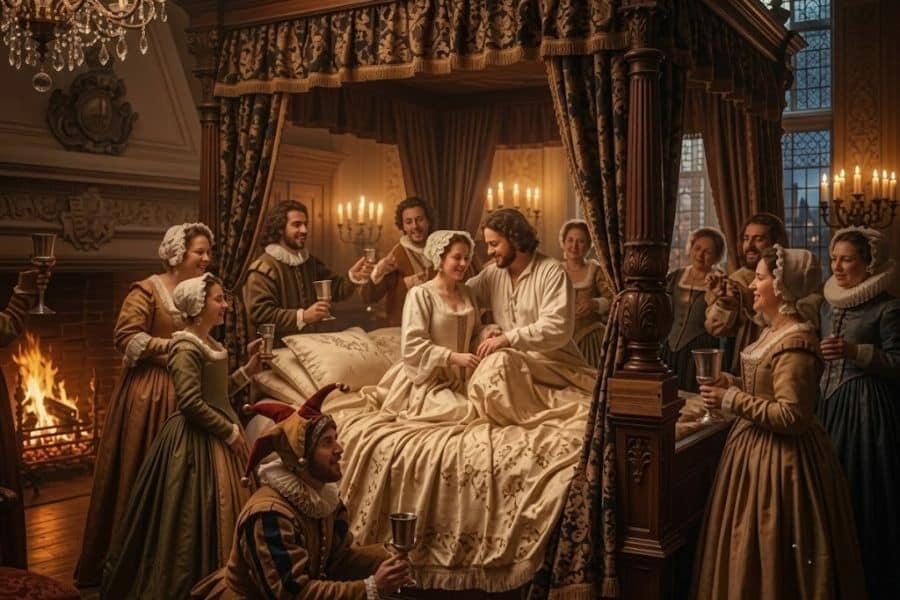
The heart of it was the bedding ceremony, a proper event in its own right, not a quiet slipping away.
After the feasting, the wedding party escorted the bride and groom to the bedchamber in a noisy, merry procession. The couple was helped into their finest nightclothes, sometimes undressed down to their shifts by attendants, and settled into the marriage bed together.
Sweet, spiced wine was passed round. In England, the bridesmaids and groomsmen would sit on the edges of the bed and throw the couple’s stockings over their shoulders. Whoever managed to hit the bride or groom was said to be the next to marry, a bit like catching the bouquet today.
Then, at last, the crowd would withdraw, leaving the couple alone. Though “alone” wasn’t in quite the way you’d think. In Germany, the guests carried on right outside with pipes, drums, and what one account politely called obscene noises, partly in celebration and partly to drown out anything the newlyweds might get up to.
Even royalty joined in the fun. At one royal wedding, the king himself did the honors of drawing the bed curtains closed on the couple.
Blessing the Marriage Bed
Before anyone left, the priest had a job to do. The blessing of the marriage bed was a religious rite, sometimes called the benedictio thalami.
The priest would bless the bed with prayers and holy water, asking God to make the union fruitful and to keep it safe from evil. This mattered enormously to medieval minds. A new marriage bed was thought to be vulnerable to demons and to curses laid by jealous neighbors, the sort of thing believed to cause impotence or barrenness.
A proper blessing was insurance against all of it. Fertility was the whole point of the exercise, so the words asked plainly for children, and the couple was sent into their first night with the Church’s approval ringing in their ears.
Consummation Was a Legal Act, Not Just a Private One
In the medieval world, sex on the wedding night wasn’t only expected, but was the very thing that made the marriage real.
Church law held that a marriage became fully binding and could not be dissolved once it had been consummated. A couple could exchange vows, but until they had slept together, there was often a crack of daylight through which the marriage might still be annulled. Consummation slammed that door shut.
This is exactly why so much fuss surrounded the wedding night, and why, for the great and powerful, witnesses sometimes waited nearby to confirm the deed was done. In medieval Iceland, custom went further still, and a marriage was considered valid only if the bedding had been witnessed by at least six men.
There were rewards written into the morning after, too. In much of continental Europe, a husband gave his new wife a morning gift, the morgengabe, handed over the day after the wedding night.
It was a substantial gift of money, land, or valuables that became hers to keep, a form of security tied directly to the consummation of the marriage. Failure to produce an heir would invite questions, because a childless marriage threatened everything a dynasty was built on, from the birth of an heir to the peaceful passing on of land.
Hooked on the Middle Ages? Get more stories like this one in your inbox.
The Church’s Rules for the Bedroom
Getting a couple into bed was one thing. The Church then spent a great deal of energy telling them when they were allowed to do anything about it.
In the earlier Middle Ages, sex was forbidden on a surprising number of days. Sundays were out, as were feast days, the whole six weeks of Lent, and the fasting fish days scattered through the calendar.
Add in the bans during menstruation, pregnancy, and breastfeeding, and a devout couple had rather fewer opportunities than you’d imagine. By the 12th century, the clergy had relaxed a little and treated the holy days more as guidance than an iron law.
Balanced against all that restraint was a strikingly even-handed idea called the marriage debt. Drawn from the teachings of Saint Paul, it held that husband and wife each owed the other sex on request, and each was equally obliged to comply.
In a world that gave women little enough, a wife had a recognized right to expect her husband in bed, and could take him to task if he refused her. It was one of the few arrangements of the age that treated the two of them as equals.
When the Marriage Bed Went to Court
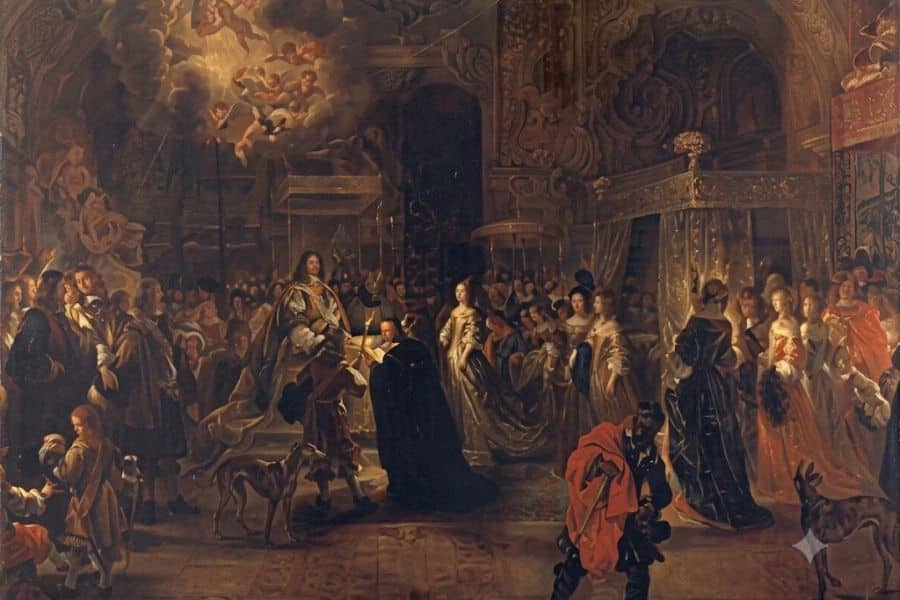
If a marriage was never consummated, it could be undone, and the medieval church courts handled these cases with a frankness that would make a modern reader blush.
A wife could petition for annulment on the grounds that her husband was impotent, and the court would investigate in the most direct way imaginable. In the church courts of York in the 14th century, the judges appointed groups of “honest women” to examine the accused husband and report back.
In one case from 1370, a wife named Tedia Lambhird accused her husband, John Sanderson, and three women were sent to test his capacity. They exposed themselves to him, warmed him by a fire, and handled him to see if he could be roused. Their verdict, recorded in unsparing detail by the court, was that there was no life in him at all. The marriage was annulled within days.
These trials were not rare curiosities. Church courts across Europe heard them regularly, and annulment on grounds of impotence was one of the few legitimate ways out of a marriage the Church otherwise refused to dissolve.
An annulment was a genuine escape hatch, and even the mightiest reached for it, as Eleanor of Aquitaine did when she shed her first royal husband and walked away to marry a younger man. Centuries later, Henry VIII would end his marriage to Anne of Cleves on the very same medieval principle, declaring the union was never consummated and therefore never truly a marriage at all.
A Royal Wedding Night That Changed England
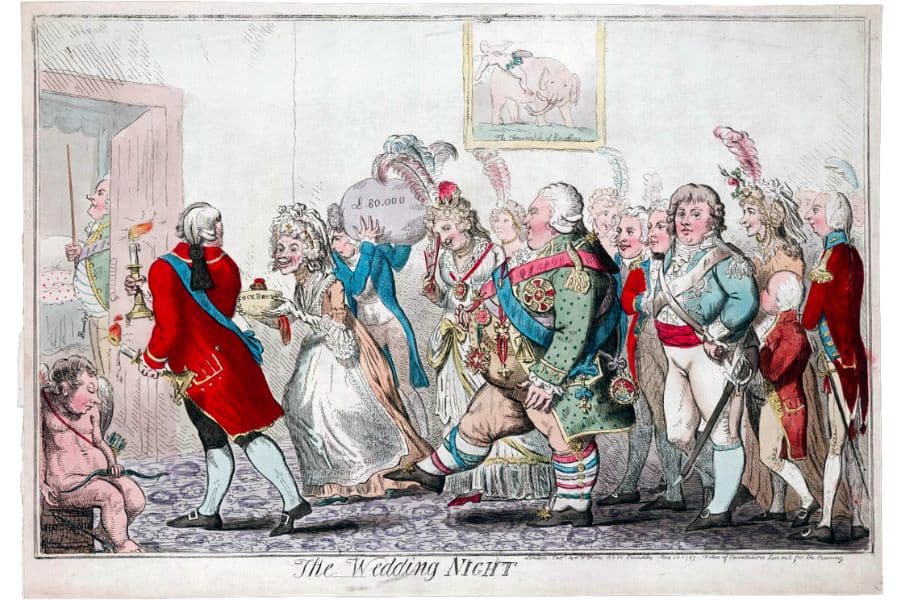
No wedding night in English history was picked over more obsessively than one from November 1501, and the whole future of the country turned on it.
When the fifteen-year-old Prince Arthur, heir to Henry VII, married the Spanish princess Catherine of Aragon, the couple were bedded with full ceremony after a fortnight of celebration.
What happened behind those curtains would be argued over for the next thirty years. The morning after, so English witnesses later claimed, Arthur emerged thirsty and boastful, calling for a drink and announcing to his companions that he had spent the night “in the midst of Spain” and that it was hot work having a wife.
Catherine told a very different story. She insisted to her dying day that the marriage was never consummated, that Arthur, sickly and young, had simply not been able. It mattered because Arthur died months later, and Catherine went on to marry his younger brother, Henry VIII. When Henry wanted rid of her decades on, the entire case rested on that long-ago wedding night. If she had slept with Arthur, the argument ran, her marriage to Henry was unlawful. A teenage boy’s morning-after bragging, true or invented, helped tip England into breaking with Rome.
Rough Music: When the Neighbors Had Their Say
The community didn’t always stop at throwing stockings. When a match struck local people as wrong, they let the couple know in no uncertain terms.
The custom went by many names, charivari being the most common, and it meant a raucous gathering outside the newlyweds’ window, banging pots, pans, kettles, and horns in a deliberate, mocking din. Rough music, people called it.
It was aimed at marriages the village disapproved of, an older widow taking a young husband, a huge gap in age or wealth, a scold, or a henpecked man. The racket might go on for nights until the couple paid the crowd off in coin or drink to be left in peace.
It was noisy, judgmental, and the neighbors’ way of making a very public comment on a very private matter. If you enjoy that sort of thing, the medieval world was full of scandal and spectacle around who married whom and why.
Frequently Asked Questions
What Happened on a Medieval Wedding Night?
On a medieval wedding night, after the feast, the wedding guests escorted the couple to bed in a procession known as the bedding ceremony. A priest blessed the marriage bed with prayers and holy water, spiced wine was shared, and guests threw stockings for luck before leaving the couple to consummate the marriage. For royalty and nobility, witnesses were sometimes present to confirm it.
Why Was Consummation So Important in the Middle Ages?
Consummation was important because it made a marriage legally binding and permanent under Church law. Until a couple had slept together, the marriage could still be annulled. Once consummated, it could not. Because inheritance, alliances, and the legitimacy of children all depended on it, the wedding night carried real legal and political weight.
Did People Really Watch Medieval Consummations?
In some cases, people really did watch medieval consummations, especially for royal and noble marriages where proof mattered. Witnesses would see the couple into bed together and remain nearby. In medieval Iceland, a marriage was only valid if the bedding was witnessed by at least six men. For ordinary couples, it was usually more about being escorted to the bedchamber than being watched throughout.
What Was the Blessing of the Marriage Bed?
The Blessing of the Marriage Bed was a religious rite in which a priest blessed the newlyweds’ bed with prayers and holy water, asking for fertility and protection from evil. Medieval people believed a new marriage bed was vulnerable to demons and curses that could cause impotence or barrenness, so the blessing was seen as important spiritual protection.
Could a Medieval Marriage Be Annulled if It Wasn’t Consummated?
Yes, a medieval marriage could be annulled if it was never consummated; it could be annulled, often on grounds of impotence. Church courts investigated these claims directly, sometimes appointing women to examine the husband. A marriage could be dissolved after about three years if the couple were unable to consummate it.

Love a good medieval story?
Join our readers and get tales of kings, queens, castles and ordinary medieval lives straight to your inbox.

Kylie Lang is a nationally syndicated travel journalist with bylines on the Associated Press Wire & more, a medieval history writer, and the founder and lead author of Tales of the Middle Ages (talesofthemiddleages.com). She holds a BA (Honours) in History from the University of Kent and is a member of the British Guild of Travel Writers.
Related posts:
 How Did People Get Divorced in Medieval England, and Did Kings and Queens Have It Easier?
 Did They or Didn’t They? Was Catherine of Aragon Still a Virgin When She Wed Henry VIII?
Did Catherine of Aragon Lie About Her Virginity?
Did They or Didn’t They? Was Catherine of Aragon Still a Virgin When She Wed Henry VIII?
Did Catherine of Aragon Lie About Her Virginity?
 Did Catherine of Aragon Marry Henry VIII as a Virgin? Or Did She Have Us All Fooled?