
Anne Neville’s life reads like a roadmap through the bloodiest years of fifteenth-century England. Born the daughter of the powerful Earl of Warwick, she grew up surrounded by ambition, rebellion, and shifting loyalties. From the very start, her world was shaped by the battles and betrayals that would come to define her future.

She would become a princess, a duchess, and eventually a queen, though each title carried as much loss as it did glory. Twice married into rival factions, Anne’s fate was bound to the rise and fall of dynasties. At times she seemed like a pawn, at others a survivor who endured when the world around her crumbled.
Table of Contents
Her story has often been overshadowed by louder voices of kings and lords, yet Anne stood at the crossroads of history. To follow her life is to see the Wars of the Roses through different eyes: not only as a clash of armies, but as a battle that reshaped families, futures, and the crown itself.
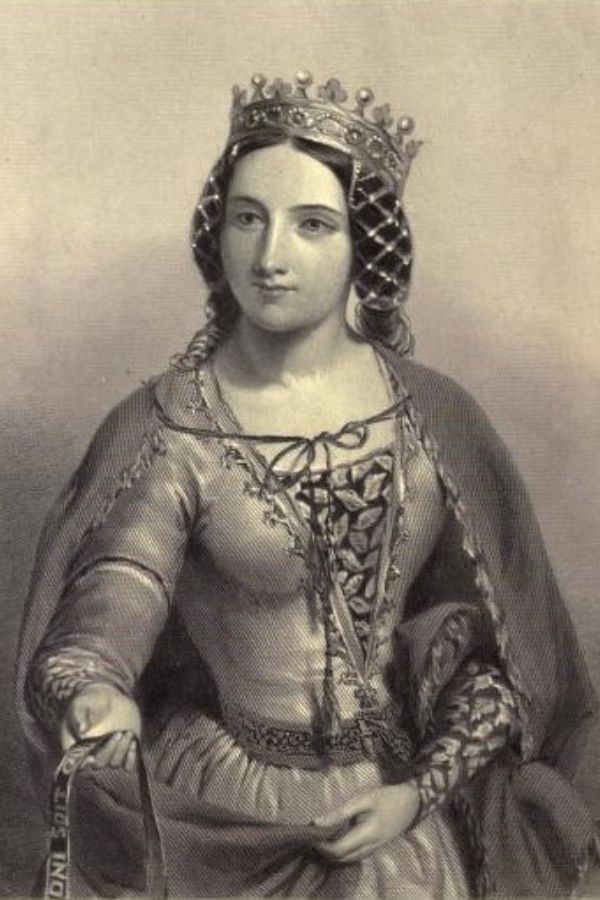
Anne’s Childhood at Middleham
Anne Neville was born on June 11, 1456, into a family already tangled deep in the rivalries that tore England apart. Her father, Richard Neville, Earl of Warwick, was one of the most powerful men of his age. Through him, Anne carried the bloodline of John of Gaunt, making her kin to King Henry VI and the future Edward IV.
She and her sister Isabel grew up at Middleham Castle in Yorkshire, a stronghold that was both their home and a hub of Yorkist ambition. Anne’s childhood was anything but sheltered. Warwick was a leading supporter of the Yorkist cause, which sought to unseat Henry VI and replace him with Richard, Duke of York.
The castle walls may have been thick, but news of battles, betrayals, and executions would have reached her ears. The fall of one noble family could mean the destruction of another, and Anne would have known that her father’s fate could mirror that of the Duke of York, killed at Wakefield in 1460.
The Yorkist triumph at Towton in 1461 changed everything. Edward, the Duke of York’s son, was crowned Edward IV, and Warwick’s loyalty was richly rewarded. Wealth and influence flowed into the Neville household, and Anne’s position shifted from vulnerability to immense privilege. By the time she was a child of five, she was one of the most valuable heiresses in England.

Her father stood beside the new king as a trusted ally and diplomat, and Middleham Castle now represented security as much as ambition. Anne and Isabel weren’t isolated in their great fortress. Wealthy families often placed their sons in the households of other nobles to be trained in military and political skills, and Middleham became a training ground for the next generation of power players.
Among them was Richard, Duke of Gloucester, Edward IV’s younger brother. Historians disagree on how much Anne and Richard saw of one another during these years, but their later bond suggests that some connection began here in the shadow of Middleham’s towers.
For all the rewards that came with Edward’s coronation, peace in the fifteenth century was fragile. The victory at Towton had only papered over the cracks, and the ambitions of men like Warwick meant the fighting was far from over. Anne’s early years, marked by triumph and tension, were only the beginning of a life that would be pulled back into chaos time and again.
Rebellion and Betrayal
The bond between Edward IV and Warwick began to splinter when the king chose Elizabeth Woodville as his bride. She was a widow and a commoner, and her sudden rise brought her family into royal favor at Warwick’s expense. Tension deepened when Edward refused to let his brothers marry Isabel or Anne. The message was clear: Warwick was powerful enough already, and Edward feared what might happen if he gained more.
Denied those alliances, Warwick turned against his king. He found a willing partner in Edward’s ambitious brother, George, Duke of Clarence. Groomed by Warwick to imagine himself on the throne, Clarence defied Edward by secretly marrying Isabel in 1469. The rift was now open, and Warwick was branded a rebel.
Forced to flee, Anne joined her family as they crossed to Calais, Isabel heavily pregnant beside her. But Edward had anticipated the move and blocked their entry. The sisters endured a punishing journey that ended in tragedy when Isabel gave birth to a stillborn child aboard ship. For Anne, the memory of that loss would have been hard to forget.
Shut out of Calais, Warwick turned to Louis XI of France, where Henry VI’s formidable queen, Margaret of Anjou, held court. In a move that stunned Europe, Warwick abandoned the Yorkists and offered himself to the Lancastrians. He promised to restore Henry VI to the throne and sealed the deal with a marriage alliance: Anne would wed Edward, Prince of Wales. At barely a teenager, she was bartered into the hands of her father’s former enemies.

Anne’s feelings about the match are lost to history, but the fear she must have carried is not hard to imagine. She had grown up with the Lancastrians painted as her family’s sworn rivals, only to be delivered into their camp as a bargaining chip. Whatever her private dread, the wedding went ahead. She became Princess of Wales, and when Warwick’s gamble briefly paid off in 1470, Henry VI was restored, and Anne stood as the wife of the heir to the throne.
The marriage, however, was distant at best, and it’s doubtful it was ever consummated. That uncertainty may have been deliberate, leaving Warwick an escape should the alliance sour. But fate soon unraveled everything. Clarence, frustrated at being shut out of the succession, abandoned Warwick and returned to Edward IV’s side. In 1471, Warwick was cut down at the Battle of Barnet. Weeks later, Anne’s husband fell at the Battle of Tewkesbury.
By the age of fifteen, Anne had lost both her father and her husband. She had no protection in a world where survival depended on powerful men. Worse still, she was bound to the enemies of the king who now reigned again. Captured by the Yorkists, she was placed in the household of her sister and Clarence, a man who had every reason to resent her very presence.

Lancastrian Princess, Yorkist Queen
Life in Clarence’s household may have kept Anne from prison, but it was no act of kindness. Clarence’s real motive was control. With Anne under his roof, he could seize her share of Warwick’s vast inheritance. When Richard, Duke of Gloucester, set his sights on marrying Anne, Clarence’s fury was less about family honor and more about the fortune slipping through his hands.
Later storytellers liked to paint Richard as the knight who rescued Anne from Clarence’s grip, with tales of her disguised as a servant to keep them apart. The truth was less romantic and more practical. Anne and Richard had known each other since childhood, and their marriage made political sense for both. Richard gained land and power in the north, and Anne gained a husband who gave her a degree of independence. Her spending records suggest she had a voice in the marriage, not just a passive role.
They wed in 1472. The feud between Richard and Clarence never healed, only worsened when Edward IV declared both brothers heirs to Warwick’s estates in 1474. Anne and Richard had one son, Edward, whose birth briefly united their household with hope for the future. But tragedy struck soon after.

Isabel Neville died in 1476, and Clarence’s erratic behavior spiraled into treason. In 1478, he was executed in the Tower of London, drowned in a butt of Malmsey wine. After his downfall, Anne also took responsibility for Clarence’s orphaned children, Margaret and Edward.
Her household became a mix of loyalty and loss, and the couple’s lack of further children over their twelve years together was not unusual, nor proof of unhappiness. In fact, when Richard claimed the throne in 1483, they defied custom by sharing a bed, a sign of closeness rarely seen between kings and queens.
Anne also stepped into a role that gave her real visibility. She co-owned books with Richard and gave him gifts, including a richly embroidered purple cloth made for their joint coronation. At the same ceremony, she also wore purple, a symbol of unity and ambition. Her influence can be glimpsed in the public displays of power that helped shape Richard’s image.
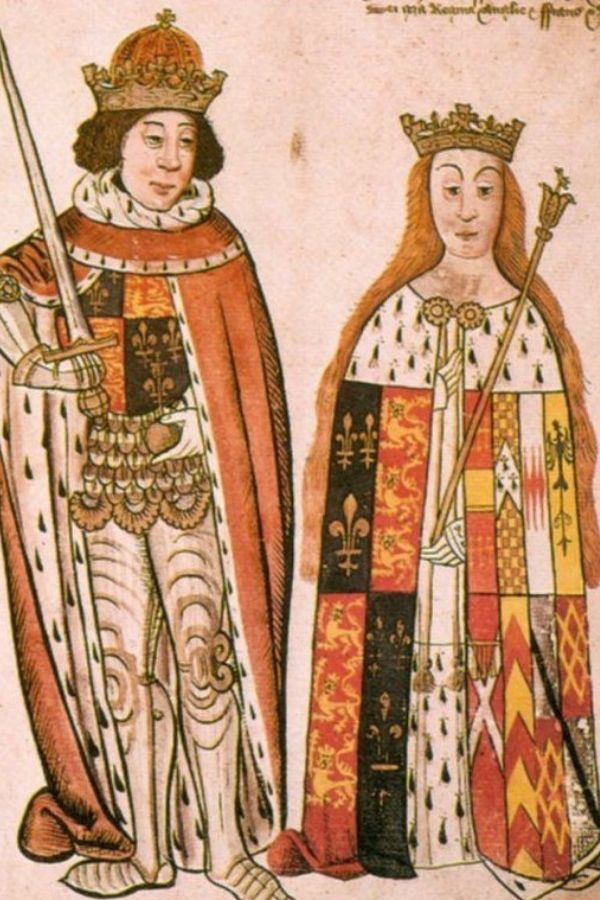
As queen, she stood beside Richard in diplomacy as well. She was present during negotiations with Ferdinand and Isabella of Spain, which aimed to betroth her son Edward to their daughter, the Infanta. A strong marriage alliance with Spain would have secured Richard’s legitimacy and Anne’s own position as queen.
But her story, like so many in this bloody age, turned to grief. Their only son died in 1484, a devastating loss both personally and politically. Without an heir, Richard’s crown was weakened. Anne’s health faltered soon after, and she died less than a year later, in March 1485, during a solar eclipse that many took as a dark omen.
Whispers spread that Richard had poisoned her so he could marry his niece, Elizabeth of York. True or not, the gossip clung to him and blackened his reputation further. Rebellion swelled, and within months, Henry Tudor defeated Richard at Bosworth. After Richard’s fall, the York Roll, a chronicle of the Neville family, was altered to show Anne as a mistreated wife and Richard as cruel. Whether this reflected truth or Tudor propaganda, it silenced Anne’s own story once again, leaving her legacy overshadowed by the men around her.


Kylie Lang is a nationally syndicated travel journalist with bylines on the Associated Press Wire & more, a medieval history writer, and the founder and lead author of Tales of the Middle Ages (talesofthemiddleages.com). She holds a BA (Honours) in History from the University of Kent and is a member of the British Guild of Travel Writers.
Related posts:
 Isabel de Clare: The Forgotten Power Behind the Greatest Knight, William Marshal
 The Rise and Fall of the Kingmaker: Richard Neville’s Ruthless Game of Thrones
 How George Plantagenet, Duke of Clarence, Ended Up Dying in a Wine Barrel
 Why Did the Plantagenet King Edward IV Kill His Own Brother In a Barrel of Wine?