When a medieval king rode out to war, the dust of his retinue settling on the road behind him, he might be gone for months, or even years. He might not come back at all.
Someone had to hold the kingdom together while he was gone, to read the dispatches, sign the orders, raise the money, and keep the nobles from tearing each other apart. More often than the textbooks let on, that someone was his wife.
Table of Contents
Medieval queens were regents, generals, and cunning political operators. They were trained to govern, trusted with seals and treasuries, and handed power that would shock anyone who still thinks of the period as one long parade of armored men. Some of them were extraordinary at it. A few were destroyed for being a little too extraordinary.
How Female Regency Actually Worked
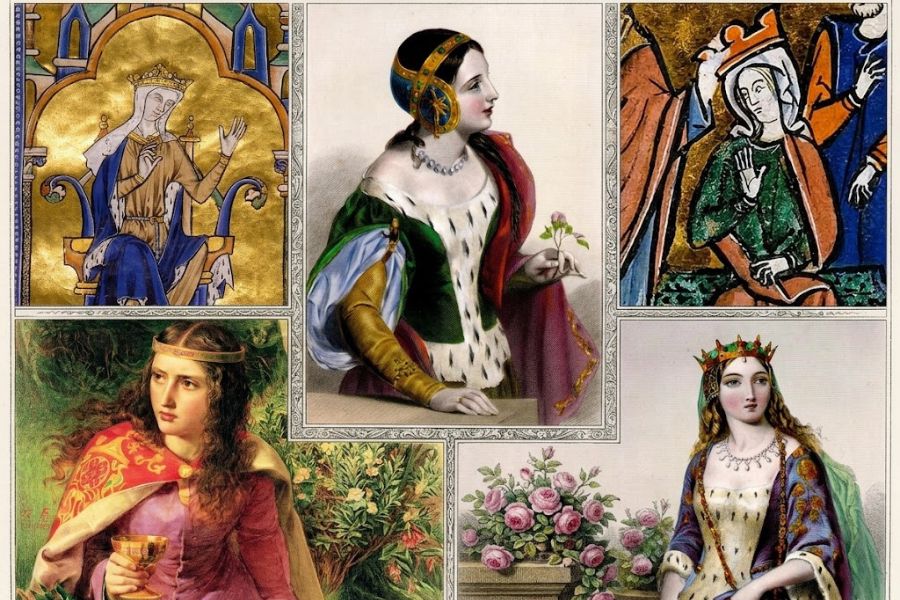
Regency was a formal legal arrangement, sealed with charters and witnessed by the great men of the realm. When a king left the country for war, crusade, or a long diplomatic absence, he had to name a regent, someone authorized to act in his name. That person could be a brother, an uncle, a trusted bishop, or the queen.
A queen regent had access to the great seal, the engine of medieval government. With it, she could issue writs, summon councils, levy taxes, appoint sheriffs, and command armies. In practical terms, she was the king. She could not be crowned again, and her authority lapsed the moment her husband returned or her son came of age, but while it lasted, it was real.
The job came with a particular set of risks. A regent who failed was blamed for everything that went wrong. A regent who succeeded too visibly risked being accused of overreach, ambition, or worse. The line between competent ruler and grasping woman was drawn wherever it suited the men watching, and it shifted constantly.
5 Medieval Queens Who Were Better Rulers Than Their Male Counterparts
These five women were formidable queens who weren’t decorative wallflowers sitting at home holding the baby. They were smart, manipulative, and knew how to govern a country better than most of the men.
Blanche of Castile, the Queen Who Held France Together
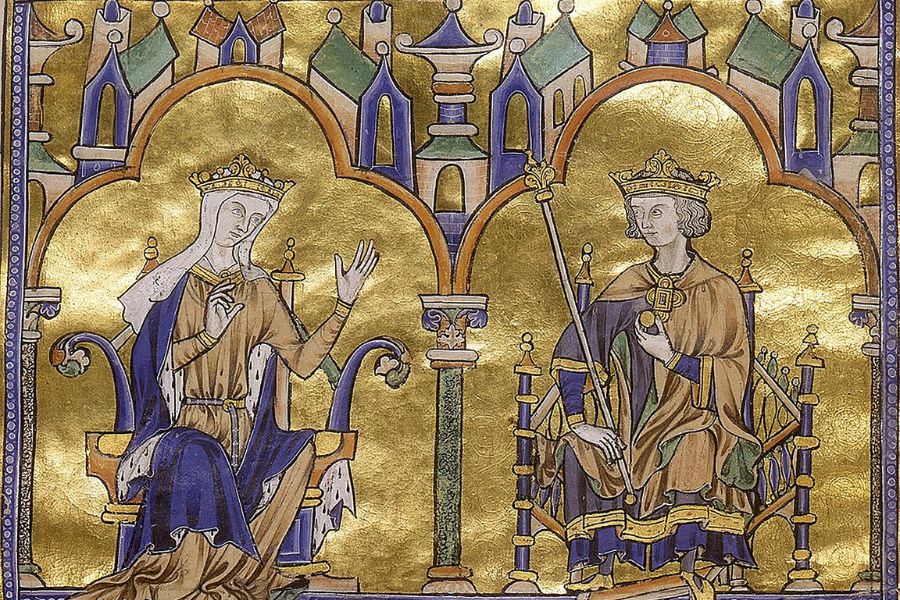
When Louis VIII of France died in 1226, he left his widow, Blanche of Castile, with a twelve-year-old son and a kingdom that several powerful nobles were already eyeing like wolves around a wounded deer.
Louis had named her regent in his will, but the barons promptly tried to ignore that arrangement and seize the boy king for themselves. Blanche moved faster than they did.
She had her son Louis IX crowned at Reims within weeks of his father’s death, secured the loyalty of the royal household, and then went out and broke the rebellion piece by piece.
When the Count of Brittany allied with the English to invade, she raised an army and met them in the field. She negotiated, she bribed, she fought, and she won.
She ruled France as regent for nearly a decade, and then ruled it again from 1248, when Louis IX went on crusade. By the time he returned, the kingdom was solvent, the rebellious nobles were broken or bought off, and royal authority extended further than it had under his father.
Louis became Saint Louis, the model of medieval Christian kingship. He built that reputation on a foundation his mother had laid in blood and ink.
Eleanor of Aquitaine, Ruling in the Cracks

Eleanor’s story is usually told as a romance, two royal marriages, and a long imprisonment by Henry II. The more interesting version is what she did when she was actually allowed to govern. When Richard the Lionheart inherited the English throne in 1189, he immediately started planning his crusade. He needed someone to keep England running while he was off besieging Acre. He chose his mother.
Eleanor was almost seventy. She had spent fifteen years locked up by her late husband for backing her sons in rebellion. None of that slowed her down. She toured the realm, accepted oaths of loyalty, released political prisoners, and crucially kept Richard’s treacherous brother John from grabbing the throne while Richard was away.
When Richard was captured on his way home and held for ransom by the Holy Roman Emperor, it was Eleanor who organized the staggering payment of 150,000 marks, roughly two or three times the annual royal revenue.
She squeezed it out of the country through taxes, church plate, and forced loans, and she personally escorted the silver across Europe to free her son. She was in her seventies, and the men around her could barely keep up.
Melisende of Jerusalem and the Queen Who Refused to Step Aside

In the Crusader Kingdom of Jerusalem, queens could inherit thrones in their own right, and Melisende did. Her father, King Baldwin II, named her co-ruler with her husband, Fulk of Anjou, in 1131. Fulk tried to push her aside almost immediately. He filled the court with his own Angevin men and acted as though Melisende’s role was decorative.
She did not accept it. There was a political crisis, possibly involving rumors of her affair with a kinsman, possibly engineered by Fulk’s faction to discredit her. Melisende responded by building a coalition of native barons who backed her hereditary right.
Fulk found himself isolated, distrusted, and forced to reconcile on her terms. From that point on, no charter of any consequence was issued without her name and seal.
After Fulk’s death in a hunting accident, Melisende ruled Jerusalem as regent for her young son Baldwin III, and then as co-ruler when he came of age. When Baldwin tried to take sole power in 1152, she refused to hand it over.
He even marched an army against his own mother, but she fortified the Tower of David in Jerusalem and forced him to negotiate. He won the eventual settlement, but she kept her own lands and her place on the council. She had ruled, in one form or another, for more than twenty years.
Margaret of Anjou and the Cost of Being Too Effective
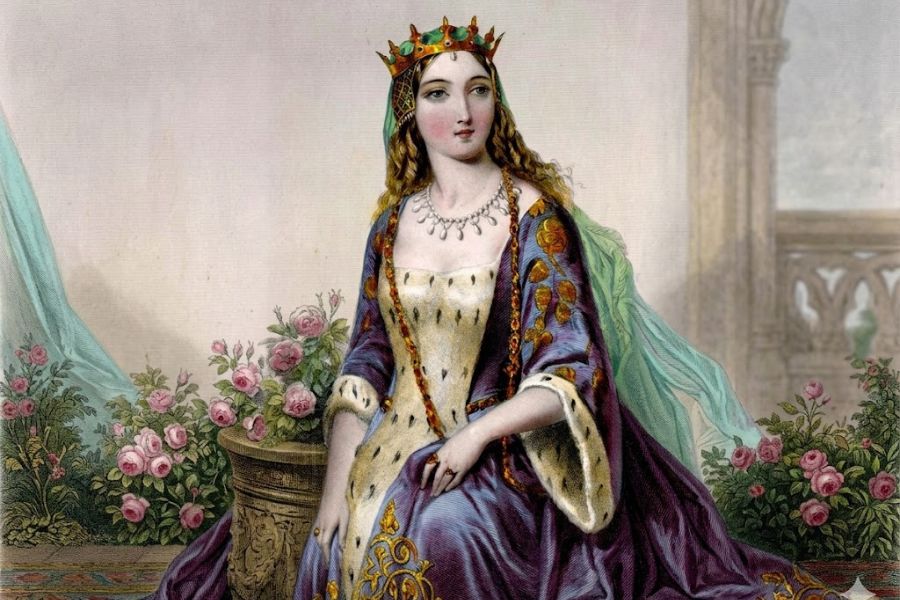
Margaret of Anjou‘s husband, Henry VI of England, was not built for the work of kingship. He suffered periods of complete mental collapse, during which he could not recognize his own son. By the 1450s, with the Wars of the Roses brewing, someone had to lead the Lancastrian cause, and Margaret stepped into the space her husband could not fill.
She raised armies, negotiated with the Scots and the French for troops and money. She rode with her forces in the field, in armor, and she was credited by both sides with the relentless drive that kept the Lancastrian cause alive long after Henry was incapable of leading it.
At the second Battle of St Albans in 1461, her army won, and she famously, or notoriously, allowed her seven-year-old son to pronounce the death sentences on the captured Yorkist commanders.
The Yorkist propaganda machine made her a monster. She was foreign, she was a woman, she was effective, and she would not give up. When her son was killed at Tewkesbury in 1471 and her husband murdered in the Tower shortly after, she had nothing left to fight for.
She died in poverty in France a few years later, having outlived almost everyone she loved. The men who’d faced her in the field never quite forgave her for being better at the job than they were.
Isabella of France, the She-Wolf Who Took the Throne

Isabella of France was married to Edward II of England at the age of twelve. By her twenties, she’d watched her husband elevate a series of male favorites, hand them her lands, and humiliate her at court.
In 1325, sent to France on a diplomatic mission, she simply refused to come home. She took a lover, the exiled English baron Roger Mortimer, raised a small invasion force, and landed in England in 1326.
The kingdom fell to her in weeks. Edward II’s regime collapsed without a real fight. He was captured, forced to abdicate in favor of his and Isabella’s son, and within months, he was dead in Berkeley Castle under circumstances that have never been satisfactorily explained. Isabella and Mortimer ruled England together for almost four years as regents for the teenage Edward III.
They overreached. They enriched themselves grotesquely, made a humiliating peace with Scotland, and lost the support of the nobility they’d ridden in with. In 1330, the seventeen-year-old Edward III staged a coup against his own mother, had Mortimer hanged, and put Isabella into a comfortable retirement.
She lived another 28 years, well-treated and apparently content, in possession of her dower lands. She was never tried. No one quite knew what to do with a queen who had successfully overthrown a king.
Why Some Queens Survived, and Others Did Not
The pattern across all these women is not really about ability. Blanche, Eleanor, Melisende, Margaret, and Isabella were all formidable operators. What separated the survivors from the destroyed was a combination of timing, the legitimacy of their claims, and the extent to which they visibly wielded power.
Blanche ruled in the name of a child king who adored her. She kept her authority cloaked in maternal duty, even as she broke armies in the field.
Eleanor governed for an adult son who was popular and absent. Melisende had a hereditary right that no one could quite deny. Margaret had only her husband’s incapacity to justify her command, and her enemies turned that into proof of unnatural ambition.
Isabella took power by deposing and probably murdering her king, which was a line no one could fully accept her crossing, even her own son.
The lesson the chroniclers drew, that women could not be trusted with power, was not the lesson the actual record supports. The record shows women governing well, often better than the men they replaced, and being judged on a different scale for the same actions.
A regent who taxed the realm to fund a war was prudent if he was a man and rapacious if she was a woman. A general who allowed a battlefield execution was firm if he was a king and savage if she was a queen.
The histories that came down to us were written mostly by men with reasons to flatten these women into types: the saintly mother, the scheming foreigner, the unnatural she-wolf. Strip the labels away, and you find administrators, strategists, and politicians who happened to wear crowns no one expected them to use.
Related posts:
 Blanche of Lancaster: The Heiress Who Anchored England’s Dynasty in the Middle Ages
 September 4, 925: The Day England’s First King, Æthelstan, Was Crowned, But Was He?
 Sweyn Forkbeard: The First Viking King of England
 The Battle of Poitiers: The Black Prince’s Boldest Victory and the Capture Of a French King