She entered the world at Bolingbroke Castle in 1342, a girl born into the powerful Lancaster family. Few would have guessed that her short life would shift the balance of English politics and open the path for a new royal dynasty. Blanche of Lancaster’s story is stitched into the rise of the House of Lancaster, yet her name is often hidden in the shadows of the men who followed.
Her marriage to John of Gaunt bound him to the vast wealth and land of the Lancastrian estates, making him one of the most powerful figures in England. Through Blanche, Gaunt’s influence spread far beyond the battlefield and the royal court.
Table of Contents
But Blanche herself lived through plague, childbirth, and the dangers of 14th-century life. Her death came young, yet her legacy ran deep, shaping the future of England in ways she could never have foreseen.

Roots and Early Years
Blanche of Lancaster was born at Bolingbroke Castle in Lincolnshire on March 25, 1342, according to inquisitions taken after her death. Some older sources suggest 1345, but most scholars now agree on the earlier date. Her birthplace belonged to one of the richest and most influential men in England, Henry of Grosmont, 1st Duke of Lancaster.
Henry of Grosmont stood at the very heart of Plantagenet power. He was a cousin of King Edward III, a celebrated soldier in the wars with France, and the wealthiest peer in the kingdom. His position gave Blanche a bloodline that carried weight in politics and in battle, and it meant that even as a child, she was tied to the shifting fortunes of the royal house.
The family was small. Blanche’s elder sister, Maud, was expected to carry on the Lancaster inheritance. But Maud’s marriage produced no heirs, and this would eventually place Blanche in a role she was never meant to fill. By the time she reached her teens, the question of inheritance was already beginning to reshape her future.

The Making of a Heiress & Marriage
Blanche’s marriage to John of Gaunt, the third surviving son of Edward III, was arranged when both were still in their teens. The wedding took place at Reading Abbey on May 19, 1359, in the presence of the king and queen. By marrying one of his sons to a daughter of Lancaster, Edward tied his dynasty to the wealthiest noble house in England.
That investment paid off sooner than expected. In 1361, Blanche’s father, Henry of Grosmont, died without a surviving son. The vast Lancaster inheritance, with estates from Lincolnshire to Cheshire, was divided between Blanche and her elder sister Maud. The following year, Maud died childless, leaving Blanche the single heir to the fortune.
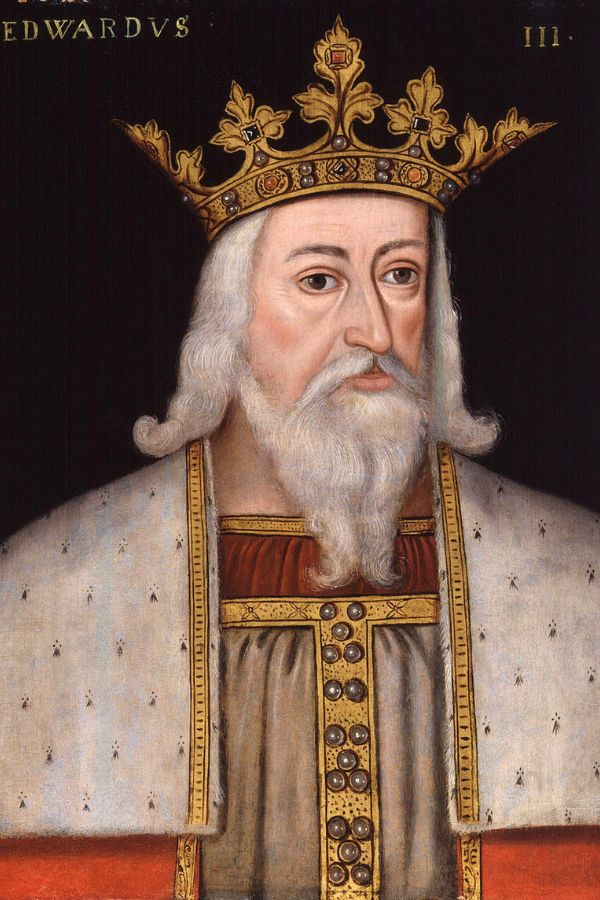
Edward III wasted no time in securing the outcome he had planned for. In 1362, he re-created the Duchy of Lancaster and granted it to his son John of Gaunt, Blanche’s husband. By binding Gaunt to Blanche’s inheritance, Edward ensured the Lancastrian fortune stayed firmly tied to the royal family. It was part of a deliberate strategy: the king married his sons to wealthy heiresses, securing money and estates to support the dynasty’s future. Blanche was now not just a duchess in name, but the pivot of a new political powerhouse.

The Rise of Lancaster Power
With the Duchy of Lancaster in their hands, Blanche and John of Gaunt commanded a fortune larger than any other noble family in England. The estates stretched from Lincolnshire to Cheshire, carrying with them castles, towns, and the revenues to maintain a household on a royal scale. Gaunt’s authority came through Edward III, but the wealth that sustained it flowed directly from Blanche’s inheritance.
For Blanche, this meant life at the head of a household that rivaled the court in size and complexity. Records show dozens of retainers, clerks, and ladies-in-waiting tied to her service. Among them was Katherine Swynford, who began her career as part of Blanche’s circle before later becoming central to John of Gaunt’s story.

Children, Hopes, and Losses
Blanche’s marriage produced seven children in less than a decade. The first was Philippa, born on March 31, 1360, who later became Queen of Portugal. Three years later came Elizabeth, born on February 21, 1363, who would marry into English nobility and carve out a political role of her own. The third surviving child was Henry, born on April 15, 1367, at Bolingbroke Castle. He would one day seize the throne as Henry IV.
The other four children did not live to adulthood. Two sons, John, another son Edward, and a daughter, Isabel, died in infancy. Their brief lives barely left a mark in the records, but they would have been keenly felt in Blanche’s household. Childbirth in the fourteenth century was perilous, and the repeated cycle of pregnancy, loss, and recovery shaped her short life.
Each surviving child strengthened the future of Lancaster power. By the time she was twenty-six, she had given birth seven times, a pace that would have tested even the healthiest of women.
Blanche’s Young Death and Funeral
In September 1368, Blanche’s life ended at Tutbury Castle. She was only twenty-six. The cause is not recorded with certainty, though many historians point to one of the recurring outbreaks of plague. John of Gaunt was abroad on campaign when she died, and her death hit him hard.
Her funeral was staged on a scale fit for royalty. Blanche’s body was taken to London and buried in the choir of St Paul’s Cathedral. The service drew England’s highest nobility and clergy, a public display of how much weight the Lancastrian inheritance carried.
John of Gaunt did not let her memory fade. He marked the anniversary of her death each year and commissioned an elaborate double tomb from the master mason Henry Yevele. The effigies showed Blanche and Gaunt hand in hand, a rare detail for medieval funerary art. The monument stood as one of the glories of Old St Paul’s until it was destroyed in the Great Fire of 1666.
Chaucer’s Tribute
Not long after Blanche’s death, Geoffrey Chaucer wrote his first major poem, The Book of the Duchess. The work is framed as a dream vision in which the narrator meets a knight dressed in black, mourning the loss of his lady. While Chaucer never names Blanche, most readers at the time would have understood the subject.
It gives voice to a sorrow that official chronicles usually ignored, showing how deeply Blanche’s death was felt within her circle. For historians today, it is also one of the few windows into how she was remembered not just as an heiress but as a person.