
You already know how the queens ended. If you were in school in the UK, you had the rhyme drummed into you in your history lessons. Divorced, beheaded, died, divorced, beheaded, survived.

But you rarely hear what happened to the women in the room when it all fell apart, the ladies-in-waiting. These women held huge influence: they had the ear of those close to them and could cause havoc when they chose.
Table of Contents
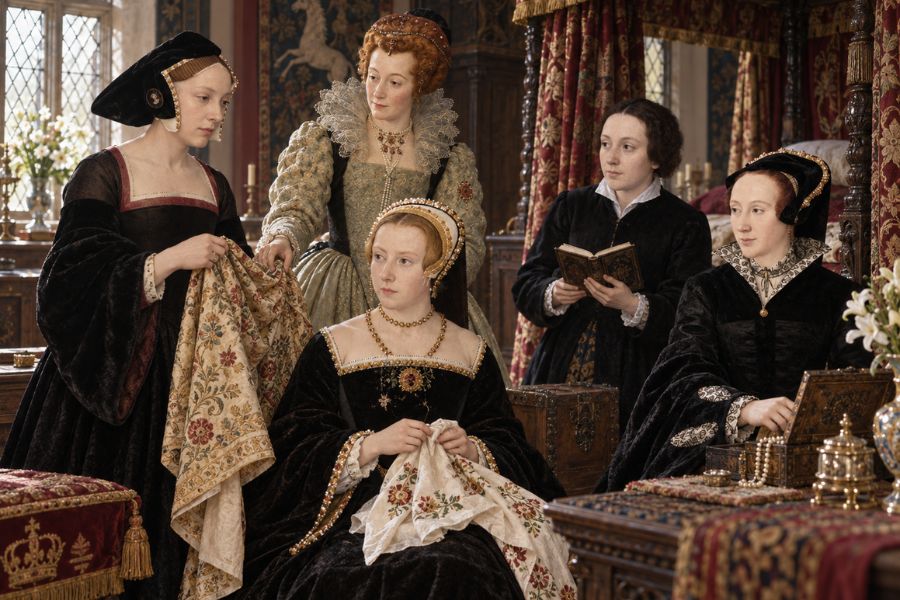
They brushed the queen’s hair, slept on pallets outside her bedchamber, and witnessed her more private and intimate moments. Some of them testified against her, and some walked her to the scaffold.
Then, most of the time, they went back to court and did it all again for the next one.
How did any of them survive that? And what did survival actually look like?
The Job Was More Dangerous Than It Looked
A lady-in-waiting was not a friend. She was a fixture of the queen’s household, appointed by the king or negotiated in by her family, and her presence was as much political as it was decorative.
She dressed the queen, carried her train, played cards with her, read to her, prayed with her, and, if the queen was clever, kept her secrets.
If the queen was not clever, or if the wind changed at court, she reported those secrets to whoever asked.
The pay was modest, but the access was everything. A well-placed daughter in the queen’s chamber could funnel information to her father, her uncle, or her husband, and Tudor families treated these appointments as investments.
The Howards, the Seymours, the Parrs and the Poles all understood that a girl in the queen’s rooms was worth more than a manor.
What none of them could plan for was how fast a queen could fall. Anne Boleyn went from crowned and pregnant to executed in roughly three years.
Katheryn Howard’s collapse took months. Every woman who served in those chambers had to work out, sometimes in a single afternoon, whether loyalty or self-preservation was going to keep her alive.
Jane Parker, Lady Rochford: The Survivor Who Ran Out of Luck
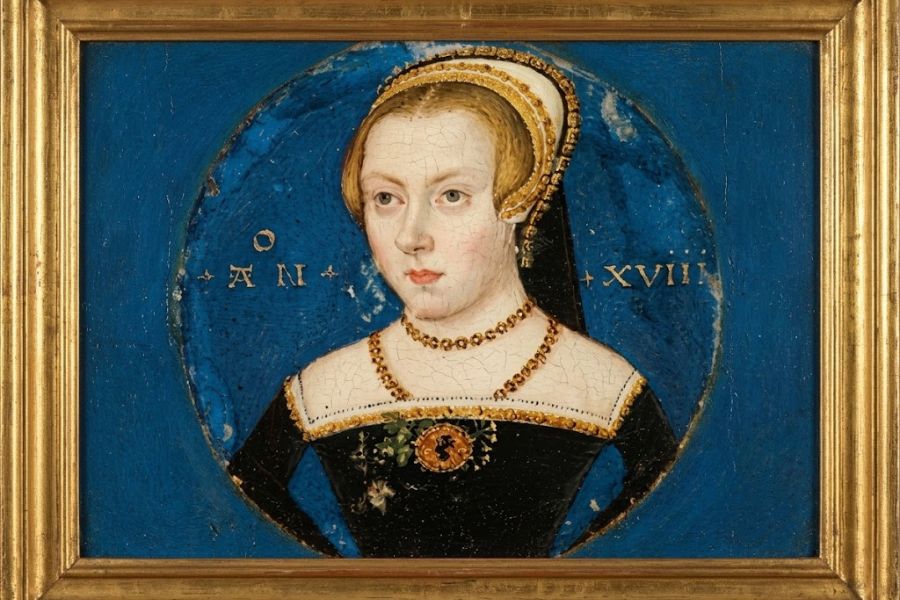
Jane Parker married George Boleyn in 1525 and, by the early 1530s, found herself sister-in-law to a queen. When Anne and George were arrested in May 1536, Jane’s role in what came next has been argued over for centuries.
Eric Ives, in his study The Life and Death of Anne Boleyn, is careful about the surviving evidence and pushes back on the older story that Jane volunteered the incest testimony that killed her husband.
What is documented is that she was questioned, that she survived, and that within months she was back at court in the household of Jane Seymour.
She served Anne of Cleves and Katheryn Howard. And it was in Katheryn’s household, in 1541, that Jane’s luck finally ran out.
She was the one who arranged the private meetings between the young queen and Thomas Culpeper, standing guard at the door while they talked, and possibly more. When the affair was uncovered, Jane was arrested alongside her mistress.
She reportedly lost her mind in the Tower, which under Tudor law should have spared her the axe.
Henry passed a special act of attainder to have her executed anyway. On 13 February 1542, she died on Tower Green minutes after Katheryn Howard, having served four of his six queens. She is the only one of the surviving ladies whose luck ran out on the scaffold.
Anne Bassett: The Girl Everyone Assumed Would Be Queen Number Seven
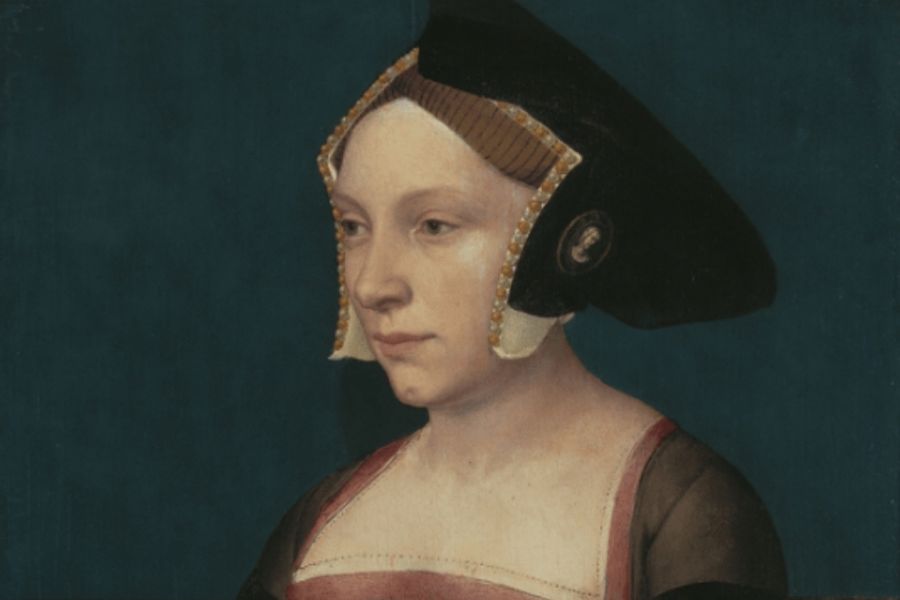
Anne Bassett arrived at court in 1537 as a maid of honor to Jane Seymour, placed there through the relentless letter-writing of her mother Honor, Lady Lisle.
The Lisle Letters, edited by Muriel St Clare Byrne and published across six volumes in 1981, are one of the richest surviving sources on Tudor domestic life, and Anne’s clothes, her lodgings, her illnesses and her flirtations are all there in her mother’s correspondence with agents at court.
Jane died in October 1537, days after giving birth to the future Edward VI. Anne stayed on. She served Anne of Cleves, then Katheryn Howard, then Katherine Parr, and along the way she caught Henry’s eye enough that ambassadors reported he might marry her.
He did not, though he gave her a horse and a saddle, which in Henry’s economy of favor was not nothing.
Anne kept her head down, kept her post, and outlived Henry entirely. She married Sir Walter Hungerford of Farleigh in the reign of Mary I. She had, by then, watched three queens die, one queen divorced, one queen survive her husband, and her own stepfather Lord Lisle die in the Tower in 1542.
Sadly, she left almost no letters of her own. Maybe she’d learned from what happened to women who wrote things down.
Kat Ashley and Blanche Parry: The Ones Who Bet on the Daughter
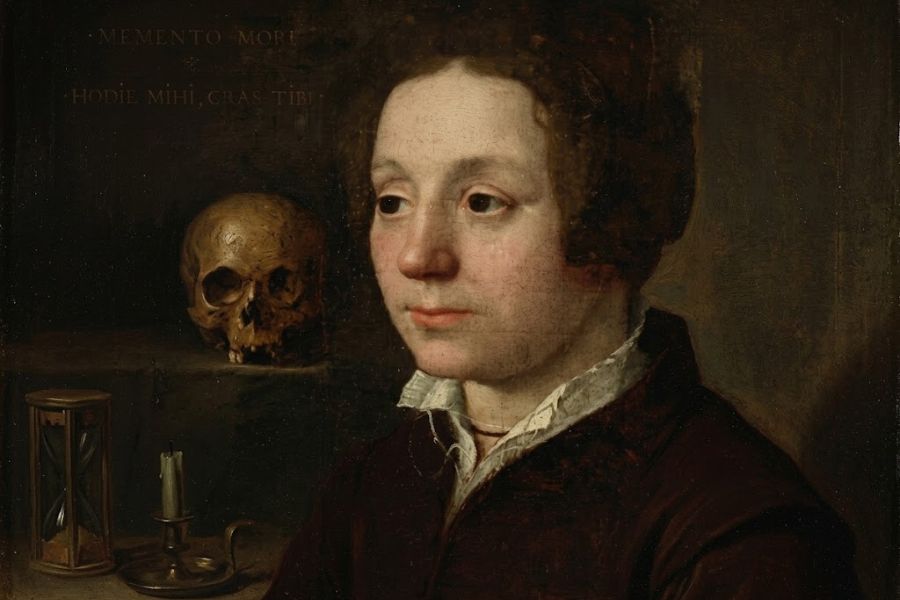
Not every survivor stayed in the queen’s chamber. Some of the shrewdest women at Henry’s court attached themselves to a princess instead, and two of them, Kat Ashley and Blanche Parry, spent their lives in the household of Elizabeth Tudor.
Blanche rocked her cradle, and Kat became her governess in 1536, the year Elizabeth’s mother was executed, and the year the three-year-old was demoted from princess to lady.
Kat’s loyalty nearly killed her. During the Thomas Seymour scandal of 1548-49, when the widowed Lord Admiral was accused of trying to seduce and possibly marry the teenage Elizabeth, Kat was hauled to the Tower and interrogated, and admitted to encouraging the flirtation.
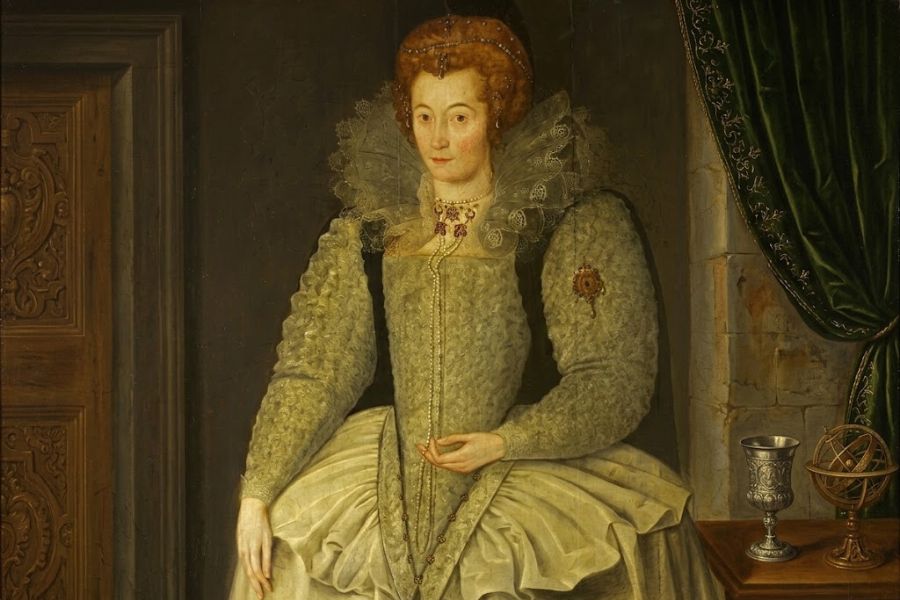
Seymour was executed. Elizabeth, questioned separately, gave nothing away, and Kat was released and, extraordinarily, returned to Elizabeth’s service. She remained with her until her death in 1565, by which point Elizabeth had been queen for seven years, and Kat was First Lady of the Bedchamber.
Blanche Parry outlasted her. She served Elizabeth for 56 years, from cradle to old age, and died in 1590 having never married. Her tomb effigy at Bacton in Herefordshire shows her kneeling in prayer beside the queen.
The women who had bet their careers on the disgraced daughter of Anne Boleyn ended up in the most powerful female household in Europe.
The Seymour Women and the Cost of Being Right
Jane Seymour brought her own network into court with her, and when she died in October 1537, her ladies did not scatter. Her sister-in-law Anne Stanhope, married to Edward Seymour, rose with her husband through the reign of Edward VI, when Edward became Lord Protector.
Anne was famously prickly about precedence, quarreling with Katherine Parr over who walked first out of a room after Henry died. Katherine, as dowager queen, won that particular argument.
Edward Seymour lost his head in 1552, undone by his brother-in-law John Dudley. Anne Stanhope went to the Tower and stayed there until Mary I released her in 1553.
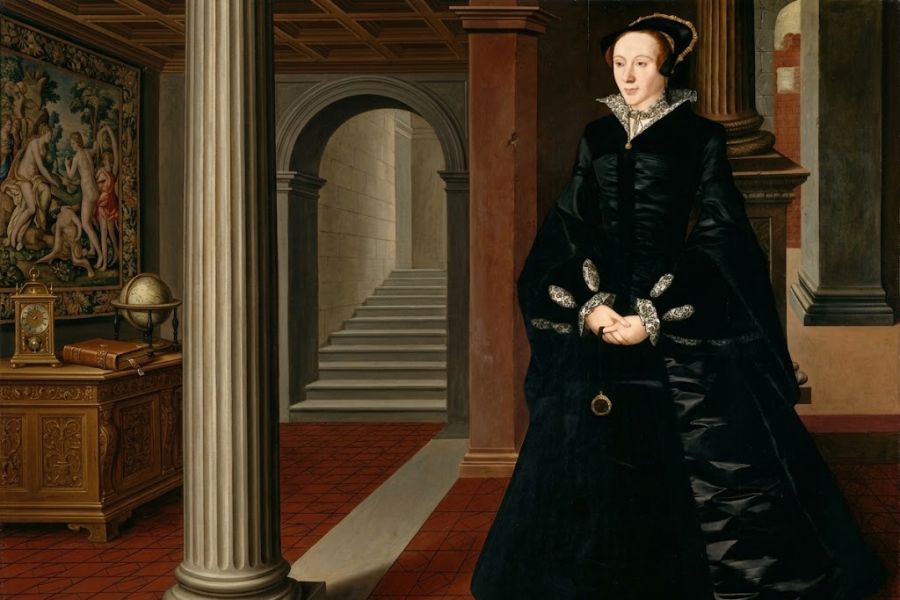
She lived, remarkably, until 1587, dying in her mid-eighties and outliving Henry, all six of his queens, her husband, Edward VI, Mary I, and most of her own children.
Mary Seymour, Katherine Parr’s daughter by Thomas Seymour, is the great ghost of this generation. Born in August 1548, orphaned within a year when Katherine died in childbed and Thomas was executed, she was handed to the Duchess of Suffolk, Katherine Willoughby, who complained bitterly about the cost of her upkeep.
Mary vanishes from the record around her second birthday. Historians, including Linda Porter, in Katherine the Queen, treat her early death as the likeliest explanation, though nothing is documented.
The last child of Henry’s last queen simply stops appearing in the household accounts.
What Survival Looked Like
The women who lived through multiple queens did not do it by being loyal, and they did not do it by being disloyal. They did it by being useful, being quiet, and being fast.
They watched which way the Privy Council was leaning. They kept their families’ interests in mind without ever appearing to. They wrote as little as they could and burned what they didn’t want seen.
They also had to make peace, somehow, with what they had seen. Elizabeth Seymour, Jane’s sister, served Anne Boleyn before her own sister replaced Anne on the throne. Mary Howard, Duchess of Richmond, was Anne Boleyn’s cousin, Katheryn Howard’s cousin, and Henry’s daughter-in-law through her marriage to his illegitimate son.
She lost her father, the Duke of Norfolk, to the Tower in 1547 and only escaped his execution because Henry died first. She was 28 years old and had already buried two queens who shared her blood.
Most of these women died in beds, not on scaffolds, and most of them died in reigns their queens never lived to see. They watched Henry go from the golden prince married to Katherine of Aragon, to the bloated, suspicious old man who signed Katheryn Howard’s death warrant, and they kept their curtsies smooth the whole way through.


Kylie Lang is a nationally syndicated travel journalist with bylines on the Associated Press Wire & more, a medieval history writer, and the founder and lead author of Tales of the Middle Ages (talesofthemiddleages.com). She holds a BA (Honours) in History from the University of Kent and is a member of the British Guild of Travel Writers.
Related posts:
 The Execution of Lady Jane Grey: The Teenager Crowned Queen and the Nine Days That Sealed Her Fate
 For Jane Seymour the Most Dangerous Place in England Was Henry VIII’s Bedchamber
 How Lady Worsley Turned Her Husband’s Humiliation into High Society Infamy
How Lady Worsley Turned Her Husband’s Humiliation into High Society Infamy
How Lady Worsley Turned Her Husband’s Humiliation into High Society Infamy