
We all know the name Anne Boleyn, and you’ve probably heard of her sister Mary, too. But what about Jane Boleyn, better known as Lady Rochford? Her name has been dragged through the Tudor mud many times, both during her life and by historians after she died.
She was George Boleyn’s wife, Anne Boleyn’s sister-in-law, and a woman who managed to serve five of Henry VIII’s six wives. Yet she’s remembered less for her service at court and more for the downfall of two queens: Anne and Catherine Howard.
Table of Contents
But the question that lingers is whether Jane truly deserved her dark reputation. Was she the scheming villain history paints her to be, or has her image been twisted by those who came after, especially in an era eager to rewrite Anne Boleyn’s story under Elizabeth I’s rule?
Jane Boleyn’s Life Before Scandal Hit
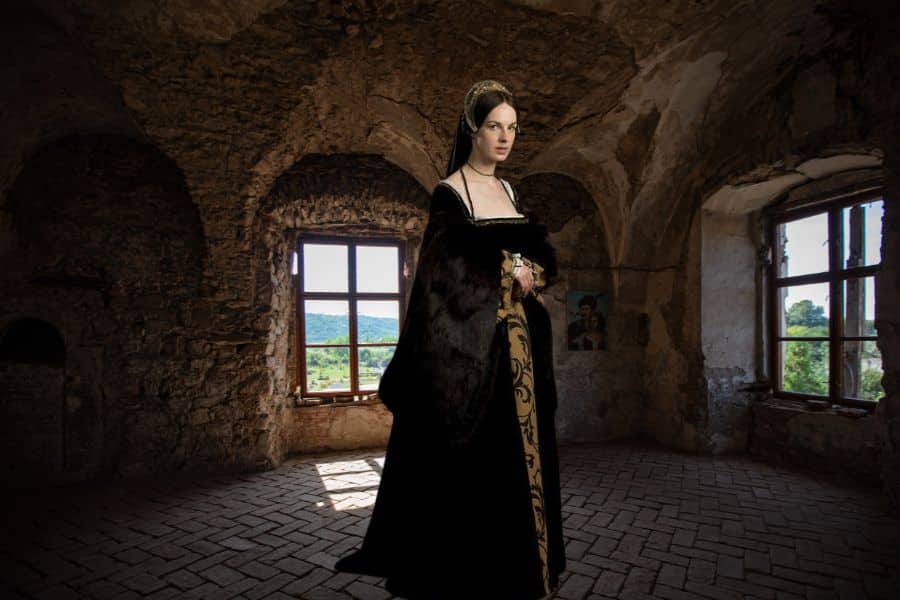
Jane Boleyn, born Jane Parker, came from a well-connected family. Her father, Henry Parker, 10th Baron Morley, served as a gentleman usher to Henry VIII, and her mother, Alice, was equally well placed in courtly circles. There’s no record of Jane’s exact birth date, but she appeared at court in 1522, likely around fourteen years old, when she entered the household of Queen Katherine of Aragon.
That same year, Jane joined her future sister-in-law Anne Boleyn in performing at the Château Vert pageant, a lavish court entertainment staged for the king. Jane played the role of Constancy, which turned out to be a strangely fitting part for a woman who would outlast most of the Boleyn family in Henry’s court.
Records of her wardrobe show she enjoyed fine clothes, with mentions of “white and gold hose for masking,” hinting at both her flair for fashion and her presence in the glittering world of Tudor pageantry.
In 1526, Jane married George Boleyn, a man whose fortunes were rising fast thanks to his sister Anne’s growing influence with the king. By 1529, George’s position was secure enough for him to be granted the title Viscount Rochford.
Their marriage, however, remains a mystery. There are no surviving letters, no records of affection or scandal between them, just silence. The couple had no known children, which has fueled endless speculation. A clergyman named George Boleyn, who died in 1603, was once rumored to be their son, but beyond sharing a name, there’s no proof of any connection.
The absence of children led some to assume the marriage was unhappy or that George was uninterested in women. Yet contemporary accounts paint a different picture. George was known for his vanity and womanizing, with one observer noting that his “appetite was all women to devour.” Whether Jane tolerated it, resented it, or turned a blind eye, history doesn’t say.
Hooked on the Middle Ages? Get more stories like this one in your inbox.
The Downfall of Anne Boleyn and the Part Jane Played
When Anne Boleyn married Henry VIII in January 1533, Jane’s fortunes rose alongside the family’s. She was appointed lady of the bedchamber, a prestigious role that placed her in daily attendance on the new queen. For a brief moment, Jane stood near the very center of Tudor power. But that circle was treacherous, and within three years, it all came crashing down.
In 1536, Anne was arrested on accusations of adultery, incest, and treason. George was among the men charged, accused of sleeping with his own sister. The scandal shocked the court, and Jane’s name was soon dragged into it.
She’s long been blamed for feeding information to Thomas Cromwell, supposedly out of jealousy or resentment, and for betraying both Anne and George. Yet when the noise of rumor is stripped away, there’s no solid evidence she played any part in their destruction.
What we do know is that Jane tried to intercede on her husband’s behalf. Records show she attempted to petition the king and sent a letter to George while he was held in the Tower. The later vilification of Jane seems to have been shaped by the Elizabethan era, when Anne’s daughter, Elizabeth I, sought to restore her mother’s image. In that retelling, Jane became the convenient villain. History made room for only one Boleyn woman to be remembered fondly, and it wasn’t her.
Jane’s Life as a Widow in the Tudor Court
Perhaps Jane’s bad reputation also comes from the fact that she did what few others in the Boleyn circle managed to do: she survived. While Anne and George met their deaths on the scaffold, and their father Thomas faded into obscurity, Jane somehow found her way back into royal favor. Only months after the executions, she was back at court, serving in the household of Henry VIII’s next queen.
A letter she wrote to Thomas Cromwell not long after the fall of the Boleyns has often been seen as proof that he protected her, maybe even rewarded her for helping bring Anne down. But that’s only speculation. What is certain is that Jane continued to serve at the heart of Henry’s court. She became lady of the bedchamber to his next three queens, a position of trust that kept her close to the shifting power of the throne.
She was present at Hampton Court when Jane Seymour gave birth to Prince Edward in 1537 and played an important role at the queen’s funeral soon after. Later, she provided key testimony during Henry’s attempt to annul his brief and awkward marriage to Anne of Cleves, confirming that the union had never been consummated. Through all of it, Jane remained right where others fell, surviving in a world where few women managed to.

The Queen Who Ended It All
When Henry married his fifth wife, Catherine Howard, Jane once again found herself drawn into the queen’s inner circle. Catherine, a cousin of Anne Boleyn, was young, lively, and barely out of her teens when she caught the aging king’s attention. Henry, now well into his forties and plagued by ill health, called her his “rose without a thorn.” But behind the courtly flattery, Catherine’s story was far more dangerous.
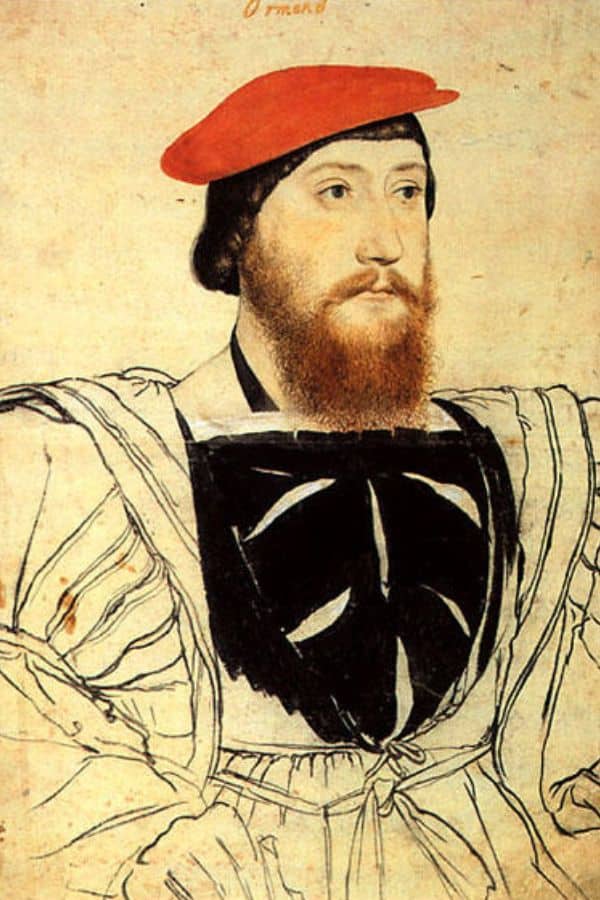
Not long after her marriage, the young queen began a secret affair with one of the king’s trusted men, Thomas Culpeper. Jane became involved, helping to arrange their meetings and even encouraging the relationship. During his interrogation, Culpeper claimed that Jane had “provoked him much to love the queen,” a statement that sealed her fate as much as his own.
For a woman as experienced as Jane, this was an astonishing risk. She had served five of Henry’s queens and witnessed firsthand how quickly favor could turn to ruin. Perhaps she believed Henry’s declining health meant the danger had passed. Perhaps she thought the affair would never come to light. Whatever her reasons, her decision to get involved would cost her everything.
When Catherine Howard’s affair was exposed in November 1541, Jane tried at first to deny knowing anything. Under pressure, she confessed her role in helping the lovers meet. The admission sealed her fate. She was arrested, imprisoned in the Tower, and condemned to die.
In the Tower, the strength that had carried her through so many years at court finally broke. Grief and terror overwhelmed her to the point that Henry sent his own physicians to treat her. Under the law, an insane person couldn’t be executed, and Henry wanted no loopholes. He needed Jane well enough to face the scaffold.
On February 13, 1542, Jane Boleyn was executed on Tower Green, moments after Queen Catherine. She gave the usual speech of repentance and prayer for the king’s health before laying her head on the block. Her body was buried in the chapel of St. Peter ad Vincula beside Catherine Howard and Anne Boleyn, the two women whose fates had shaped her own.
Jane left almost nothing behind, no known portraits, few letters, and little written record of her voice. What endures is the reputation crafted after her death: that of a scheming, heartless woman. But much of that image came later, molded by Elizabethan efforts to rewrite the story of Anne Boleyn’s fall and centuries of dramatization that followed. The real Jane Boleyn remains largely lost, hidden somewhere between guilt and survival.

Love a good medieval story?
Join our readers and get tales of kings, queens, castles and ordinary medieval lives straight to your inbox.

Kylie Lang is a nationally syndicated travel journalist with bylines on the Associated Press Wire & more, a medieval history writer, and the founder and lead author of Tales of the Middle Ages (talesofthemiddleages.com). She holds a BA (Honours) in History from the University of Kent and is a member of the British Guild of Travel Writers.
Related posts:
 The Queen Who Blew Up the Tudor Court: Catherine Howard’s Rise and Catastrophic Fall
 The Execution of Lady Jane Grey: The Teenager Crowned Queen and the Nine Days That Sealed Her Fate
 The Rise and Fall of Anne Boleyn: Power, Passion, and Politics
 For Jane Seymour the Most Dangerous Place in England Was Henry VIII’s Bedchamber