
There has been so much written about Anne and Mary Boleyn that it’s hard to know what’s fact and what’s fiction. I certainly don’t want to add to that with another surface style article about either of them.

Instead, I want to delve into the relationship between the two sisters. Were they really that close? Was there jealousy between them that Philippa Gregory’s book, The Other Boleyn Girl, hinted at?
Table of Contents
Well, I hate to be the one to break it to you, but the real relationship between Anne and Mary Boleyn is mostly a blank. No letters between the sisters survive, so most of what we ‘know’ is guesswork.
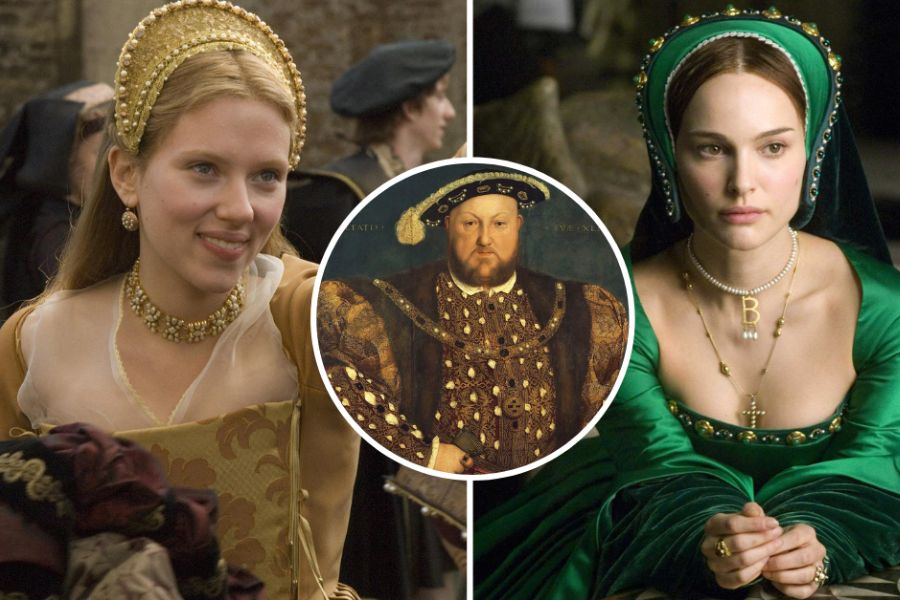
Who Was Older, Anne or Mary Boleyn?
Most historians now think Mary was the elder of the two, probably born around 1499 or 1500, with Anne following about a year or so later. It isn’t settled, and it’s the first place where fiction and the record part ways.
The strongest evidence is a squabble over inheritance. In 1597, long after both sisters were dead, Mary’s grandson George Carey claimed the earldom of Ormond on the grounds that Mary had been the eldest Boleyn daughter, and Elizabeth I accepted the claim. That’s the sort of thing families fought over carefully, so it carries real weight.
It was Anne, not Mary, who landed the prestigious foreign posting first, sent on ahead as a young girl to the court of Margaret of Austria in the Netherlands, and that sort of plum appointment would usually go to the elder child.
In truth, no birth record survives for either girl, so this is an inference rather than a fact.
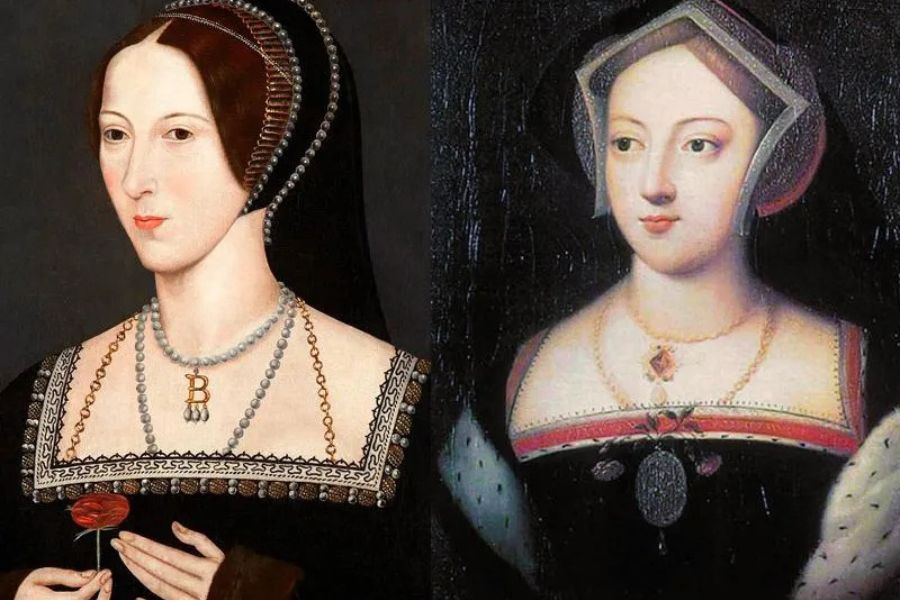
What Do We Actually Know About Their Childhood Together?
Very little of a personal nature, and that’s the frustrating heart of this whole story. Both girls were probably born at Blickling Hall in Norfolk, then raised at Hever Castle in the Kent countryside, close enough in age that they almost certainly shared a governess and tutors, learning music, dancing, French, and the running of a great household.
In 1514, both were sent to France in the household of Mary Tudor, Henry VIII’s younger sister, for her marriage to the aging King Louis XII. Two Boleyn girls, teenagers, abroad together at one of the most glittering courts in Europe. You’d give anything for a letter between them from those years. There isn’t one.
As the historian Eric Ives once put it, what we actually know about Mary could be written on the back of a postcard with room to spare. We have no diaries, no notes, nothing describing their bond as children. Everything warmer than a date is something a novelist added later.
Was Mary Boleyn Really Henry VIII’s Mistress?
Yes, Mary really was Henry VIII’s mistress, and the affair came years before he ever looked at Anne. Most historians place it roughly between 1522 and 1525, while Mary was married to a courtier named William Carey, long before Anne’s rise to power.
What makes it certain is Henry’s own later admission that he had “known” Mary, an admission he was forced into precisely because it created a canon-law problem. Having slept with one sister, he needed a papal dispensation to marry the other.
The affair itself was so discreet that not a single love letter survives, unlike the famous ones he later showered on Anne. Mary was never paraded as a royal favorite the way another of Henry’s mistresses, Bessie Blount, had been when she gave the king a son.
Mary came, and went, almost without a trace.
Did Anne Boleyn Take Mary’s Son Away?
Not in the way the films suggest. When Mary’s husband, William Carey, died suddenly of the sweating sickness in 1528, he left her widowed and deep in debt, and it was then that Anne took the wardship of Mary’s young son, Henry Carey.
Taking wardship of a struggling widow’s child was standard practice, and Anne arranged for the boy to be educated at a respected monastery, a real leg-up for him. She also secured her widowed sister an annual pension of £100, a serious sum then, which rather undercuts the wicked-sister version of events.
There’s a lingering question over whether Henry Carey or his sister Catherine were actually fathered by the king during the affair, though Henry never acknowledged either child, and we’ll likely never know.
Why Did Anne Boleyn Banish Her Own Sister?
The rupture came in 1534, and it was Mary’s own doing in the family’s eyes. She secretly married William Stafford, a soldier of low rank and very little money, entirely for love and entirely without permission.
The secret came out when Mary turned up at court visibly pregnant, and Anne, by then queen, was furious. So were the rest of the Boleyns. For the sister of the queen to throw herself away on a poor soldier of her own choosing, rather than marry for family advantage, was seen as a humiliation to Anne and the whole family’s carefully climbed position.
They cut her off and shut her out. Mary poured her heart out in a letter to the king’s chief minister, Thomas Cromwell, begging for help and famously writing that she would rather beg her bread with Stafford than be the greatest queen in Christendom.
It’s the one moment in this whole story where we actually hear Mary’s voice, and it’s a woman choosing love over everything her family valued.
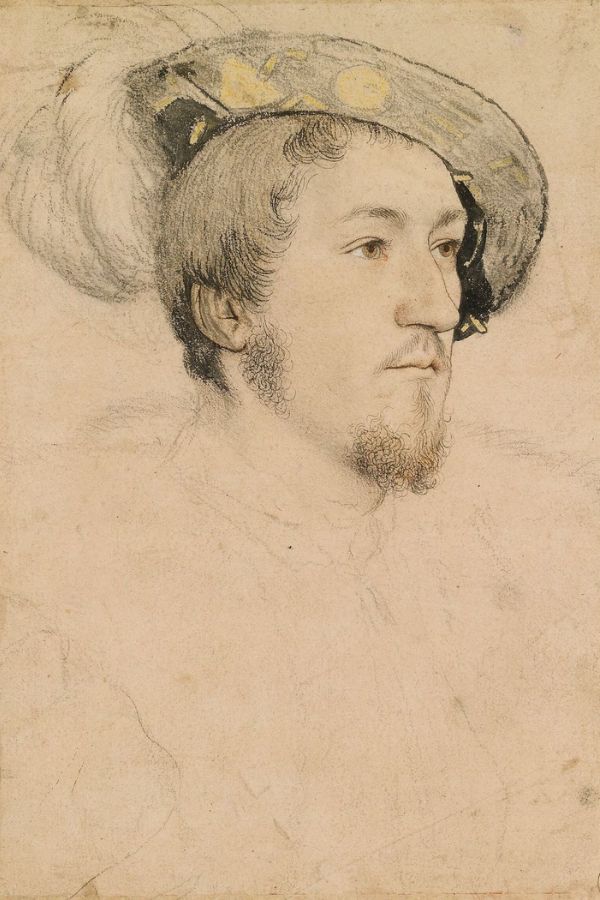
Where Did George Boleyn Fit In?
George Boleyn sat firmly on Anne’s side of the family, and that closeness would cost him his life. He was the clever, ambitious brother, a rising courtier and diplomat, and by every account, he and Anne were the tight pair, with Mary somewhat the odd one out.
That bond turned lethal in 1536. When Anne fell, George was arrested alongside her and charged with the almost unthinkable crime of incest with his own sister, a charge nobody seriously believes today and one built to make Anne’s ruin as total as possible.
He was executed just days before her, protesting the treatment of the court rather than confessing. His wife, Jane Boleyn, is often blamed for giving evidence against them, though even that is murkier than the drama makes it seem.
Whatever the precise truth, the picture holds. George and Anne rose together and fell together, while Mary, banished and disgraced, was the one who survived.
Did the Sisters Ever Reconcile?
Not really, and there’s no evidence the two ever met again after the banishment, which is very sad.
Anne did soften a little. She sent Mary a gold cup and some money, a gesture that suggests the door wasn’t slammed forever. But she never restored her sister to a place at court, and the warmth, if there ever was much, never came back.
There’s no record at all of Mary trying to save Anne in 1536, whatever the films show. By then, she’d been cast out for two years, and she may not even have been in the country, since her husband was a soldier often stationed over at Calais.
Mary outlived both Anne and George, dying in 1543 as the last surviving Boleyn of that doomed generation.
How Accurate Is The Other Boleyn Girl?
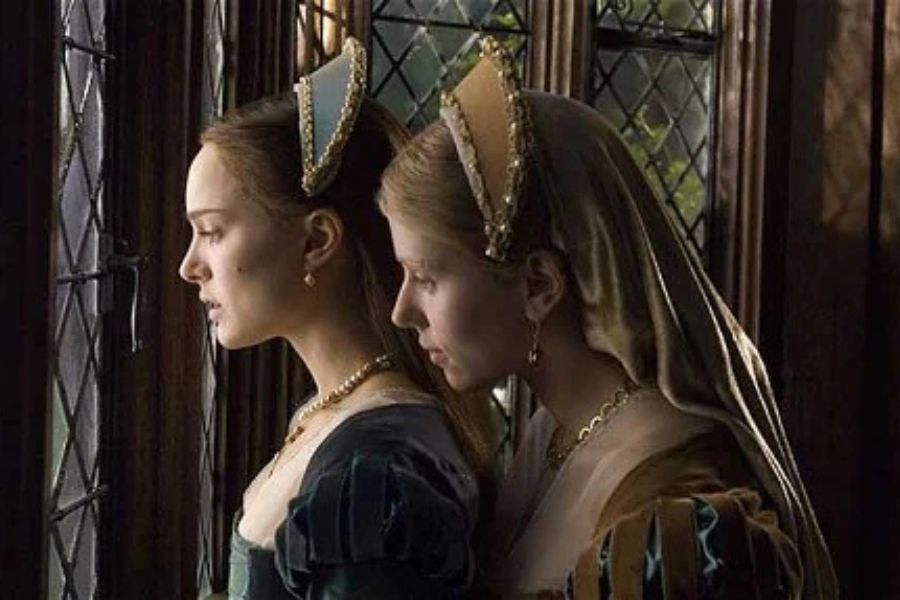
Very little of The Other Boleyn Girl holds up as history, though it’s a cracking read. Philippa Gregory’s novel has sold more than a million copies and shaped how a whole generation pictures these two women, which is exactly why it’s worth pulling apart.
The book reverses the birth order, making Anne the elder and casting her as the cold, scheming sister against sweet, wronged Mary. The film goes further, inventing scenes of Mary rescuing the infant Elizabeth and pleading for Anne at her execution, neither of which happened.
The real sources give us almost nothing about what the sisters felt for one another, so the rivalry, the jealousy, the tearful reconciliations, all of it is dramatic invention.
And that, in the end, is the true shape of their story. We know they were sisters, we know Mary shared the king’s bed before Anne wore his crown, and we know Mary defied her family for love. The feelings between them, the thing we most want to know, the archives simply refuse to tell us.
Frequently Asked Questions
Who was older, Anne or Mary Boleyn?
Anne and Mary Boleyn’s birth order is disputed, but most historians now believe Mary was the elder, born around 1499 or 1500, with Anne following about 1501. The best evidence is that in 1597, Mary’s grandson claimed the Ormond earldom as heir of the eldest Boleyn daughter, and Elizabeth I accepted it. No birth records survive, so it’s an inference, not certainty. Fiction like The Other Boleyn Girl flips this, making Anne the elder.
Was Mary Boleyn really Henry VIII’s mistress before Anne?
Mary Boleyn was indeed Henry VIII’s mistress, in an affair most historians place between about 1522 and 1525, years before he pursued her sister. The affair was so discreet that no love letters survive, and the main proof is Henry’s own later admission that he’d had relations with Mary. That admission is what forced him to obtain a papal dispensation before he could marry Anne.
Why did Anne Boleyn banish Mary from court?
Anne Boleyn banished Mary in 1534 after Mary secretly married William Stafford, a low-ranking soldier with little money, revealed only when she appeared at court pregnant. For the queen’s sister to marry for love rather than family advantage was seen as a scandal, so Anne and the Boleyns cut her off financially and shut her out of court. The sisters never fully reconciled.
Did Anne Boleyn steal Mary’s son?
Anne Boleyn did not steal Mary’s son so much as step in for a widow in trouble. When Mary’s husband died in 1528, leaving her in debt, Anne took wardship of the boy, Henry Carey, and arranged his education at a monastery. She also secured Mary an annual pension of £100. It was ordinary practice for a struggling widow’s child, though films tend to paint it as cruelty.
Did Mary Boleyn try to save Anne before her execution?
Mary Boleyn almost certainly did not try to save Anne, and there’s no evidence she did. The scene in The Other Boleyn Girl where Mary pleads for Anne and rescues the baby Elizabeth is invented. By 1536 Mary had been banished for two years, and historians don’t know where she was, possibly not even in England, since her husband was a soldier stationed at Calais.
How historically accurate is The Other Boleyn Girl?
The Other Boleyn Girl is very light on accuracy and heavy on drama. Philippa Gregory’s novel reverses the sisters’ birth order, invents a sweet-versus-scheming rivalry, and adds a fictional incest plot and a rescue of Elizabeth. What’s true is narrow: there were two Boleyn sisters, Mary was Henry’s mistress, and Mary defied her family to marry William Stafford. The emotional drama is largely made up.

Kylie Lang is a nationally syndicated travel journalist with bylines on the Associated Press Wire & more, a medieval history writer, and the founder and lead author of Tales of the Middle Ages (talesofthemiddleages.com). She holds a BA (Honours) in History from the University of Kent and is a member of the British Guild of Travel Writers.
Related posts:
 What History Got Wrong About Mary Boleyn: The Forgotten Sister of Anne, Mistress, Mother, Survivor
Mary Wasn’t Just the “Other Boleyn Girl,” She Was the First (this is her story)
What History Got Wrong About Mary Boleyn: The Forgotten Sister of Anne, Mistress, Mother, Survivor
Mary Wasn’t Just the “Other Boleyn Girl,” She Was the First (this is her story)
 What Happened to the Children of Mary Boleyn and Who Was Their Father?
 The Rise and Fall of Anne Boleyn: Power, Passion, and Politics