We like to think we invented the beauty industry, with its serums and its filters and its endless promises. We didn’t.
Five hundred years ago, the women of the Tudor court were chasing an ideal every bit as demanding as anything you’ll see online today. Not to mention that some of the Tudor beauty secrets that kept them looking the part were slowly poisoning them.
Table of Contents
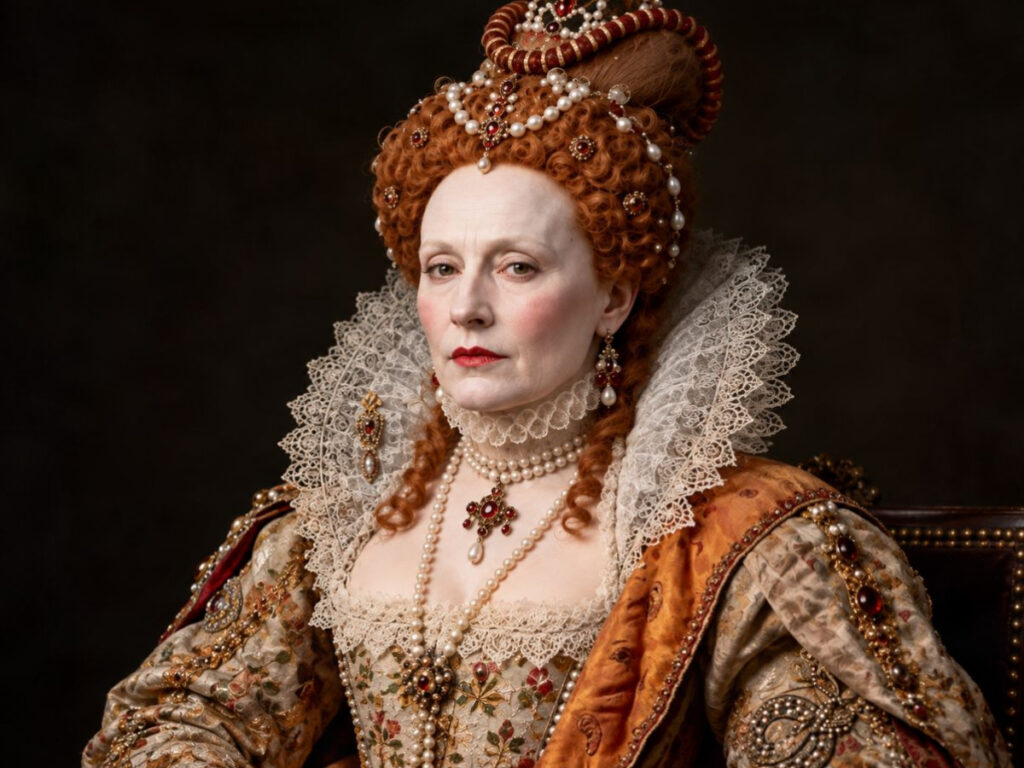
If you love this period, you’ll know the look already. The chalk-white face, plucked forehead, and small red mouth. What you might not know is what actually went into it, or just how grisly some of it was, so I hope you’re ready.
The Tudor Beauty Secrets
The idea that a lady should be pale, smooth, and fair did not start with the Tudors. It dates back through the Middle Ages and beyond.
A set of twelfth-century texts from southern Italy, known as the Trotula after a woman physician of Salerno called Trota, already told women how to lighten their skin, tidy a stray hairline, sweeten their breath, and look after their teeth.
Beauty advice, written down, eight hundred years ago. By the Tudor era, what changed was the money and the scale.
Beauty in the Tudor court meant pale, red-lipped, high-browed, and almost impossibly groomed. Getting there was the dangerous part.
The Pale Tudor Skin
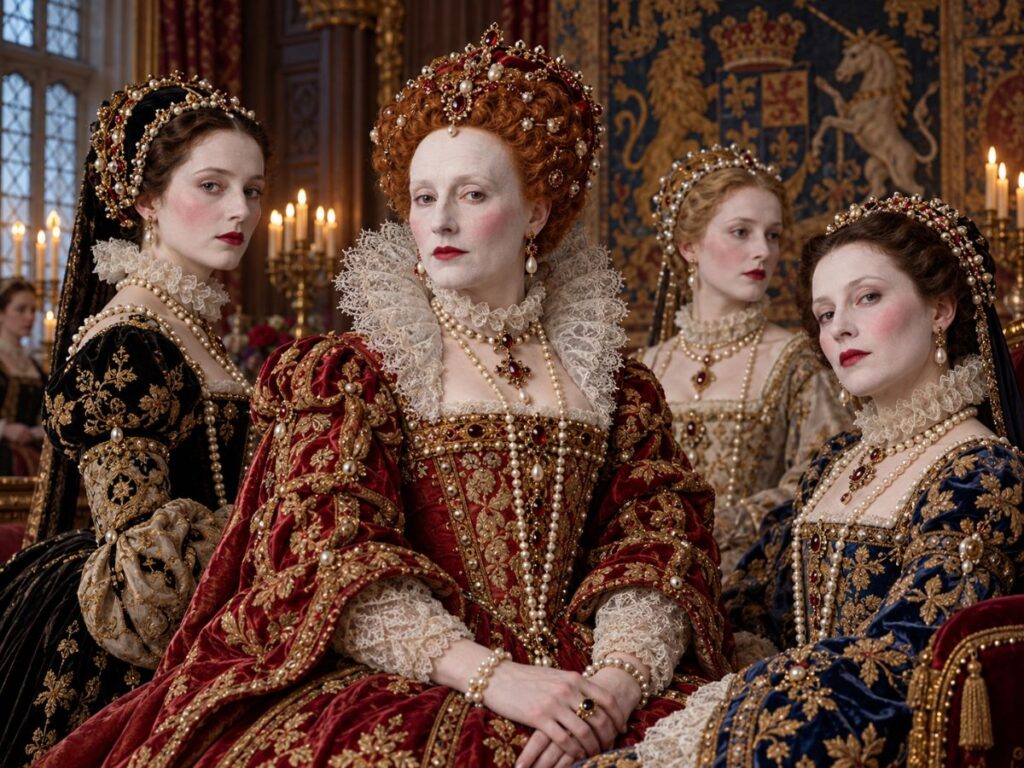
Pale skin was the look everyone wanted. A tan meant you worked outdoors, so the paler you were, the clearer it was that you didn’t have to.
The most prized way to get there was a cosmetic called Venetian ceruse, a face paint made from white lead mixed with vinegar and water. The Venetian version was the good stuff, made from purer lead and sold for a fair whack more than ordinary lead white, up to twice the price. Beauty has always had a premium tier.
Elizabeth I is the face we all picture under that stark white mask, and she probably did use some form of it, especially after she caught smallpox in 1562 and was left with scarring to hide.
However, some historians don’t believe the evidence supports how thickly she’s said to have caked it on.
What isn’t in doubt is what lead does to a person. It eats into the skin, so you need more paint to cover the damage, which does more damage. It causes a grey pallor, hair loss at the front of the hairline, rotting teeth, and with enough exposure, organ failure and death.
White lead was dangerous enough that Britain classed it as a poison as early as 1631, and women were still painting it on long after that. One of the most famous victims came much later, Maria, Countess of Coventry, who died in 1760 at just twenty-seven from the lead in her makeup. The papers of the day called it death by vanity.
The Plucked Forehead
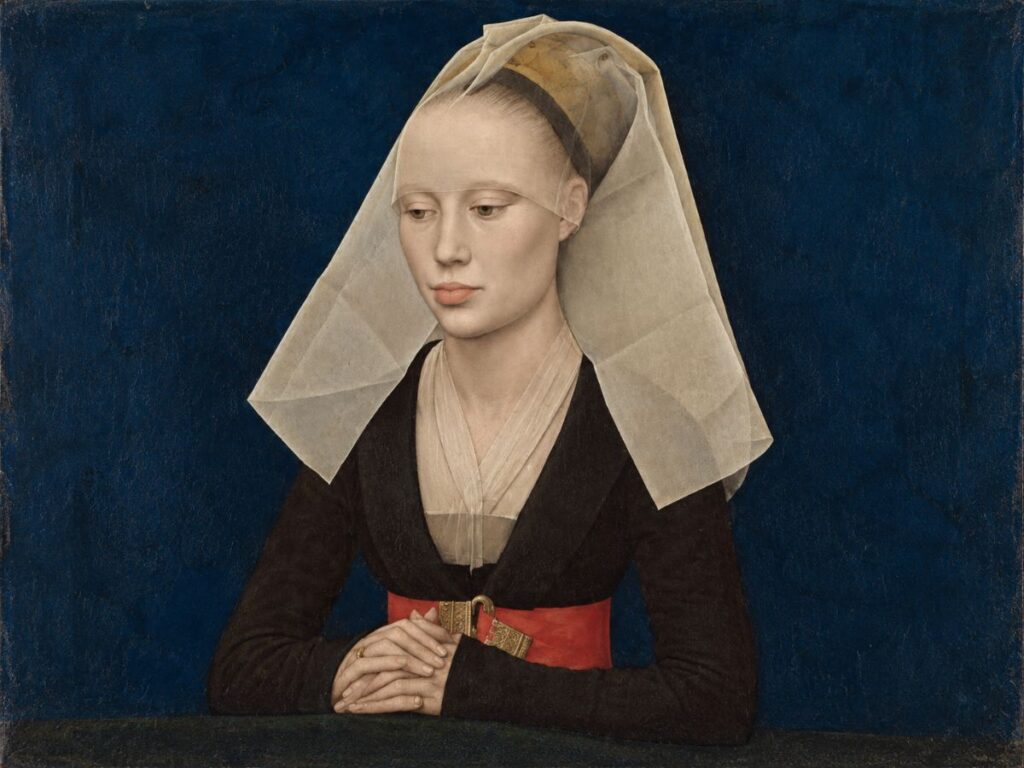
A high, smooth forehead was the mark of a refined woman, so the hairline got plucked back, sometimes alarmingly far, and the eyebrows and lashes often went with it. A bare, egg-smooth brow was the goal.
Plucking with a cloth or crude tweezers was the gentle option. The harsher option was a caustic paste, often made with quicklime and orpiment, a form of arsenic, smeared on to burn the hair away. It burned the skin too.
Lead poisoning from the face paint caused hair loss right along the front of the hairline, meaning the makeup itself created the very baldness the fashion then demanded women show off. You couldn’t make it up.
A generation before Elizabeth, Anne Boleyn had made dark eyes and the French hood the thing to copy, proving the Tudor court changed its mind about faces as often as we change ours.
Red Hair and Red Lips
Thanks to Elizabeth, red and gold hair became hugely fashionable, and the queen leaned on an ever-growing collection of wigs to keep hers looking the part as she aged. Where the queen led, the court followed.
The small red mouth and flushed cheek had their own recipes. The safer reds came from plants, from the root of madder and from cochineal, a dye made from crushed insects that still colors food today.
The dangerous one was vermilion, a brilliant mineral red made from mercury. Women were painting one of the most toxic substances known straight onto their lips. Lovely color, terrible idea.
The Use of Mercury
If pale skin was the ideal, a blemish was a disaster, and the Tudor fix for that was mercury again, this time as a sublimate of mercury dabbed onto spots, freckles, and marks.
It “worked” in the sense that it stripped off the top layer of skin and took the blemish with it, leaving scarring, sensitivity, and slow poisoning behind.
We know a surprising amount about these mixtures because people wrote them down. Hugh Plat’s Delightes for Ladies, published in 1602, and A Closet for Ladies and Gentlewomen from 1608 are full of beauty and household recipes, the Tudor and Jacobean version of a well-thumbed cookbook, except some of the pages could kill you.
Black Teeth and the Price of Sugar
A German visitor named Paul Hentzner saw Elizabeth I in 1598, when she was in her mid-sixties, and noted that her teeth were black, a fault he put down to the English and their “too great use of sugar.”
Sugar arrived through new trade routes and became a luxury for those who could afford it, and it rotted their teeth. You’ll often read that people then blackened their teeth on purpose to look as though they could afford all that sugar. It’s a good story; however, how true it was, I’m not sure.
Did the Tudors Really Never Wash?
This is the Tudor myth I’d most like to put to bed. The idea that everyone back then was filthy and never touched water is only half right at best. Tudor people washed their faces and hands, changed their linen often because they thought clean linen against the skin drew out dirt, and used scented washballs, a kind of early soap.
A real fear grew during the 1500s that soaking in hot water opened the pores and let disease in, so full-immersion bathing fell out of favor with many people, and they used strong perfumes, pomanders, and scented gloves to cover the rest.
Hooked on the Middle Ages? Get more stories like this one in your inbox.
The Belladonna Eyes
You’ll have seen the claim that women dripped belladonna into their eyes to make the pupils huge and dreamy. It’s true the plant does that, and its name is Italian for “beautiful woman”: bella donna.
However, this one belongs far more to the Italian courts of Lucrezia Borgia‘s world than to Tudor England, where there’s little evidence of it.
FAQs
Did Tudor makeup really contain lead and mercury?
Yes, Tudor makeup really did contain lead and mercury. The prized pale complexion came from Venetian ceruse, a paint of white lead mixed with vinegar and water, and blemishes were burned off with sublimate of mercury. Both are poisons.
Did Elizabeth I really wear white lead makeup?
Elizabeth I probably did wear some form of white lead makeup, though the famous caked-on white mask is less certain than the legend suggests. She caught smallpox in 1562 and was left with scarring to cover, which fits the pale look of her portraits. Some historians argue the evidence that she used heavy ceruse is thinner than the story we have inherited.
Why did Tudor women want such pale skin?
Tudor women wanted pale skin because it signaled wealth and status. A tan meant working outdoors in the fields, so the paler you looked, the clearer it was that you did not have to labor for a living. Pale, smooth, unblemished skin became the mark of a lady, which is why women went to such dangerous lengths to fake it.
Why did Tudor women pluck their hairlines?
Tudor women plucked their hairlines to create the high, smooth forehead that marked a refined lady, and they often removed their eyebrows and lashes too.
Did Tudor people really have black teeth from sugar?
Yes, wealthy Tudors really did get black, rotting teeth from sugar. A German visitor, Paul Hentzner, saw Elizabeth I in 1598 and noted her black teeth, blaming the English fondness for sugar.
Did Tudor people ever wash or bathe?
Tudor people did wash, so the idea that they never bathed is a myth. They cleaned their faces and hands, changed their linen often in the belief that clean cloth drew dirt from the skin, and used scented washballs. What they grew wary of was sitting in hot water, which many feared opened the pores and let disease in.
Love a good medieval story?
Join our readers and get tales of kings, queens, castles and ordinary medieval lives straight to your inbox.

Kylie Lang is a nationally syndicated travel journalist with bylines on the Associated Press Wire & more, a medieval history writer, and the founder and lead author of Tales of the Middle Ages (talesofthemiddleages.com). She holds a BA (Honours) in History from the University of Kent and is a member of the British Guild of Travel Writers.
Related posts:
 Dying to Be Beautiful: The Deadly Cosmetics of the Middle Ages (The Poisonous Price of Beauty)
 How Did Tudor People Brush Their Teeth and Deal With Hygiene in General?
 Would You Have Been Considered a Beauty as a Woman in the Tudor Court?
 Dentistry in the Middle Ages: 7 Gross Things People Did Before Toothpaste