
In our world full of modern conveniences, we love to think of anyone who lived more than a hundred years ago as lacking in personal hygiene. We’ve made up our minds that they obviously bathed only once a year, never brushed their teeth, and wore the same clothes for days on end.
And given that the toothbrush as we know it was only invented in 1938, how did Tudor people brush their teeth? Did they even bother, or was it, like bathing, something they didn’t really bother with?
Table of Contents
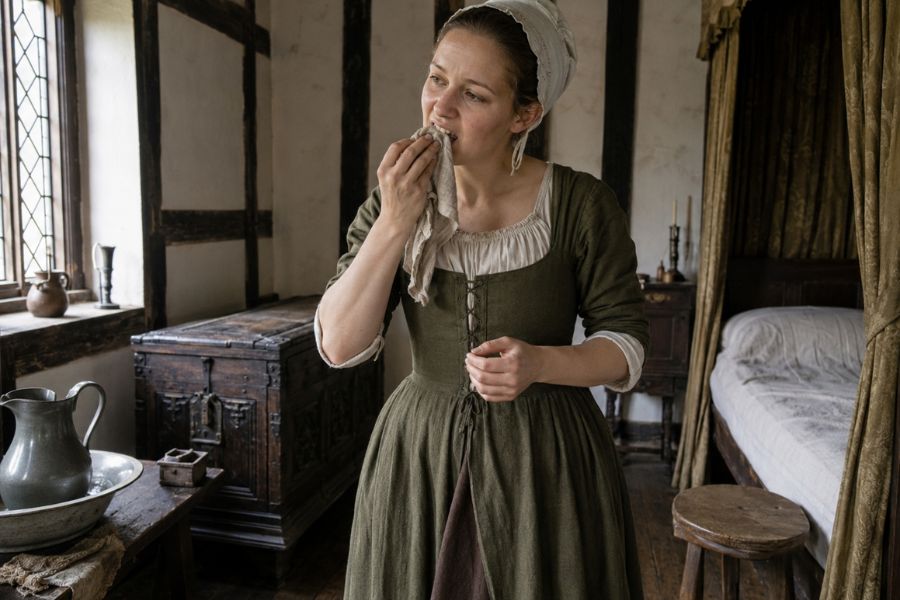
Believe it or not, Tudor people cleaned their teeth by picking out food with a toothpick, then rubbing their teeth with a cloth dipped in tooth powder. There were no toothbrushes. For the body, they mostly sponge-washed with linen and changed their undershirts often, saving a full bath for rare occasions.
No, Tudor hygiene wasn’t the modern routine of foam and hot showers, but these were people who cared a great deal about being clean and smelling sweet. They just approached it completely differently.
Did the Tudors Really Have Terrible Teeth?
Mostly, no. The image of a grim-looking man smiling at you with no more than two teeth, both of them black, is largely a myth pushed by TV dramas, and most Tudors kept reasonably decent teeth on a diet of whole foods and very little sugar.
So, if you’ve been picturing every Tudor with a mouthful of black stumps, I’m sorry to disappoint you.
Bizarrely, it was often the wealthiest Tudors who had the worst teeth, precisely because they were the only ones who could afford the imported sugar and candied treats that rotted them. Poorer people, who rarely tasted sugar and ate coarse bread, vegetables, and pottage, tended to hold onto their teeth far longer.
It’s the exact opposite of what the Wolf Hall and The Tudors versions would have you believe. The archaeology tells a very different story from the costume department.
How Did Tudor People Brush Their Teeth Without a Toothbrush?
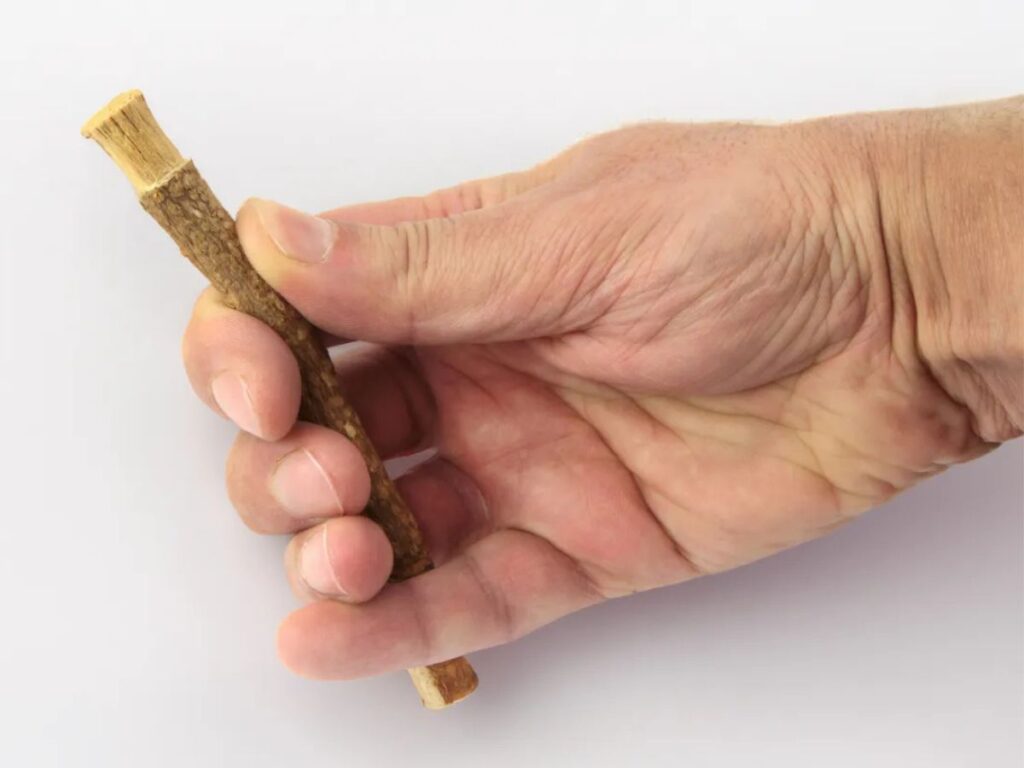
They used a cloth. No toothbrush existed in Tudor England, so a person would first dislodge trapped food with a toothpick, then rub their teeth clean with a linen or wool rag, a chewed twig, or a small sponge dipped in tooth powder. It sounds primitive, but done daily, it did a surprisingly good job.
According to Cadw’s research on Tudor cleanliness, wealthier people scrubbed with salt, powdered alabaster or pumice, or ground cuttlefish bone, while poorer people made do with soot or other cheap abrasive powders. The rich had gentler, more expensive grit. The poor scraped away with whatever the fire left behind.
They chewed mint, sage, cloves, cinnamon, or aniseed to sweeten the mouth.

What Was Tudor Toothpaste Actually Made Of?
There was no toothpaste as we’d know it. Instead, Tudors mixed abrasive powders and herbal preparations and rubbed them onto the teeth with a cloth. Some of these preparations included honey, which the Tudors had no idea was quietly rotting the very teeth they were trying to clean.
For a mouthwash, they’d turn to mint steeped in vinegar, or bay leaves soaked in orange flower water, which at least left things smelling pleasant.
And at the top of the tree, the wealthy sometimes polished their teeth with a sugar paste, a habit that was completely counterproductive. They were, in effect, cleaning their teeth with the very thing destroying them.
Why Were Queen Elizabeth I’s Teeth Black?
Sugar. Elizabeth I had a famous sweet tooth, and a lifetime of it turned her teeth black and left her with chronic toothache. By the end of her reign, the decay was impossible to hide. In 1599, a German visitor named Paul Hentzner described the aging queen’s teeth as black and attributed it to the English fondness for sugar, and she is said to have worn false teeth by then.
Now, for a fun fact. Because only the rich could afford sugar, black teeth became a status symbol, and some people deliberately blackened their own teeth with soot. An entire fashion for a rotten smile, all to seem wealthy.
Hooked on the Middle Ages? Get more stories like this one in your inbox.
How Often Did Tudor People Bathe?
Rarely, by our standards. A full immersion bath was an occasional event, often monthly or only a few times a year, simply because heating that much water over a fire was an enormous job. This is the root of the “dirty Tudor” myth, but it misses what they did the rest of the time.
Day to day, cleanliness meant the sponge or a wash with a damp cloth, along with washing the face and hands. When families did fill a tub, they often shared the same water, since it took so long to heat.
As the Shakespeare Birthplace Trust notes, the order ran men first, then women, then the children, which meant the little ones were left with cold, murky water. Elizabeth I herself reportedly bathed about once a month.
There was fear mixed in with the effort, too. Many Tudors believed in the miasma theory, the idea that bad air carried disease into the body through open pores. The physician Thomas Moulton, writing in 1545, warned against hot baths because they openeth the pores of a man’s body and maketh the venomous air to enter. If you thought a hot soak might let the plague in, you’d skip it too.
How Did the Tudors Stay Fresh Without Soap and Showers?
Clean linen was the secret weapon. The Tudors changed their sweat-soaking undershirts, or shifts, as often as they could afford to, and the fresh linen wicked away dirt and oil from the skin. In a very real sense, changing your shirt was their version of a shower.
It doubled as a status display. The whiter your laundry and the more shifts you owned, the wealthier you looked, so clean linen was as much about showing off as staying fresh. On top of that, the well-off used scented waters, herbs, and imported soaps to mask any odor and sweeten the body, with lavender, rosemary, and rose all popular.
Many also carried a chatelaine, a little toiletry set worn on the belt holding a pick, a nail cleaner, tweezers, and an ear scoop. Grooming, quite literally, hung at their hip.
Did Rich and Poor Tudors Keep Clean Differently?
Yes, sharply, in both the tools they used and the results they got. Cleanliness split along class lines from top to bottom.
At the top end, wealth bought proper plumbing. Henry VIII had private bathrooms installed at Hampton Court, Windsor, and Whitehall, fed by a plumbing system that delivered hot and cold water.
He even had a trusted courtier whose whole job revolved around the royal toilet, the Groom of the Stool. Here’s how the two ends of Tudor society compared.
| The wealthy Tudor | The poor Tudor |
|---|---|
| Private plumbed bathrooms and heated water | A bowl, a cloth, and reused bathwater |
| Imported soap and scented waters | Herbs, ash, and whatever was to hand |
| Silver toiletry tools on a belt | A twig, a rag, and a toothpick |
| Salt and cuttlefish powder for teeth | Soot for teeth |
| Worse teeth, thanks to sugar | Often better teeth, for the lack of it |
So the rich had the silver tools and the plumbing, and the black teeth to go with the sugar. The poor had the bowl and the cloth, and frequently the healthier mouth. Cleanliness, it turns out, didn’t run in a straight line from rich to poor.

Dentistry in Tudor Times
If a tooth was past saving, though, heaven help you. There were no dentists as we’d understand them, so a Tudor in agony went to a barber-surgeon, the local blacksmith, or a traveling tooth-drawer who set up at fairs and advertised his trade by wearing a string of pulled teeth around his neck.
There was no anesthetic and precious little gentleness, just a strong grip and a quick yank, which is exactly why extraction was a last resort saved for the truly unbearable. Small wonder people tried everything else first.
They packed sore teeth with cloves, muttered prayers to Saint Apollonia, the patron saint of toothache, and blamed the whole business on a tiny “tooth worm” they believed was gnawing away inside the tooth.
What Did the Mary Rose Tell Us About Tudor Teeth?
When Henry VIII’s warship the Mary Rose sank in the Solent in 1545, it preserved the skeletons of its crew, and their teeth have since given archaeologists a rare, direct look at genuine Tudor health.
In a 2021 study, researchers ran multi-isotope analysis on the teeth of eight crew members to reconstruct their childhood diets and origins, tentatively suggesting as many as three of them had grown up in warmer, more southerly climates than Britain.
The teeth themselves carried the story of what these men ate and where they came from, and one crew member stood out for severe tooth decay.
So, What’s the Verdict on Tudor Hygiene?
They were far cleaner than their reputation, just cleaner in their own way. The Tudors picked and rubbed their teeth, changed their linen, sponged themselves down, scented their rooms, and reserved the big bath for high days and holidays.
Where they fell down was sugar and superstition, not indifference. But if you think about it, where we fall down is fast food and sugary drinks.
Frequently Asked Questions
How did Tudor people brush their teeth?
They had no toothbrushes, so a Tudor would pick out food with a toothpick, then rub their teeth with a cloth, a chewed twig, or a small sponge dipped in tooth powder. Wealthier folk used salt, powdered pumice, or ground cuttlefish bone, while poorer people used soot or cheap abrasive powders. Herbs like mint and sage freshened the breath afterward.
Did the Tudors have bad teeth?
Most Tudors kept surprisingly decent teeth, thanks to a whole-food diet low in sugar. The rotten-grin image comes mainly from TV dramas. Oddly, the wealthiest people had the worst teeth, because only they could afford imported sugar and candied treats, while poorer people who rarely tasted sugar tended to hold onto their teeth far longer.
Why were Queen Elizabeth I’s teeth black?
Elizabeth I loved sugar, and that habit turned her teeth black and left her with chronic toothache. By the end of her reign, foreign visitors were remarking on the blackness of her remaining teeth. Black teeth even became a strange status symbol, since they signaled you were rich enough to afford all that expensive sugar, and some people blackened their own to copy the look.
How often did Tudor people bathe?
Full baths were rare, often monthly or only a few times a year, because heating enough water was an enormous chore. Between baths, Tudors sponge-washed with a cloth and changed their linen shifts. Queen Elizabeth I reportedly took a bath about once a month. Many also feared that hot water opened the pores and let disease in.
Did Tudor people use toothpaste?
Not toothpaste as we know it. They rubbed abrasive powders and herbal mixes onto their teeth with a cloth, using ingredients like salt, pumice, or ground cuttlefish bone. Some preparations even included honey, which quietly rotted the teeth. For fresher breath and mouth rinses, they turned to mint, vinegar, cloves, cinnamon, and orange flower water.
Were the Tudors actually dirty?
It’s a myth that Tudors were filthy and indifferent to washing. They cared a great deal about cleanliness and how they smelled, just on different terms than we do. They washed face and hands daily, changed clean linen often, used scented waters and toiletry tools, and simply reserved full immersion bathing for special occasions.
What did Tudor people use instead of a toothbrush?
A cloth was the main tool. A Tudor would wrap a linen or wool rag around a finger, dip it in tooth powder, and rub the teeth clean, having first used a toothpick to remove trapped food. Chewed twigs and small sponges did the same job. Silver toiletry sets worn on the belt often carried a pick for exactly this.

Love a good medieval story?
Join our readers and get tales of kings, queens, castles and ordinary medieval lives straight to your inbox.

Kylie Lang is a nationally syndicated travel journalist with bylines on the Associated Press Wire & more, a medieval history writer, and the founder and lead author of Tales of the Middle Ages (talesofthemiddleages.com). She holds a BA (Honours) in History from the University of Kent and is a member of the British Guild of Travel Writers.
Related posts:
 Dentistry in the Middle Ages: 7 Gross Things People Did Before Toothpaste
 10 Ancient Phrases We Still Use Today, From the Grossest in the English Language to Those Born From Medieval Scams
 What Passed for Dessert in the Middle Ages and How People Got Their Sugar Fix
 Did Medieval People Really Smell That Bad? The Truth About Hygiene in the Middle Ages