
In the Middle Ages, a crown equaled power. It was God’s blessing, and it was supposed to sit on the head of the one person in the kingdom fit to rule. So what happened when the person under the crown lost their grip on reality?
The short answer is chaos, and some of the strangest stories the Middle Ages ever produced.
Table of Contents
The most famous mad monarch from the medieval period was Charles VI of France, who believed he was made of glass and once cut down his own knights in a fit of madness. But he was far from alone.
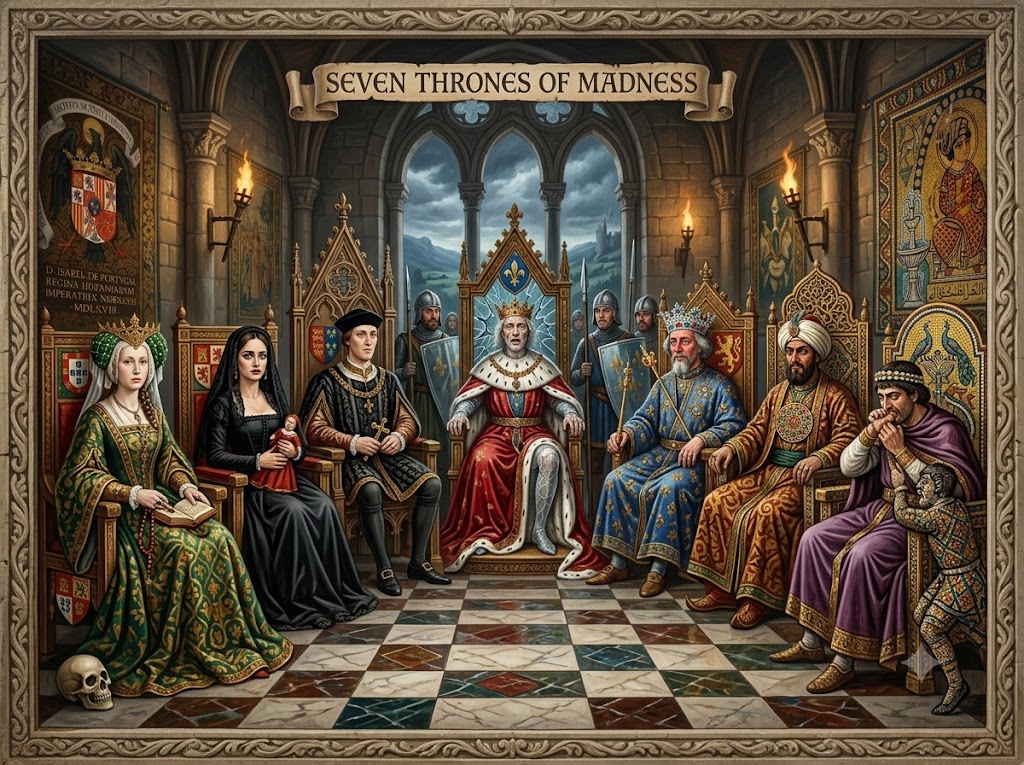
One thing worth saying first, because it shapes everything. Medieval people had no real idea what madness was. They didn’t see mental illness; they saw the work of demons, or a curse, or God’s punishment for sin, or the body’s black bile gone sour.
A king who raved was a king who was possessed, and the cures matched the theory: prayer, pilgrimage, exorcism, and a good deal of bloodletting. It’s the same fearful, superstitious world that gave us the dancing plague and all those rituals for warding off evil spirits.
Keep that in mind as we go, because these people were, in the eyes of everyone around them, touched by something dark.
Right. Let’s meet them.
Justin II: The Emperor Who Bit His Servants (Reigned 565 to 578)
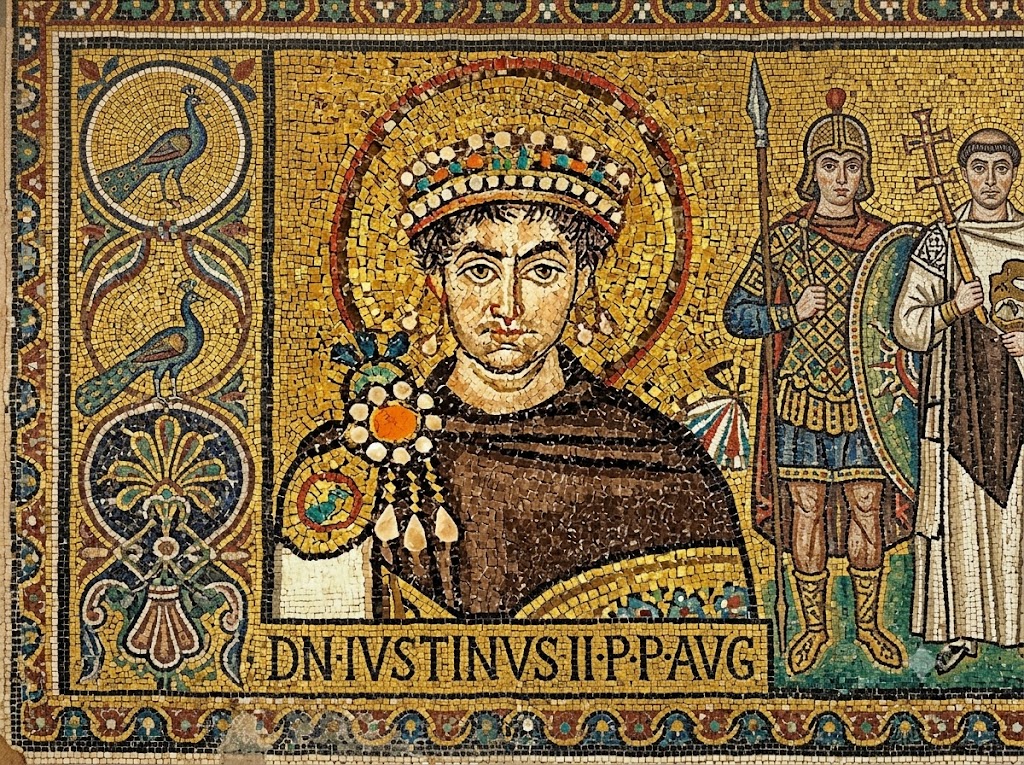
We start in Constantinople, with a man who inherited the greatest empire in the Christian world and could not cope with it.
Justin II came to the Byzantine throne in 565, following his famous uncle Justinian the Great. He started well enough, energetic and popular, forgiving debts and cutting a confident figure. Then his own foreign policy destroyed him.
He picked a fight with the mighty Persian Empire, refused to pay the tribute that kept the peace, and watched in horror as the Persians overran Syria and seized the vital fortress city of Dara in 573. The news broke him.
What the chroniclers describe next is deeply disturbing. The emperor, they say, behaved like a wild animal. He had to be wheeled around the palace on a throne fitted with wheels. He tried to throw himself out of the windows, so they put bars on them.
He bit and attacked the servants who came near him, and, in one of the strangest details to survive, organ music was played day and night in an effort to soothe him. The master of the Roman world had become a man whose own staff was frightened to approach.
To his credit, in a lucid moment, Justin did the wisest thing left to him. In 574, he raised a capable general named Tiberius to rule alongside him and gave a broken, moving little speech admitting his failure.
“As a man, I have sinned,” he said, “and as a sinner I have been severely punished.”
He died in 578, having handed the empire to steadier hands. Not every mad king was self-aware enough to do that. Hold that thought.
Al-Hakim: The Mad Caliph of Cairo (Reigned 996 to 1021)
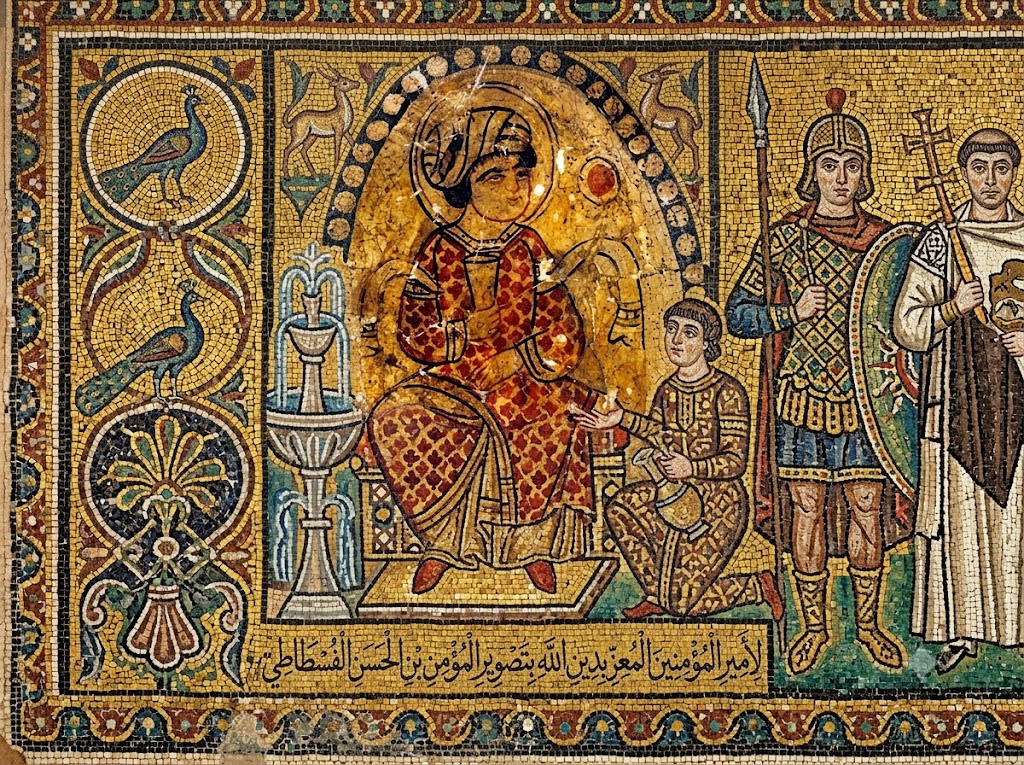
Now to the Islamic world, and quite possibly the most bewildering ruler on this list.
Al-Hakim bi-Amr Allah became the sixth Fatimid caliph of Egypt in 996, when he was just eleven years old, and he ruled from Cairo for twenty-five extraordinary years.
History nicknamed him the Mad Caliph, and when you read his decrees, you can see why. He ordered every dog in Cairo killed because their barking irritated him.
He banned certain vegetables and shellfish outright. He forbade women from leaving their homes, and to enforce it, he reportedly banned cobblers from making women’s shoes.
Strangest of all, he flipped the whole city’s clock, ordering people to work through the night and sleep during the day, because that was the rhythm he preferred to live by.
He turned savagely on religious minorities, persecuting Sunni Muslims, Jews, and Christians, and in 1009 he ordered the destruction of the Church of the Holy Sepulchre in Jerusalem, the holiest site in Christendom.
That single act sent a shock through Europe that helped, decades later, to light the fuse of the Crusades and everything that came with them, including the rise of the Knights Templar.
The same man founded a great house of learning, patronized scholars and poets, fed the poor during famine, and steadied prices in hard times. He was an ascetic who rode out alone at night on a donkey. And then, on the night of 13 February 1021, he rode into the hills outside Cairo and simply vanished.
All they ever found were his bloodstained clothes. His body was never recovered, and the mystery has never been solved. Some of his followers refused to believe he was dead at all. They decided he was divine, and from that belief grew the Druze faith, which survives to this day.
Wenceslaus IV: The Drunk King of Bohemia (Reigned 1378 to 1419)
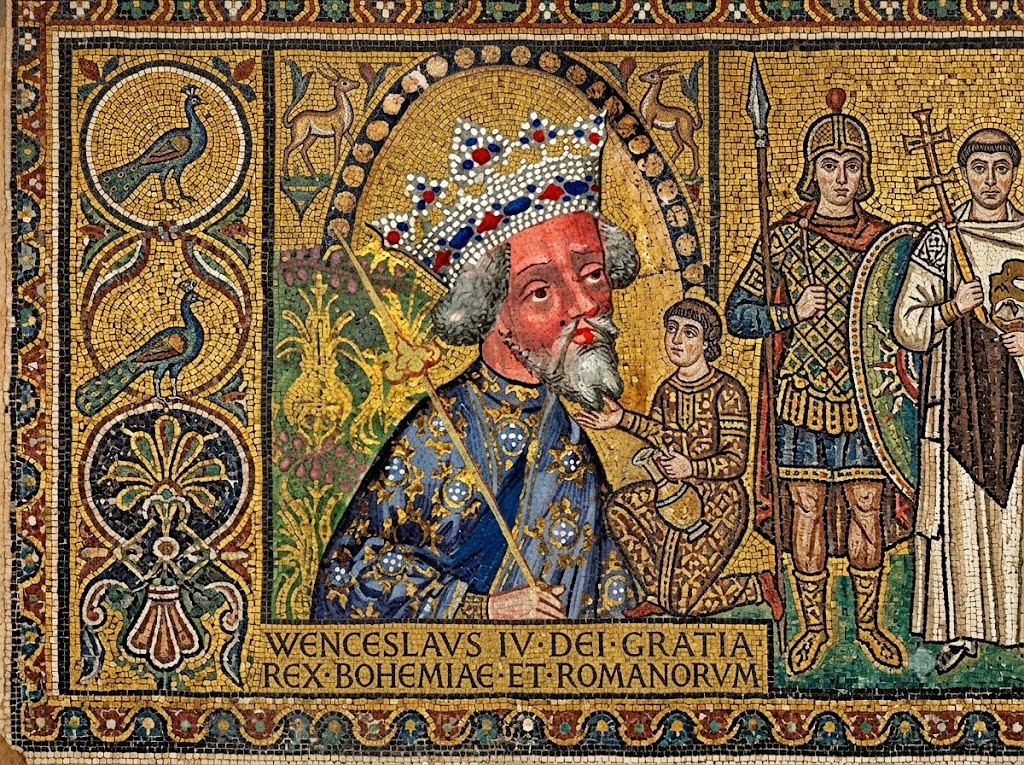
This one comes with a warning label, because he’s the entry where I have to be careful with the word “mad.”
Wenceslaus IV was King of Bohemia and, for a while, King of the Romans, which put him in line to be Holy Roman Emperor. He is remembered as one of the great failures of medieval kingship, nicknamed “the Idle” and, less kindly, “the Drunkard.”
In 1398, he was too drunk to attend a grand reception laid on for him by, of all people, the mad Charles VI of France. His own German electors formally deposed him in 1400, spelling out their reasons in black and white: “futility, idleness, negligence, and ignobility.” His nobles arrested and imprisoned their own king, more than once.
Was he actually mad, though? Probably not in the way the others here were. The lurid stories, like the tale that he had his cook roasted alive for a bad meal, look to be later inventions with no solid source behind them.
What the records really show is a violent temper, a serious drinking problem, and a man wholly unfit for the job he was born into. He was tangled up in the killing of a priest, John of Nepomuk, whose body was thrown from a bridge into the river in 1393.
Hooked on the Middle Ages? Get more stories like this one in your inbox.
Charles VI of France: The King Who Thought He Was Made of Glass (Reigned 1380 to 1422)
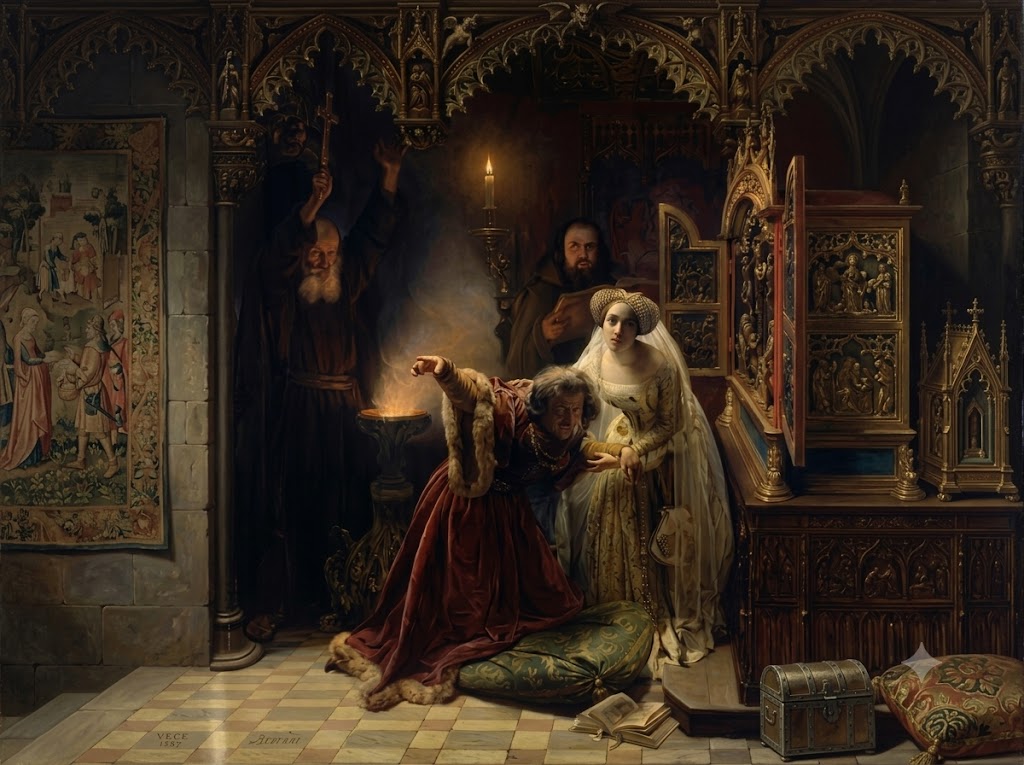
And now the headline act. If the Middle Ages had one truly iconic mad king, this is him.
Charles VI came to the French throne as a boy and was, at first, called Charles the Beloved. Then, on 5 August 1392, riding through a forest near Le Mans on a hot day, something in him snapped.
A page dropped a lance, the clang startled the king, and Charles drew his sword and attacked his own men in a screaming frenzy, killing at least four of his knights before he was wrestled down and fell into a coma.
He was never the same again. For the next thirty years, he swung between lucid spells and terrifying breakdowns.
The details are heartbreaking. During his episodes he sometimes could not remember his own name or that he was king. He failed to recognize his wife, Isabeau of Bavaria, and asked the servants who this strange woman was and why she kept staring at him.
He would run howling through the corridors of his palaces until they walled up the doorways to keep him contained. He once went five months refusing to bathe or change his clothes. And then there was the glass.
Charles became convinced that his body was made of glass and might shatter at the slightest knock, so he wrapped himself in protective clothing and reportedly had iron rods sewn into it, and forbade anyone to touch him in case he broke.
With the king incapable, his relatives fought like cats over control of the kingdom, splitting the realm into the warring Armagnac and Burgundian factions and tipping France into civil war. Into that chaos sailed the English king Henry V, who destroyed the flower of French chivalry at Agincourt in 1415, another grim chapter in the long wars between England and France.
And in 1420, poor broken Charles was made to sign the Treaty of Troyes, handing his crown to that same English king and disinheriting his own son. A father, out of his mind, signing away his child’s birthright. He died in 1422, and the damage he left behind outlived him by decades.
Doctors have argued ever since about what he had. Schizophrenia is the usual guess, with bipolar disorder and other conditions also in the running. Nobody can be sure. What isn’t in doubt is that the glass king’s cracked mind reshaped the map of Europe.
Henry VI of England: The King Who Slept Through the Birth of His Son (Reigned 1422 to 1471)
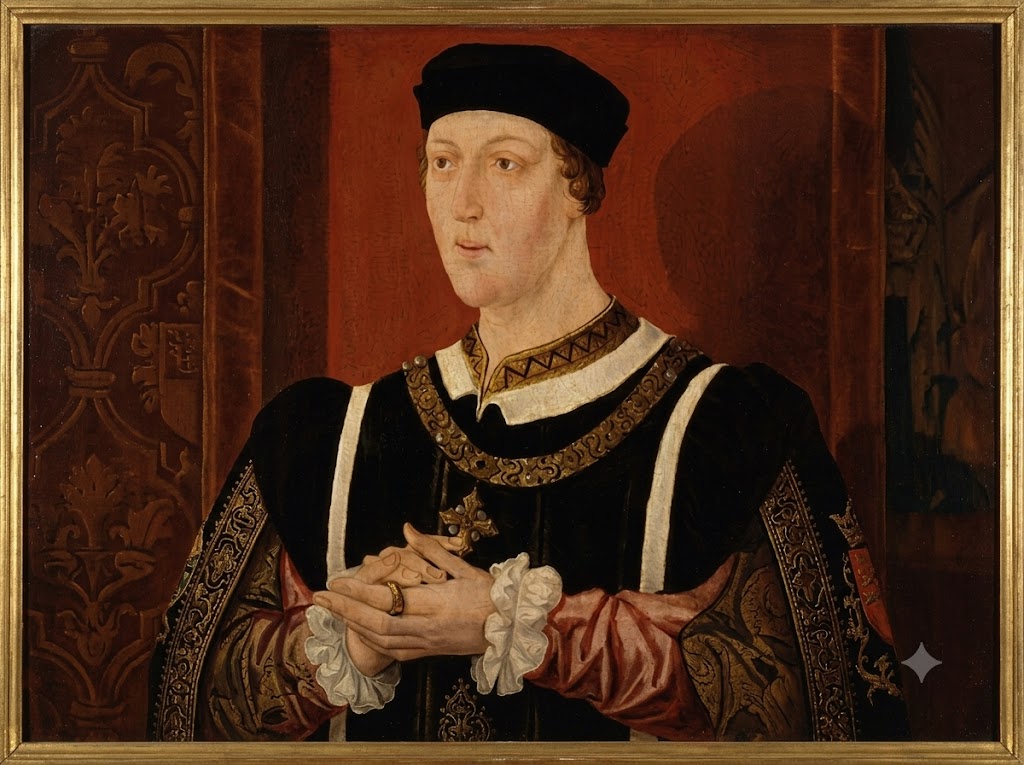
Cross the Channel, and the story gets eerier, because the madness followed the bloodline. Charles VI was Henry VI’s grandfather.
Henry VI of England became king at just nine months old, and grew into a gentle, pious, bookish man who was hopeless at the ruthless business of ruling. Then, in August 1453, at the age of thirty-one, he collapsed into a complete mental shutdown.
The likely trigger was news from France, the catastrophic defeat at Castillon, which lost England almost everything it held there. Henry simply switched off. For around a year and a half, he sat unresponsive, unable to speak, walk unaided, or recognize anyone. No doctor and no medicine could reach him.
The cruelest moment came that October. Henry’s wife, the formidable Margaret of Anjou, gave birth to their only son, Prince Edward, and brought the baby to the king. Henry gave no sign at all that he saw the child, or his wife, or anything.
When he finally surfaced around Christmas 1454, he had to be told he had a son, and he reacted as though the boy had arrived by miracle.
A king who cannot rule leaves a hole, and ambitious men rush to fill it. During Henry’s illness, Richard, Duke of York, was made Protector of the realm, and the deadly rivalry that ensued helped drag England into the Wars of the Roses, the thirty-year bloodbath for the throne.
Henry drifted in and out of his fog for the rest of his troubled life, was deposed, briefly restored, and finally murdered in the Tower of London in 1471.
He founded Eton College and King’s College, Cambridge, but he’ll always be remembered as the king who was somewhere else while his kingdom tore itself apart.
Isabella of Portugal: The Queen Who Vanished into the Dark (Died 1496)
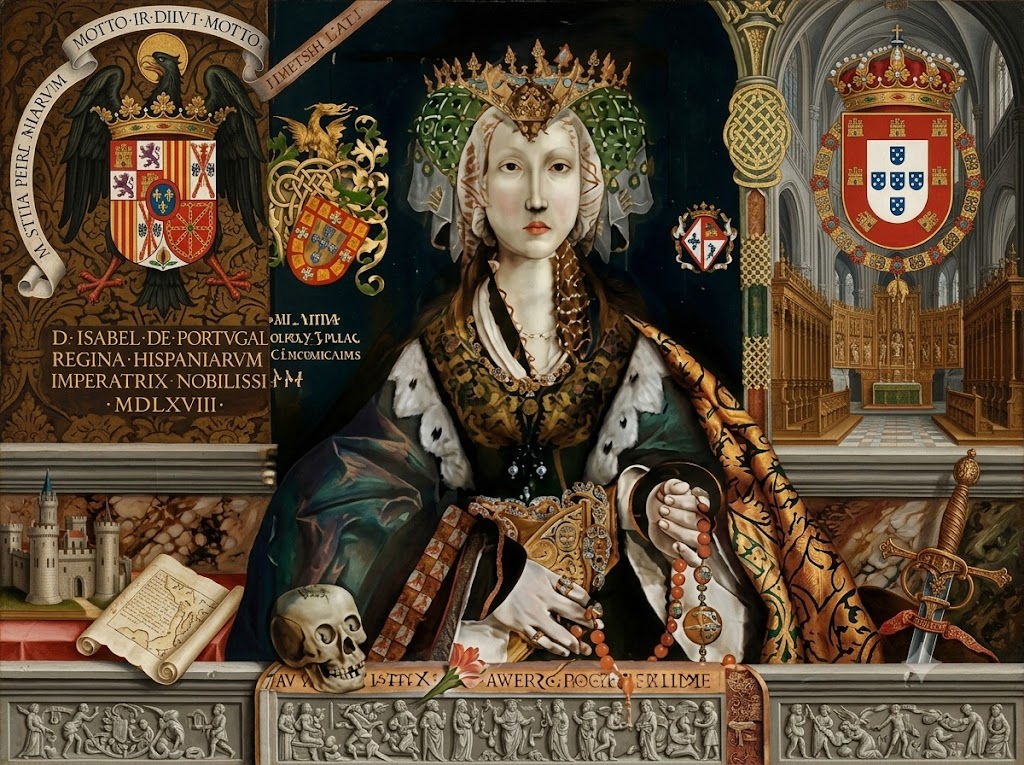
Here is one you almost certainly haven’t heard of, and she may be the saddest of the lot.
Isabella of Portugal was the second wife of King John II of Castile, and by every account a bright, capable young woman.
Then, in July 1454, her husband died, and something in her went out like a candle. She sank into a depression so total that it curdled into what her own contemporaries called madness. She shut herself away, fell into long silences, and was tormented by fear and paranoia.
Still only in her twenties, she was moved to the castle of Arévalo in the Castilian countryside, and there she stayed, lost inside her own mind, for more than forty years, until her death in 1496.
The detail that turns her story from sad to chilling is who grew up in that castle beside her. Her little daughter, raised in the shadow of her mother’s illness at Arévalo, was the girl who would become Isabella I of Castile, one of the most powerful queens Europe ever produced.
And Isabella I’s own daughter would be Joanna, the last name on our list. Three generations of royal women, and the same darkness threading through all of them. The line that gave Spain its greatest queen also carried something that broke the women on either side of her.
Joanna of Castile: Juana the Mad (Reigned 1504 to 1555)

And so we come to the granddaughter, and the most argued-over case on this list.
Joanna of Castile, daughter of Isabella I, and sister of Catherine of Aragon, was sent north in 1496 to marry the handsome, faithless Philip of Flanders.
She loved him with an intensity that his constant affairs turned into obsessive, raging jealousy, and the nickname followed her ever after, Juana la Loca, Joanna the Mad. When Philip died suddenly in 1506, she is said to have refused to let his body go, keeping the coffin close on a grim, wandering journey.
Declared unfit to rule, she was locked away in the convent-fortress of Tordesillas, where she remained for nearly forty-six years until her death in 1555, holding the title of Queen of Castile the entire time.
But was she really mad? This is where it gets uncomfortable, and where I lean toward the modern historians. Look at who benefited from calling Joanna insane. Her father wanted her power, her husband had wanted it, and her son, the Emperor Charles V, wanted it too, and kept her locked up long after his own reign was secure.
A grieving, possibly depressed woman who stood between three ambitious men and a throne was an awfully convenient person to declare mad. She may well have inherited the same fragility that haunted her great-grandmother Isabella of Portugal.
Did Madness Really Run in Royal Blood?
Charles VI of France lost his mind, and so did his English grandson Henry VI, who inherited the Valois blood through his mother, Catherine of Valois.
Isabella of Portugal broke down into madness, and two generations later, her great-granddaughter, Joanna, wore the very same nickname.
When you marry your cousins to keep the crown in the family, as Europe’s royal houses did for centuries, you concentrate the good and the bad alike, and a fragile mind can be passed down the generations like a title or a coat of arms.
Frequently Asked Questions
Which Medieval King Thought He Was Made of Glass?
The medieval king who thought he was made of glass was Charles VI of France, who reigned from 1380 to 1422. During his episodes of madness, he became convinced his body was fragile as glass and would shatter if touched, so he wrapped himself in protective clothing reportedly reinforced with iron rods and forbade anyone to come near him. This so-called glass delusion was recorded in others of the era, but Charles is its most famous victim.
Did Henry VI Inherit His Madness from Charles VI?
Henry VI very likely inherited a predisposition to mental illness from his grandfather, Charles VI of France, through his mother, Catherine of Valois. Both kings suffered episodes of profound mental collapse, and Henry’s breakdown in 1453 left him unresponsive for over a year, unable even to acknowledge the birth of his son. Historians widely see the two cases as linked by blood, an early example of mental illness running through a royal line.
Who Was the Mad Caliph?
The Mad Caliph was al-Hakim bi-Amr Allah, the sixth Fatimid caliph of Egypt, who ruled from Cairo between 996 and 1021. He earned the name through erratic and contradictory decrees, ordering all the city’s dogs killed, banning certain foods, and forcing people to work by night and sleep by day. He persecuted religious minorities, destroyed the Church of the Holy Sepulchre in 1009, and mysteriously vanished one night in 1021, never to be found.
How Did Medieval People Treat Mental Illness?
Medieval people treated mental illness through the lens of religion and superstition rather than medicine. Madness was usually blamed on demonic possession, divine punishment for sin, a curse, or an imbalance of the body’s four humors. Treatments ranged from prayer, pilgrimage, and exorcism to bloodletting and herbal remedies. The idea of mental illness as a medical condition to be understood and managed simply did not exist as we know it.
Was Joanna of Castile Really Mad?
Whether Joanna of Castile was really mad is still fiercely debated. Known as Juana la Loca, or Joanna the Mad, she may have suffered genuine mental illness inherited through her family, or she may have been a grieving, depressed woman deliberately labeled insane so the ambitious men around her could seize her power. Her father, husband, and son all benefited from her removal, and she was confined for nearly 46 years while keeping her royal title.
Did Madness Run in Medieval Royal Families?
Madness did appear to run in some medieval royal families, made worse by generations of marriage between close relatives. The clearest examples are Charles VI of France and his grandson Henry VI of England, and Isabella of Portugal and her great-granddaughter Joanna of Castile, who shared both an illness and, in Joanna’s case, the same nickname. Concentrating royal bloodlines through cousin marriage concentrated inherited weaknesses along with crowns.

Love a good medieval story?
Join our readers and get tales of kings, queens, castles and ordinary medieval lives straight to your inbox.

Kylie Lang is a nationally syndicated travel journalist with bylines on the Associated Press Wire & more, a medieval history writer, and the founder and lead author of Tales of the Middle Ages (talesofthemiddleages.com). She holds a BA (Honours) in History from the University of Kent and is a member of the British Guild of Travel Writers.
Related posts:
 Joanna of Castile: the Mad Queen of Spain
 The Forgotten Daughter of Eleanor of Aquitaine: Joanna Plantagenet Survived Betrayal, Crusades, and Imprisonment
 8 Movies About Real Medieval Queens (and How Much They Got Right)
 The Legend of Joanna of Flanders, Jeanne la Flamme, Warrior Duchess of Brittany