I love a good historical drama as much as the next person, but I also like to come away having learned something about the period it’s set in. And it annoys me no end when the facts get pushed aside for a bit of theater. I mean, medieval and Tudor history has more than enough theater of its own already.
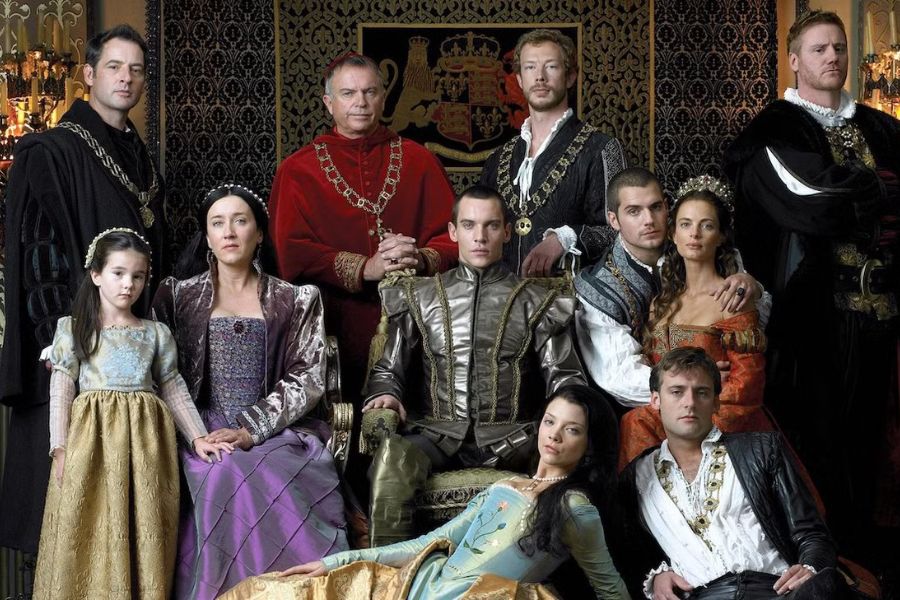
But the big question that keeps rearing its ugly head is whether the Tudors show is historically accurate. And my answer is partly. The Tudors is roughly accurate in the major events and loose in the details surrounding them.
Table of Contents
It nails the big things: Henry’s split from Rome, the six wives, the executions, but it merges his two sisters into one character, invents affairs and a murder, and shuffles dates around for drama. So the bones are real, but much of the flesh is not.
Let me show you exactly where the line falls, so you know what to trust and what to raise an eyebrow at.
So, Where Does The Tudors Show Blur the Historical Lines
You’ll sometimes see the figure that it’s “about 80% accurate” thrown around. I’d treat that as a rough fan shorthand rather than any official measure, because it seems to trace back to a reviewer rather than the studio.
The more honest guide is the one the writer himself gave. Creator Michael Hirst always wrote it as drama, not documentary. As he told NPR, he “wasn’t commissioned by Showtime to write a historical documentary.” His job was to entertain, and he’s been open ever since he shaped real history into a story with a beginning, a middle, and an end.
So my advice is simple. Treat the show as a doorway into the real story, not a replacement for it.

Why Does Henry VIII Only Have One Sister in the Show?
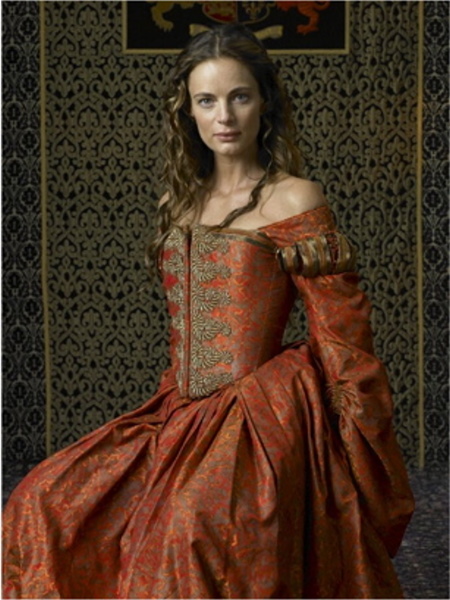
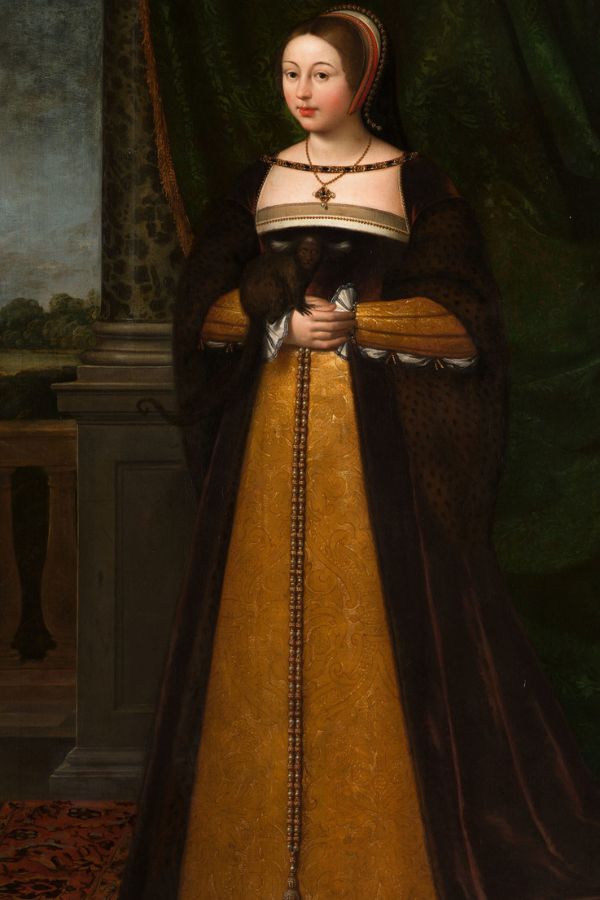
Because the show merged his two real sisters into a single invented character. Henry actually had two sisters, Margaret and Mary. The Tudors kept the elder sister’s name, Margaret, but handed that character the younger sister Mary’s entire life story, right down to the marriage to Charles Brandon.
In reality, the two women lived very different lives. The real Margaret Tudor married James IV of Scotland. Mary married Louis XII of France and then, scandalously, Henry’s best friend Charles Brandon. The show gives “Margaret” Mary’s marriages and cuts the genuine Margaret out altogether.
Apparently, the reasoning behind this was that the cast already had too many characters called Mary, what with Mary Boleyn and Princess Mary in the mix, so Mary Tudor was deemed one Mary too many. Curiously, nobody worried about the small army of Thomases at court.
However, in my mind, they cut the wrong sister’s story. The real Margaret’s Scottish marriage is the thread from which the current British royal family hangs.
Her line ran to her granddaughter Mary, Queen of Scots, and on to James VI of Scotland, who became James I of England in 1603. Cut Margaret, and you quietly erase how everything that came next actually happened.
Did the King of Portugal Storyline Really Happen?
No. None of it. The show marries “Margaret” off to an elderly King of Portugal and then has her smother him with a pillow to be free of him. That is pure invention from start to finish.
What really happened is dramatic enough without the fiction. Henry’s sister Mary married Louis XII of France, not Portugal, in 1514. Louis was much older and in poor health, and he died of natural causes just under three months into the marriage.
There was no pillow and no murder. Mary then married Charles Brandon in a rushed, secret ceremony that scandalized the court and left Henry spitting feathers.
Hooked on the Middle Ages? Get more stories like this one in your inbox.
What Did the Tudors Actually Get Right?
Henry’s desperation for a male heir, the break with Rome, and the 1534 Act of Supremacy largely unfolded as shown. That Act declared Henry the only supreme head on earth of the Church of England, and the show gets that revolution right.
It also gets a fair few specifics right. Henry did have an acknowledged illegitimate son, Henry Fitzroy, with Bessie Blount, whom he raised up as Duke of Richmond and Somerset. The whole ugly business that triggered the split, his attempt to annul his marriage to Catherine of Aragon, is faithful in its essentials.
And the big executions, grim as they are, happened. Some of the dialogue was even pulled close to the historical record, and the costume and production work won awards for capturing the period’s feel.
Here’s a quick way to keep the two columns straight in your head.
| What the show gets right | What the show invents or bends |
|---|---|
| The break with Rome and the 1534 Act of Supremacy | The King of Portugal’s marriage and murder |
| The six wives and the major executions | Merging Margaret and Mary into one sister |
| Henry Fitzroy as acknowledged son and Duke | Fitzroy dying as a young child |
| The secret marriage of Mary Tudor and Charles Brandon | A plot to assassinate Anne Boleyn |
| Henry’s desperation for a male heir | Much of the timeline, compressed for pace |
Where Does the Show Bend the Timeline and the Facts?
Constantly, and almost always, to keep the pace up. Dates get compressed and rearranged so freely that events years apart often land in the same season. It’s the single biggest liberty the show takes.
A few examples. On screen, Henry Fitzroy dies as a small child. In reality, he lived to about 17, outliving both Catherine of Aragon and Anne Boleyn. Bessie Blount, the mother of Fitzroy, is shown already married during her affair with the king, yet she didn’t marry Gilbert Talboys until 1522, after the affair had ended.
And Henry’s womanizing is dialed right up. The real Henry leaned toward serial monogamy and kept relatively few known mistresses, with only a couple firmly confirmed. The show fills his court with far more affairs than the record supports
Hirst even admitted to inventing a plot to assassinate Anne Boleyn, purely to dramatize how much the English public disliked her at the time. It never happened. Neither did the invented storyline given to some of the other courtiers. None of this ruins the show, but it’s worth knowing which scenes are history and which are Hirst having fun.
Was Henry VIII Really That Handsome? The Casting Question
In his youth, yes. The young Henry was widely described as tall, athletic, and good-looking, so casting Jonathan Rhys Meyers isn’t as absurd as those later portly portraits make it seem. The problem isn’t the young king. It’s the older one.
The show keeps Henry lean and dark-haired across all four seasons, while the real man changed dramatically. By his forties, he was heavy, ailing, and nursing a suppurating ulcer on his leg.
Hans Holbein’s famous portrait shows a red-haired, bearded, and distinctly hefty king. Rhys Meyers, brilliant as he is, keeps the body of a model to the end.
Other casting takes liberties, too, glamorizing figures who looked quite different in their surviving portraits. It’s a small thing on the face of it, but it flattens a man whose body and health, and the politics that flowed from both, shifted enormously across his reign.
Should You Still Watch It? How to Enjoy It Without Being Fooled
Yes, absolutely watch it, then read around it. The Tudors is a cracking hook, and it revived public interest in the period, sending a whole new audience back to the real history. That’s no small thing.
When it premiered on April 1, 2007, it was the highest-rated Showtime debut in three years, and at a reported $2 million an episode, it was the network’s most expensive original at the time.
Just keep a mental asterisk on three things: the two sisters squashed into one, the invented Portugal murder, and the timelines. Use the show as a launchpad rather than a textbook. If it makes you curious, chase down the real people, especially the two sisters it erased, and the tangle of executions it compressed.
Frequently Asked Questions
Is the Tudors show historically accurate?
Mostly on the big things, loosely on the small ones. The break from Rome, the six wives, and the major executions are grounded in real events. But the show merges Henry’s two sisters into one character, invents affairs and a murder, and reshuffles dates freely for dramatic pacing. Treat it as a doorway into the real history rather than a reliable record of it.
Why did the Tudors combine Henry VIII’s two sisters?
Henry really had two sisters, Margaret and Mary. The show kept the name Margaret but gave that character Mary’s life, including the marriage to Charles Brandon. The reported reason was that the cast already had too many Marys, with Mary Boleyn and Princess Mary in play. It’s the show’s most criticized change, since it erases Margaret’s Scottish royal line, from which today’s monarchs descend.
Did Henry VIII’s sister really marry and murder the King of Portugal?
No, that whole storyline is invented. In reality, Mary Tudor married Louis XII of France, not Portugal, and he died of his own failing health within three months of the marriage. She didn’t smother anyone. The show borrowed her real and genuinely scandalous secret marriage to Charles Brandon, then attached a fictional murder to it for drama.
Was Henry VIII really as much of a womanizer as the show suggests?
Less than you’d think from watching. Henry leaned toward serial monogamy and kept relatively few known mistresses compared with other kings of the era, with only a couple firmly confirmed, including Bessie Blount and Mary Boleyn. The show packs his court with far more affairs and nudity than the historical record supports, mostly to keep things steamy and moving.
How accurate was the Tudors’ portrayal of the break with Rome?
This is one of the show’s strongest areas. Henry really did split from the Catholic Church after the Pope refused to annul his marriage to Catherine of Aragon, and the 1534 Act of Supremacy made him Supreme Head of the Church of England. The show gets the shape of that revolution right, even as it compresses the surrounding timeline for pace.
Did the Tudors get Henry Fitzroy’s death right?
No. On screen, Henry’s illegitimate son Fitzroy dies as a young child. In reality, he lived to about 17, outliving both Katherine of Aragon and Anne Boleyn, and had been elevated to Duke of Richmond and Somerset. The existence and royal status of Fitzroy are accurate. His age at death is not.
Love a good medieval story?
Join our readers and get tales of kings, queens, castles and ordinary medieval lives straight to your inbox.

Kylie Lang is a nationally syndicated travel journalist with bylines on the Associated Press Wire & more, a medieval history writer, and the founder and lead author of Tales of the Middle Ages (talesofthemiddleages.com). She holds a BA (Honours) in History from the University of Kent and is a member of the British Guild of Travel Writers.
Related posts:
 What History Got Wrong About Mary Boleyn: The Forgotten Sister of Anne, Mistress, Mother, Survivor
 Alison Weir vs Philippa Gregory: Which Is More Historically Accurate and Which Plays Fast and Loose With the Facts?
 The Rise and Fall of Anne Boleyn: Power, Passion, and Politics
Mary Wasn’t Just the “Other Boleyn Girl,” She Was the First (this is her story)
The Rise and Fall of Anne Boleyn: Power, Passion, and Politics
Mary Wasn’t Just the “Other Boleyn Girl,” She Was the First (this is her story)