
If you have ever thought it would be fun to step back into the Middle Ages, you might want to think again. Sure, there were castles, tournaments, and the occasional feast, but daily life was a minefield of laws that could trip you up in ways you would never expect. Some of them were so bizarre that you could break one without even realizing it.
The Middle Ages were a time when fashion choices were policed, gossiping was dangerous, and animals could end up on trial. You could even get in trouble just for not having a job. It was a world where common sense often took a back seat to strange rules and brutal punishments.
Table of Contents
Medieval justice was a labyrinth of arbitrary rules and terrifying punishments. Every aspect of daily life was regulated, and a minor infraction could transform into a life-altering catastrophe. Here are seven laws you’d never want to break in the Middle Ages.
1. Sumptuary Laws: Dressing Above Your Status Could Get You Punished
Fashion crimes today might get you featured on a worst-dressed list, but in medieval times, they could get you killed. The medieval elites were obsessed with maintaining social hierarchy through strict clothing control, transforming fashion into a weapon of social control. What you could and couldn’t wear was strictly adhered to.

What Were Sumptuary Laws?
Medieval fashion wasn’t about personal expression but about knowing your place. These laws micromanaged everything from the fabric you could wear to the length of your shoes. In England, for example, the 1363 sumptuary laws under Edward III spelled out exactly what different classes could and could not wear. Only knights and above could wear velvet or satin; purple was almost always reserved for royalty. Even the size of shoe points and the width of belts were regulated. It was all about keeping the social hierarchy crystal clear just by looking at someone.
Punishment for Fashion Crimes
Breaking these laws meant more than just a slap on the wrist. In 1363, a London merchant named Thomas Blanket faced public flogging for wearing a linen shirt with silver threads, a style reserved for the nobility. His defense that it was a family heirloom didn’t save him from spending three months in the stocks, becoming a cautionary tale for fashion-forward commoners.
2. Trial by Ordeal: Proving Innocence Through Pain
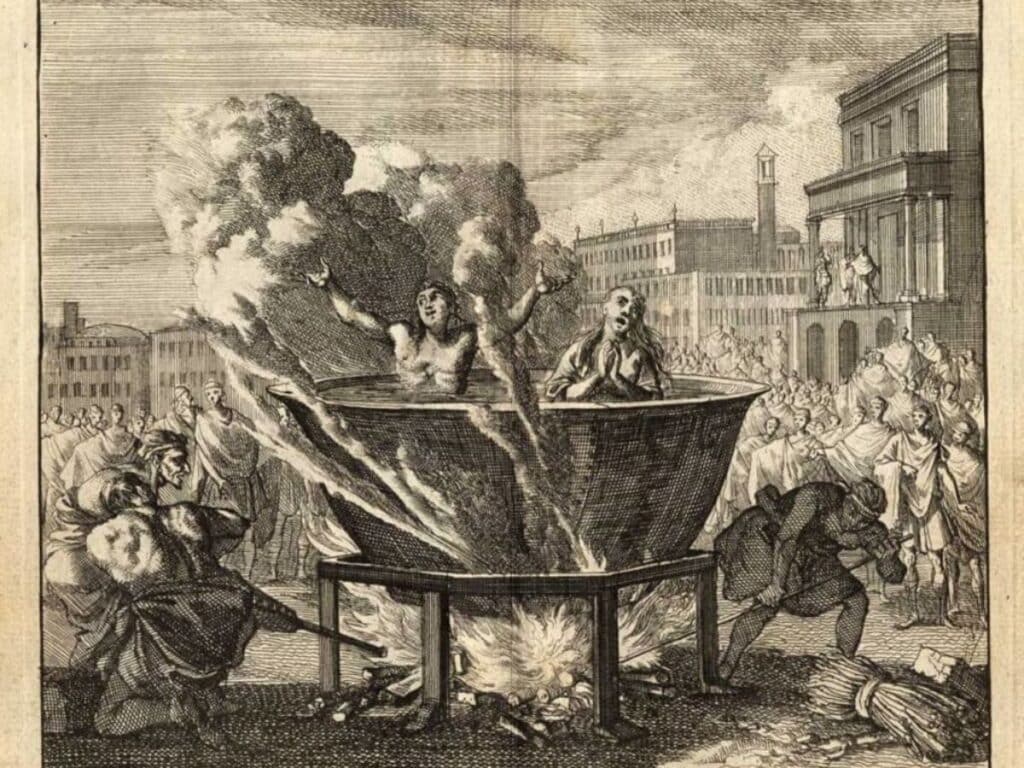
If you ever thought medieval justice was rough, wait until you hear about trial by ordeal. When there was no clear evidence and no reliable way to figure out the truth, people turned to what they believed was divine judgment. The idea was simple. God would protect the innocent. The guilty would suffer. In reality, it meant facing terrifying tests that could leave you permanently scarred or even dead.
Types of Ordeals
There were different types of ordeals depending on the crime and the region. You might have to carry a red-hot iron bar for a set distance or plunge your hand into boiling water to retrieve a stone. Afterward, your wounds would be bandaged and inspected a few days later. If they were healing nicely, you were innocent. If not, well, that was seen as a clear sign of guilt and probably a witch. Other versions included ordeal by water, where floating was seen as bad, and sinking meant you were telling the truth.
How the System Was Rigged
The priests controlling these trials held immense power. They could heat the iron more for suspected criminals or less for those they favored. One documented case from 1215 shows a priest who offered to “bless” the hot iron with holy water, for a fee, of course, making it significantly cooler for the accused.
3. The Weird Laws of Bread and Ale: The Assize of Bread and Ale
In medieval times, messing with people’s bread and ale was considered a crime worse than many forms of violence. The lengths authorities would go to ensure proper bread weight and ale strength would put modern food safety inspectors to shame.

The Importance of Bread and Beer in Medieval Life
Bread and ale were regulated like currency. The Assize of Bread and Ale, first introduced in England in 1266, set official prices, weights, and standards. If you messed around with the rules, you could end up in big trouble, even facing public humiliation. A standard loaf had to weigh exactly 12 ounces, and ale strength was strictly controlled. These staples were so important that towns employed official “ale-conners” who tested beer quality by sitting in it wearing leather pants (yes, really).
The way it worked was simple in theory but tricky in practice. Officials called “ale-conners” would taste the ale to ensure it was of good quality, and “bread weighers” would check the loaves. Prices were tied to the cost of grain. If grain prices went up, the weight of the loaf went down, but the price stayed the same. This way, everyone was supposed to get a fair deal, rich or poor. Bakers who shorted the weight or used poor ingredients risked serious consequences.
One famous example is 14th-century London, where a baker was caught selling underweight bread. His punishment was to be dragged through the streets on a wooden sled with the faulty bread hung around his neck for everyone to see. It was not just embarrassing. It was career-ending. After all, in a tight-knit medieval town, nobody wanted to buy from the guy who had cheated his neighbors.
Hooked on the Middle Ages? Get more stories like this one in your inbox.
4. No Working on Sundays… Or Else!
The medieval Church took Sabbath-breaking so seriously that even feeding your animals at the wrong time could land you in serious trouble. What’s truly fascinating is how these laws led to some of the most creative excuses in legal history.
The Church’s Strict Control Over Daily Life
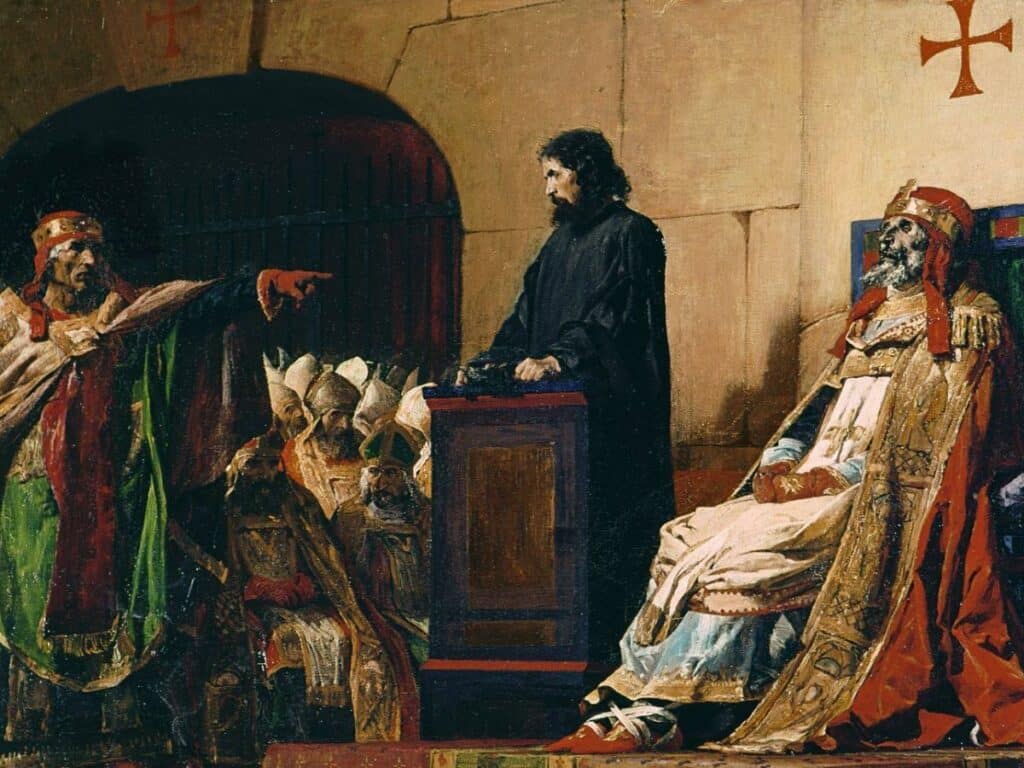
In the Middle Ages, Sunday was serious business. The Church declared it a day of rest, and working on a Sunday was seen as an insult to God. It was not just about skipping the fields or closing your shop. Even everyday tasks like baking bread or fixing clothes could get you into hot water if caught doing them on the Lord’s Day. The definition of “work” was surprisingly broad. One woman was fined for humming while spinning wool on the Sabbath.
Punishments for Breaking the Sabbath
Records from 1295 show a Yorkshire merchant fined his entire month’s earnings for selling ale after Saturday vespers. Repeat offenders faced excommunication, which meant social death in medieval society. Some communities even had “Sunday watchmen” who peeked into windows to catch secret workers.
5. The Law Against Gossiping: Talking Too Much Could Cost You
Before social media, medieval communities had their way of dealing with people who couldn’t keep secrets. The punishment for spreading rumors involved some of the most creative and cruel devices ever invented for controlling speech.

Gossip as a Threat to Social Order
Medieval authorities took gossip as seriously as we take cyberbullying today. Spreading rumors was seen as a form of social terrorism, especially if it involved questioning someone’s honor or suggesting a woman wasn’t virtuous. Talking too much, especially spreading rumors about your neighbors, could land you with fines, punishments, or worse. Authorities believed that gossip led to fights, feuds, and a breakdown of community trust, so they created strict rules to try to stop it before it got out of hand.
The Terrifying ‘Scold’s Bridle’ Punishment
One common punishment for gossips, especially women, was the scold’s bridle. This nasty contraption was a metal cage fitted over the head, often with a plate pressed down on the tongue to stop the person from speaking. In some towns, repeat offenders could be paraded through the streets wearing the bridle or chained to the town pillory. It was public humiliation at its worst and made a clear example for anyone tempted to stir up trouble.
Agnes Skinner of York wore one for six hours in 1443 for spreading rumors about her neighbor’s cow. The spikes left permanent holes in her tongue. Some towns kept their bridles decorated with bells to add humiliation to the pain.
6. The Unbelievable Animal Trials
Just when you thought medieval law couldn’t get any stranger, they started putting animals on trial, complete with lawyers, judges, and formal court proceedings. From murderous pigs to crop-destroying rats, no animal was too big or too small to face medieval justice.
When Animals Were Put on Trial Like Humans
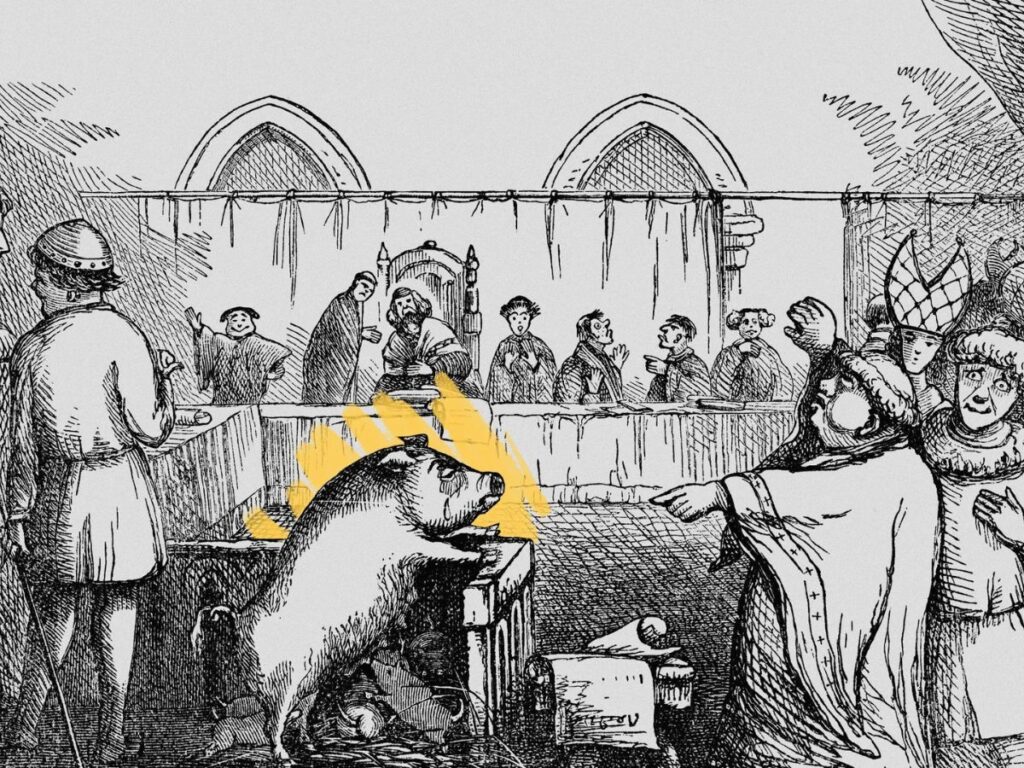
Believe it or not, animals could be put on trial in the Middle Ages just like people. If a pig attacked a person or rats destroyed a harvest, they could actually be arrested, tried in court, and sentenced. It sounds completely bizarre now, but at the time, it made sense to communities who believed that justice needed to be served, no matter who or what committed the crime.
The process could be surprisingly formal. Animals were assigned defense lawyers, charges were read out loud in court, and witnesses were called. Punishments ranged from excommunication to execution, depending on how serious the offense was. Pigs were the most common animals to stand trial, but there are records of cows, dogs, and even insects facing legal action. It was a mix of superstition, law, and religious belief all rolled into one strange ritual.
Absurd Sentences and Executions
One of the most famous cases occurred in Falaise, France, in 1386. A pig was found guilty of attacking a child and was dressed in human clothes before being hanged in public. The execution was meant to show that crime, no matter who committed it, would not go unpunished. In another case, rats were summoned to court for crop destruction. When they failed to appear, their lawyer successfully argued they couldn’t safely travel to court due to the plaintiff’s cats.
7. The Law Against Being Unemployed: The Statute of Laborers
The workforce was left in ruins after the Black Death swept through Europe. With so many people gone, laborers were in high demand, and wages started to rise fast. The ruling classes did not like that one bit. In England, they passed the Statute of Laborers in 1351, which made it illegal for workers to ask for higher wages or refuse a job if offered. In short, if you were unemployed, you could be punished for turning down work.
Why Being Jobless Was a Crime
After the Black Death wiped out half the population, surviving workers demanded better wages. The nobility’s response? Make unemployment illegal and fix wages at pre-plague levels. Talk about adding insult to injury. The law aimed to freeze wages at pre-plague levels and force people back into service. Workers were required to accept the same pay they had earned before the plague, even though the cost of living had increased.
Local officials were tasked with enforcing the law, and anyone found wandering without a master or refusing employment could be fined, jailed, or placed in the stocks. It was one of the first examples of the government trying to control the labor market by force.
Forced Labor and Public Whippings
Refuse to work for pennies? Enjoy your public whipping. One account from 1351 describes a craftsman forced to wear an iron collar, listing his “crime” of refusing work at regulated wages. The collar stayed on until he accepted a job at the legal maximum wage.
Living to Tell the Tale
Medieval justice lurched between the absurd and the horrifying. Laws that seem laughable today once held the power to destroy lives with shocking, arbitrary cruelty.

Love a good medieval story?
Join our readers and get tales of kings, queens, castles and ordinary medieval lives straight to your inbox.

Kylie Lang is a nationally syndicated travel journalist with bylines on the Associated Press Wire & more, a medieval history writer, and the founder and lead author of Tales of the Middle Ages (talesofthemiddleages.com). She holds a BA (Honours) in History from the University of Kent and is a member of the British Guild of Travel Writers.
Related posts:
 How Medieval People Dressed: Fashion in the Middle Ages
 The Most Terrifying Ways to Die in the Middle Ages (And Who Faced Them)
 The Hat Wars of Tudor England: Why What You Wore on Your Head Could Mark You as a Rebel, a Fool, or a Heretic
 What Was Daily Life Like for a Peasant Woman in the Middle Ages?