There has been a lot written about chastity belts in the Middle Ages. Did history get it wrong or right, or was it just the medieval sense of humor at its best?
Did medieval knights really lock up their ladies in metal underwear before galloping off to the Crusades? The very idea of the chastity belt, an iron contraption clasped around a woman’s nether regions, has fueled endless jokes, horror stories, and Monty Python-esque images of the Middle Ages.
Table of Contents
It’s a titillating tale of medieval morality run amok. But when we separate fact from myth (and rusted metal from rumor), the real story of chastity belts turns out to be far more interesting, and far less gruesome than the legend suggests.
The Famous (and Bizarre) Chastity Belt Legend
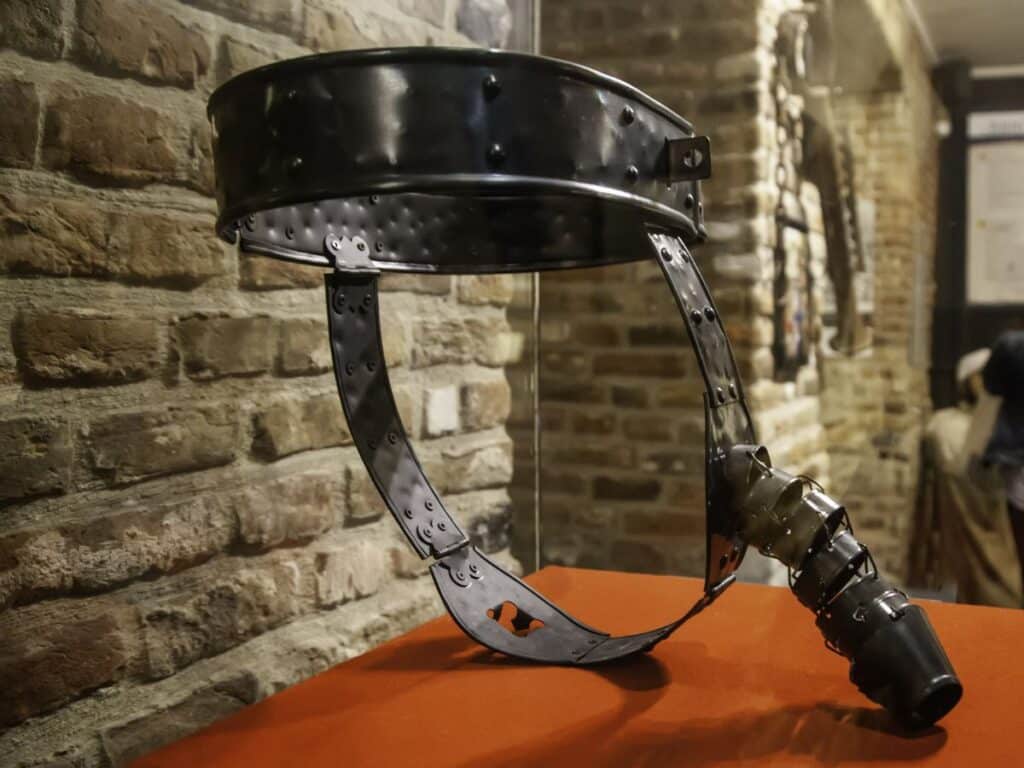
According to the popular legend, a chastity belt was used by anxious husbands in medieval times to ensure their wives remained faithful. The classic story involves a knight departing for the Holy Land and locking up his wife’s sexuality with an iron belt and padlock.
Supposedly, this would protect her from any “unwanted” male attention (and prevent any illegitimate dalliances) while he was off fighting for God and glory. It’s a story that paints medieval men as barbarously overprotective and medieval women as passive prisoners of their husbands’ jealousy.
This image of the armored and padlocked medieval maiden is pervasive in pop culture. From old melodramas to modern comedy films, the chastity belt trope pops up whenever we need a quick gag about prudish morality or overbearing husbands.
However, just because the story is widespread doesn’t make it true. Historians and museum curators have been poking serious holes in the chastity belt myth for years (no locksmith required). To find out if medieval women ever actually wore these contraptions, we have to dig into the historical record, and that’s where the tale starts to unravel.
Hooked on the Middle Ages? Get more stories like this one in your inbox.
Early Mentions of the Chastity Belt
If chastity belts were really a fixture of the Middle Ages, you’d expect to find them mentioned in medieval texts or depicted in art of the era. Surprisingly (or not!), nearly all early references to chastity belts are figurative. They’re metaphorical expressions of chastity or purity, not descriptions of actual gadgets.
For example, medieval writers and church figures, including Gregory the Great and Bernard of Clairvaux, referred to a “belt” or “girdle” of chastity in their sermons and exhortations. These pious authors weren’t talking about an iron device at all. Telling a virtuous woman to don a “girdle of chastity” was akin to saying, “Armor yourself with virtue.” It was a metaphor for fidelity, not an instruction to lock yourself in metal underwear.
One Latin source from the early medieval period even advised the “honest virgin” to “hold the helmet of salvation on your front… [and] the girdle of chastity in the body” – a clearly allegorical bit of advice. No one expected virgins to actually go around wearing an iron girdle or a literal helmet on their belly. Medieval readers understood these images symbolically.
The idea was to stay chaste in thought and deed, not to embrace actual hardware. In other words, the “chastity belt” began as a poetic device long before it was (much later) mistaken for a physical device.
The 1405 ‘Invention’? A Bit of a Medieval Joke
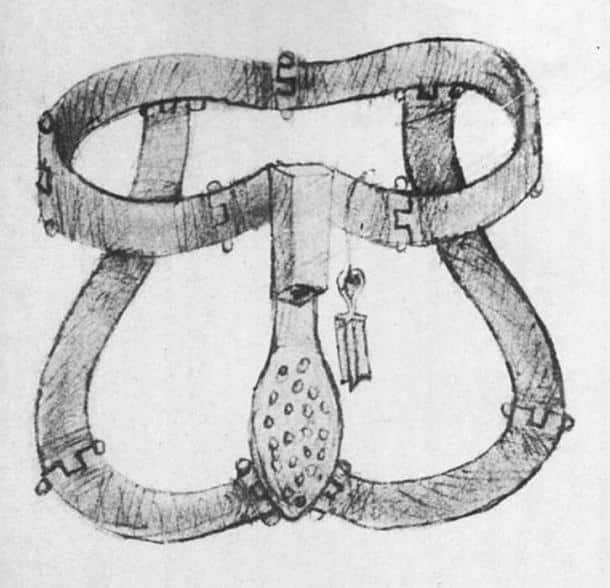
The first time something like a chastity belt shows up in a drawing is in 1405, and even then, it’s probably a joke.
A German military engineer named Konrad Kyeser included a sketch in his book Bellifortis, a manual of war machines and odd contraptions. In the middle of catapults and crossbows, there’s a curious little drawing: a metal belt, supposedly worn by Florentine women to keep them out of trouble.
But historians think Kyeser was having a bit of fun. His book includes plenty of fantastical ideas (there’s even a fart-powered device), so this chastity belt likely wasn’t meant to be taken seriously. It reads more like satire than instruction.
More importantly, there’s no real evidence that any such belts were actually used at the time. No records, no inventories, no complaints from women in iron underpants. So, while 1405 gave us the first visual nod to the idea, it seems to have been more of a medieval meme than a real-life device.
The Renaissance: When Chastity Belts Became the Butt of the Joke
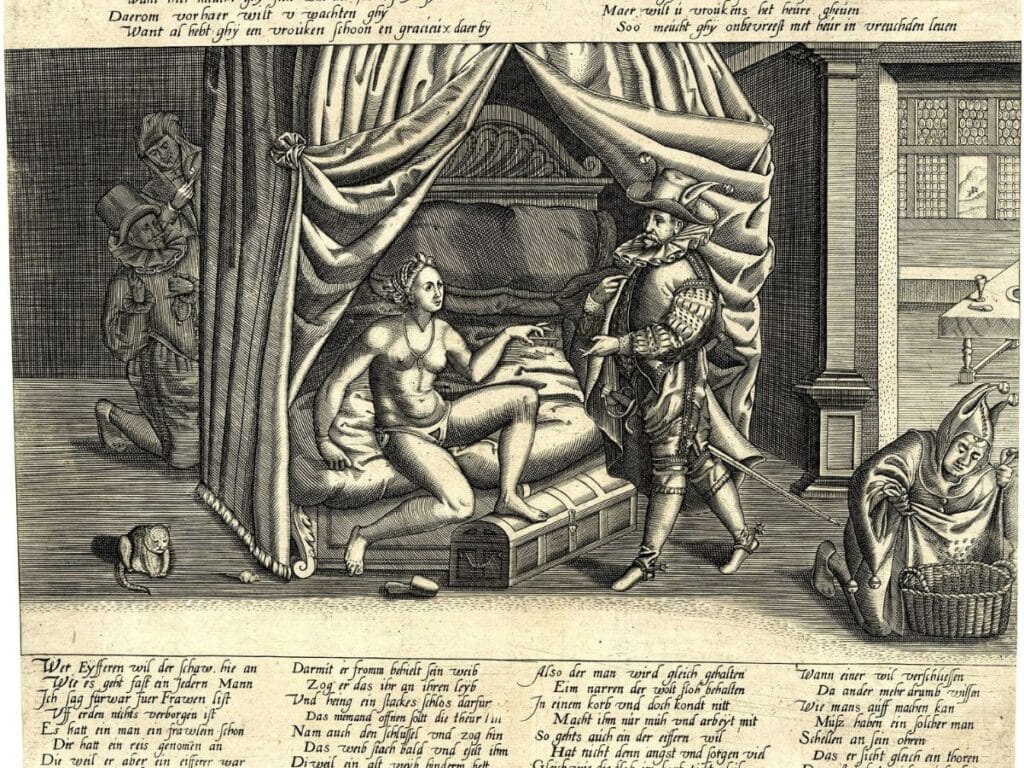
Fast-forward to the 16th and 17th centuries, and chastity belts started popping up in art and literature, but not as serious devices. Instead, they were the punchline in satirical works. Artists would depict scenes where an older husband locks up his young wife before heading off, only for her lover to appear with a spare key as soon as he’s out of sight.
These illustrations often included donkey ears on the husband’s hat, symbolizing his foolishness. Even back then, the idea of locking up one’s wife in metal underwear was seen as absurd and laughable.
The Big Clue? It’s Missing from the Records
If chastity belts were actually used in the Middle Ages, you’d expect someone to have written about them. A church leader. A judge. Even a gossipy monk.
But… nothing. Zilch.
There are no medieval laws about them, no sermons warning against them, no diaries saying, “Wife’s in the belt, off to battle!” If these things were real, there’d be at least a few mentions in the archives. But they’re completely absent.
Historians have combed through wills, household inventories, medical texts, you name it, and there’s no sign of belts being handed down, treated, or even grumbled about. And let’s be honest, if you were wearing an iron device down there, you’d probably complain.
Museum Pieces? Mostly Fakes (Sorry, Catherine de’ Medici)
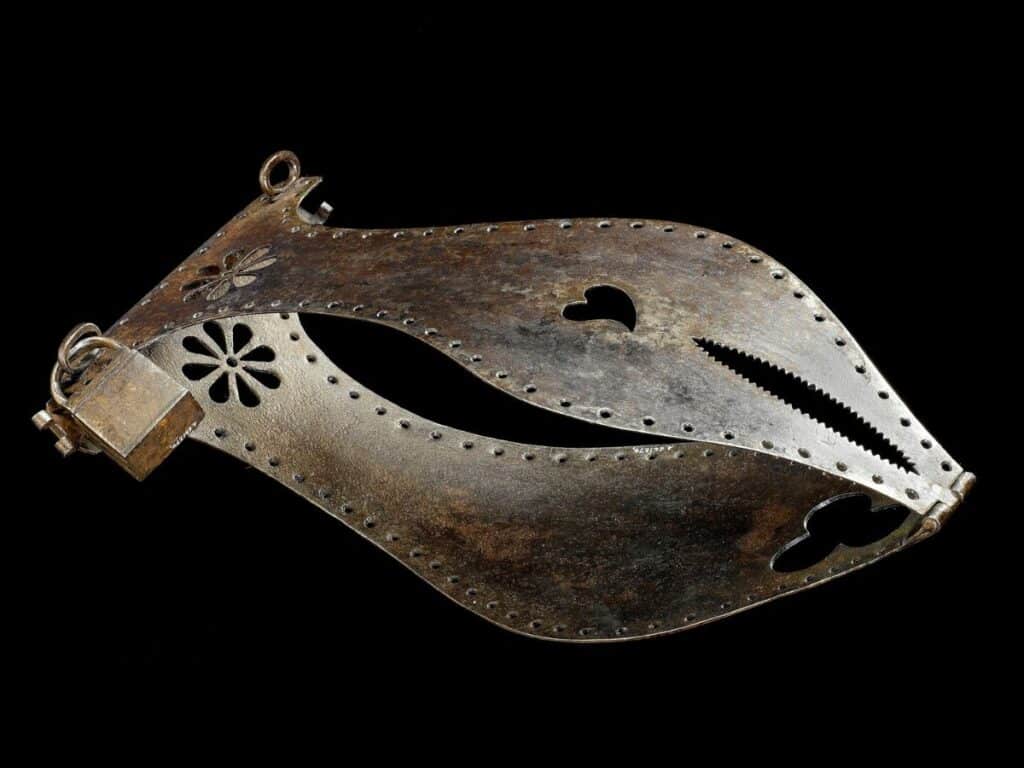
You might’ve seen one on display in a museum, an intimidating iron contraption labeled “medieval chastity belt.” But nearly all of them are fakes.
For a long time, museums proudly showcased these belts, sometimes claiming they belonged to famous women like Catherine de Medici. But dig a little deeper, and most turn out to be made in the 1800s, not the 1400s.
Many were created to titillate Victorian audiences who were obsessed with the idea of medieval “barbarity”. They weren’t medieval, and they weren’t practical. But they made for a good spectacle, and museums were happy to go along with the myth for a while.

So… Were They Ever Actually Used?
Surprisingly, yes, but not in the Middle Ages.
The time chastity belts actually made an appearance was much later, in the 18th and 19th centuries. And the reason? Not jealous crusaders. It was all about a moral panic over masturbation.
Doctors and parents back then thought self-pleasure could cause illness, madness, or general moral collapse. So they came up with all sorts of bizarre contraptions to stop it, including chastity belts for both women and men.
Some belts were even patented. Others were worn (briefly) by women working night shifts or walking home alone, not as punishment, but as a makeshift protection against assault. Still, they weren’t worn for long stretches, mostly because they were wildly uncomfortable and, frankly, a health hazard.
So yes, chastity belts were real, just not medieval.
Why the Myth Still Sticks
Because it’s juicy. It’s got sex, control, and a healthy dose of medieval weirdness. The kind of story that makes modern people go, “Can you believe they did that back then?” (Even though they didn’t.)
It also reinforces the idea that the Middle Ages were a time of punishment and repression, which makes us feel a bit more enlightened by comparison. This is the same reason people still believe medieval people thought the Earth was flat.
And let’s be honest, it’s a great visual. Whether it’s in cartoons, movies, or pub trivia, the image of a clunky iron belt is just too ridiculous not to remember. It’s been the butt of jokes for centuries (literally), and once something becomes a cultural punchline, it tends to hang around.
So while the chastity belt might live on in museum myths and comedy sketches, history tells a different story.

Love a good medieval story?
Join our readers and get tales of kings, queens, castles and ordinary medieval lives straight to your inbox.

Kylie Lang is a nationally syndicated travel journalist with bylines on the Associated Press Wire & more, a medieval history writer, and the founder and lead author of Tales of the Middle Ages (talesofthemiddleages.com). She holds a BA (Honours) in History from the University of Kent and is a member of the British Guild of Travel Writers.