In Tudor England, walking outside without something on your head was the rough equivalent of stepping into the street in your underclothes. Men kept their heads covered indoors and out. Women did the same, with a coif at the very least, and rarely uncovered their hair past the age of marriage.
What sat on that head, though, was a different matter entirely. A flat cap of coarse wool said one thing. A black velvet bonnet trimmed with a gold aglet said something else. And in 1571, Parliament got involved, passing a statute that told most of England exactly what kind of cap they were legally required to wear on a Sunday.
Table of Contents
This is the strange, half-forgotten story of how the English Crown tried to legislate the social hierarchy onto people’s heads, what happened when they pushed back, and why a hat could mark you as a loyal subject, a Puritan troublemaker, or a Catholic spy, depending on the year, the cut, and the company you kept.
A Country That Refused to Go Bareheaded
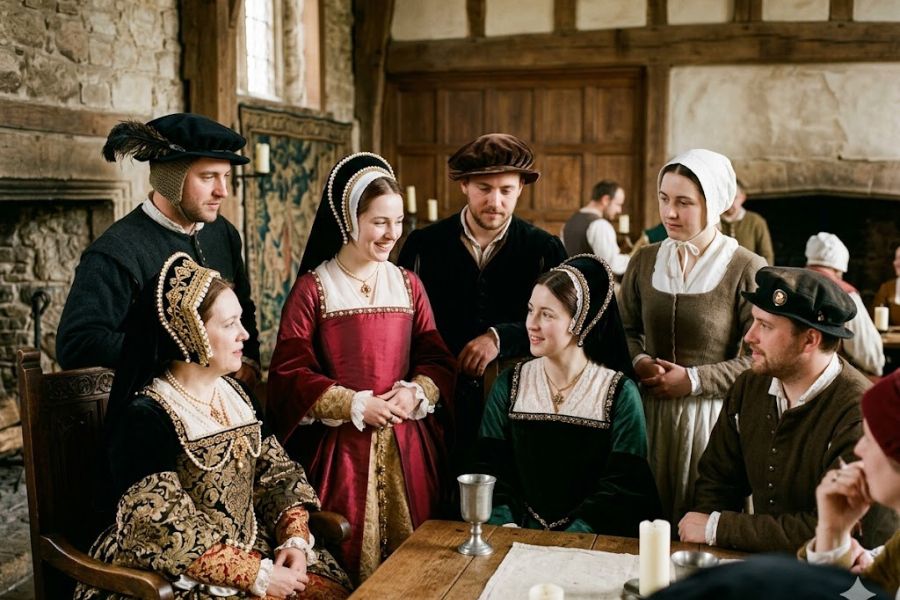
To understand why Tudor lawmakers cared so much about hats, you have to start with how seriously ordinary people took the business of covering their heads. A man removed his cap to a social superior, in church, before the monarch, and at meals if a great person was present. Refusing to take it off in the first place was, depending on the circumstance, an insult worth fighting over.
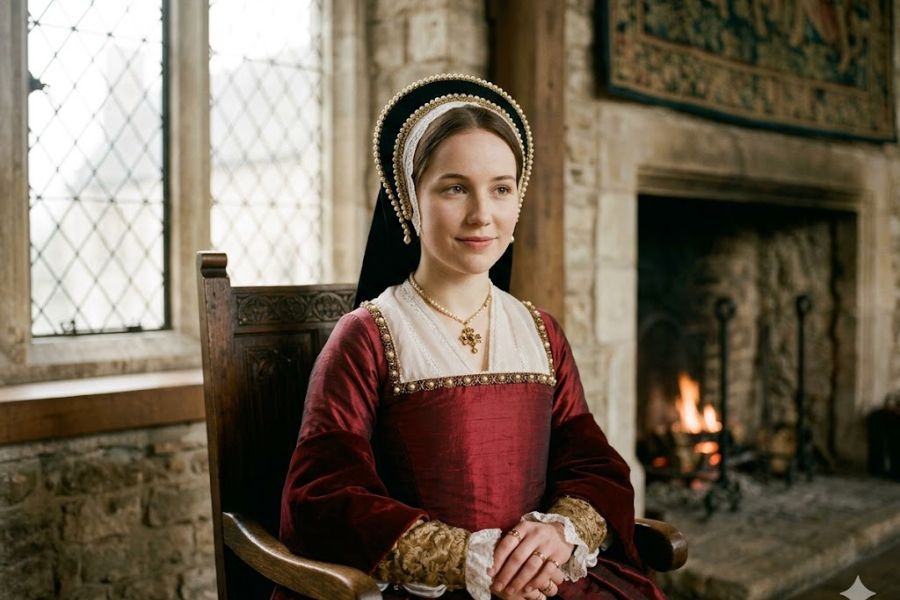
Women had it stricter still. A married woman with her hair loose in public was practically inviting scandalous gossip. Linen coifs, French hoods, gable hoods, attifets, the rolled and padded shapes that gave Tudor portraits their distinctive silhouette, all of it sat on top of further layers of cap and pin.
Even working women in the fields wore a kerchief at minimum. I’ve handled reproductions of Tudor coifs in a museum workshop, and the surprise is how much linen is involved. It’s a work of art and not something you simply pop on your head.
The point of all this fabric was like a resume. A glance at someone’s head told you their sex, their rough age, their marital status, their trade, and increasingly, their place in a social order the Crown was determined to keep visible.
So when the Tudor state decided to begin drafting laws on clothing, the head was an obvious place to start.
Sumptuary Law and the Tudor Obsession With Knowing Your Place
Sumptuary laws, statutes regulating what people could eat, drink, and wear according to their rank, were not a Tudor invention. Edward III had passed them in the 14th century, and most of Europe had some version. What the Tudors did was sharpen them, repeat them, and tie them to a particular anxiety about social climbing.
Henry VIII issued sumptuary proclamations in 1517, 1533, and again later in his reign. Cloth of gold was reserved for the royal family and a narrow band of high nobility. Purple silk was, in effect, the king’s own.
Crimson velvet, sable fur, embroidered shirts, and gold chains above a certain weight were all graded down the social ladder by income and title. A yeoman with forty pounds a year was permitted some things. A gentleman with a hundred was permitted more. A baron, more again. The list ran to pages.
This mattered for hats because men, especially, spent their money on them. A doublet could be hidden under a cloak. A cap sat in plain view. Velvet bonnets, often slashed and decorated with a brooch or a feather, were exactly the kind of conspicuous spending the laws tried to police.
Elizabeth I reissued the regulations almost annually in the 1560s and 1570s, sometimes with frustrated language about how the previous proclamations had been ignored. The truth is, they usually were. Enforcement was patchy, prosecutions rare, and the fines often less than the value of the offending garment.

Hooked on the Middle Ages? Get more stories like this one in your inbox.
The Cap Act of 1571 and the Wool Lobby in Felt
The most peculiar piece of Tudor hat legislation was passed in 1571, the Statute of Caps, which required every male over the age of six, excluding the nobility, gentry, and a few other named groups, to wear a cap of knitted wool, made in England, on Sundays and holy days.
The fine for non-compliance was three shillings and fourpence per day of offense, which was real money for a working man.
The statute had nothing to do with morality and everything to do with industry. The English cappers, the guildsmen who made knitted woolen caps by the thousand, had been losing business to imported felt hats and to changing fashion.
Their petitions to Parliament emphasized unemployment in the cap-making towns, the threat to the wool trade, and the strain on the poor rates. The result was a law that tried to force a fashion choice on most of the population to prop up a domestic industry.
It’s one of the earliest pieces of straightforwardly protectionist clothing legislation in English history.
The Cap Act was a flop in practice. Wealthy men ignored it, paid the fines, or claimed exemptions. Younger men, in particular, wanted the taller, stiffer felt hats coming in from the Low Countries.
By 1597, the act was repealed, having been a quiet embarrassment for a quarter century. What it leaves behind is a vivid picture of a Parliament that thought it could, and should, decide what shape of wool went on the head of a London apprentice on a Sunday morning.

Hats as Religious Battleground
By the late 16th century, the hat had picked up a second job. It had become a marker of religious position. Puritans, the godly reformers who wanted the English Church scrubbed of anything that smelled of Rome, developed a particular hat culture.
Tall, plain, black or dark felt, narrow-brimmed, severely unornamented. No feather, jewel, or slashing.
It also became a point of confrontation in church. The Puritan refusal to remove the hat at certain liturgical moments, or insistence on removing it at others, could mark a man out to the local minister and to the bishop’s visitation.
There are records from the 1580s and 1590s of churchwardens noting who wore what, and how, during services. A man who kept his hat on during the reading of the Gospel was making a statement. A man who refused to bow his head and uncover at the name of Jesus, a practice Puritans considered superstitious.
On the Catholic side, recusant gentlewomen sometimes wore older styles of hood, French or gabled, long after fashionable Protestant women had moved on to looser caps and uncovered foreheads.
A priest hiding in a recusant household might be smuggled in dressed as a serving man, his clerical identity erased by a borrowed cap. When pursuivants raided a house, the hats hanging in the hall could tell them how many men were really inside, and of what status, before anyone said a word. I find this detail oddly chilling. The hunters were reading the hat racks.
The Fool, the Rebel, and the Punished
Beyond law and worship, the hat was also a tool of public humiliation. The fool’s cap, the coxcomb, two-pointed and sometimes belled, was the visual shorthand for licensed idiocy, but it had a darker cousin. Convicted scolds, perjurers, and certain offenders were sometimes made to stand in the marketplace wearing a paper hat or mitre painted with their offense.
A bawd might wear a paper cap labeling her trade. A man convicted of slander could be paraded in a cap with his crime written on it, sometimes with his ears nailed to the pillory beneath.
Religious offenders got the same treatment, escalated. Heretics in the early Tudor decades, before doctrinal lines hardened, were sometimes made to do public penance in a paper cap painted with flames or with the implements of their offense.
Catholic priests captured under Elizabeth and led to execution sometimes had their clerical identity mocked with a paper mitre. The visual logic was the same throughout the period. Put the message on the head, where everyone can see it.
Rebellion, too, had its hats. During the Pilgrimage of Grace in 1536, the great Catholic rising against Henry VIII’s religious changes, participants wore badges and emblems on their caps, the Five Wounds of Christ chief among them. Pinning that badge to your hat in Yorkshire that autumn was a treasonable act.
Many of the men who did it were hanged for it in the spring. A small piece of stitched cloth on a felt brim could, and did, end lives.

Why the Hat Wars Mattered
The Tudor state never managed to make people wear what it told them to wear. The sumptuary laws were repealed in 1604, early in James I’s reign, having achieved very little beyond producing a paper trail historians now mine for evidence of what people actually owned.
The Cap Act was gone by 1597. The proclamations of Elizabeth’s reign read, in places, like the frustrated memos of a management that has lost control of the dress code.
What the hat wars do show is how seriously the Tudor government took the idea that society needed to be readable. A glance down a street should tell you who was a knight and who was a yeoman, who was married and who was not, who was loyal and who was strange.
Clothing was the first line of social information, and the head was its banner. When Parliament legislated caps, it was trying to keep the system from blurring as cloth became cheaper, ports grew busier, and London apprentices began dressing above their station.
By the time the last Tudor was in her grave, Englishmen of the middling sort were buying felt hats from Flanders, trimming them with whatever they pleased, and ignoring their betters about it. The flat woolen cap survived, but as a workman’s garment, the ancestor of the cloth cap that would last into the 20th century on the heads of factory hands and farm laborers.
The velvet bonnet of Holbein’s portraits drifted off into history. Somewhere in the middle of all that, an aging Elizabethan capper in Coventry, watching his trade die out despite every statute meant to save it, would have known exactly what the head on a passing apprentice meant.
Love a good medieval story?
Join our readers and get tales of kings, queens, castles and ordinary medieval lives straight to your inbox.

Kylie Lang is a nationally syndicated travel journalist with bylines on the Associated Press Wire & more, a medieval history writer, and the founder and lead author of Tales of the Middle Ages (talesofthemiddleages.com). She holds a BA (Honours) in History from the University of Kent and is a member of the British Guild of Travel Writers.


