We have this image of the Vikings that has mainly come through TV or films. I remember studying Viking history at school, but it was so long ago it’s hard to remember the details. What I do know is I wouldn’t have wanted to cross one or meet one, as, from what I remember, they were fierce and scary.
They were invaders and, as such, took everything they could get their hands on, including any females they came across. The Vikings treated Anglo-Saxon women largely as property. Many were seized in raids, sold as thralls, kept as concubines, or married into Norse households whether they liked it or not.
Table of Contents
A handful earned their freedom or even rose in status, but most had no say over their own lives at all. It was a good deal darker than the box sets let on.

What Did the Vikings Actually Do to Anglo-Saxon Women in a Raid?
Start with the raid itself, because that’s where it began for most of them. Women and girls were the prize rather than collateral damage. Killing a young woman wasted her value, so raiders took her alive, to keep, to use, or to sell.
When the Vikings hit the coastal towns of the British Isles, they carried off thousands of men, women, and children to hold or sell. The Irish Annals of Ulster record a raid near Dublin in 821 in which the raiders carried off “a great number of women into captivity.”
Imagine what it would have been like to be a woman at that time in a coastal settlement or a monastery like Lindisfarne, chosen precisely because it was undefended and full of people who could be turned into silver.
The longships beach at dawn, and by the time the smoke clears, the church plate is gone, and so are the daughters. Alfred the Great would spend his life fighting the armies behind those boats, but for the women taken that morning, the war was already lost. Not every captive vanished forever, mind.
The Life of Saint Findan, a 9th-century Irishman, tells of a father who sent his son to buy back a daughter the Vikings had seized. But ransom needed money and reach, and most families had neither.

Were Anglo-Saxon Women Taken as Slaves?
Absolutely, Anglo-Saxon women were taken as slaves and were known as a thrall, the very bottom of Norse society. The Old Norse even had gendered words for it, þræll for an enslaved man and ambátt for a female one.
A thrall owned nothing and was owned entirely. She could be bought, sold, gifted, or killed at her owner’s discretion, with no more legal standing than a milk cow. Female thralls did the grinding, endless work that free women pushed away: turning the quern to grind grain, milking, hauling water, cooking, and above all spinning and weaving the wool that clothed the entire household.
By some estimates, enslaved people made up as much as 10 percent of Viking-age Scandinavia’s population, a whole underclass keeping the farms alive.
Captives were funneled through slave markets at Dublin, Hedeby, and Birka, and some were sold on and on until they reached the markets of the Mediterranean and the Islamic east.
Archaeologists have dug up iron collars and shackles at those very hubs, the hardware of a human supply chain. This was a world away from the free shield-maidens the TV shows love to portray. For most women who met the Vikings, the reality was a rope, not a sword.
What Was Life Like as a Concubine in a Viking Household?
Many captured Anglo-Saxon women weren’t sold on but kept, as concubines, living entirely at the whim of the man who owned them. Norse society let a powerful man keep a legal wife and one or more concubines alongside her, which created a steady demand for young captured women.
A concubine’s life was a bundle of contradictions. She might be handed finer clothes and better jewelry than the wife herself, and yet she owned none of it, and could lose all of it, and her place, overnight.
The law was coldly explicit about her purpose. The Icelandic code known as Grágás records that a man was entitled to buy a slave specifically for sexual use. And we think we have it bad now.
The sagas remember one of these women by name. In the Laxdaela saga, a silent thrall-woman is bought in Norway for three marks of silver by an Icelander named Höskuldr and taken as his concubine.
She bears him a son, Olaf, and only later, overheard talking to her child, is discovered not to be mute at all. She was Melkorka, she tells him, a captured Irish princess and the daughter of a king.
Whether she truly lived hardly matters. The saga’s audience found nothing strange in the idea of a king’s daughter ending up a bedslave on a foreign farm.
At the very darkest end, a woman’s life could be demanded along with her master’s death. The Arab diplomat Ibn Fadlan left an eyewitness account from the year 922 of a Rus chieftain’s funeral on the Volga, in which a slave girl was chosen to die with him, plied with drink, used by the men of the camp as part of the ritual, and then killed and burned with her master in his ship.
Many archaeologists suspect the famous Oseberg ship burial, with its two women, may hold an echo of the same practice. Her life was not her own. Neither, sometimes, was her death.

Hooked on the Middle Ages? Get more stories like this one in your inbox.
Could a Captured Woman Ever Escape or Buy Her Freedom?
Not often, but the door wasn’t nailed shut. A master could free a thrall, an act called manumission, and it did happen, though rarely and never casually. Freedom had to be declared aloud, at a public assembly or in a church, and sealed with ceremony, right down to the brewing of a “freedom ale.”
But freedom came with a leash. A freed slave became a leysingi, a freedman stuck in a halfway state between thrall and free. He or she still owed allegiance to the former master, needed his say-so over where to live and whom to marry, and if the freed person died without children, the old master inherited the lot.
It took two full generations before a family shook off that debt and became truly free.
Escape and ransom were the other slim hopes. The Life of Saint Findan captures both worlds at once: his own sister was carried off by Vikings, and Findan himself was later seized, sold through four masters in turn, and finally escaped to end his days as a monk on the Continent.
For every Findan who got away, though, there were countless women who simply disappeared into a Norse household and were never seen again by their families.
Did Any Anglo-Saxon Women Marry Vikings or Settle Into Norse Families?
Over time, yes, and this is where the story gets far more complicated. As raiding gave way to settlement, the Norse not only plundered the British Isles; they moved in. Men who had come to steal ended up staying to farm, and households formed, some around captured women, some around local women who married in.
The cemeteries tell the tale of that slow blending, with mixed families and shared burial customs appearing as the generations pass. Rollo and his followers, who settled Normandy, are the grand version of the same process: Norse men putting down roots and marrying into the local population until, within a few generations, they had become something new.
For a captured woman, a “marriage” usually followed captivity and gave her precious little real say. And even at the very top of society, a woman’s marriage was rarely her own choice. Emma of Normandy was married to two different kings of England, a diplomatic pawn passed between dynasties for the good of men. If a queen had that little say over her own hand, imagine how much a thrall had. Which is to say, none.
The DNA That Proves Where Those Women Ended Up
When geneticists studied the founding population of Iceland, settled by the Norse who also sailed on to Vinland, they found a striking split.
The male and female lines came from different places. Around 80 percent of Iceland’s early male settlers traced back to Scandinavia. In comparison, maternal DNA told a different story: roughly 62 percent of the female settlers came from the British Isles and only about 37 percent from the Nordic countries. A 2018 study of ancient Icelandic genomes confirmed the picture: Norse fathers, Gaelic and British mothers.
Those women were the captured wives and concubines carried off by Norse men, and their descendants became a nation. That asymmetry, Scandinavian fathers and British-Irish mothers, is the genetic fingerprint of the slave trade itself, pressed into the DNA of the north.
You can still measure Scandinavian ancestry in places like Orkney today. The raids are, quite literally, written in the blood.
Were the Vikings Uniquely Cruel, or Was Everyone Doing This?
It’s tempting to cast the Vikings as uniquely monstrous, but honesty demands some context, because the Anglo-Saxons were up to their necks in the same trade.
The English enslaved one another and their neighbors, took captives in their own campaigns against the Britons of Cornwall and Wales, and ran a market of their own. Bristol was a notorious export hub, shipping English slaves across the water to the Viking-run markets of Dublin well into the 11th century.
One archbishop of the age thundered from the pulpit that Englishmen would club together to buy a poor woman, defile her, and then sell her overseas. Slavery was not a Norse invention.
What set the Vikings apart wasn’t the cruelty so much as the scale and the system. Their trade networks were vast, their raiding relentless, and their reach ran from Ireland to the Caliphate. They industrialized something everyone else did piecemeal. And it’s worth remembering how slowly it all faded.
Slavery in England only really wound down after the Norman Conquest of 1066, and the trade in humans was formally condemned by a church council in 1102. Brutal by any measure, the Vikings, but very far from alone in the brutality.
How Do We Even Know Any of This?
A fair question, because the women themselves left almost nothing behind. There are the chronicles, like the Anglo-Saxon Chronicle and the Annals of Ulster, which log the raids but rarely the people.
There are the law codes, like Iceland’s Grágás, chillingly precise about a slave’s status and worth. There are the sagas, full of figures like Melkorka, though they were written down centuries later through a Christian lens and blend memory with story.
There is archaeology: the shackles, the slave-market sites, the sacrificial burials, and the worn bones that betray a lifetime of hard labor. And now there is ancient DNA, settling arguments the documents never could.
Every source we have was written or made by someone other than the enslaved woman herself. She is described, counted, bought, buried, and analyzed, but almost never heard in her own voice. Like so many medieval women, she was written clean out of her own story, and it has taken chronicles, spades, and now genetics to write even this much of her back in. The least we can do is refuse to look away, even in the museum gift shop.
Frequently Asked Questions
Did the Vikings Kidnap Anglo-Saxon Women?
The Vikings did kidnap Anglo-Saxon women, and often deliberately. When they raided coastal towns across the British Isles, they took thousands of men, women, and children captive to hold or sell as slaves, and women and girls were particular targets. The Annals of Ulster describe a raid near Dublin in 821 in which the raiders carried off a great number of women into captivity.
Were Anglo-Saxon Women Sold as Slaves by the Vikings?
Anglo-Saxon women were indeed sold as slaves by the Vikings. Captured women became thralls, the lowest rung of Norse society, treated as property that could be bought, sold, or even killed by an owner. Many passed through slave-trading hubs like Dublin, Hedeby, and Birka, and some were sold as far as the Mediterranean. By one estimate, enslaved people made up as much as 10 percent of Viking-age Scandinavia’s population.
Did Vikings Marry the Anglo-Saxon Women They Captured?
Some Vikings did marry the women they captured, especially over time. Manumission was possible, and as settlements grew, Norse men and captured or local women formed households together, with cemeteries showing mixed families buried side by side. It wasn’t romance in most cases, though. Marriage usually followed captivity, and the woman rarely had a real say in the matter.
Is There DNA Evidence of Viking Treatment of Women?
There is striking DNA evidence of how the Vikings treated women. Studies of Iceland’s founding population found that around 80 percent of male settlers were Scandinavian, while roughly 60 percent of female settlers came from the British Isles. That mismatch, Norse fathers and Gaelic or British mothers, is the genetic signature of women taken west by Viking men, and traces of Scandinavian ancestry still show up in regions like Orkney today.
What Was a Viking Concubine?
A Viking concubine was an enslaved or lower-status woman kept for a man’s household and sexual use, living entirely at his whim. She might receive fine clothes and jewelry, but she owned none of it and could lose everything overnight. Norse elites could keep multiple wives and concubines, which fueled the demand for captured women. Some, like the saga figure Melkorka, were purchased outright at market.
Were the Vikings Worse Than the Anglo-Saxons With Slavery?
The Vikings weren’t uniquely worse than the Anglo-Saxons at slavery, though their scale was larger. Slave-raiding was common across early medieval Europe, and Anglo-Saxon rulers enslaved captives too, including fellow Britons during campaigns in Cornwall, and shipped English slaves out through Bristol. What set the Vikings apart was their organized trade network, moving captives across huge distances. Cruel by any measure, but far from alone in it.
Love a good medieval story?
Join our readers and get tales of kings, queens, castles and ordinary medieval lives straight to your inbox.
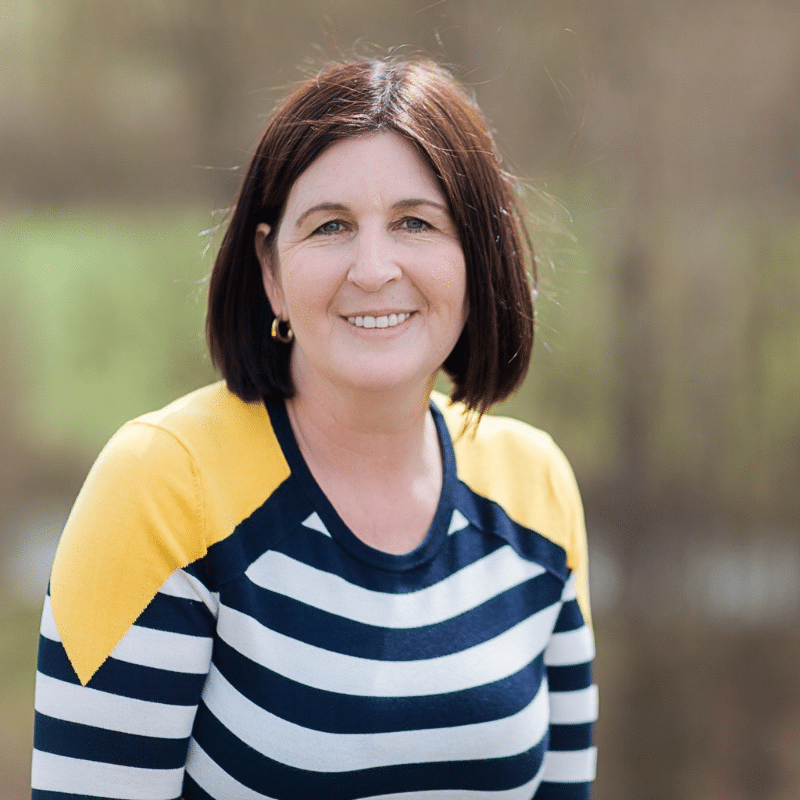
Kylie Lang is a nationally syndicated travel journalist with bylines on the Associated Press Wire & more, a medieval history writer, and the founder and lead author of Tales of the Middle Ages (talesofthemiddleages.com). She holds a BA (Honours) in History from the University of Kent and is a member of the British Guild of Travel Writers.
Related posts:
 Did the Vikings Really Sail to America Before Columbus? Unraveling the Mystery of Vinland
 Sweyn Forkbeard: The First Viking King of England
 The Best TV Shows and Films Set in the Dark Ages To Binge Watch When Trying To Avoid the Summer Heat
 What Drove the Vikings? How They Mastered the Art of Fear and Weaponized It. A Strategy That Shook Europe