
Of all six of Henry VIII’s wives, you’d think the one who outlived him would get the easiest ride after death. Catherine Parr nursed the old king through his final illness, kept her head on her shoulders when the conservatives at court came for her, and remarried for love within months of his funeral.
So what did happen to Catherine Parr’s body after she died? Well, the death itself was quite ordinary by Tudor standards: in childbed, at her own house, with her husband at her bedside at Sudeley Castle on September 5, 1548, days after giving birth, and her body went through 269 years of indignity before it rested.
Table of Contents
She was sealed in a lead coffin, lost for over two centuries, dug up in 1782 still eerily preserved, stripped of hair and teeth by souvenir hunters, reopened again and again by sightseers, and at one point reburied upside down in a wall. She was only given a proper tomb in 1817.

How Did Catherine Parr Die?
Catherine Parr died between two and three in the morning on September 5, 1548, at Sudeley Castle in Gloucestershire. She was 36 and had given birth to her first and only child, a daughter named Mary Seymour, about a week earlier.
The cause was puerperal fever, the bacterial infection that killed so many women in the days before anyone understood that doctors and midwives needed to wash their hands.
In the delirium of her final days, Catherine turned on her husband, Thomas Seymour, in front of her ladies and accused him of standing by while she was mistreated. She may have been thinking of his flirtation with her stepdaughter, the teenage Princess Elizabeth, who had been sent away from Catherine’s household earlier that year under a cloud.
Whatever she meant, Lady Tyrwhit, who was at the bedside, wrote it all down, and it has been fuel for Thomas Seymour’s bad reputation ever since.
She left behind the most Protestant will any English queen had yet produced, and a baby who would, within 18 months, be left an orphan when her father went to the block for treason. Mary Seymour then vanishes from the record before her second birthday, and almost certainly died in infancy.
The last wife of Henry VIII had, in the space of 20 months, outlived him, remarried, borne a child, and died, and her small family was wiped out behind her.
Her funeral on September 7 was the first Protestant burial of an English queen. Miles Coverdale, the man who had translated the first complete printed English Bible, preached the sermon. The chief mourner was an 11-year-old girl then living in Catherine’s household: Lady Jane Gray, who would be queen for nine days six years later and lose her head in the Tower.
It was a quiet funeral by Tudor standards, with no royal party down from London, because Thomas Seymour didn’t want to pay for one.

Where Was Catherine Parr First Buried at Sudeley?
Catherine’s body was prepared as a Tudor queen’s body always was. The contemporary account known as the Breviate of the Interment of the Lady Katherine Parr, printed in Janel Mueller’s edition of Catherine’s complete works and correspondence, records that she was “cered and chested in lead” in her privy chamber while the funeral was arranged.
Cered meant wrapped in cerecloth, strips of linen soaked in melted wax, which sealed the body against air and slowed decay. The wrapped corpse was then laid in sheets of lead soldered shut, and the lead was placed inside a wooden coffin.
She was buried on the north side of the altar in St Mary’s Chapel, the small private chapel standing in the grounds of Sudeley Castle. An alabaster tablet marked the spot. For about 95 years she lay there undisturbed.
Why Was Catherine Parr’s Grave Lost for Over 200 Years?
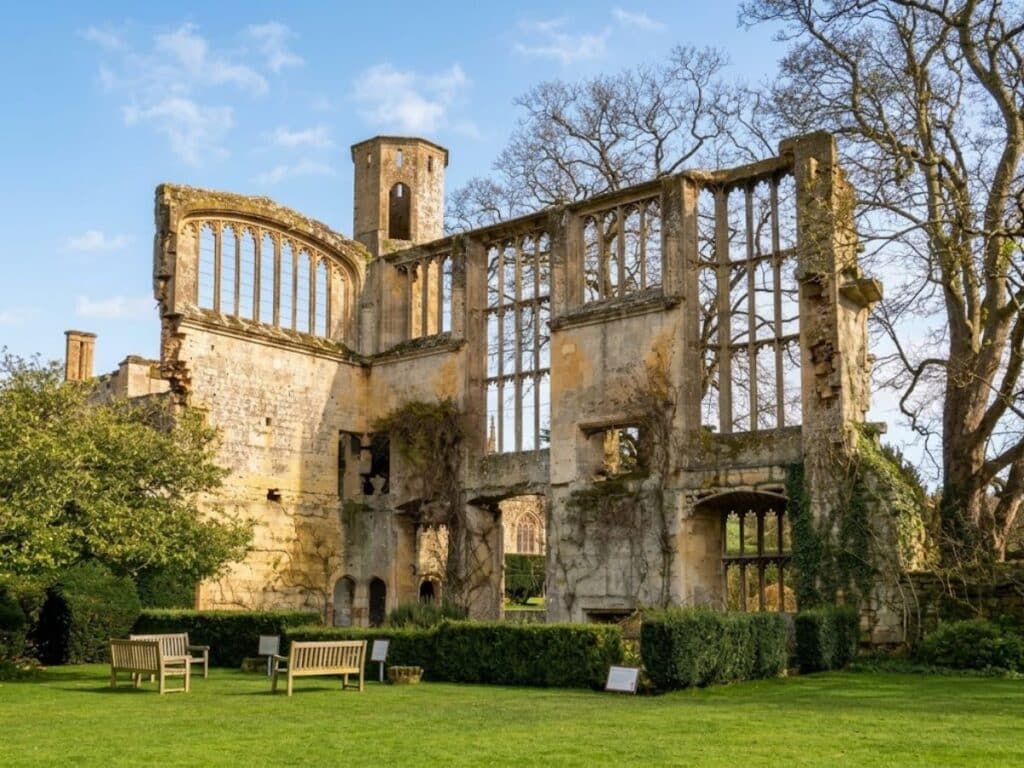
Sudeley was a Royalist stronghold during the Civil War, and it paid the price. The castle was besieged twice and taken by Parliamentary forces, and in 1643 it was slighted on Parliament’s orders.
Slighting meant making a castle useless for war: the roof was stripped, walls were pulled down, and the whole place was left open to the weather. St Mary’s Chapel suffered the same fate. Its roof came off, its windows were smashed, and Roundhead soldiers dug up the graves inside, broke the monuments, and stole anything worth taking.
Agnes Strickland, in her Lives of the Queens of England, quotes a College of Arms manuscript describing Catherine’s original tomb and burial, and goes on to record what happened to the chapel afterward.
The alabaster tablet that marked her grave vanished in the destruction. By 1668 the chapel stood as an ivy-grown ruin, open to the sky, and nobody in the parish could say exactly where the queen was buried.
By 1768 the antiquary Rev. Treadway Russell Nash recorded that no one at Sudeley knew where Catherine Parr lay at all. The chapel had been a ruin for a century and a quarter.
Hooked on the Middle Ages? Get more stories like this one in your inbox.
What Happened When Her Coffin Was Found in 1782?
In the summer of 1782, a group of ladies visiting the Sudeley ruins decided to look for her. They had read Strickland’s predecessors and worked out roughly where the altar of the ruined chapel had stood. Under the direction of John Lucas, a tenant farmer who had the run of the site, they began to dig at the north side of the altar foundations.
About 2 feet down, they struck lead. It was Catherine’s coffin, with her name and titles still legible on the plate: “K.P. Here lyeth Queen Katheryne Wife to Kinge Henry the VIII. And last the Wife of Thomas Lord of Sudeley…” The dates were there too, and no one could pretend it was anyone else.
Lucas, on his own authority, cut into the lead to see what was inside. Emma Dent, writing in the Annals of Winchcombe and Sudeley in 1877 and reproducing the illustrations and letters from the time, records what the diggers found.
After 234 years in sealed lead and wax, Catherine’s body was startlingly preserved. The flesh on one arm, exposed when Lucas peeled back the cerecloth, was described as white and moist. Her nails were still on her fingers. Golden-brown hair was still on her head.
Then, after opening the coffin, they shut it again and went home for the day, leaving it covered with a bit of earth.
Air now reached a body sealed since the reign of Edward VI, and the preservation that had amazed them began to break down within hours. Lucas, by his own account, had already cut off a lock of her hair and kept it. The local clergyman, Rev. John Treadway, recorded his displeasure at Lucas’s interference, but the damage was done.
What Was Taken From Catherine Parr’s Grave?
Over the following years the coffin was reopened repeatedly. Any visitor to Sudeley with the right introduction, and a shilling for Lucas, could have the lead peeled back and peer inside. In 1783 a Mr. Brookes, steward to Lord Rivers, had the grave opened again purely to satisfy his curiosity, and recorded that the body had by then turned fetid.
By the time antiquaries took her remains seriously, there wasn’t much to examine. She had decayed from a preserved corpse into bone and dust in about three years, because sightseers wouldn’t leave her alone.
Each visitor took something. Locks of hair were snipped from the head, a tooth was taken, scraps of the wax-soaked cerecloth were cut away as souvenirs, and fragments of her dress were pocketed.
Pieces of the queen were scattered into private collections across England and the Continent, where they’ve been drifting between heirs and auction houses ever since. A lock of hair said to have been taken from Catherine Parr the night she died was sold at Bonhams in London in January 2008 for £2,160, according to the catalog entry.
Some of these relics can’t be authenticated, and probably never came off her body at all. A lock of hair sat in a jewel case for 200 years with nothing but a label to vouch for it; there’s no way of knowing.
Sudeley itself displays a tooth, locks of hair, and a scrap of cerecloth said to have come from the 1782 opening, in a glass case in the chapel.
Why Was Catherine Parr’s Coffin Buried Upside Down?
By the end of the 18th century, even the local gentry could see that Catherine’s remains couldn’t be left where they were. Every year brought another curious visitor, another reopening, another handful of grave goods pocketed.
At some point in the late 1790s or early 1800s, they moved the coffin, reburied it, and walled it in, hoping it would be the end of it.
It was not. In 1817, a fresh examination of the site was ordered, and when the searchers found Catherine’s coffin again, it had been placed in a walled grave in the north wall of the chapel, bottom-upwards, but nobody knows why.
The most likely story is that whoever did the earlier reburial was working in a hurry, in a half-ruined chapel, probably in the dark, and either didn’t notice or didn’t care which way up the coffin went.
The lead case was by then filled with ivy roots that had grown in through the gaps, and inside, the preserved body of 1782 had been reduced to what the Sudeley guide now calls a pile of dust.
That was the state in which the last Tudor queen was handed over to the 19th century: upside down, root-bound, and almost gone. The Chandos family, who then owned Sudeley, had her remains transferred to their own family vault inside the chapel in 1817, which was the first dignified thing anyone had done for her body in nearly 70 years.
Where Is Catherine Parr Buried Now?
Catherine Parr’s body rests today in St Mary’s Chapel in the grounds of Sudeley Castle, under a neo-Gothic canopied tomb with a recumbent marble effigy on top. The chapel itself was rebuilt from its ruin in the 1850s by the Dent family, who had bought Sudeley in 1837, as part of a general restoration of the whole estate.
In 1861 Catherine’s coffin was moved one final time, from the Chandos vault to the spot where she lies now, in the restored chapel on roughly the same ground where she was first buried in 1548.
The tomb above her was designed by Sir George Gilbert Scott, the Victorian Gothic Revival architect best known for the Albert Memorial and the frontage of St Pancras station. The effigy was carved by John Birnie Philip.
She’s shown as she probably looked around the time of her marriage to Henry: in a gable hood, hands folded on her breast, serene in a way the last three years of her actual existence were not. It’s a 19th-century idea of a Tudor queen, laid over the dust of a real one.
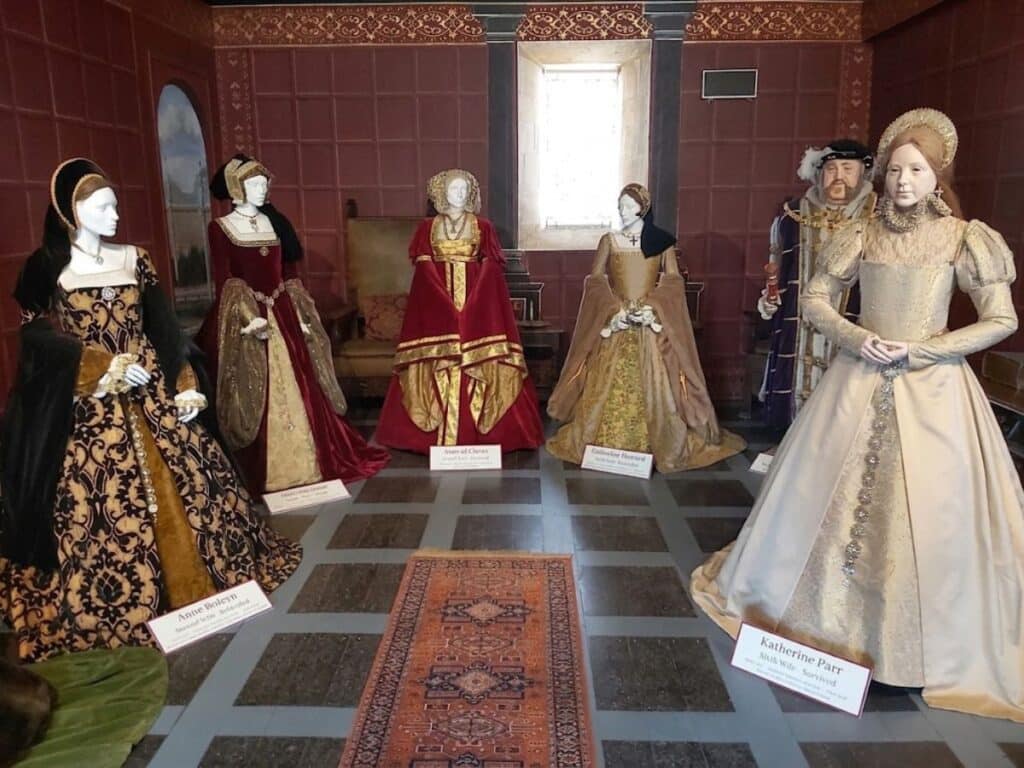
Sudeley is the only private castle in England with a queen buried in its grounds. You can visit the chapel, see the tomb, and look into the glass case that still holds the tooth, the hair, and the scraps of cerecloth taken from her coffin in the long years when nobody was guarding her.
Thomas Seymour, Catherine’s widower, went to the block for treason in March 1549. Their baby, Mary, was taken in by Katherine Willoughby, Duchess of Suffolk, and almost certainly died before she was two.
Frequently Asked Questions
What happened to Catherine Parr’s body after she died?
Catherine Parr’s body had a strange afterlife. She was sealed in a lead coffin and buried at Sudeley Castle in 1548, and then her grave was lost for more than 200 years as the chapel fell to ruin. When the body was dug up in 1782 it was still preserved, and souvenir hunters started helping themselves to hair and teeth. The coffin was reopened again and again, reburied upside down at one point and shoved into a wall, before she was given a proper tomb in 1817.
Was Catherine Parr’s body really preserved when they found it?
Catherine Parr’s body really was preserved when it was first uncovered in 1782, 234 years after her death. An arm was opened up, and the flesh was described as white and moist, with golden hair still on the head inside the sealed lead coffin. Once air reached her, the preservation broke down fast.
Why was Catherine Parr’s coffin buried upside down?
Catherine Parr’s coffin was buried upside down because the people reburying her stopped caring which way up she went. When the chapel was examined in 1817, her coffin was found in a walled grave, filled with ivy roots that had worked their way through the lead.
Where is Catherine Parr buried now?
Catherine Parr is buried now in St Mary’s Chapel in the grounds of Sudeley Castle in Gloucestershire, under a neo-Gothic tomb designed by Sir George Gilbert Scott with a marble effigy by John Birnie Philip. Her remains were moved there during the chapel’s 19th-century restoration.
How did Catherine Parr die?
Catherine Parr died at Sudeley Castle on 5 September 1548, between two and three in the morning, of puerperal fever, roughly a week after giving birth to her only child, Mary Seymour. She was 36, had outlived Henry VIII, and had married Thomas Seymour. Her funeral two days later is recorded as the first Protestant burial service held for an English queen.
Sources
Primary sources
“A Breviate of the Internment of the lady Katherine Parr, Queen Dowager.” Katherine Parr: Complete Works and Correspondence. Chicago: University of Chicago Press, 1548. https://thetudortravelguide.com/katherine-parr-tomb/.
Secondary sources
Dent, Emma. Annals of Winchcombe and Sudeley. London: John Murray, 1877. https://openlibrary.org/books/OL6920086M/AnnalsofWinchcombeandSudeley. .
Strickland, Agnes. Lives of the Queens of England from the Norman Conquest. 1840-1848. https://babel.hathitrust.org/cgi/pt?id=hvd.32044094404332&view=1up&seq=330.
Sudeley Castle – History. https://sudeleycastle.co.uk/history.

Love a good medieval story?
Join our readers and get tales of kings, queens, castles and ordinary medieval lives straight to your inbox.

Kylie Lang is a nationally syndicated travel journalist with bylines on the Associated Press Wire & more, a medieval history writer, and the founder and lead author of Tales of the Middle Ages (talesofthemiddleages.com). She holds a BA (Honours) in History from the University of Kent and is a member of the British Guild of Travel Writers.
Related posts:
 The Last Wife of Henry VIII: Catherine Parr’s Fight for Faith, Power, and Survival
 Where Is Henry VIII Buried, and Why Is There No Tomb?
 The Queen Who Blew Up the Tudor Court: Catherine Howard’s Rise and Catastrophic Fall
 Catherine of Valois, the Widowed Queen Who Secretly Married a Welsh Servant and Started the Tudors