Mary Boleyn doesn’t get nearly as much attention as her sister Anne. Yet her story runs just as deep, with twists that shaped the Tudor dynasty in ways few people realize. While Anne lost her head for catching a king’s eye, Mary captured his heart first, long before the crown came between the sisters.
She was married to William Carey, a respected courtier, but her relationship with Henry VIII turned her life upside down. Two children were born during that time, a daughter named Catherine and a son named Henry. History has never agreed on who their father really was, and the king himself kept silent. Still, these two would go on to weave themselves into the very fabric of Tudor England.
Table of Contents
Their mother faded into obscurity, yet her children rose higher than anyone expected. Catherine served queens and became a trusted figure in Elizabeth I’s court. Her brother Henry became a baron and one of the most loyal men Elizabeth ever had by her side. The Boleyn bloodline didn’t die with Anne on the scaffold. It lived on through Mary’s children, shaping the Tudor world from behind the scenes.
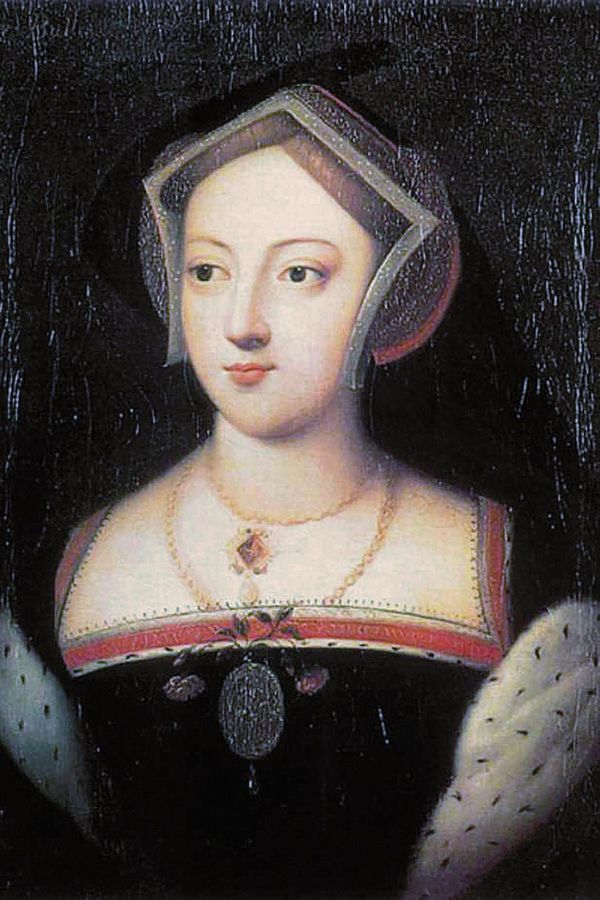
Mary Boleyn: The King’s Mistress
Mary Boleyn entered the royal court in her teens, part of a rising family with sharp ambition and powerful friends. She spent time in France before returning to England, where she caught the attention of Henry VIII. By then, she was already married to William Carey, one of the king’s trusted courtiers. The wedding in 1520 was grand enough that Henry himself attended, though no one could have predicted what would come next.
Sometime around 1522, whispers began to circle the court. Mary Boleyn was said to have become the king’s mistress. The relationship likely lasted for about three years, ending around 1525. During that time, Mary gave birth to two children: Catherine in 1524 and Henry in 1526. Their births have fueled centuries of speculation. Were they the king’s children or William Carey’s?
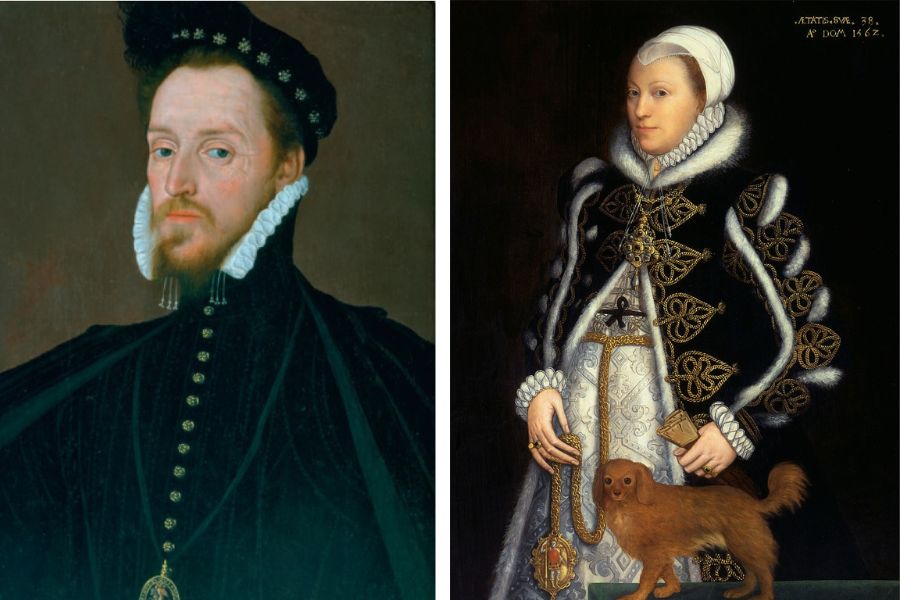
The Two Children of Mary Boleyn
Henry never claimed them as his own. There were no titles, no lands, no public acknowledgment. But there were favors. The Carey family received royal grants and patronage that hinted at more than friendship. When William Carey died suddenly of the sweating sickness in 1528, Mary was left a widow with two young children and no financial security.

Anne Boleyn, already rising in the king’s favor, stepped in to help her sister. She arranged for Mary’s son Henry to receive an education and a position that would open doors in the years ahead. It was a small act that kept Mary’s children connected to the court, even after their mother’s fall from grace.
Mary’s own story faded from public view after her affair ended, but her children were another matter entirely.
Catherine Carey
When her named father, William Carey, died in 1528, she was just a child. Her aunt, Anne Boleyn, intervened to ensure Catherine’s education and position were secure. It was Anne’s influence that kept the family within reach of the royal circle, even when public opinion began to turn.
Catherine first served as a maid of honor to Anne of Cleves and later to Catherine Howard, two of Henry VIII’s unfortunate wives. Service at court was no easy life. It meant long days, constant scrutiny, and the risk of being caught in the crossfire of royal politics. But Catherine managed to navigate it all with steady grace and sharp instinct.

In 1540, she married Francis Knollys, a respected courtier who would later become treasurer of the royal household. Together they had sixteen children, an exhausting number by any measure, and yet Catherine remained a consistent presence at court. Her real rise came under Elizabeth I.
When Elizabeth became queen, she made Catherine her chief lady-in-waiting and one of her most trusted attendants. The two women were close, perhaps closer than anyone around Elizabeth dared to be. If Catherine truly carried the king’s blood, it would explain Elizabeth’s affection. But no proof has ever surfaced, only the deep loyalty that bound them for life.
When Catherine died in 1569, Elizabeth paid for her funeral and allowed her to be buried in Westminster Abbey. That honor spoke volumes.
Henry Carey
Henry Carey grew up in the shadow of uncertainty. Like his sister, his parentage was the subject of endless gossip. Still, his life was marked by opportunity. After his father’s death, his aunt Anne Boleyn ensured that he was well-educated and well-connected.
Those early efforts paid off. When Elizabeth I took the throne, she rewarded Henry’s steady character with titles and wealth. In 1559, she made him Baron Hunsdon, a position that carried both status and responsibility.

She granted him an annual pension worth £400, a significant sum for the time, and later appointed him Master of the Hawks with a salary of £40 a year. These rewards reflected Elizabeth’s trust in him, something she gave to few.
Henry’s loyalty never wavered. He served as a member of the Privy Council and commanded troops during times of rebellion. He was respected for his blunt honesty and his refusal to play the scheming games that destroyed others at court. His relationship with Elizabeth was one of genuine kinship, whether through blood or shared history.
He married Anne Morgan, and like his sister, fathered sixteen children. His family continued to thrive under Elizabeth’s protection. When he died in 1596, the queen also allowed him to be buried in Westminster Abbey, the same as his sister.
The Boleyn Bloodline Beyond the Throne
The Boleyn name may have been tainted by scandal, but through Catherine and Henry Carey, it found a second life. Their children and grandchildren married into noble families, weaving Boleyn blood through the veins of England’s upper class. Some became courtiers, others politicians or soldiers. The legacy of Mary Boleyn’s line stretched far beyond the Tudor court, outlasting the dynasty that had shaped their fate.
Catherine’s descendants included figures who would play their own roles in shaping the country’s story. Her granddaughter, Lettice Knollys, married Robert Dudley, the Earl of Leicester, Elizabeth I’s favorite. That marriage created a rift between Lettice and the queen that never fully healed, but it also ensured that the Boleyn connection continued to influence circles of power.
Henry’s descendants carried the Hunsdon title for generations. His grandson became the first Earl of Dover. The family’s loyalty to the crown endured through the reigns of the early Stuarts, though their influence waned as new dynasties rose.
It’s ironic, in a way. Anne Boleyn’s ambition brought her to the throne, only to end in execution. Mary’s path, though not royal, had a bloodline that endured. Her children lived long enough to see the Boleyn name restored, if not in power, then in honor.
Related posts:
 What History Got Wrong About Mary Boleyn: The Forgotten Sister of Anne, Mistress, Mother, Survivor
Mary Wasn’t Just the “Other Boleyn Girl,” She Was the First (this is her story)
What History Got Wrong About Mary Boleyn: The Forgotten Sister of Anne, Mistress, Mother, Survivor
Mary Wasn’t Just the “Other Boleyn Girl,” She Was the First (this is her story)
 The Rise and Fall of Anne Boleyn: Power, Passion, and Politics
 The Queen Who Blew Up the Tudor Court: Catherine Howard’s Rise and Catastrophic Fall