I was rummaging through a box of my grandmother’s old postcards last winter and found one from 1937, a coronation souvenir for George VI. She’d kept it in a biscuit tin with a lock of hair and a ration book.
I remember sitting on the kitchen floor with it, thinking how strange it was that this nervous, stammering man ended up being the king who steadied a country through the Blitz, while his older brother, the golden boy, had walked off the stage the year before.
Table of Contents
By the end of the Second World War, almost every crown in Europe was either gone, in exile, or wearing the very thin disguise of a constitutional figurehead nobody much believed in. But the British monarchy was still there.
The Romanovs were shot in a cellar. The Hohenzollerns were chased into the Netherlands. The Habsburgs were dismantled by treaty. The Italian royals were voted out by referendum in 1946.
And here we’re in 2026 with a Windsor still on the throne. So how did the British royal family do it? They did it through a series of cold, sometimes brutal, sometimes lucky decisions made by three kings in a row.

The Cousins’ War and a King Who Read the Room
If you want to understand why the British monarchy is still standing, you have to start with George V, who came to the throne in 1910 and inherited a family tree so tangled with German relatives it looked like a Christmas card list for half of central Europe.
His first cousin was Kaiser Wilhelm II of Germany. His other first cousin was Tsar Nicholas II of Russia. The three of them looked so alike in photographs that people sometimes confused George and Nicholas at family weddings.
When the war broke out in 1914, George was technically the head of the House of Saxe-Coburg and Gotha, a name that didn’t go down terribly well in a London being bombed by Gotha aircraft.
By 1917 the mood in Britain had turned vicious. There were anti-German riots, dachshunds being kicked in the street, shops with German-sounding names having their windows smashed.
H.G. Wells wrote a sniffy letter to The Times calling the court an ‘alien and uninspiring’ one, and George reportedly snapped, ‘I may be uninspiring, but I’ll be damned if I’m alien.’
On July 17, 1917, he issued a royal proclamation renaming the dynasty the House of Windsor, after the castle. At the same stroke, he stripped his German relatives of their British titles and cut a lot of cousins loose.
It was a piece of public relations so successful that we still call them the Windsors today, and most people have no idea the name was invented during a war. The Kaiser, when he heard, made a famously bitter joke about going to see a performance of ‘The Merry Wives of Saxe-Coburg-Gotha.’
He wasn’t laughing for long. Within 18 months, his own throne was gone.
The Cousin Left to Die
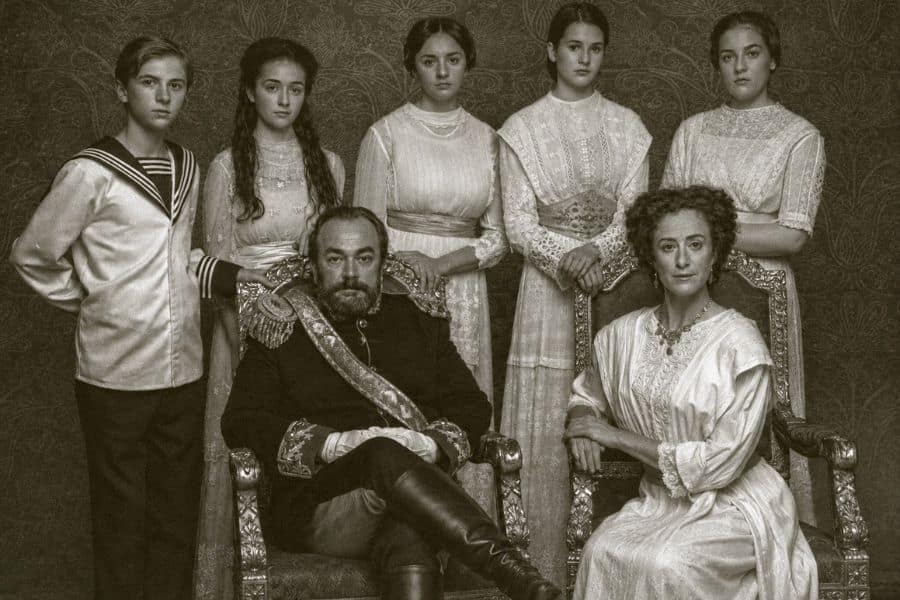
The harder, uglier decision came the same year. After the February Revolution in 1917, the new Russian provisional government was looking to get rid of Nicholas II and his family, and the obvious place to send them was Britain.
George V was Nicky’s first cousin. They’d written to each other for years. The British government, under David Lloyd George, initially agreed to offer asylum. The telegram was sent. The Romanovs began to pack.
And then George got cold feet. His private secretary, Lord Stamfordham, wrote a series of increasingly anxious letters to the Foreign Secretary arguing that the presence of the Tsar in Britain, with his deeply unpopular German-born wife Alexandra, could destabilize the monarchy at exactly the wrong moment.
There were strikes at home. There was talk of revolution in the air, and the king himself was rattled by the Russian example. The offer was killed.
Sixteen months later, Nicholas, Alexandra, their four daughters and their hemophiliac son were shot in a basement in Yekaterinburg. The bodies were doused in acid and dumped down a mineshaft.
George wrote in his diary that he was horrified, and he was, but he had also chosen his throne over his cousin’s life. Historians have argued about this for a century now. Kenneth Rose’s 1983 biography brought the king’s role to wider attention, and Helen Rappaport’s more recent work has fleshed out just how cold the decision was.
A king who wouldn’t lift a finger to save his cousin was a king who understood, even painfully, what survival in 1917 actually required.

Hooked on the Middle Ages? Get more stories like this one in your inbox.
The Brother Who Walked Away
Skip forward to 1936, and the monarchy was facing a different kind of threat, this time from inside the family. George V had died in January, and the throne passed to his eldest son, who became Edward VIII.
Edward was popular in the way that good-looking princes who say sympathetic things to unemployed Welsh miners tend to be popular. He was also, by every account, restless, easily bored, and reportedly fond of Nazi sympathizers in a way that worried both his ministers and his mother.
And he wanted to marry Wallis Simpson, a twice-divorced American whose second divorce wasn’t even final when he proposed.
The Church of England wouldn’t have it, Prime Minister Stanley Baldwin wouldn’t have it, and the Dominions, whose support was constitutionally required, wouldn’t have it either. By December Edward had abdicated, the first British monarch ever to do so voluntarily, and his younger brother Bertie was suddenly on a throne he had never expected or particularly wanted.
Bertie became George VI, choosing the name to signal continuity with his father after the chaos of his brother’s 11-month reign.
What looks now like a near-disaster was spun, with extraordinary speed, into a story about duty. Edward had put a woman before his country. Bertie, stammer and all, had stepped up. The Christmas broadcast, the visits to bombed-out East End streets in 1940, the famous line from Queen Elizabeth (the wife, later the Queen Mother) about being glad Buckingham Palace had been bombed because now she could look the East End in the face.
All of it built a picture of a family who stayed when they could have run. Edward, meanwhile, was packed off to be Governor of the Bahamas to keep him out of Europe, where his sympathies were becoming embarrassing.
The Marburg Files, captured German documents released in the 1950s, suggested the Nazis had hoped to restore him as a puppet king if they invaded Britain.

A Symbol at the Exact Moment One Was Needed
The Second World War is where the monarchy really earned its keep, and it did so by doing very specific things at very specific moments. The royal family stayed in London during the Blitz when they could easily have gone to Canada, as plenty in government suggested.
Buckingham Palace was hit by German bombs nine separate times. On September 13, 1940, a bomb landed in the quadrangle while the king and queen were actually inside, and they came close enough to being killed that the king’s diary entry from that day is slightly shaky in the handwriting.
Princess Elizabeth, then 18, joined the Auxiliary Territorial Service in 1945 and trained as a mechanic, which gave the newspapers a photograph of a future queen in overalls under the hood of a truck.
Was it staged for the cameras? Of course it was, partly. But she did the training, and she could actually change a tire, which is more than most princesses anywhere had ever been asked to do.
The king made his broadcasts, voice tight with the effort of pushing through the stammer, and the country listened.
Compare this to what was happening to other European royals. King Leopold III of Belgium remained in Belgium when his country was overrun and was widely accused of collaboration; he was forced to abdicate in 1951.
King Victor Emmanuel III of Italy had spent two decades propping up Mussolini and was thrown out by referendum in 1946.
The Greek royals went into exile and limped back briefly before being voted out for good in 1974.
The British royals had managed to be present without being political, visible without being compromised, and had threaded a needle almost nobody else had.
The Constitutional Trick the British Got Right
By 1914, the British monarchy had already spent more than two centuries giving up real power in slow, grudging increments, from the 1688 settlement onward through the great reform acts of the 19th century.
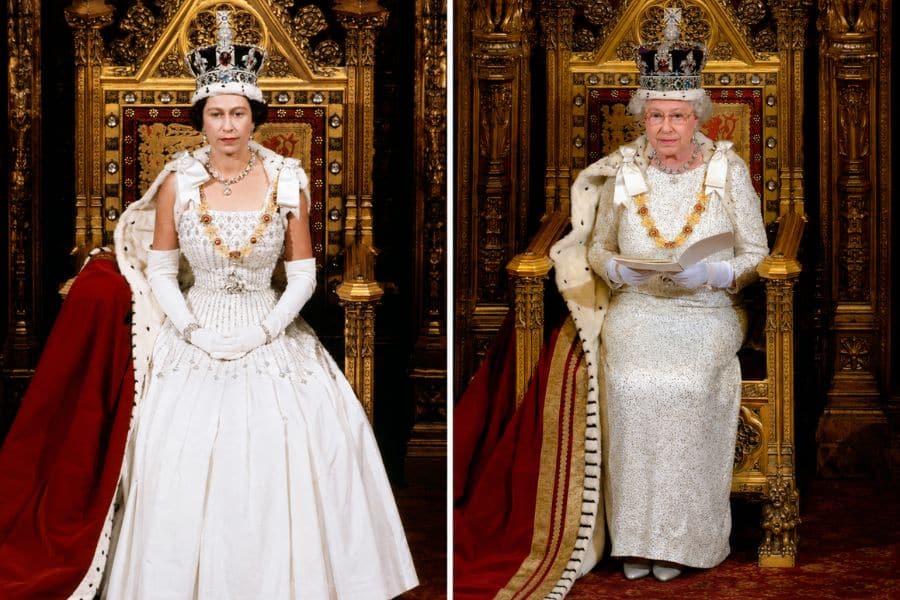
The king didn’t rule. He reigned. He signed what Parliament put before him, opened buildings, reviewed troops, and stayed out of party politics. Walter Bagehot’s 1867 book The English Constitution had laid out the theory: the monarch had the right to be consulted, to encourage and to warn, and nothing more.
This meant that when things went wrong, the blame landed on politicians, not the palace. Lost the war? Blame the government. Economic collapse? Blame the chancellor. The king was useful precisely because he wasn’t responsible.
Contrast this with the Kaiser, who had insisted on being a real war leader and therefore wore every defeat personally, or the Tsar, who had taken command of the Russian army in 1915 and was held to account for every disaster that followed.
Both lost their thrones partly because they hadn’t yet finished the long climb-down from real power.
The British had done their revolutionary violence in the 17th century, with the execution of Charles I in 1649 and the Glorious Revolution of 1688, and they’d been adjusting the settlement ever since.
By the time of the 20th-century wars, the monarchy was already a kind of national mascot with constitutional duties attached, and a mascot is much harder to overthrow than a ruler. You can be furious with a prime minister and still feel fond of a king who waves from a balcony.
The Europeans who hadn’t done that work, who still had monarchs trying to govern as well as reign, found out the hard way what happens when the people decide they want a republic.
Which is how you end up with a 1937 coronation postcard in a biscuit tin in rural France, almost 90 years later, with a Windsor still on the throne and the Romanovs still in their forest grave.
Love a good medieval story?
Join our readers and get tales of kings, queens, castles and ordinary medieval lives straight to your inbox.

Kylie Lang is a nationally syndicated travel journalist with bylines on the Associated Press Wire & more, a medieval history writer, and the founder and lead author of Tales of the Middle Ages (talesofthemiddleages.com). She holds a BA (Honours) in History from the University of Kent and is a member of the British Guild of Travel Writers.
Related posts:
 How George Plantagenet, Duke of Clarence, Ended Up Dying in a Wine Barrel
 Why Did the Plantagenet King Edward IV Kill His Own Brother In a Barrel of Wine?
 The Rise and Fall of George Villiers, the King’s Favorite: From the Bedchamber to the Assassin’s Blade
 Josephine Baker: The Superstar Who Became a Spy in World War Two