
Being the king’s favorite was a dodgy business in medieval times, and it was no different during the reign of the Stuarts. The Stuart court was a ruthless place where people would say one thing to your face and stab you in the back the minute you turned around. Everyone was vying for favor and jostling for position, and being the King’s love interest was a dangerous title to have hanging over your head.
This was the position George Villiers, 1st Duke of Buckingham, found himself in. His rise to power was due to King James I (VI of Scotland), who was madly in love with George. The King’s proclivity towards men was well known amongst the court, and many made a living out of it. However, George Villiers stood out from the crowd in the king’s eyes.
Table of Contents
But what happened to him in the end? Did he fall out of favor after the King’s death, or did he manage to maintain favor and continue on his path upwards?

From Modest Beginnings to Royal Circles
George Villiers didn’t come from the highest ranks of English nobility, but he knew how to play the game. Born in 1592 in Leicestershire, he was the second son of Sir George Villiers and Mary Beaumont. His family had some influence, but nowhere near the power he would later wield.
As a young man, Villiers was ambitious and understood early on that presentation mattered just as much as pedigree. He trained in France, polishing his manners and mastering courtly graces. Dancing, fencing, and conversation came naturally to him, and people noticed.
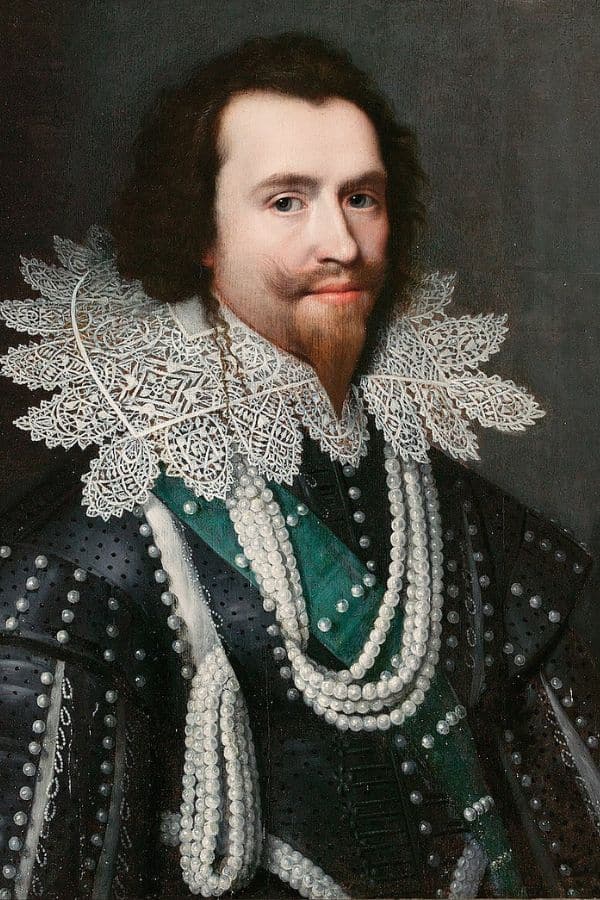
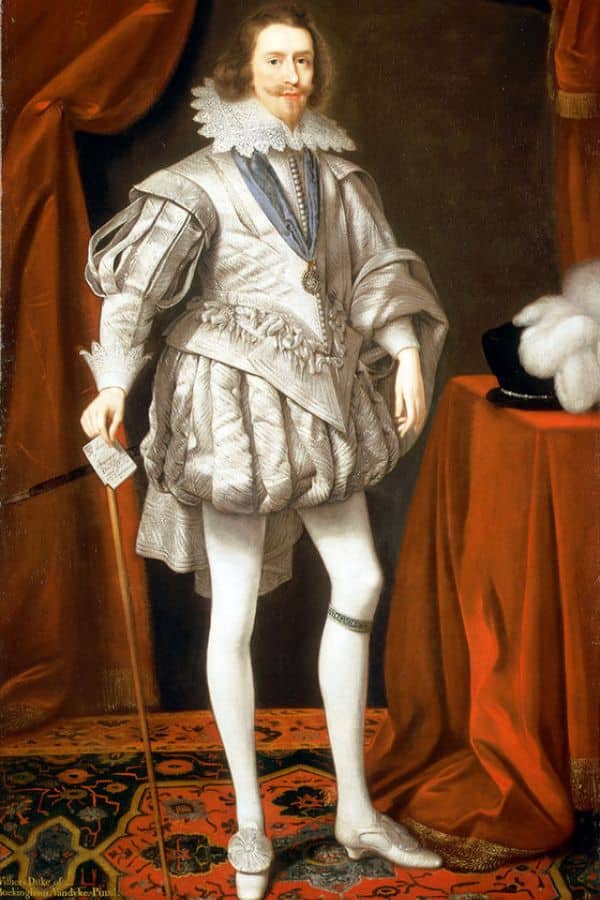
Those who met him couldn’t help but comment on his good looks and confidence. One court observer even described him as “the handsomest-bodied man in all of England,” which certainly didn’t go unnoticed when he caught the King’s eye.
When Villiers Caught the King’s Attention
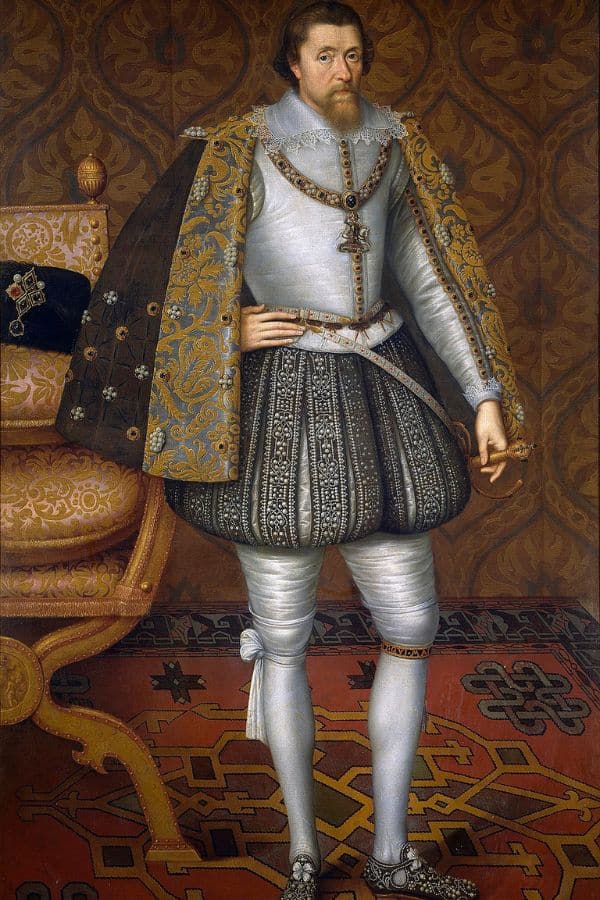
In 1614, George Villiers crossed paths with King James I at Apethorpe Palace in Northamptonshire, and everything changed. The King had a well-known weakness for handsome young men, often rewarding them with wealth, titles, and more than a little affection.
His current favorite was Robert Carr, the Earl of Somerset, a man whose power at court had grown to dangerous levels. Carr’s influence over the King made him deeply unpopular, even with Queen Anne of Denmark, who wanted him gone.
So when Villiers appeared, elegant, confident, and far easier on the eye, many saw an opportunity. He became the perfect rival to Carr, and those who resented the Earl were more than willing to help the newcomer take his place.
Another quote from the time described him as:
“From the nails of his fingers – nay from the sole of his foot – to the crown of his head, there was no blemish in him. The setting of his looks, every motion, every bending of his body was admirable.”
Climbing the Ladder of Favor
George Villiers didn’t rise at court by luck alone. With the backing of some well-connected supporters, including his ambitious mother, Mary Villiers, and her second husband, Sir William Compton, he landed the coveted role of royal cupbearer.
It was a position that allowed him to be near the King daily, serving him at meals and entertaining him with sharp wit and easy conversation.
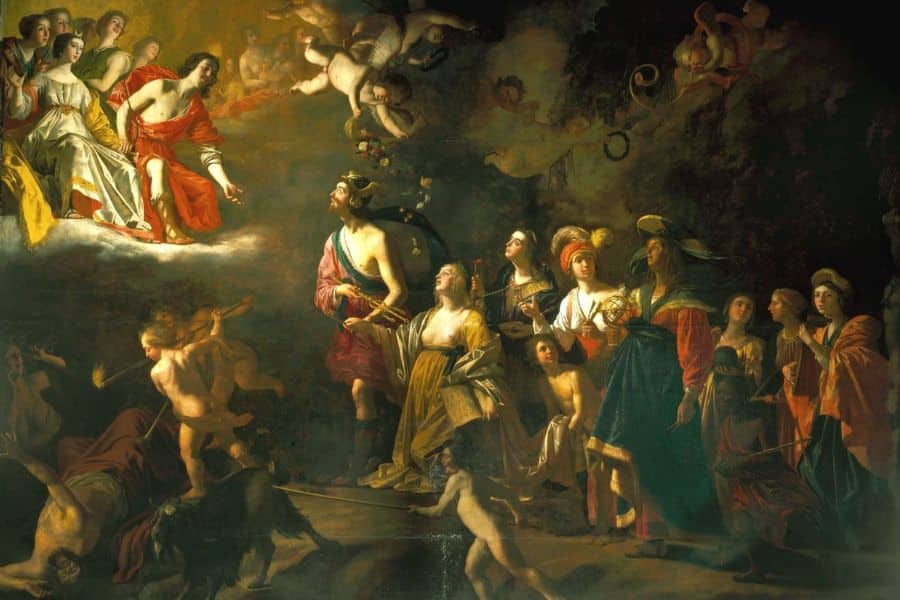
James adored lively company, and Villiers knew exactly how to keep his attention. His grace also shone in the court masques that the King loved so much. These elaborate performances were the height of royal entertainment, and Villiers became a regular feature, dazzling the audience with his dancing.
Many of these spectacles took place in the newly built Banqueting House at Whitehall, which James had commissioned as a symbol of his reign. Its ceiling, later decorated with a grand painting celebrating the King’s rule, would one day watch over the man who had once danced his way into royal favor.
Hooked on the Middle Ages? Get more stories like this one in your inbox.
The Rise of the King’s Favorite
Once George Villiers had the King’s attention, his climb through the ranks was rapid. In 1615, James rewarded him with a knighthood and made him a Gentleman of the Bedchamber, a position that allowed intimate access to the monarch’s daily life. Few men came closer to the King than Villiers, and it wasn’t long before he completely replaced Robert Carr as James’s most trusted companion.
With royal favor came power. Villiers began collecting titles, lands, and money at an astonishing pace. In less than a decade, he rose from Knight to Viscount, then Earl, then Marquis, and finally, in 1623, Duke of Buckingham. James also appointed him to the Privy Council and made him Lord High Admiral of England, giving him influence both at court and at sea.
His position also opened doors to a strong marriage alliance. In 1620, Villiers wed Lady Katherine Manners, daughter of the Earl of Rutland and one of the wealthiest women in England.

The Scandalous Courtship of Lady Katherine Manners
Of all George Villiers’ schemes, his pursuit of Lady Katherine Manners may have been the most ruthless. Katherine was the only surviving child of the Earl of Rutland, and after her brothers died under suspicious circumstances, blamed on witchcraft, she became the richest heiress in England.
Known for her modesty and strong Catholic faith, she was hardly the type to draw attention at court. But when George turned his charm toward her, she was quickly captivated.
Her father saw through it.
The Earl of Rutland wanted nothing to do with a marriage between his daughter and the King’s favorite. George was Protestant, the Villiers family had a reputation for social climbing, and the Earl openly disapproved of the King’s affection for him. He refused to give permission for the match.
George and his mother, Mary Villiers, decided to take matters into their own hands. While the Earl was away, Lady Katherine was invited to dine at Mary’s home, an invitation that seemed harmless enough. But after the meal, she was taken to the gatehouse at Whitehall and persuaded to stay the night, supposedly because she was unwell. George stayed too, and by morning, her reputation was destroyed.
When the furious Earl demanded that George marry his daughter to save her honor, George refused. The Earl, humiliated and desperate, had to plead for the marriage to go ahead. Eventually, George relented, and the couple were married in a quiet ceremony attended only by the King and the Earl himself.
Whether Katherine knew what was planned that night remains uncertain. What is known is that she loved George deeply and stayed devoted to him despite his affairs and ambition. She even converted to Protestantism for him, only to return to her Catholic faith after his death. Together, they had four children and remained under the warm favor of the King, who saw their marriage as a reflection of his own affection for Villiers.
The King’s Protection
The gossip in court circles was open and often cruel, and while letters between the two men reveal deep affection, they stop short of proving anything beyond question. Still, in a world where appearances mattered, there was little doubt about how close they were.
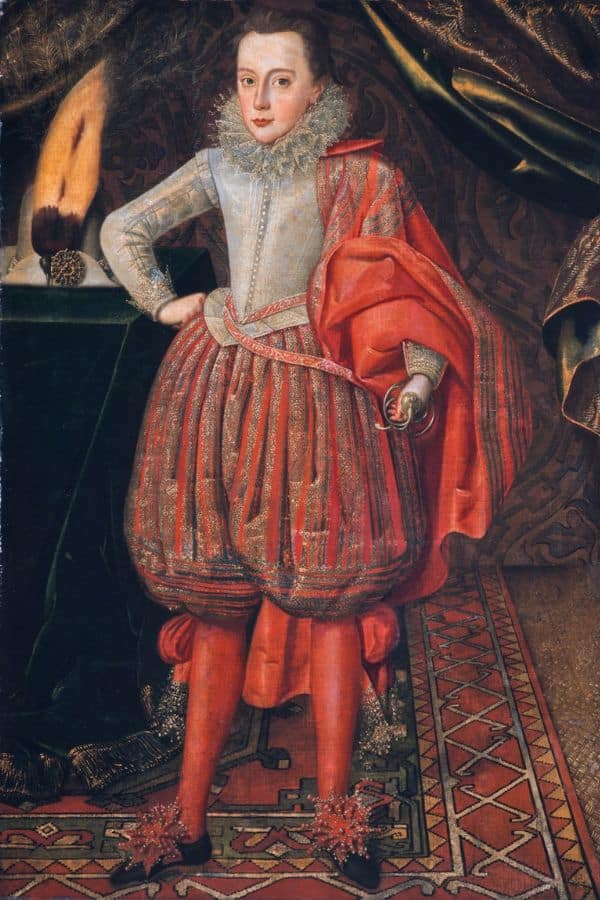
Not everyone was impressed by Villiers’ influence over the King. The young Prince Charles resented him and often clashed with him during his teenage years. George usually came out on top. In one heated moment, he reportedly told the Prince to “kiss his arse,” and the King said nothing. It was clear who held power in those days.
George wasn’t stupid; he knew James’s protection would not last forever. The King was aging, and the day would come when Charles would inherit the crown. Slowly, Villiers began repairing his relationship with the future monarch.
The King’s Admiral and the Heir’s Ally
In 1619, following the death of Queen Anne of Denmark, George was made Admiral of the Fleet. By 1623, he had joined Prince Charles on a mission to Spain to negotiate a royal marriage with the Infanta Maria Anna. The trip was ambitious and risky, but it also brought the two men closer.
With the Queen gone, George became a guide for Charles at court, helping him navigate its politics and social intrigues. He often acted as mediator between father and son when tensions ran high. Their bond grew, and letters show a growing trust between them. In one, Charles confided a secret affair, knowing his father would disapprove. Ironically, James, who had his own favorite, was strongly opposed to mistresses, fearing that illegitimate heirs could destabilize the line of succession.
In March 1625, the royal household was shaken. James fell ill after taking a cordial and poultice prepared by George himself. Rumors spread fast that the King had been poisoned, and by the time word reached the continent, the story had grown into an accusation of murder.
The truth was far less dramatic. James’s health had been failing for years, and the medicine was more likely a desperate attempt to ease his pain than anything sinister. George was at his bedside when the King died, holding his hand. James’s death left George vulnerable and Charles suddenly on the throne at only twenty-four years old.
The New King and a French Queen
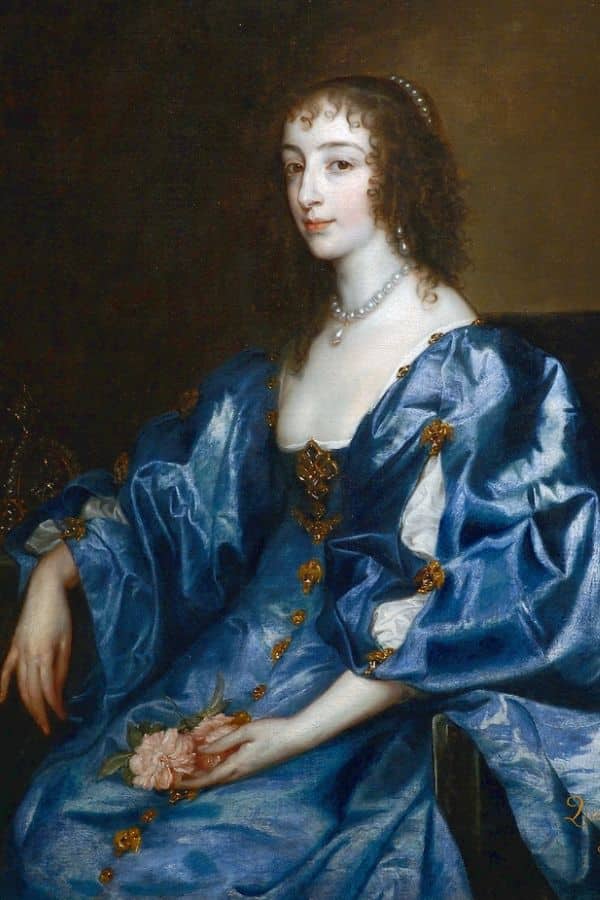
Even before James’s death, negotiations were underway for Charles to marry Henrietta Maria, sister to the King of France. The marriage treaty was unpopular in England because it included a promise to ease the persecution of Catholics. To calm Protestant fears, Charles refused to let prominent Catholics attend his father’s funeral, denying them mourning clothes as a statement of loyalty to his faith.
When it came time to bring his bride home, Charles sent George to France. True to form, George made it a grand affair. He arrived with gilded carriages, fine clothing, and a retinue that dazzled Paris. There were whispers that he paid too much attention to the French queen, Anne of Austria, but George dismissed the talk.
Relations between him and Henrietta Maria were more difficult. At their first meeting, George took offense at the Catholic ceremony arranged for her arrival in Amiens, led by nearly thirty priests and a papal envoy.
He knew the English people would see it as a threat to their Protestant identity. His temper flared, and he publicly scolded the young queen, who stood her ground despite being only fifteen. Their relationship never recovered.
Trouble with Parliament
Once back in England, George faced new problems. As Lord High Admiral, his leadership of the navy came under scrutiny. Parliament accused him of mismanagement and of favoring Catholics. The events in France had not helped his reputation.
Trying to prove his loyalty, he persuaded Charles to reintroduce the harsh laws against Catholics. The move only widened the divide between the King and his new queen, who blamed George for the growing hostility at court.
Henrietta Maria resented him deeply, especially after he reminded her that English queens who defied expectations had sometimes lost their heads. It was a cruel warning, and she never forgot it.
Charles’s relationship with Parliament also collapsed. When they refused to fund a war against Spain, he dissolved them and used Henrietta Maria’s dowry to finance the campaign himself. The great artist Rubens, who had met George in France, observed at the time that he pitied the young king who, through “false counsel,” was dragging himself and his country toward ruin.
The war went badly. English ships were poorly supplied, and the campaign was a disaster. Public anger turned toward George. When he failed to denounce certain Catholic writings, his enemies pounced, claiming he was sympathetic to Rome. By early 1626, his popularity had collapsed, and pamphlets accusing him of treachery spread across England.
Scandal, Accusations, and Rebellion
That spring, a pamphlet appeared accusing George of murdering King James. Parliament took notice and opened an inquiry. The House of Commons sent formal charges against him to the Lords. Charles, desperate to protect his friend, shut Parliament down before the case could proceed. But this left him broke and politically isolated.
Suspicion now turned toward the Queen. Charles believed her French entourage was full of spies, and when France made peace with Spain, he lost all trust in her household. Acting on George’s advice, he sent most of her servants back to France. The Queen was devastated and blamed both men for her humiliation.
Her new attendants included George’s own sister, Susan, Countess of Denbigh, and Lucy Hay, Countess of Carlisle, who was rumored to be George’s choice for the King’s mistress. The plan, if true, failed, and Lucy eventually befriended the Queen instead.
The Fall of George Villiers
By 1627, England was fighting both Spain and France, a reckless decision pushed forward by George. The double war drained money and manpower, and George’s leadership at sea continued to disappoint. His fleets were ill-equipped, and losses were heavy. Public outrage boiled over. In February 1628, sailors attacked his London home, shouting for his death.
When Charles called Parliament again that spring, the members refused to discuss funding until George was removed. They revived every accusation they could find, including the old rumor that he had poisoned James and new claims that he planned to overthrow Charles himself. Then in June, George’s astrologer, John Lambe, was murdered by a mob shouting that he was “the duke’s devil.”
Two months later, on August 23, 1628, George Villiers’s story came to a bloody end. While staying at the Greyhound Inn in Portsmouth, he received word that English troops had achieved a small victory. Excited, he ordered a carriage to carry him to the King with the news.
As he passed through the inn, he stopped to speak to a colonel, unaware of the danger behind him. A man stepped forward and drove a knife into his chest. George collapsed and was laid on a table, where he died within minutes.
Aftermath and Legacy
When news reached Charles, he remained silent until he was alone, then broke down in grief. The public celebrated the death of the man they blamed for their troubles, forcing the King to hold the funeral in secret at night. George Villiers, 1st Duke of Buckingham, was buried in Westminster Abbey.
In the days that followed, Henrietta Maria showed unexpected compassion. She comforted the King through his mourning and even visited George’s widow, Lady Katherine. Despite the scandal and resentment between them, she chose grace over vengeance.
Katherine outlived her husband by many years. Their son, also named George Villiers, would one day become a favorite of Charles II, continuing the family’s strange pattern of rising and falling with royal favor.

Love a good medieval story?
Join our readers and get tales of kings, queens, castles and ordinary medieval lives straight to your inbox.

Kylie Lang is a nationally syndicated travel journalist with bylines on the Associated Press Wire & more, a medieval history writer, and the founder and lead author of Tales of the Middle Ages (talesofthemiddleages.com). She holds a BA (Honours) in History from the University of Kent and is a member of the British Guild of Travel Writers.