
November 25, 1940. A woman wrapped in a fur coat steps off a train at a remote border crossing in the Pyrenees. Pinned to her underwear are photographs of German landing craft being built to invade Britain. In her companion’s briefcase, intelligence about Wehrmacht divisions is written in invisible ink on sheet music. If they’re caught, they’re dead.
The guards at passport control recognize her instantly. Josephine Baker. Pandemonium breaks out. Everyone rushes over, begging for autographs, while her handler slips through unnoticed with the classified intelligence.
Table of Contents
The most photographed woman in the world had become a spy. And she was willing to die for France.
From Slums to Stardom
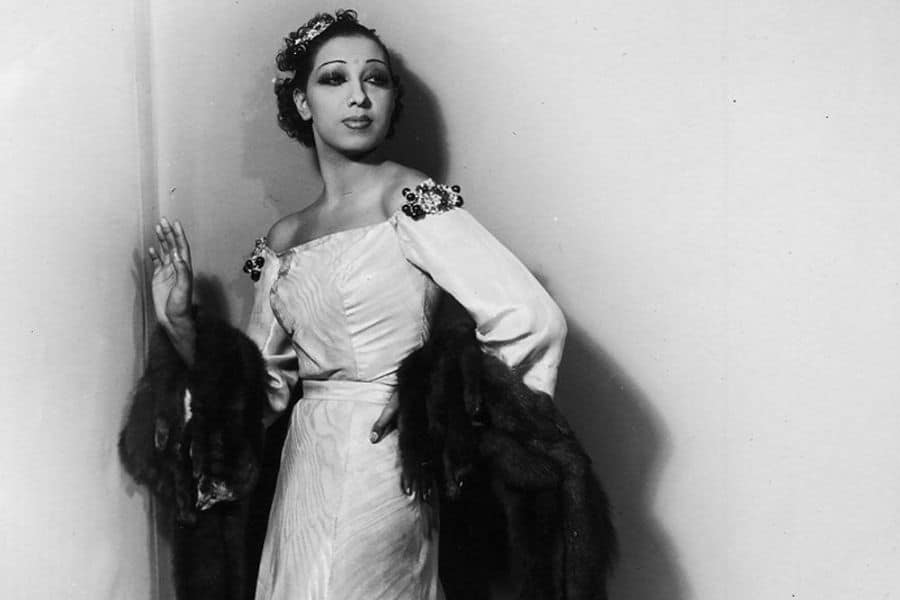
Josephine Baker was born Freda Josephine McDonald in St. Louis, Missouri, on June 3, 1906. Her grandmother had been born into slavery. Her mother barely scraped together a living as a laundry worker after Josephine’s father abandoned the family. From age eight, Josephine worked menial jobs to help feed her siblings. At 13, she married to escape. The marriage lasted a year.
The racial violence she witnessed as a child seared itself into her memory. Years later, she described standing on the west bank of the Mississippi River watching homes burn during the 1917 East St. Louis race riots. Black children huddled together in bewilderment as flames lit up the sky. That image never left her.
Dancing became her escape. At 14, she performed with the Jones Family Band. At 15, she married Willie Baker, kept his last name, and joined a vaudeville troupe. By 1925, at age 19, she sailed to Paris to perform in La Revue Nègre.
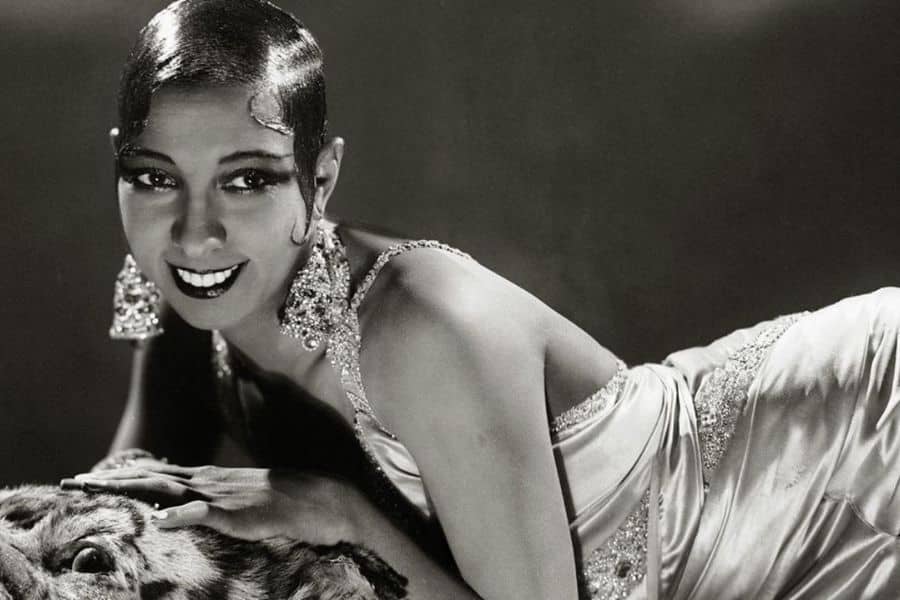
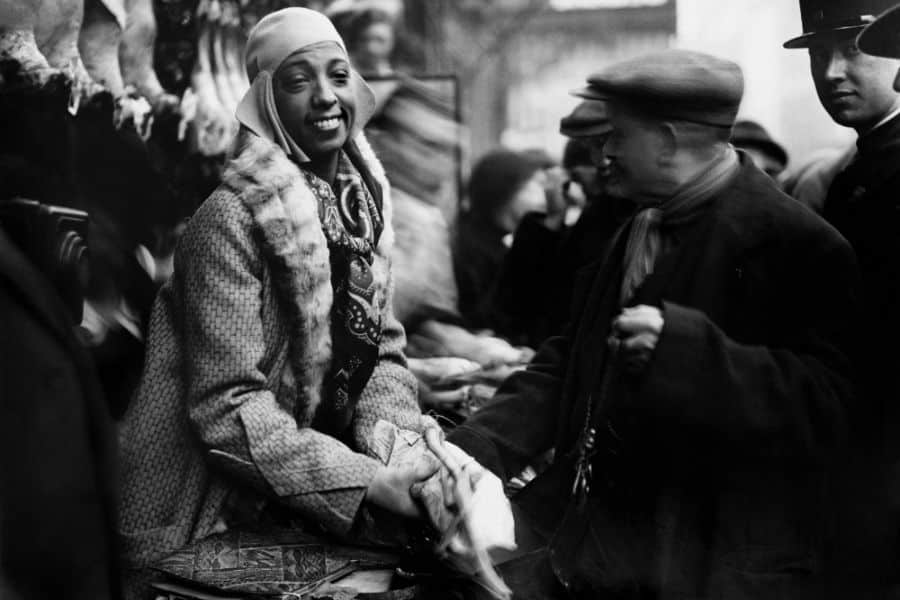
On October 2, 1925, she opened at the Theatre des Champs Élysées wearing almost nothing but a skirt made of artificial bananas and a beaded necklace. Paris went insane. She became the biggest star in Europe practically overnight.
She walked Paris streets with a pet cheetah on a diamond-studded leash, opened her own nightclub that sold out every night, and headlined at the Folies Bergere.
France gave her what America never did. Freedom. She fell in love with the country, and it loved her back. In 1937, she married French industrialist Jean Lion, a Jewish man, and became a French citizen.
The Perfect Recruit
Baker already knew what was coming. During her late 1920s European tours, she’d been targeted by fascists. In Germany and Austria, they threw ammonia bombs at her performances and screamed at her to go back to Africa. She watched Hitler’s racist ideology metastasize through Europe, and when France declared war on Germany in September 1939, she didn’t hesitate.
Jacques Abtey was head of French military counterintelligence in Paris, responsible for rooting out German infiltrators. In September 1939, he was short-staffed and drowning in work. The last thing he needed was a meeting with an entertainer. But a concert promoter named Daniel Marouani insisted he meet Josephine Baker.
Abtey was 33, blond and fair with Scandinavian features and an air of seriousness, and he was more than a little skeptical. She was a woman in a male-dominated field, and as if that wasn’t bad enough, she was famous where secrecy was paramount. And she wasn’t even French. But Baker won him over immediately.
She raised her glass of champagne in a toast. “France made me what I am,” she told him. “The Parisians gave me their hearts, and I am ready to give them my life. You can use me as you wish.”
She had one condition. She wouldn’t accept payment. France had given her everything. This was her way of paying it back.
The Italian Mission
Baker’s first assignment as a spy came before France fell in 1940. French intelligence needed to know if Italian dictator Benito Mussolini planned to form a military pact with Hitler. Baker had toured Italy extensively and befriended several Italian diplomats, so she was the perfect candidate for the job.
There was another advantage. Baker initially and publicly supported Mussolini’s invasion of Ethiopia, which led the Axis powers to believe she was sympathetic to their cause. They were dead wrong, but Baker took full advantage of the misconception.
She attended parties at the Italian embassy in Paris, mingling with high-ranking Axis officials. She was brilliant at it. Diplomats were starstruck, and they’d tell her anything. Within a single week, she passed critical intelligence to Abtey, including what’s believed to have been a code book from the Italian embassy.
Her next target was Japan. She’d developed a close friendship with the wife of Japan’s ambassador to France, and her mission was to confirm whether Japan intended to ally with Germany. She attended diplomatic functions, collected gossip at embassy parties, and wrote everything down. Sometimes she scribbled notes on her hands and arms under her sleeves. Other times, she’d excuse herself to the bathroom, make detailed notes, and pin them to her bra with a safety pin.
“Oh, nobody would think I’m a spy,” she said with a laugh when Abtey warned her about the danger. She was right. Who would dare search Josephine Baker to the skin?

Château des Milandes
In May 1940, German forces invaded France, so Baker loaded her possessions into vans and fled Paris. And she headed to a Renaissance château called Les Milandes in the Dordogne, which she had rented.
The chateau became headquarters for Resistance operations. Baker hid Jewish refugees in the rooms, sheltered resistance fighters in the basement, and stored weapons in the cellar. She had a radio transmitter installed so the Resistance could communicate with Allied forces.
Baker also used her celebrity to secure visas and forged documents for people trying to escape. One of the first was Frederic Rey, a dancer from Austria, then Rodolphe Solmsen, a German-born movie producer, and in 1941, she even got papers for her ex-husband.
The Nazis got wind of suspicious activity at Les Milandes. They showed up unannounced for a search while several resistance fighters were hiding in the basement. Baker met the Germans at the door, smiling her famous smile and charmed them completely. They left without searching the chateau.
But it was too close for comfort, and Abtey told her it was time to leave France.
Hooked on the Middle Ages? Get more stories like this one in your inbox.
The Lisbon Mission
On November 25, 1940, Baker and Abtey left Les Milandes by car in the early morning, with Abtey in full disguise as her secretary. The intelligence they carried was hidden in multiple locations. Paul Paillole, a French secret service chief, had given them the most sensitive material available and instructed them to transcribe everything in code using invisible ink.
Abtey transcribed intelligence onto Baker’s sheet music using invisible ink made from bicarbonate chloride. He carried the sheets in his briefcase, and Baker pinned photographs to her undergarments.
The intelligence packet included exact locations of German military divisions in western France, details of troop numbers and landing fields, precise descriptions of Nazi parachute divisions, and most critically, photographs of landing craft the Germans were building to invade Britain.
After a long day traveling by train, they reached Pau in southwestern France by nightfall. The next morning, they left at 8 a.m. for the mountain journey to Canfranc. When the train pulled into the station, Baker and Abtey were the only passengers to get off at this remote border crossing.
They’d chosen Canfranc deliberately, as it had only reopened in March 1940 after years of closure and remained relatively unknown compared to busier crossings at Cerbere and Hendaye, hopefully meaning less scrutiny.
The platform was deserted as they walked down its length toward border controls, surrounded by mountain peaks rising 2,500 meters into the sky. As they approached passport control, there was a moment of panic, and then she smiled.
The guards stared as recognition slowly set in. It was Josephine Baker. Pandemonium erupted, and everyone rushed to speak to her. Some ran to fetch their wives and children so they could share in the excitement.
Meanwhile, Abtey kept a respectful distance, maintaining his cover as her secretary. He passed through the controls completely unnoticed, carrying the vital intelligence in his briefcase. No one gave him a second glance.

In Madrid, there was no room on the fast train to Lisbon, so they secured flights instead. At the airport, there was a tense moment when officials checked Abtey’s name against a list of suspicious individuals. His traveling identity had existed for only a few days, but he was anxious, as there was a Nazi presence apparent everywhere.
Several planes with swastikas sat on the airfield, but luck was on their side as he passed through without incident. Baker’s presence caused a stir again, but they boarded the flight and attempted to relax.
In Lisbon, Abtey recognized several intelligence agents operating in the city, both German and British. He approached one of the British agents, who secured him an appointment with the British air attache at the embassy on November 28. Abtey explained their mission and passed over the intelligence dossiers, and the British diplomat promised to convey everything to London.
Four days later, Abtey returned to the embassy, and the news from London was positive. British intelligence wanted to renew working relations with Abtey and Paillole. But instead of inviting them to continue to London as they’d hoped, the British wanted them to work from Portugal and North Africa. Baker’s anti-fascist reputation had made her too visible, so she couldn’t safely return to Vichy France. While Abtey would travel back and forth, Baker would stay in neutral territory.
While in Lisbon and later in Spain, Baker continued her work. As she later wrote, “My notes would have been highly compromising had they been discovered, but who would dare search Josephine Baker to the skin? When they asked me for papers, they generally meant autographs.”
Alone on the Train to Tangiers
Later, Baker had to make a solo mission. Abtey settled her into a couchette on the 8 p.m. train to Tangiers, where she’d catch a flight to Lisbon. It was her first mission abroad without his protection. As always, the scores were covered in invisible scrawl containing vital secrets.
Despite her nerves, the mission was a success, and Baker connected with Abtey’s contacts in Lisbon, crucial links in the intelligence pipeline they’d established. She also mined valuable information from Arab nobles as she reentered Morocco.

Morocco and the Passport Network
In January 1941, Abtey and Baker were ordered to Morocco to set up a liaison and transmission center in Casablanca. Their mission was to establish contact with British intelligence and help create a network providing Spanish Moroccan passports to Eastern European Jews so they could escape to South America.
For the trip, Baker brought two emeralds, 28 pieces of luggage, a Great Dane, two mice, and three monkeys. It would have been more suspicious, she reasoned, if she’d been traveling light. The more conspicuous her travel, the fewer suspicions it generated.
In Morocco, Baker developed a friendship with Ahmed Belbachir Haskouri, a powerful member of the royal court during the protectorate period. When she traveled between Tangier and her home in Marrakech, she often stopped to visit him in Tetouan, a small coastal town in northern Morocco.
She’d have a tent pitched by the seaside where she’d drink tea, be entertained by musicians, and have cooks prepare barbecued lamb. Ahmed installed a Turkish bath in his home for her, and she fell in love with the local custom of drinking raw eggs after taking a Turkish bath.
Ahmed was also useful in her espionage work. With his assistance, Baker developed a network to secure Spanish Moroccan passports for Jews fleeing Nazi persecution. The passports stated that Eastern European Jews were actually Moroccan Jews, allowing many to escape to Latin America. It was dangerous work, and if she’d been caught, she faced imprisonment in a concentration camp or worse.
Baker toured Morocco, Spain, and Portugal, giving concerts and attending receptions. All the while, she gathered intelligence on Axis troop movements, harbor activities, and airfield operations. She collected information on tides, beaches, and enemy defenses that would later help with planning Operation Torch, the Allied amphibious invasion of Morocco and Algeria in November 1942.
The Hospital Room Spy Hub
In June 1941, disaster struck. Baker was at her home in Marrakech when crippling abdominal pain hit. Abtey borrowed a station wagon so she could lie down for the 350-mile journey on rough roads to the hospital in Casablanca. She’d suffered a miscarriage, possibly of the Pasha of Marrakech’s child, according to rumors. The complications were catastrophic, with an emergency hysterectomy, then peritonitis, and then sepsis.
The Chicago Defender ran her obituary, written by Langston Hughes. He wrote that Baker was “as much a victim of Hitler as the soldiers who fall today in Africa fighting his armies. The Aryans drove Josephine away from her beloved Paris.”
Baker corrected the record. “There has been a slight error,” she told the Afro-American newspaper. “I’m much too busy to die.”
She spent 18 months in that hospital, from June 1941 to December 1942, undergoing multiple operations. Abtey stayed with her on a cot in her room, and the spy work continued. Her hospital room became a safe meeting place for American vice consuls, diplomats, and French Resistance members who could visit the ailing star without arousing German or Vichy suspicion.
From her hospital balcony, Baker watched American troops arrive in Morocco as part of Operation Torch in November 1942. The intelligence she and Abtey had gathered about beaches, tides, and defenses had helped make that invasion possible.
Entertaining the Troops
When Baker was finally discharged in December 1942, she was still frail, but it didn’t matter. She threw herself into entertaining Allied troops touring military camps from Algiers to Jerusalem and across the Middle East. By day, she rode in jeeps across scorching deserts, and at night she bundled up and slept on the ground beside her vehicle to avoid landmines.
She refused payment for these performances and sometimes sold her jewelry to help finance the trips. In 1943, she raised 3 million francs for the war effort, with the only requirement that when performing for American troops, Black and white soldiers sit together. She wouldn’t tolerate segregation.
During one show for Allied soldiers in North Africa in 1943, a bombing raid started. Soldiers had to stay put in their positions, so Baker decided to continue singing through the raid. If they couldn’t leave, then neither would she.
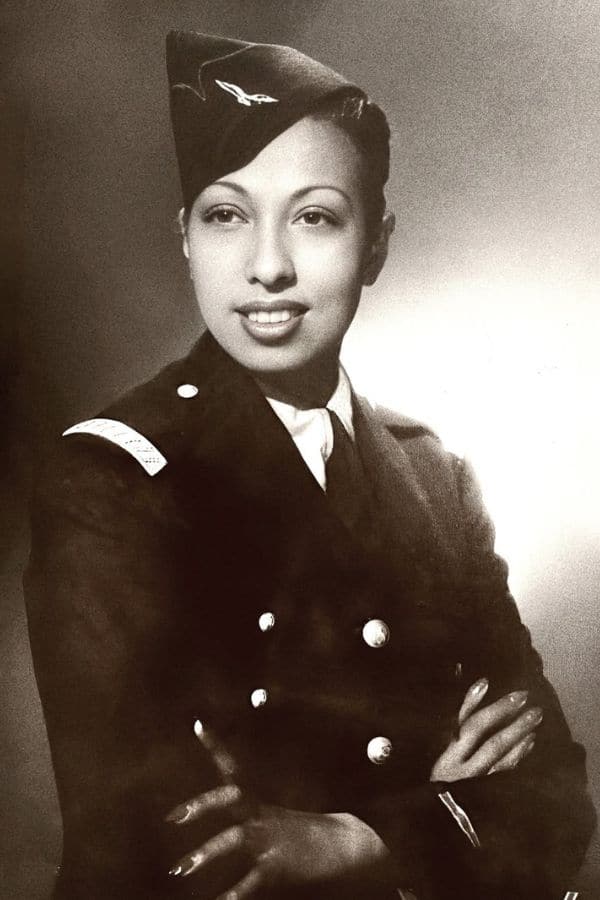
She’d also earned her pilot’s license in 1936. During the Phoney War from 1939 to 1940, she flew her own airplane delivering humanitarian supplies to desperate refugees flowing into the Low Countries. She was officially enlisted as a second lieutenant in the Women’s Auxiliary of the Free French Air Force.
The Middle East Intelligence
By summer 1943, Baker’s work had evolved, and she wasn’t just collecting intelligence on Axis powers anymore. After touring and performing for troops in North Africa and the Middle East, she’d been dealing with highly placed individuals in Beirut and elsewhere. She became convinced that events were being prepared in Syria, Lebanon, and Egypt that threatened France’s position.
Baker had become her own intelligence collector, analyst, and policy maker. She assessed the material she’d gathered, recognized threats, and recommended courses of action. When she and Abtey brought her concerns to their superiors, the reception was mixed. Some listened, and others dismissed them.
Eventually, complaints about their activities reached higher levels. Abtey was briefly dismissed from the intelligence service and shunted to a desk job in Oran. Baker, too famous for a bureaucratic slap on the wrist, left Algiers and followed Allied troops into Italy.

Liberation and Recognition
After D-Day on June 6, 1944, and the liberation of Paris, Baker returned to the city she loved in October 1944 after a four-year absence. She wore her blue Air Auxiliary Lieutenant’s uniform with gold epaulettes, and as she rode down the Champs Élysées in the back of an automobile, crowds threw flowers at her.
But the devastation shocked her. Paris had suffered terribly under Nazi occupation, and the poverty was heartbreaking. Baker sold pieces of jewelry and other valuables to raise money to buy food and coal for poor Parisians.
For her wartime service, General Charles de Gaulle personally thanked Baker. He awarded her the Croix de Guerre, the Rosette de la Resistance, and named her Chevalier of the Legion of Honor, France’s highest order of merit. She was the first American woman to receive these honors, and at her funeral in 1975, she became the first American-born woman to receive full French military honors.

After the War
After the war had ended, she returned to Château des Milandes and married orchestra conductor Jo Bouillon in 1947 in the chateau’s chapel. They’d first met in 1933 and reconnected during the war, and that same year, she purchased the chateau outright.
Starting in 1953, Baker adopted 12 children from around the world. She called them her Rainbow Tribe. Two daughters, Marianne from France and Stellina from Morocco. Ten sons from Japan, Korea, Finland, Colombia, Algeria, the Ivory Coast, Venezuela, France, and Israel. She deliberately chose children of different races and religions to prove that people of all backgrounds could live together as brothers.
Maintaining the chateau and supporting 12 children required enormous amounts of money, and Baker performed relentlessly. Her husband left for Argentina in 1960 as the stress of running the chateau became too much, and they divorced. By 1968, creditors seized the property, and Baker was forcibly evicted at age 62. Princess Grace of Monaco rescued her and offered her an apartment in Roquebrune.
Civil Rights Fighter
Baker threw herself into the American Civil Rights Movement. In 1951, when she returned to the United States, she refused to perform for segregated audiences, forcing clubs to desegregate if they wanted her to appear. She wrote articles about segregation, gave talks at historically Black colleges, and spoke out wherever she went, shaming America on the world stage.
In 1963, Baker became the only woman to receive an official speaking slot at the March on Washington, alongside Martin Luther King Jr. She wore her Free French uniform. She told the vast crowd, “I have walked into the palaces of kings and queens and into the houses of presidents. But I could not walk into a hotel in America and get a cup of coffee, and that made me mad. And when I get mad, you know that I open my big mouth. And then look out, because when Josephine opens her mouth, they hear it all over the world.”
After King’s assassination in 1968, his wife Coretta Scott King asked Baker to take his place as leader of the movement. Baker declined. She believed her children were too young to lose their mother.

The Final Curtain
Baker’s final performance came on April 8, 1975, at the Bobino in Paris. It was a retrospective revue celebrating 50 years in show business, financed by Prince Rainier, Princess Grace, and Jacqueline Kennedy Onassis. The opening night audience included Sophia Loren, Mick Jagger, Shirley Bassey, Diana Ross, and Liza Minnelli. The reviews were rapturous, and the theater had to add fold-out chairs to accommodate demand.
Four days later, on April 12, 1975, Baker was found in her bed surrounded by newspapers with glowing reviews. She was in a coma from a cerebral hemorrhage. She died that same day at age 68. More than 20,000 mourners attended her funeral at L’Eglise de la Madeleine.
On November 30, 2021, Josephine Baker was inducted into the Pantheon in Paris, becoming the first Black woman to receive one of France’s highest honors. Her body remains in Monaco at her family’s request, but a cenotaph containing soil from St. Louis, where she was born, Les Milandes, where she lived for 30 years, and Monaco, where she died, was installed in the Pantheon’s crypt.
French President Emmanuel Macron welcomed her with these words: “Josephine Baker, you are entering into the Pantheon because, although you were born American, there is no greater French person than you.”
The woman who danced in a banana skirt became one of the Allies’ most valuable intelligence assets. The refugee from American racism who found freedom in France risked her life to defend that freedom. The spy who smuggled photographs of German landing craft in her underwear and wrote intelligence in invisible ink on her sheet music helped change the course of World War II.
She crossed borders dozens of times, carrying secrets that could have gotten her executed. She set up passport networks that saved Jewish lives, turned her hospital room into a spy hub, and flew humanitarian missions and entertained troops under fire.
Josephine Baker once said, “I shall dance all my life. I would like to die, breathless and spent, at the end of a dance.” She got her wish. But she was so much more than a dancer; she was a soldier in the war against fascism. And she never stopped fighting.

Love a good medieval story?
Join our readers and get tales of kings, queens, castles and ordinary medieval lives straight to your inbox.
Kylie Lang is a nationally syndicated travel journalist with bylines on the Associated Press Wire & more, a medieval history writer, and the founder and lead author of Tales of the Middle Ages (talesofthemiddleages.com). She holds a BA (Honours) in History from the University of Kent and is a member of the British Guild of Travel Writers.
Related posts:
 Virginia Hall: The American Spy the Gestapo Couldn’t Catch Who Helped Win World War II
 Marie-Madeleine Fourcade Escaped From a Gestapo Prison and Gave the Allies the Map That Made D-Day Possible
 Vera Atkins, Legendary Spymaster of the SOE Turned Nazi Hunter
 The Best and Worst Kings of the Middle Ages That the History Books Rarely Talk About