It’s hard to imagine a world where the food was beyond bland, given how much is available to us in this day and age. Many of us are foodies who love trying different flavors and cooking styles.
However, in Tudor England, from 1485 to 1603, most people ate coarse rye or barley bread, cheese, and pottage, washed down with ale.
Table of Contents
The wealthy ate roasted meats, game birds, fish, spiced pies, and sugary treats. Potatoes and tomatoes barely featured at all. What ended up on your plate came down almost entirely to your rank.
What a Poor Tudor Family Actually Ate
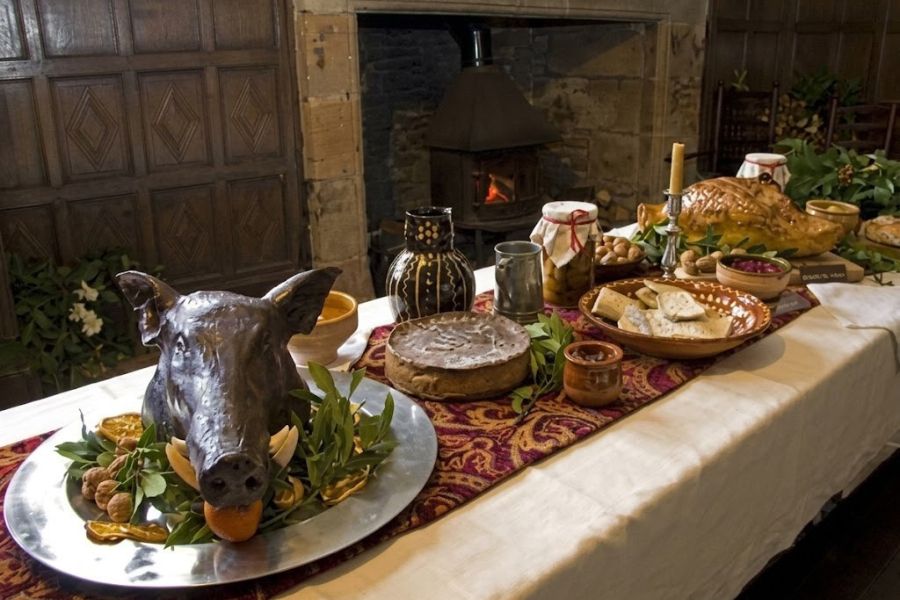
For most ordinary Tudors, the daily meal was pottage. It was a soup of grains, water, and vegetables, with a few scraps of meat thrown in when they could get them, and it was eaten with coarse bread. Filling, cheap, and endlessly repeated.
The bread was rye, barley, or maslin, which was a mix of grains. The cheapest of the lot was Carter’s bread, a rough rye-and-wheat loaf that was sometimes stretched with ground acorns when the harvest was thin. Not exactly a warm baguette from the boulangerie.
Then there were the so-called white meats, which had nothing to do with meat at all. The term meant dairy: milk, cheese, butter, and eggs. A family might add the odd rabbit, bird, or river fish if they could catch one, but for many, that was a treat rather than a habit.
Life got harder for the poor as the century wore on. Enclosure fenced off the common land people had relied on, and the dissolution of the monasteries removed the charity the abbeys had handed out.
On top of that came the hunger. There were at least two famines in Tudor England, one in the mid-1550s under Mary I and another in the mid-1590s under Elizabeth I, because the country lived or starved by its own harvests.

What Did Rich Tudors and the Royal Court Eat?
The wealthy ate a meat-heavy diet, with fresh roasted meat on the table every single day and a long menu of dishes to pick from. That kind of daily choice was a luxury reserved for those with rank and money.
And when I say meat-heavy, I mean it. By some estimates three-quarters of the rich Tudor diet was meat: oxen, deer, calves, pigs, and wild boar, along with game birds like heron, crane, and peacock.
The nobility’s diet has been put at around 80% protein, with feasts running several thousand calories more than a modern meal. In fairness, Tudor life demanded a great deal more energy than ours, so they burned a fair bit of it off.
Citrus, almonds, olive oil, sugar from Cyprus, and spices carried all the way from China, Africa, and India were status foods, prized as much for showing off as for flavor. The spiced pies that came out of a wealthy kitchen were small statements of rank in their own right.
Best of all were the subtleties. These were sugar sculptures, served between courses to be admired before being eaten. A sugar castle, a sugar swan, a sugar coat of arms. Only the very rich could waste something so expensive on a bit of theater.
What Did Henry VIII Eat?
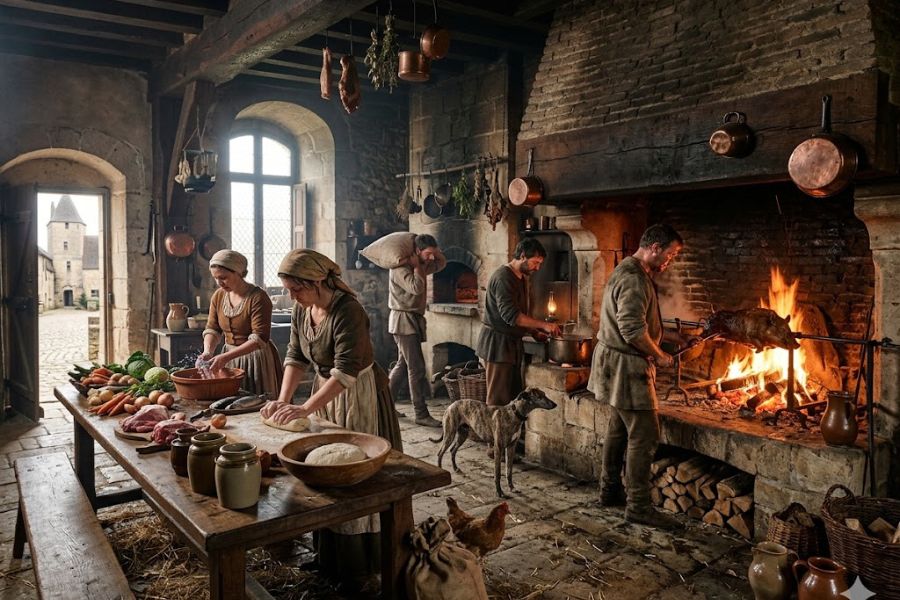
Henry VIII ate whatever he fancied, chosen from an enormous buffet. Game roasted or baked into pies, lamb, venison, and swan, alongside banquet oddities like conger eel and porpoise. Sweet and savory came out together.
His food was cooked in a private kitchen under his Privy Master Cook, John Bricket, and Henry usually ate in his private rooms rather than in the crowded hall. Being king had its perks, and dining away from the throng was one of them.
The scale of it all is hard to picture. Around 400 courtiers and staff at his court were entitled to two meals a day, served at 10 am and 4 pm, with strict rules about who sat where and who got which dishes, all decided by rank. Feeding that many mouths twice a day was a small industry.
His waistline, of course, is the result of all that meat and sugar. His 1540 field and tournament armor has a chest of 54 inches and an external waist of 51 inches, a metal record of how much the man had spread in his later years.
There is a reason the Tudors, and Henry above all, were so keen on a well-stuffed codpiece.

Hooked on the Middle Ages? Get more stories like this one in your inbox.
Did the Tudors Really Not Drink Water?
You have probably heard that nobody in the past drank water because it would kill you. It is a myth. The Tudors did drink water, and it was perfectly safe at places like Hampton Court. It simply left little trace in the records, because unlike ale and wine, it cost nothing, so nobody needed to write it down or account for it in the household records.
Ale was the everyday drink for everyone, children included. It was brewed without hops and was not very alcoholic.
Wine was for the wealthy and mostly imported. And water was often mixed straight into wine or beer to soften the strength and adjust the taste.
Did the Tudors Have Potatoes and Tomatoes?
Barely. Potatoes only reached England in the 1580s, and at first hardly anyone ate them. Tomatoes were essentially unknown as food.
What they actually relied on were onions, cabbage, beans, peas, and carrots, nearly all home-grown and eaten in season. Nothing came from the other side of the world to fill a winter gap. You ate what the garden gave you.
Turkeys were introduced around 1525 and settled happily into English farmyards, long before they became a Christmas fixture.
Many Tudors believed that eating raw fruit could make you ill, so fruit was usually cooked into tarts and pies rather than eaten fresh off the tree.

How Did the Tudors Eat? Manners, Forks, and Fingers
Forks were not used for dining. Tudors ate with knives, spoons, and their fingers, using pieces of bread, almost like flatbread, to scoop and soak up their food. The fork, when it appeared at all, was for serving and carving, and most people thought eating with one was a fussy foreign notion.
Most people carried their own knife about with them, which is where the old custom of giving a christening spoon comes from. A child was set up for life with the one utensil the household did not always provide.
Eating was a communal business, everyone reaching into shared dishes, so clean hands mattered a great deal. People were expected to wash their hands in a place where everyone could see them.
The rich dined on gold or silver plates, the middling sort on pewter, and the poor on wood. You could read a person’s place in the world from their dinner service alone.

Sugar, Sweets, and the State of Tudor Teeth
Sugar in Tudor England was treated as both a medicine and a status symbol, and among the wealthy, it did dreadful things to their teeth. The more of it you could afford, the blacker your smile. Elizabeth I had dreadful teeth due to how much sugar she consumed.
Before sugar became affordable, honey did the sweetening, kept in hives at the bottom of the garden. When sugar arrived, the rich fell on it.
The sweet treats of the age ran to marzipan subtleties, gingerbread, sugared almonds, and preserved fruit.
And the savory and the sweet were tangled together in ways that would raise an eyebrow now. A mince pie of the era carried thirteen ingredients, one for Christ and each of the apostles, and it included mutton. Puddings often contained meat.
When Did the Tudors Eat, and What Was on the Schedule?
The two main meals were dinner, taken around 11 am, and supper, taken around 5 pm, with breakfast slowly becoming more common across the sixteenth century. Early on, breakfast was a privilege for the sick, the old, and travelers, not the everyday habit it is now.
Laborers, who could not work a field on nothing, took a midday break of bread and cheese called a beever, or a noonshine, to keep them upright until supper.
The calendar was ruled by the church and the law. Fish was eaten on Fridays, Saturdays, and all through Lent, because religion shaped what landed on the table as firmly as hunger did. Elizabeth I even banned the slaughter of animals on Wednesdays in 1563, with three months in prison for anyone who broke the law, though the aim was to prop up the fishing fleet as much as to please God.
If you had the money, you could buy a license to eat meat on a banned day, priced to match your social standing. Even sin had a rate card.
Tudor Food Questions, Answered
What did poor people eat in Tudor England?
Poor Tudors lived mostly on pottage, a thick soup of grains, water, and vegetables with meat scraps if they were lucky, eaten with coarse rye or barley bread. Cheese, eggs, butter, and onions filled things out, plus the odd rabbit, bird, or river fish they could catch. Ale was the everyday drink for everyone, children included.
Did the Tudors eat potatoes?
Not really. Potatoes only reached England in the 1580s, and at first hardly anyone ate them. Tomatoes were essentially unknown as food. The vegetables Tudors actually relied on were onions, cabbages, beans, peas, and carrots, nearly all home-grown and eaten in season.
What did Henry VIII eat?
Henry VIII ate whatever took his fancy from an enormous buffet: game roasted or baked into pies, lamb, venison, and swan, with unusual banquet dishes like conger eel and porpoise. Sweet and savory came out together. His food was cooked in a private kitchen by his Master Cook, John Bricket, and he usually dined in his private rooms rather than the crowded hall.
Did Tudors really not drink water?
That is a myth. The Tudors did drink water and it was safe at Hampton Court. It just left little trace in the records because, unlike ale and wine, it cost nothing. Water was also mixed into wine or beer to soften the strength. Ale stayed the everyday drink partly out of habit and taste, not pure necessity.
Did Tudors use forks?
Not for eating. Tudors dined with knives, spoons, and their fingers, using small pieces of bread to scoop and soak. Forks existed for serving and carving and began appearing at the very end of the 1500s, but they were dismissed as a fancy foreign notion. Forks did not become common at English tables until the eighteenth century, well after the Tudors were gone.
Why did Tudors think fruit was bad for you?
Tudor medical thinking held that eating raw fruit and salad could unbalance the body and cause sickness. It did not help that produce picked ripe often arrived in town past its best after a slow journey on poor roads. So fruit was frequently cooked into tarts and pies rather than eaten raw. Apples, pears, plums, cherries, and strawberries all turned up, usually softened by cooking or sugar.
How many meals a day did Tudors eat?
Most people ate two main meals: dinner around 11am and supper around 5pm. Breakfast started out as a privilege for the sick, the old, and travelers, but became far more common through the sixteenth century. Laborers took a midday bread-and-cheese break called a beever, or noonshine, to keep them going through fieldwork.
Love a good medieval story?
Join our readers and get tales of kings, queens, castles and ordinary medieval lives straight to your inbox.

Kylie Lang is a nationally syndicated travel journalist with bylines on the Associated Press Wire & more, a medieval history writer, and the founder and lead author of Tales of the Middle Ages (talesofthemiddleages.com). She holds a BA (Honours) in History from the University of Kent and is a member of the British Guild of Travel Writers.