Egypt, the Pyramids, and the Pharaohs have been talked about for years, but the Curse of Tutankhamun sends shivers down your spine. Was it real or a medieval invention dressed up in Egyptian robes?
There’s something about ancient tombs and long-lost pharaohs that still stirs up unease, even in our modern world. And few names hold more fascination than Tutankhamun. When his tomb was opened in 1922, it wasn’t just gold and artifacts that captured the world’s attention. It was the talk of a curse. One that supposedly killed those who dared to disturb the boy king’s eternal rest.
Table of Contents
But was there really a curse? Or did the deaths of archaeologists and financiers spark a wildfire of sensational headlines that fed into old fears? Somewhere between whispered superstitions and scientific explanations lies a murky middle ground. This is where myth and memory blur, especially when stories are retold across centuries.
Some even claimed the curse wasn’t Egyptian at all. Instead, they pointed to medieval legends that traveled with Crusaders and shaped Europe’s earliest take on the tomb’s secrets. Death stalks those who disturb the pharaoh’s rest, or so they say. But is there more to this infamous curse than just newspaper sensationalism and Hollywood drama?

Who Was Tutankhamun?
Tutankhamun wasn’t one of ancient Egypt’s most powerful rulers. He was barely known outside of scholarly circles before his tomb was found. He became pharaoh around 1332 BCE at just nine years old and reigned for less than a decade. His rule came at a turbulent time, following the controversial reign of Akhenaten, who had tried to push Egypt toward monotheism. When Tutankhamun took the throne, those changes were quietly reversed.
He died around age nineteen, though no one knows exactly how. Some theories suggest an infection from a broken leg. Others point to congenital health issues made worse by royal inbreeding. His tomb, small and unusually plain for a pharaoh, was likely rushed. Many believe it was originally intended for someone else. That may be why it remained undisturbed for so long.
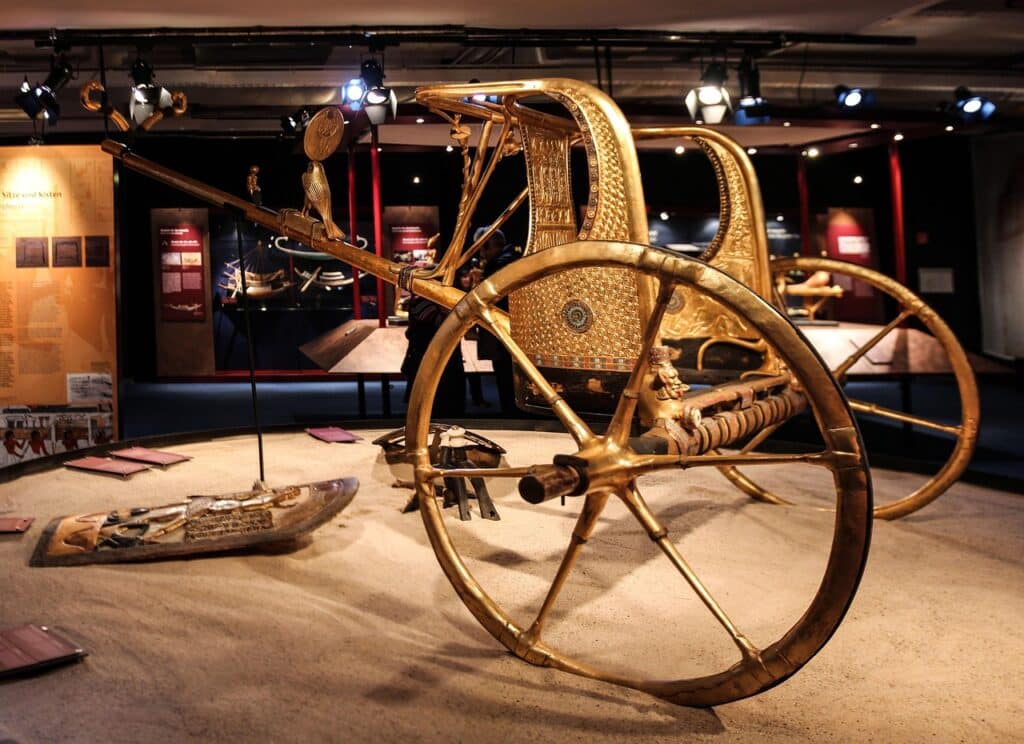
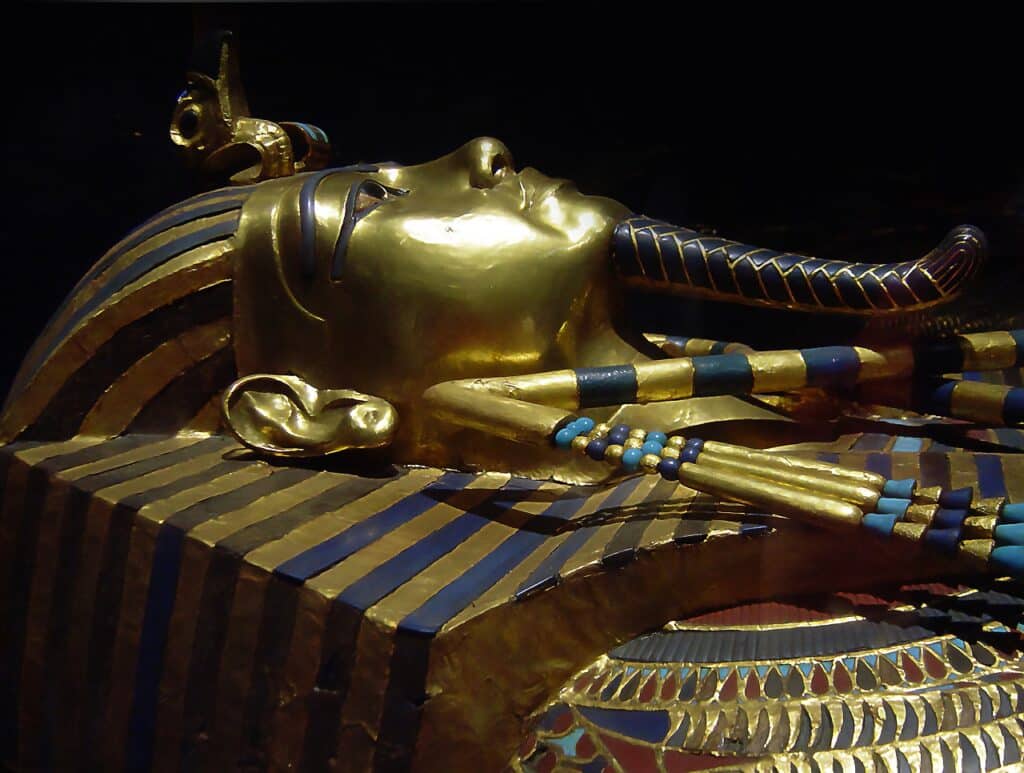
Still, because it had never been looted, the tomb gave the world its first real look at how an Egyptian pharaoh was buried. It contained gold statues, a chariot, a dagger made from meteoric iron, and, of course, the famous gold death mask. Tutankhamun may have been a minor king in life, but in death, he became one of the most famous names in archaeology.

A Royal Family Tree with Twists
Tutankhamun’s lineage reads like a cautionary tale in royal inbreeding. He was likely the son of Akhenaten, the pharaoh who shook things up by introducing the worship of a single sun god, Aten. Akhenaten’s reforms upended centuries of religious tradition and left Egypt in chaos. Tutankhamun’s mother? Probably Akhenaten’s own sister. Her name is still debated, but DNA tests in 2010 confirmed they were full siblings.
That family tree came with consequences. Tutankhamun had a clubfoot, scoliosis, and other health issues. He married his half-sister, Ankhesenamun, and they had two daughters, both stillborn. It’s a tragic thread that runs through much of the dynasty. After his death, the royal bloodline lost power quickly. His successors tried to erase his father’s legacy and bury the memory of the boy king.
Ironically, that erasure may have saved his tomb. Because his name was forgotten, it stayed untouched. Hidden beneath layers of rubble near the tomb of Ramses VI, it was overlooked by thieves and explorers alike until Carter’s team arrived in 1922.
The Discovery of Tutankhamun’s Tomb

By the early 20th century, many Egyptologists believed the Valley of the Kings had given up all its secrets. But British archaeologist Howard Carter wasn’t convinced. He had spent years working in Egypt and became fixated on the idea that one tomb still lay hidden: that of the little-known pharaoh Tutankhamun, who had died young and mysteriously disappeared from most royal records.
Howard Carter and Lord Carnarvon
The search was expensive and slow, and by 1922, Carter was under pressure. His work was funded by George Herbert, the 5th Earl of Carnarvon, a wealthy English aristocrat who was passionate about Egyptology. The two men had a tense but productive working relationship. Just when Lord Carnarvon was ready to call it quits, Carter made one final push. In November of that year, Carter’s team uncovered a step. Then a sealed doorway. And finally, a staircase that led down into the sands of history.
Side note for fellow Downton Abbey fans: Lord Carnarvon lived at Highclere Castle, which became world-famous as the setting for the Crawley family’s fictional estate in the TV series and films about Downton Abbey. While the drama on our screens was mostly confined to ballrooms and breakfast trays, the real-life Lord Carnarvon was making history beneath the Egyptian desert. When I visited Highclere Castle, there was an exhibition showcasing many of the Egyptian finds and treasures from the time Lord Carnarvon had spent as part of the dig.
The Supposed Curse and Its Origins

Ancient Egyptian tomb inscriptions were less about supernatural vengeance and more about practical deterrence. While no actual curse was found in Tutankhamun’s tomb, whispers of mystical protection circulated wildly. These pragmatic warnings, once meant to frighten potential tomb robbers, would soon transform into a tantalizing legend of supernatural retribution.
Hooked on the Middle Ages? Get more stories like this one in your inbox.
The Legend of the Curse
Long before Tutankhamun’s tomb was uncovered, the idea of a curse tied to Egyptian graves had already taken root. The belief was simple and chilling: anyone who disturbed a pharaoh’s resting place would suffer grave misfortune or even death. These so-called curses weren’t just modern inventions. Ancient Egyptians did leave warnings on some tombs, often calling on gods to protect the dead or punish intruders.
Over time, these inscriptions morphed into stories of supernatural revenge. The myth had solidified by the time of the early archaeologists and treasure hunters. A pharaoh’s curse was seen as a spiritual warning and a lingering force that could reach out across the centuries.
Early Reports and Media Sensationalism

The first hints of a curse emerged in London’s Daily Mail, with a sensational claim about a clay tablet bearing deadly warnings. The story grabbed the public’s imagination despite the fact that no such tablet ever existed. Within days, the tale had spread across continents, with each retelling more dramatic than the last.
A Media Feeding Frenzy
Newspapers worldwide pounced on the curse story, each adding its supernatural twists. No tale was too outlandish to print, from mysterious diseases to ghostly apparitions in the tomb. The stories sold papers by the thousands, marking one of the first global media sensations of the 20th century.
Carter’s Futile Denials
Howard Carter found himself fighting not just desert sand but an avalanche of sensational reporting. His public denials of any curse fell on deaf ears as newspapers continued their supernatural speculation. Even respected publications couldn’t resist joining the frenzy, proving that facts were no match for a good story.
Variations of the Curse Across Different Sources

From Cairo to London, the Tutankhamun curse story spread like wildfire, transforming with each sensational whisper and embellishment. Newspapers gleefully invented hieroglyphic warnings and ancient scrolls, proving that a juicy story needs no evidence to captivate the world’s imagination.
The press leaned in hard. One article claimed that Carter’s pet canary was eaten by a cobra the day the tomb opened, as if Egypt had issued a warning. Others tallied a growing list of “victims,” including archaeologists, museum workers, and financiers. Even the lights going out in Cairo when Carnarvon died was spun into the legend. A city-wide power outage became an omen. The line between coincidence and curse blurred almost instantly.
What made this different from other archaeological discoveries was the moment in history. It was the Roaring Twenties. Spiritualism, séances, and ghost stories were everywhere. The idea of a sleeping curse being awakened fit perfectly with the mood of the time. Reporters weren’t just covering the tomb. They were crafting a story that mixed fact with fear, and it sold papers by the thousands.
The height of sensationalism came when one newspaper claimed to have interviewed an ancient Egyptian spirit medium about the curse. Another publication insisted their reporter had witnessed hieroglyphics glowing with an eerie blue light when touched. Such fantastic claims marked the point where journalism crossed firmly into the realm of fiction.
The Deaths Linked to the Curse
In the shadowy aftermath of Tutankhamun’s tomb, death seemed to stalk the expedition like a vengeful phantom. A series of mysterious fatalities transformed a groundbreaking archaeological discovery into a chilling narrative that would grip the world’s imagination.
Lord Carnarvon’s Mysterious Death
When Lord Carnarvon died just months after entering the tomb, it was as if the newspapers had been waiting for it. The story was irresistible. A wealthy English lord, dead in Cairo, with ancient treasure in the background and mystery in the air. The New York Times, The Times of London, and The Daily Express all ran dramatic stories suggesting that the curse had claimed its first victim.
Never mind that Carnarvon had a long history of poor health. A mosquito bite followed by an infected razor cut was far too ordinary for the public to accept. The timing proved irresistible to the press, especially when paired with reports that all the lights in Cairo mysteriously failed at the moment of his death. A city-wide power outage became an omen. The line between coincidence and curse blurred almost instantly.
Other Alleged Victims
Newspapers claimed the curse claimed 27 lives within the first few years. They breathlessly reported each death connected, however tenuously, to the expedition, including archaeologists, museum workers, and financiers. The reality? Most expedition members lived well into their 70s and 80s. Howard Carter himself, who spent more time in the tomb than anyone, survived until 1939, dying from entirely natural causes at age 64.
Scientific Explanations for the Curse
Forget supernatural vengeance, the real culprit behind the Tutankhamun curse might be something far more microscopic and mind-bending! Scientists began unraveling a mystery that was less about mystical revenge and more about the hidden dangers lurking in ancient tombs.
Deadly Microbes and Toxins
Some researchers proposed that ancient mold or bacteria in the tomb could have caused mysterious deaths. They suggested that deadly pathogens, trapped for millennia, might have been released when the tomb was opened. However, the tomb’s dry conditions made this unlikely, and the varied causes of death among supposed victims don’t support this theory.
Psychological Influence and Power of Suggestion
Modern psychologists suggest that belief in the curse might have created a self-fulfilling prophecy through stress and anxiety. The power of suggestion, combined with the era’s limited medical knowledge, could have contributed to health problems among those who believed themselves cursed.
The Medieval Connection: Did the Curse Originate Later?
The curse of Tutankhamun might not be as ancient as we think. Medieval Europe was obsessed with cursed tombs and vengeful spirits long before Carter entered that famous tomb. The real origin of the curse might tell us more about Victorian-era ghost stories than ancient Egyptian beliefs.
Curse Myths in Medieval Europe
The concept of cursed tombs didn’t originate in ancient Egypt. Medieval European literature often featured tales of cursed burial grounds and vengeful spirits. These stories likely influenced how later generations interpreted Egyptian tomb warnings.
19th and 20th Century Orientalism
Victorian-era fascination with the “mysterious East” shaped public perception of Egyptian archaeology. This period’s tendency to exoticize and sensationalize non-Western cultures helped transform practical tomb warnings into supernatural curses in the popular imagination.
Modern Perspectives on the Curse
Today’s archaeologists have a different take on ancient curses than their 1920s predecessors. While they might not fear supernatural retribution, they’re uncovering something far more interesting about human nature. The truth behind the curse reveals more about our fears and fascinations than any ancient Egyptian magic.
Archaeologists’ Views Today
Contemporary archaeologists view the curse as a product of 1920s media sensationalism rather than ancient Egyptian magic. Egyptian researchers dismiss curse stories, though some admit they make for excellent tourism marketing.
Lasting Cultural Impact
Despite scientific skepticism, the curse remains firmly embedded in popular culture. Every new Egyptian archaeological discovery prompts fresh speculation about curses, showing how deeply this narrative has become entrenched in our collective imagination.
The Truth Behind the Legend
The Curse of Tutankhamun reveals more about 1920s society than ancient Egyptian beliefs. While the pharaohs didn’t unleash supernatural vengeance, they did leave us something far more valuable: a window into humanity’s enduring fascination with mystery, mortality, and the unknown.
Love a good medieval story?
Join our readers and get tales of kings, queens, castles and ordinary medieval lives straight to your inbox.

Kylie Lang is a nationally syndicated travel journalist with bylines on the Associated Press Wire & more, a medieval history writer, and the founder and lead author of Tales of the Middle Ages (talesofthemiddleages.com). She holds a BA (Honours) in History from the University of Kent and is a member of the British Guild of Travel Writers.