Every generation thinks it invented the best parties, but the Middle Ages had their own way of partying that may well raise an eyebrow. One minute you’re in church repenting your sins, the next you’re parading a donkey down the aisle while someone in a bishop’s hat brays the sermon.
And don’t be thinking these were small village fêtes or fairs either. These were full-blown medieval festivals with booze, bones, and sometimes a naked guy riding backward on a cow. Some of these festivals were sanctioned by the Church, while others were barely tolerated. All of them walked the line between celebration and complete chaos
Table of Contents
If you’ve ever thought the Middle Ages were all about piety and plague, think again. Keep reading and you’ll discover just how bizarre medieval entertainment could be.
1. The Feast of Fools: When the World Turned Upside Down
On January 1st, cathedrals across France and beyond became the stage for the most outrageous party of the year. The Feast of Fools originated as a subversive celebration led by lower-ranking clergy, such as choirboys and subdeacons, who inverted the power structure.
They dressed up in bizarre costumes, wore masks, and elected one of their own as the “bishop” or “pope” of fools. It was a short-lived reign, but it came with all the mock pomp and ridiculous ceremony you’d expect from a festival built entirely on satire.

Fake masses were held with obscene jokes and wine spilled over altars. Robes were worn backward, incense was replaced with sausage smoke or old boots, and hymns were swapped out for bawdy songs.
Some participants rode donkeys into the nave. Others mooned the congregation. The Church repeatedly attempted to ban it, labeling it scandalous, but it kept resurfacing because it gave the underlings a taste of freedom, even if only for a day.
2. The Festival of the Ass: A Donkey in the Church
This one sounds made up, but it wasn’t. The Festival of the Ass was a real religious celebration that reached its peak in the 11th and 12th centuries. It was meant to honor biblical donkeys, like the one that carried Mary into Bethlehem.
A specially chosen donkey, dressed in fine robes and a priest’s cope, was led into the church with a grand ceremony while the congregation sang special hymns in its honor. The mass ended with the priest leading the congregation, braying like donkeys instead of saying, “Amen.”
Church documents include detailed instructions for proper liturgical braying. Some particularly enthusiastic priests would replace entire parts of the mass with carefully timed “hee-haws.”
3. The Lord of Misrule: A Peasant Becomes King
For a few chaotic days around Christmas, the lowest-ranking person in a household, abbey, or court could become the one in charge. They called him the Lord of Misrule, and his job was simple: create chaos.
This upside-down tradition gained popularity in England and parts of Europe from the late Middle Ages to the Tudor period. Servants became masters. Drunken games replaced prayer. Formality went out the window. Even noble households played along, handing power to fools, peasants, or choirboys just to see what would happen.
He’d lead processions, plan feasts, demand bad poetry, and make rules designed to be broken. Some places made it feel like a proper coronation, dressing the Lord in fake robes and giving him a throne. Others went darker, mixing the party with crude jokes, staged fights, and public humiliation.
In some towns, it turned into street-level rowdiness that the authorities could barely control. Eventually, the whole idea was banned by both the Church and the state. But for a while, it gave regular people a rare taste of power, even if it came with a hangover.
Hooked on the Middle Ages? Get more stories like this one in your inbox.
4. Midsummer Madness: Pagan Fires and Wild Dancing
On Midsummer’s Eve, entire communities gathered to light massive bonfires that could be seen for miles. Young men competed to build the tallest pyre, while women performed secretive fertility rituals in nearby forests. People believed jumping through the flames would bring good fortune and protect against evil spirits.
Revelers performed increasingly dangerous stunts as the night wore on. They’d leap through flames, run across hot coals, and join fire-jumping competitions.
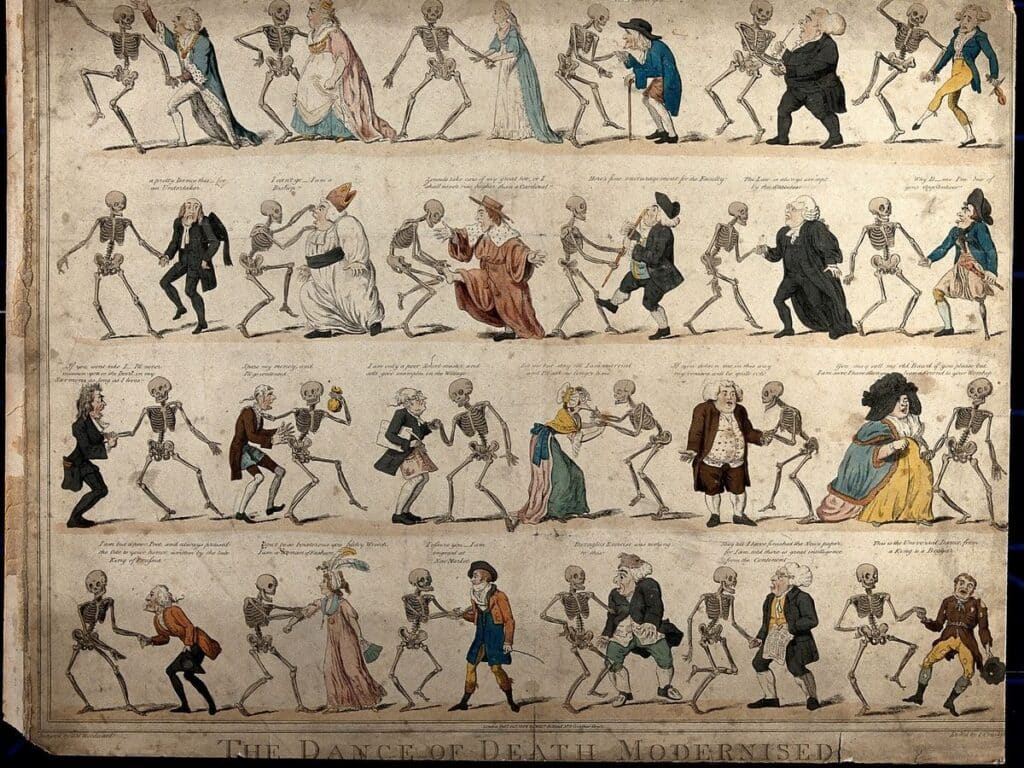
5. The Dance of Death: A Creepy Celebration
In 1518, in Strasbourg, one woman started dancing in the street. Within days, dozens joined her. Within weeks, hundreds danced nonstop in what became known as the Dancing Plague. Officials’ solution? Hire more musicians, believing the dancers needed to “get it out of their system.”
The dancing continued day and night, with participants dancing themselves to death from exhaustion, heart attacks, and strokes. Yet people kept joining, creating a macabre festival atmosphere around what was essentially a mass hysteria event. The city built special stages and brought professional musicians to support the endless dance party.
6. The Drunken Yule: Christmas Gone Wild
Yule originated from older pagan traditions tied to the winter solstice, but by the Middle Ages, it had evolved into a season of excess that lasted for twelve long days. People drank, ate, and drank some more.
Alehouses were packed, livestock was slaughtered for feasts, and gift-giving came with a heavy dose of guilt if you didn’t pony up. Lords gave food and drink to their servants, and in return, the servants partied like their lives depended on it.
People got properly sloshed while the Church looked the other way. In some towns, drunken mobs in costume would go door to door demanding food and booze. Eventually, the Puritans tried to shut it down, calling it sinful and disgraceful. But for the average medieval peasant, Yule was survival wrapped in chaos. It was warmth, meat, and a break from the cold grind of winter, even if it ended in vomit.
7. The May Day Revelries: Dancing, Romance, and Mischief
May Day was spring’s wild card. It was one of the few times in the year when social rules bent, boundaries blurred, and everyone leaned into a bit of mischief. Villages threw up maypoles, lit fires, and let the dancing go on until dawn.
Young men and women “disappeared” into the woods for what they called gathering flowers. Everyone knew what was really going on. And no one cared. This was the green light for fertility, renewal, and letting go after a long, cold season.
The Church never liked it. Too pagan, too naked, too loud. They tried to Christianize it, but May Day had a mind of its own. Mock kings and queens were crowned. Drinking started early. Some towns had hobby horses and masked performers stirring up the crowds.
Others just leaned into the mayhem with food, music, and a bit of public flirting. It was one of the few medieval festivals where the focus was less on satire or rebellion and more on lust, laughter, and letting off steam.

8. The Carnival of Excess: Pure Hedonism
Carnival was the last chance to sin before Lent arrived, bringing with it fasting and guilt. And medieval folk didn’t waste it. In the weeks leading up to Ash Wednesday, cities across Europe erupted in parades, masked processions, street theater, and some serious overindulgence.
People gorged on food, drank until they fell over, and dressed in costumes that mocked the rich, the clergy, and just about everyone else. It was a moment when everything flipped—rules, roles, and even gender. You could be whoever you wanted, even if just for a day.
Some towns went all in with public feasts, animal fights, and crude plays that bordered on dangerous. Others let things escalate to outright violence, especially when rival neighborhoods used the chaos as cover to settle scores.
Authorities looked the other way as long as it didn’t spill too far into Lent. It was the medieval version of release, a pressure valve before the Church came knocking with ashes and repentance. And for a few glorious days, anything went.
9. The Eccentric Festival of the Bean King
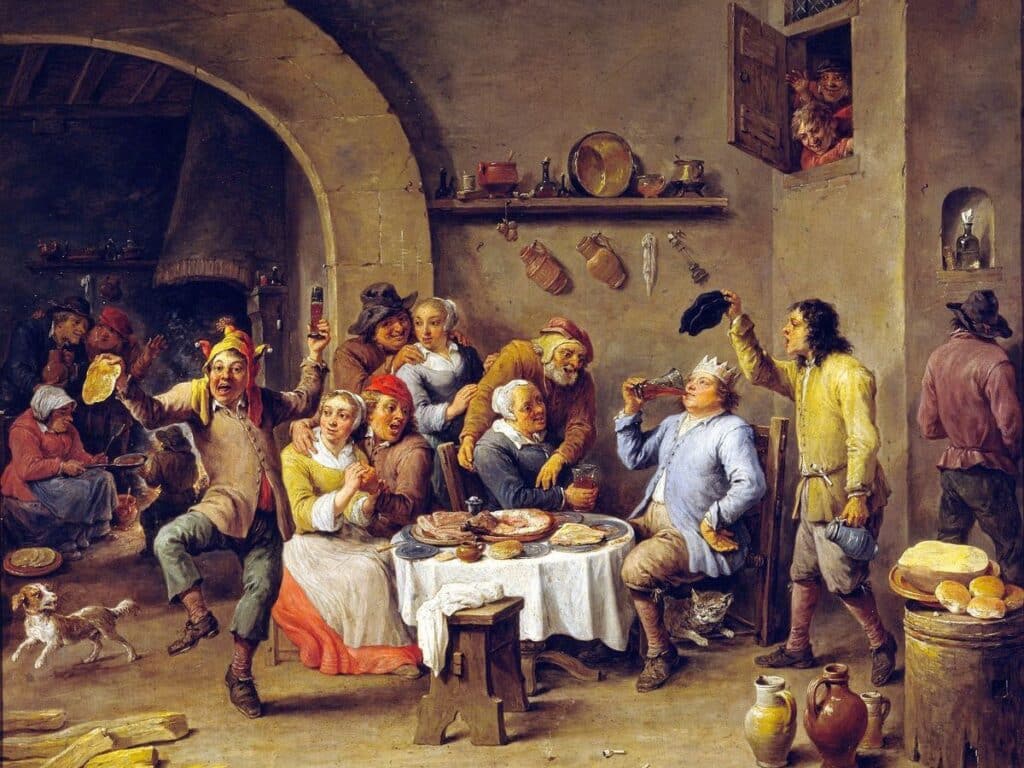
Every January 6th, communities choose their “Bean King” by baking a bean into a massive cake. The person who found the bean ruled as an absolute monarch for 24 hours. Unlike modern party games, these bean kings took their temporary power deadly seriously. Historical records show that one bean king ordered all the town’s merchants to give away their goods for free, and they complied.
Bean kings issued increasingly bizarre proclamations as their day progressed. One famous decree required everyone to walk backward while carrying a cat. Another commanded the town’s most dignified judge to spend his day rolling cheeses down the main street. The festival ended when too many bean kings started demanding that their rules become permanent.
10. The Ridiculous Tournament of the Peacock
This bizarre tournament celebrated the peacock as a symbol of nobility and pride. Knights would take solemn vows on a roasted peacock, swearing to accomplish increasingly ridiculous feats. One knight famously vowed not to sleep in a bed until he had fought a lion while wearing nothing but his underwear.
The whole event was part tournament, part feast, part ego trip. These were usually thrown by rich nobles trying to outdo each other in flair, not skill. The armor was polished to a mirror shine. The gestures were exaggerated. The language was pure nonsense.
It all played into courtly ideals that had little to do with actual warfare and a lot to do with spectacle. The peacock became a strange symbol of pride and glory, even though everyone knew it was a bit ridiculous. But in a world obsessed with status, being the most flamboyant knight in the room still counted for something.
Want to Experience Real Partying? Go Medieval
Our medieval ancestors turned partying into an art form, creating festivals where priests brayed like donkeys, peasants became kings, and every social norm was gleefully turned upside down. These were officially sanctioned periods of chaos that make our modern parties look about as exciting as organizing your sock drawer.
Love a good medieval story?
Join our readers and get tales of kings, queens, castles and ordinary medieval lives straight to your inbox.

Kylie Lang is a nationally syndicated travel journalist with bylines on the Associated Press Wire & more, a medieval history writer, and the founder and lead author of Tales of the Middle Ages (talesofthemiddleages.com). She holds a BA (Honours) in History from the University of Kent and is a member of the British Guild of Travel Writers.