The Capetian dynasty ruled France for over 350 years, producing some of Europe’s most influential monarchs. Yet beneath their glittering achievements lies a darker tale, a chilling legend that whispers of curses, divine retribution, and an unbroken chain of tragedy stretching across generations. Murder plots, scandals, and mysterious deaths seemed to shadow them for centuries like a relentless medieval paparazzi.
Was it mere coincidence, or did the Capetian kings truly bear the weight of a supernatural curse? What is the truth behind the legend of the Capetians?
Table of Contents
The Rise of the Capetians
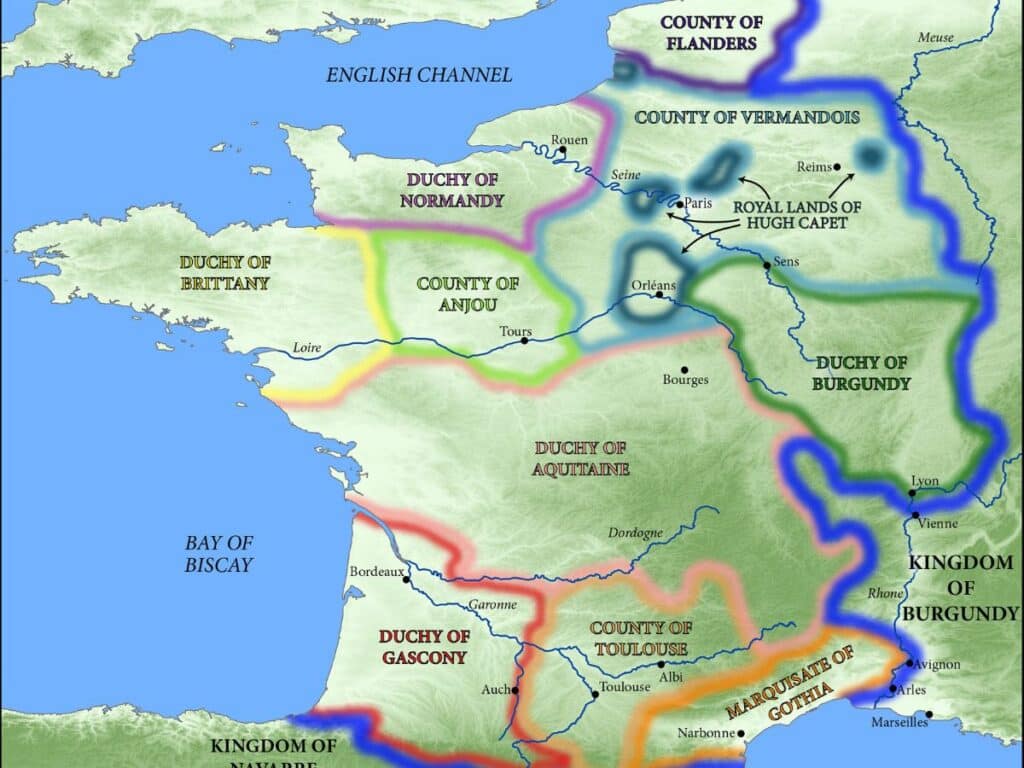
When Hugh Capet became king of France in 987, the kingdom was fragmented and weakened after decades of Carolingian decline. Hugh was a pragmatic choice made by nobles desperate for stability. They needed a king strong enough to hold the kingdom together, but not powerful enough to threaten their own authority.

One of Hugh’s cleverest moves was to establish a clear hereditary succession. He secured the throne for his family by crowning his son, Robert II, as co-king shortly after he took power. This strategy wasn’t new, but Hugh made sure it stuck, transforming what had previously been a loose elective monarchy into a stable hereditary line. Thanks to this foresight, the Capetians steadily increased their control over the fragmented territories of medieval France.
Over the next few centuries, the Capetians strengthened their position by gradually bringing powerful duchies and counties under royal control. By carefully arranging marriages and alliances and navigating their way through endless feuds and conflicts, the Capetian kings turned a fragile kingdom into one of medieval Europe’s strongest dynasties. But despite their rising power and wealth, a shadow soon appeared, one that seemed determined to bring down even the mightiest kings of France.
Philip IV and the Curse of the Templars
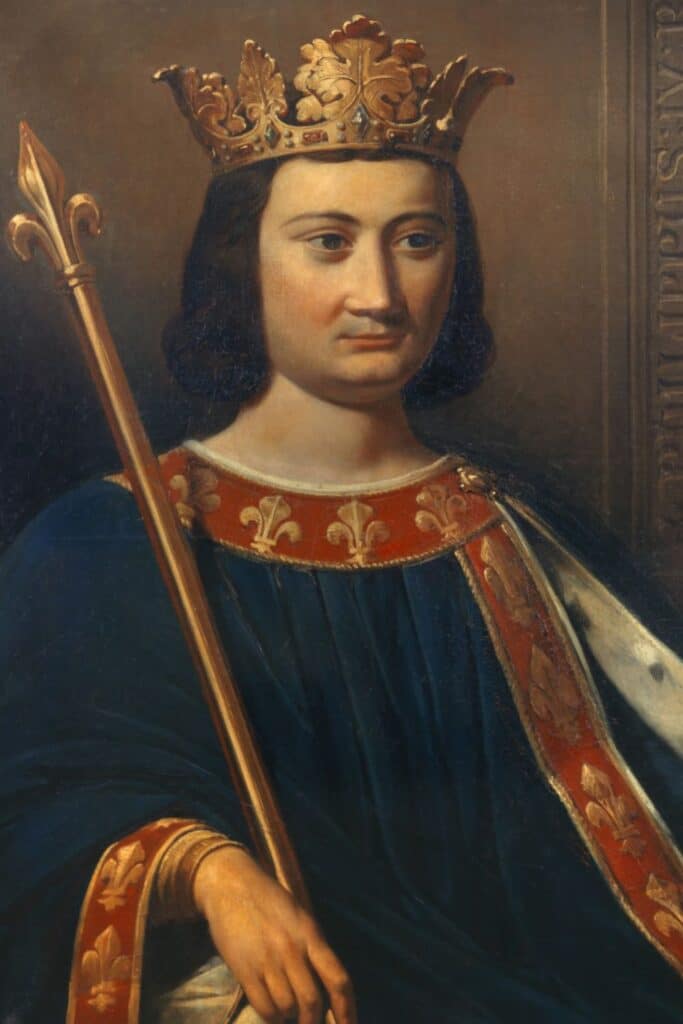
If you’re hunting for the origins of the so-called Capetian curse, you can start by looking straight into the cold eyes of Philip IV of France. Known as Philip the Fair, not for his temperament, mind you, but for his deceptively handsome face, this medieval king was as ruthless as they come. Ambitious, cunning, and chronically short of cash, Philip eyed the wealth and power of the Knights Templar with envy.
By the early 1300s, the Templars had become Europe’s bankers, controlling vast treasures and lending money to kings, including Philip. Deep in debt and eager for a quick solution, Philip did something shocking: on Friday, October 13th, 1307, he ordered a swift and brutal arrest of the Templars throughout France. Under torture, many Templars confessed (falsely, historians now agree) to charges of heresy, blasphemy, and worse. He launched a spectacular smear campaign, staging lurid trials designed to publicly humiliate and destroy their reputation forever.
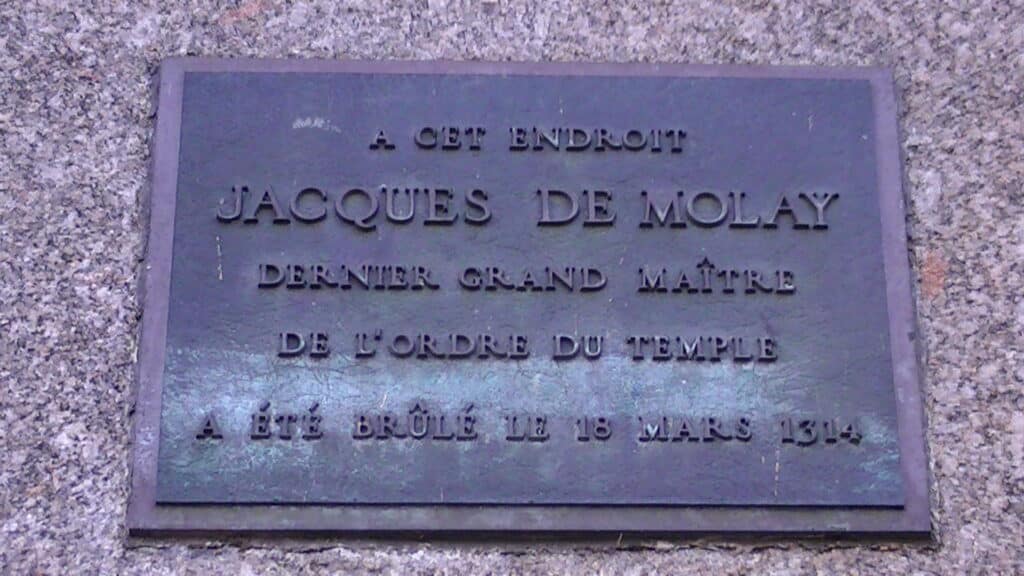
Jacques de Molay, the last Grand Master of the Templars, was burned at the stake in Paris in 1314. As flames consumed him, legend has it he cursed Philip and his bloodline, proclaiming that Philip and his heirs would meet their doom within a year. Within months, Philip IV was dead from a mysterious stroke, and his sons soon followed him to early graves, plunging France into turmoil and leaving many wondering if the Templars’ curse was terrifyingly real.
Hooked on the Middle Ages? Get more stories like this one in your inbox.
The Tragic Downfall of the Direct Capetian Line
For centuries, the direct Capetian line thrived, producing kings who expanded France’s borders and cemented its place as a major European power. But by the early 14th century, disaster struck. Within a span of just over a decade, three consecutive kings, all sons of Philip IV the Fair, died without leaving male heirs:
Louis X (1314–1316)
Louis X took the throne first, but his reign was a disaster from day one. Nicknamed Louis the Quarrelsome because he spent most of his short rule squabbling with nobles and failing to control widespread famine, he lasted just two troubled years before suddenly dropping dead at age 26. Rumors flew: some whispered poison, others said divine punishment for his father’s sins. Either way, the curse seemed real enough.
Philip V (1316–1322)
Next up was Philip V, nicknamed Philip the Tall. Determined not to make his brother’s mistakes, he worked tirelessly to restore royal authority, reform taxes, and strengthen justice. But Philip was dogged by his own ghosts. His reign was overshadowed by scandal, particularly the lingering aftermath of the notorious “Tour de Nesle affair,” where Philip’s sisters-in-law had been accused of adultery, throwing royal legitimacy into question. Philip ruled only six uneasy years before dying mysteriously at 29, leaving no sons to carry on his line.
Charles IV (1322–1328)
The final blow came with Charles IV, the youngest brother and last hope of the direct Capetian line. Charles was cautious and competent and tried his best to bring stability back to France, but fate seemed determined to finish off Philip IV’s bloodline.
His short reign saw endless political squabbles, miscarriages by his queens, and growing anxiety that the dynasty was cursed. In 1328, Charles died at 33, again without a male heir. The direct Capetian dynasty came crashing down with him, and France faced a succession crisis that would lead directly into the Hundred Years’ War. Real curse or tragic coincidence? History still debates, but the chilling legacy remains.
This succession of untimely deaths led many to believe the curse had finally claimed its victims, marking the end of the original Capetian line.
The Hundred Years’ War
The lack of a clear successor opened the door for claims from England. King Edward III, the nephew of Charles IV through his mother, asserted his right to the French throne. France, however, favored Philip VI from the Valois branch of the Capetian family.
This dispute ignited the Hundred Years’ War, a series of conflicts that ravaged France. Battles like Crécy and Agincourt resulted in devastating losses. The prolonged warfare drained resources and fractured the country. Many saw this relentless strife as the manifestation of the Templar curse, punishing the nation for the sins of its former king.
Madness Within the Royal Bloodline
The Valois dynasty, though a branch of the Capetian family, didn’t escape misfortune. King Charles VI, dubbed “Charles the Mad,” suffered from severe mental illness. Episodes of paranoia and delusion plagued his reign; he once believed he was made of glass and could shatter at any moment.
His incapacity led to power struggles among the nobility and weakened France’s leadership during a critical period. The internal chaos compounded the external threats, exacerbating the nation’s woes. This mental instability within the royal line intensified whispers of a family curse affecting not just fortunes but minds.
The Fall of the Bourbons
Centuries later, the supposed curse seemed to resurface with the Bourbon dynasty, which was the direct descendants of the Capetians. King Louis XVI inherited a fractured France teetering on the brink of revolution.
Despite attempts at reform, he couldn’t quell the growing unrest. The financial crisis, famine, and calls for equality culminated in the French Revolution. In 1793, Louis XVI was executed by guillotine, marking the violent end of the French monarchy. The tragic fate of Louis XVI and the royal family added another chapter to the curse legend, suggesting that the malediction had reached its grim conclusion.
Skepticism and Historical Realities
While the narrative of a curse is alluring, historians often attribute these events to political intrigue, social upheaval, and the harsh realities of the times. The Middle Ages and the centuries that followed were periods of immense difficulty for ruling families across Europe. High child mortality rates, lack of medical knowledge, and constant warfare made tragedies commonplace.
The repetitive misfortunes of the Capetians could be seen as unfortunate but natural consequences of the era rather than the result of a supernatural curse.
The Power of Myth and Legend
So why does the legend of the Capetian curse endure?
Myths like these offer a gripping explanation for historical coincidences and tragedies. They weave a narrative that connects disparate events into a cohesive story, satisfying a human desire for meaning.
The curse serves as a cautionary tale about the perils of power, greed, and injustice. It reminds us that actions have consequences, sometimes echoing beyond one’s lifetime. The enduring allure of such legends speaks to their effectiveness in capturing the imagination and imparting moral lessons.
Cultural Impact and Literary Inspiration

The idea of the Capetian curse firmly planted itself into Europe’s imagination, resurfacing through centuries of literature, drama, and popular culture. The most famous literary reference came from Maurice Druon, whose acclaimed historical novels “The Accursed Kings” (Les Rois Maudits) revived interest in the curse during the mid-20th century.
Druon’s meticulous historical research blended seamlessly with compelling storytelling, drawing readers into a gritty medieval world. His novels inspired history buffs and influenced George R. R. Martin’s “Game of Thrones,” shaping his vision of brutal power struggles and doomed royal bloodlines.
In the theater, the curse has repeatedly taken center stage. French dramatist François Ponsard’s play “Les Templiers” vividly dramatized Jacques de Molay’s execution and the supposed curse on Philip IV’s heirs. The play’s depiction reinforced the chilling narrative that royal arrogance could provoke divine retribution.
Likewise, the Templar legend and its fatal aftermath have inspired gothic novels and historical thrillers, exploring themes of vengeance, betrayal, and supernatural justice, always circling back to the events that unfolded on that infamous Friday the 13th.
Even today, echoes of the Capetian curse ripple through popular culture. Movies and television series periodically revisit the Templar myth, from Ridley Scott’s epic “Kingdom of Heaven,” which hints at Templar mystique, to the History Channel’s “Knightfall.”
A Legacy of Shadows
Whether the Capetian curse was real or imagined, it remains one of history’s most compelling mysteries. From Hugh Capet’s controversial rise to power to the tragic fates of his descendants, the dynasty’s story is a testament to the interplay of fate, ambition, and circumstance. It underscores how decisions made by those in authority can have far-reaching and unforeseen consequences.
Even the greatest empires are built on fragile foundations, and sometimes, the price of greatness is paid in blood.
Love a good medieval story?
Join our readers and get tales of kings, queens, castles and ordinary medieval lives straight to your inbox.

Kylie Lang is a nationally syndicated travel journalist with bylines on the Associated Press Wire & more, a medieval history writer, and the founder and lead author of Tales of the Middle Ages (talesofthemiddleages.com). She holds a BA (Honours) in History from the University of Kent and is a member of the British Guild of Travel Writers.
Related posts:
 Friday the 13th, Jedi Knights, and a Drug Cartel: The Legacy of the Knights Templar
 The Curse of Tutankhamun: A Medieval Myth or Ancient Reality?
 Mary Tudor and Charles Brandon: The Secret Marriage That Rocked Henry VIII’s Tudor Court
 The Hundred Years War Battles That Broke France: Mud, Blood, Dysentery, and a King Taken Hostage