
Stories of the Knights Templar have circulated for centuries, and it’s a case of picking the fact from the fiction. They certainly sport a romantic figure in their white cloaks and red crosses and have been the subject of a few historical romance novels. But the fate of the Templars in Britain was very different from that of the Templars in France.
For a start, they weren’t burned at the stake. Imprisoned, yes, burned no. There were also no curses or treasure hunts. However, that’s not to say that the Templars had an easy ride of it in the Tower of London, far from it.
Table of Contents
Many of the older Templars died while imprisoned, and some were simply erased from the records. So what actually happened in January 1308 when Edward II ordered the arrest of the Templars in Britain?
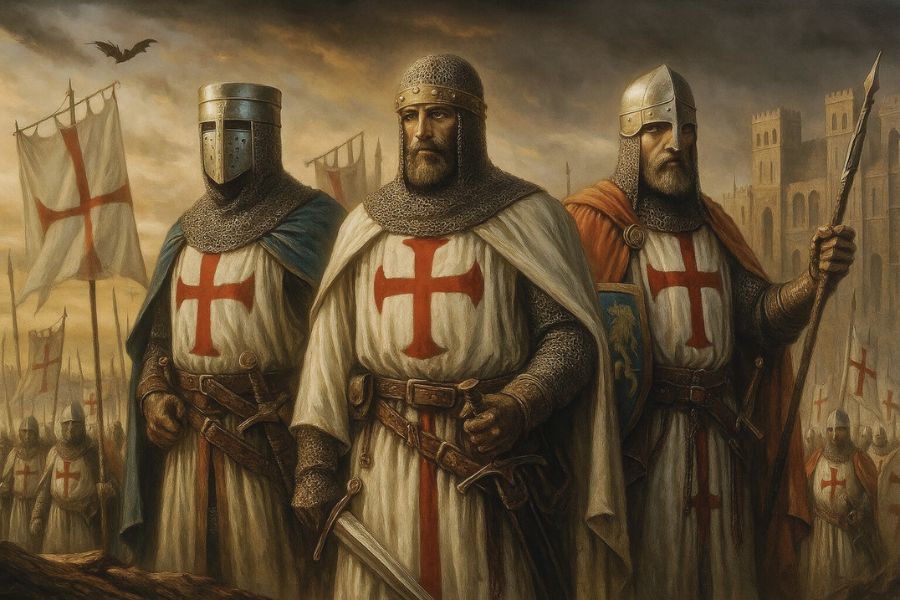
The Rise of the Warrior Monks
The story of the Knights Templar begins in the chaos that followed the First Crusade at the end of the 11th century. With new Crusader States carved out in the Holy Land, Christian pilgrims started streaming toward Jerusalem, eager to see the places they had fought so hard to reclaim. The problem was that the roads were dangerous, and many never made it.
That’s when two French knights, Hugh de Payens and Godfrey de Saint-Omer, decided to do something about it. They formed a small brotherhood of knights sworn to protect travelers heading to the sacred sites of Palestine and Syria. They took vows like monks but fought like soldiers, creating a new kind of order that was both spiritual and military.
By 1129, their cause had caught the attention of the Pope, who officially recognized them as the Order of the Temple of Solomon of Jerusalem. From there, the Templars grew fast. Donations of land and wealth poured in from across Europe, and soon they weren’t just protecting pilgrims, they were managing vast estates and wielding serious political influence.
By the late 12th century, the Templars had become one of the most powerful institutions in medieval Europe. But when the Crusader strongholds fell in 1291, they were forced to retreat to Cyprus. The dream of reclaiming the Holy Land was fading, and so too was the future of the Templar Order.
Heresy Charges and Arrests
It was Friday, October 13, 1307, when everything changed for the Knights Templar. In France, King Philip IV ordered a series of coordinated dawn raids that saw every Templar he could get his hands on dragged from their beds and thrown into prison. The charges were shocking: 127 counts of heresy, from spitting on the cross to performing unauthorized confessions. It was a public scandal that spread like wildfire.
Most historians agree that the accusations were nonsense. Philip was drowning in debt to the Templars after years of expensive wars, and this was his chance to wipe the slate clean while seizing their fortune. The Pope, Clement V, soon took over the investigation, and the arrests spread across Europe.
In England, King Edward II didn’t buy the accusations at first. But he was in no position to defy the Pope or Philip IV, whose daughter he was set to marry. By December 1307, Edward gave in. Within weeks, the Templars in Britain and Ireland were rounded up, with arrests carried out between January 9 and 11, 1308. The once-mighty warrior monks were now prisoners of their own kings.
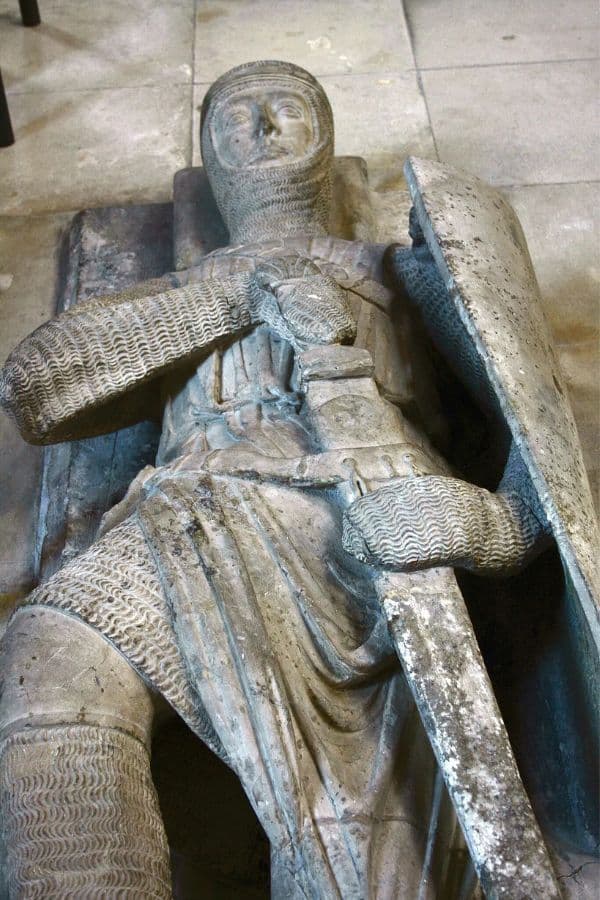
Hooked on the Middle Ages? Get more stories like this one in your inbox.
The Templars Imprisoned at the Tower of London
After their arrest, the Templars were scattered across England, locked up in royal castles while officials decided what to do with them. In Kent, they were kept in Canterbury Castle. Others found themselves in various strongholds around the country.
Then, in late November 1308, King Edward II ordered that every Templar held in London and Middlesex be transferred to the Tower of London. It was the kingdom’s most formidable fortress and, by then, already home to many political prisoners.
The trials didn’t begin until October 1309, nearly two years after the first arrests. Some Templars managed to evade capture altogether, forcing Edward to issue new orders in September 1309 to round up anyone still at large.
He made it clear that those caught in southern England were to be sent directly to the Tower. Forty-eight men would eventually face trial there, including William de la More, the Templar grand commander in England, and Himbert Blanc, grand commander of Auvergne, who had come from France to promote a new crusade.
No one knows exactly where in the Tower the Templars were kept. Records from earlier mass imprisonments show that inmates could be housed almost anywhere within the walls, from small towers along the inner curtain to cellars, stables, or even the elephant house.
By 1308, the Tower was already crowded with Scottish and Welsh prisoners, so the Templars likely endured cramped, unpleasant conditions. When Edward later tried to move them to the city gates in 1310, he was refused. The gates were city property, not royal, and the Templars remained in the Tower.
Their imprisonment was grim. Many were elderly and frail, and several died in captivity. By March 1310, they were separated from one another on the orders of inquisitors who feared the men might coordinate their defenses. Torture was eventually used during the London interrogations beginning in June 1311, though those held in York, Ireland, and Scotland were spared such treatment.
Most of the prisoners eventually confessed to heresy, though these confessions were likely given under pressure. On July 13, 1311, five aging Templars, Richard Peitevin, Henry of la Volee, William of Welles, Robert of the Wolde, and William of Chesterton, were too weak to travel from the Tower to St. Paul’s Cathedral for their formal abjuration. Instead, the bishops of London, Chichester, and Winchester came to All Hallows by the Tower, the small church still standing near the fortress today.
The five men were brought in by the Constable’s guards. Too frail to stand, they wept as they gave their confessions. They swore their oaths in English and French, renouncing the heresies for which they had been accused. Afterward, the bishop of Chichester absolved them, and their long ordeal inside the Tower finally came to an end.
The End of the Order
By 1312, the fate of the Knights Templar was sealed. The Council of Vienne officially dissolved the order under pressure from both the Pope and King Philip IV. Whatever remained of their brotherhood was scattered, their wealth seized, and their reputation tarnished beyond repair.
William de la More, who had led the Templars in England, refused to confess. For that defiance, he stayed locked in the Tower of London, where he died on December 20, 1312. Himbert Blanc, once a high-ranking Templar from France, was meant to be handed over to the Archbishop of Canterbury the following year for a retrial. He never made it. His name vanishes from history after that.
Meanwhile, in Paris, Jacques de Molay, the Grand Master of the Templars, met a fiery death in March 1314 after withdrawing his earlier confession. With his execution, the leadership of the Templars was gone. Those who survived were forced into monasteries, stripped of their status, and left to fade quietly into history.
The Order of the Temple was finished, but its legend had only just begun. The dramatic arrests, the mysterious disappearances, and the brutal deaths of its leaders would fuel stories for centuries—turning the Templars from persecuted warriors into one of the most enduring mysteries of the Middle Ages.
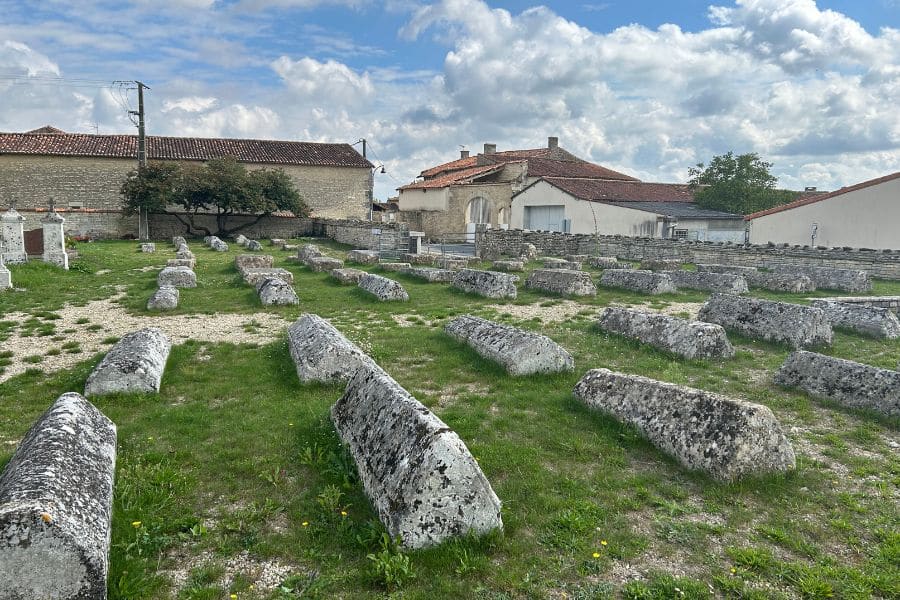
Templar Graves in Southwest France
In the Middle Ages, the necropolis of Ligné, a little tiny village just twenty minutes from where I live, used to have more than one hundred gravestones, which were positioned around a lantern of the dead, which no longer stands. The lantern was a monument erected in the 12th century in the southwest cemeteries. On top of it was an oil lamp, whose flame represented the divine light that watched over the dead.

There are seventy or so graves of the Knights Templar, some so faded you can hardly see the sculptures on top of them. Others are a little less worn, but they’re a reminder of the fact that the Charente was a known Templar region in France.
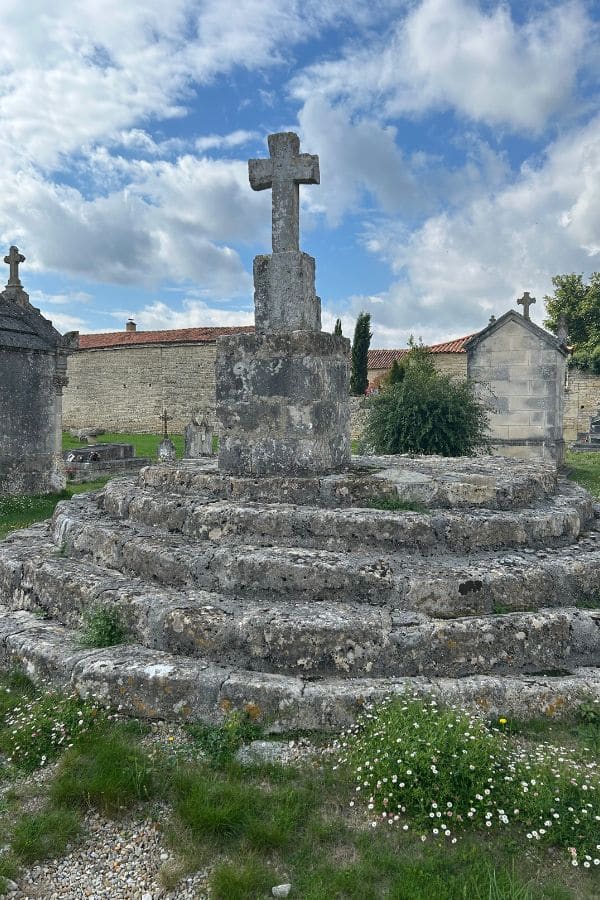
In the center of the graveyard is the hosannière cross built in 1654 on the base of the lantern of the dead, where the Palm Sunday procession used to stop. You can see its circular base and its five steps built from the masonry in large courses, which stood with the lantern.
Source: Historic Royal Palaces

Love a good medieval story?
Join our readers and get tales of kings, queens, castles and ordinary medieval lives straight to your inbox.

Kylie Lang is a nationally syndicated travel journalist with bylines on the Associated Press Wire & more, a medieval history writer, and the founder and lead author of Tales of the Middle Ages (talesofthemiddleages.com). She holds a BA (Honours) in History from the University of Kent and is a member of the British Guild of Travel Writers.
Related posts:
 From Holy Land to Heresy Trials: The Rise and Fall of the Knights Templar
 Were the Knights Templar Heroes, Heretics, or Scapegoats? There Story is Full of Intrigue and Secrets
The Mystery of the Knights Templar: Guardians of Secrets, Enemies of the Church or the Greatest Scandal of the Middle Ages?
Why the Knights Templar Still Haunt History Books. Uncovering the Truth Behind the Legend
Were the Knights Templar Heroes, Heretics, or Scapegoats? There Story is Full of Intrigue and Secrets
The Mystery of the Knights Templar: Guardians of Secrets, Enemies of the Church or the Greatest Scandal of the Middle Ages?
Why the Knights Templar Still Haunt History Books. Uncovering the Truth Behind the Legend