There is something fascinating about the Knights Templar and all they stood for. Maybe it’s because of their brutal downfall that we still talk about them today and want to know more. Or perhaps it’s because of the stories and legends surrounding them that we have built them up in our minds as men of mystery.
Whatever it is, there is an undeniable pull and thirst to know more, certainly for a history gal like me. Where I live in the southwest of France, there was a strong Templar base, and we have graveyards and old churches where many of these knights are said to be buried. La Rochelle was one of their headquarters, and many escaped from there for a new life in America.
Table of Contents
But what about the Knights Templar in England and the rest of Britain? What of their fate? Did they suffer as much at the hands of Edward II as the French Templars did with Philip IV of France?
Money, Power, and the Beginning of the End
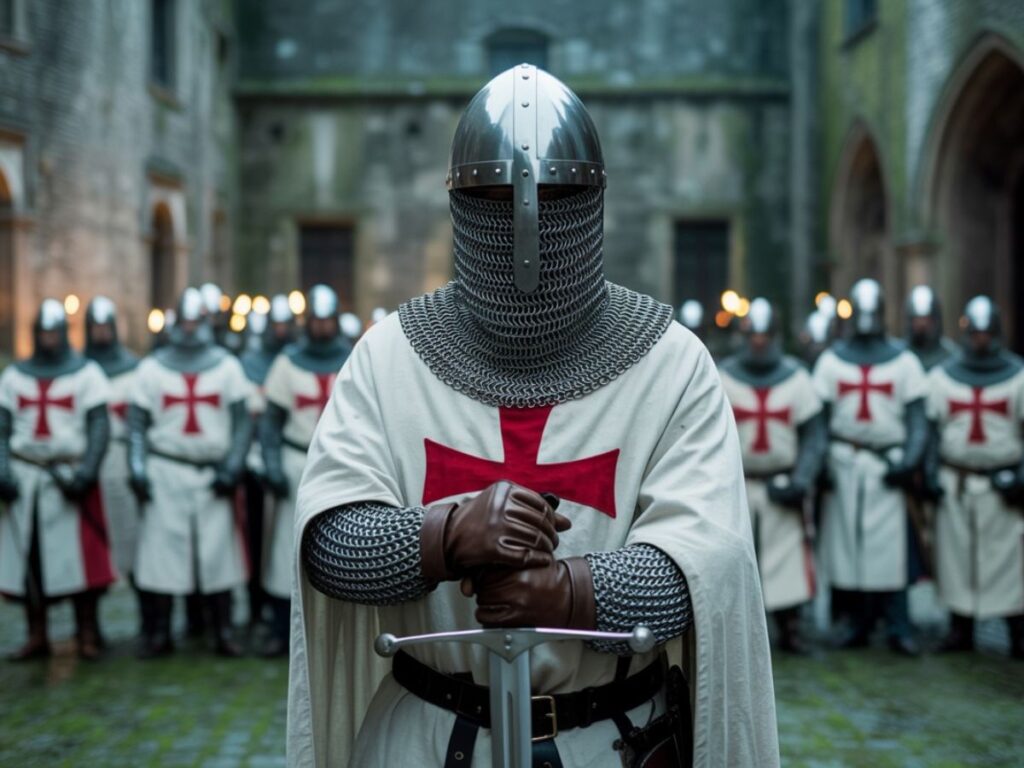
By the time the Templars were arrested in France in 1307, they’d been part of life in the British Isles for nearly two centuries. They were landowners, landlords, and administrators. They ran estates, collected rent, offered loans, and helped the Crown manage money. Their properties were better organized than the local lords could manage.
They arrived in England in the 1120s, not long after the order was founded in Jerusalem. Henry I gave them land in London, a prime patch along the Thames, where they built Temple Church. It was a hub of influence, used by kings, lawyers, and moneylenders. That area is still called the Temple today, and it became the beating heart of their English operations.
But they didn’t stay confined to London. Over the years, the Templars were granted lands all across England, as well as in Scotland, Wales, and Ireland. By the early 14th century, the Templars held over 500 estates in England alone. Places like Templecombe in Somerset, Garway in Herefordshire, and Aslackby in Lincolnshire were all tied to them.
They had a strong base in Scotland at Balantrodoch, now known as Temple, Midlothian. They were well-established in Ireland, with a notable preceptory at Clontarf, near Dublin. Most of these sites were working farms. The Templars made their money from wool production, milling, wine, and livestock. They employed peasants, servants, and craftsmen. In return, they kept strict records and expected efficiency.
Their economic power also came with legal privileges. They were exempt from certain taxes, answered only to the Pope, and saw their houses as places of sanctuary. That rankled more than a few bishops and barons, especially those who didn’t have the same freedoms.
By the early 1300s, their image had shifted. They still had wealth but didn’t have battlefield glory. The last Crusader strongholds had fallen, and many questioned why the Templars still held so much land, especially when they weren’t winning wars.
So when Philip IV of France accused them of heresy, and the Pope backed him, many powerful people saw an opportunity. In France, it led to fire and torture, but in Britain, it led to questions, hesitation, and eventually, a slow unraveling. But there’s no doubt: when the Templars came under pressure, the consequences reached far beyond the royal courts. Whole communities were affected. Land changed hands. Loyalties shifted. And for those working the land or running the mills, it meant uncertainty, and likely, higher dues.
Three Templar Strongholds in Britain
Templecombe, Somerset
Templecombe was one of the Templars’ key sites. The land was fertile and perfect for farming, and it linked easily to other holdings in Dorset and Hampshire. The Templars ran it as a preceptory, meaning it was a local headquarters that helped manage other estates in the region.
After the order fell, the land passed to the Knights Hospitaller. In the 1940s, a strange painting was found hidden behind a panel in a cottage on former Templar land. It showed the face of a man, possibly Christ, painted in a style that didn’t quite fit any known religious artwork from the area. Some believe it was part of the Templars’ private devotional space.
Balantrodoch, Midlothian
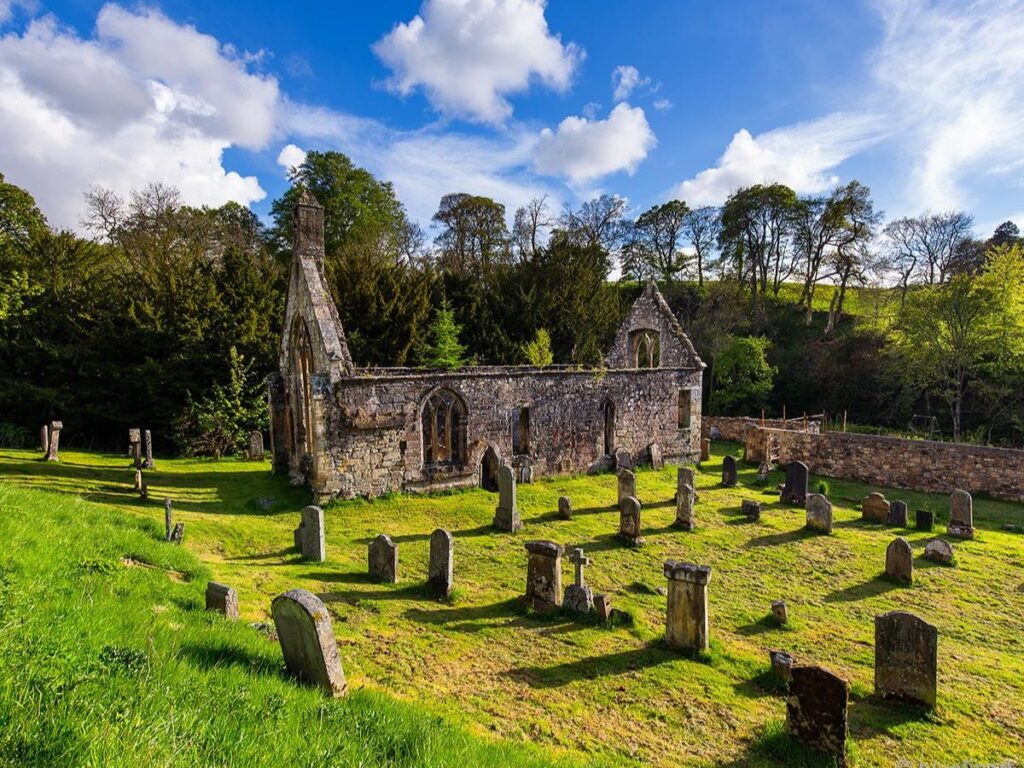
The Templars made their main base in Scotland at Balantrodoch, just south of Edinburgh. It sat along an old Roman road and had access to good land and clean water, two things the Templars always looked for when choosing a site. They built a chapel, managed livestock, and created a well-run estate supporting local and wider operations.
Today, the village is called Temple. The name stuck. Parts of the original church still remain, though much altered. After the suppression of the Templars, Balantrodoch was handed over to the Hospitallers, but for centuries, locals referred to it as “the place of the Templars.”
Clontarf, County Dublin
Just east of Dublin, near the sea, the Templars held land at Clontarf, a place already known in history thanks to the famous battle fought there in 1014. By the 12th century, it had become part of the Anglo-Norman world, and the Templars were granted a sizable estate. They established a preceptory where they managed farming and taxation and oversaw trade that moved in and out of Dublin’s port.
The Clontarf site was practical more than anything else. It allowed them to maintain influence near the capital while controlling agricultural land and rental income. After the order was suppressed, Clontarf passed to the Knights Hospitaller like most other Templar properties.
Over time, the buildings disappeared or were built over, but records show just how firmly the Templars had rooted themselves in Ireland’s landowning class. Today, there’s little to mark the site.
Hooked on the Middle Ages? Get more stories like this one in your inbox.
The Trials Begin: A Long, Cold Reckoning in the Isles
After the mass arrests of the Templars in France in 1307, it didn’t take long for pressure to reach British shores. But this wasn’t France, and Edward II wasn’t Philip IV. No bonfires were waiting in the courtyard. No widespread torture chambers. In fact, Edward II had initially been reluctant to arrest the Templars.
The reason? He actually liked them, and more to the point, he relied on them. Like Philip IV, Edward owed the Order a good chunk of money, and the Templars held land and resources that were deeply useful to the Crown. Eventually, though, the Pope insisted, and Edward fell in line. The arrests came in January 1308, months after the drama had already exploded across France. But what followed was a much quieter kind of destruction.
What Happened in England
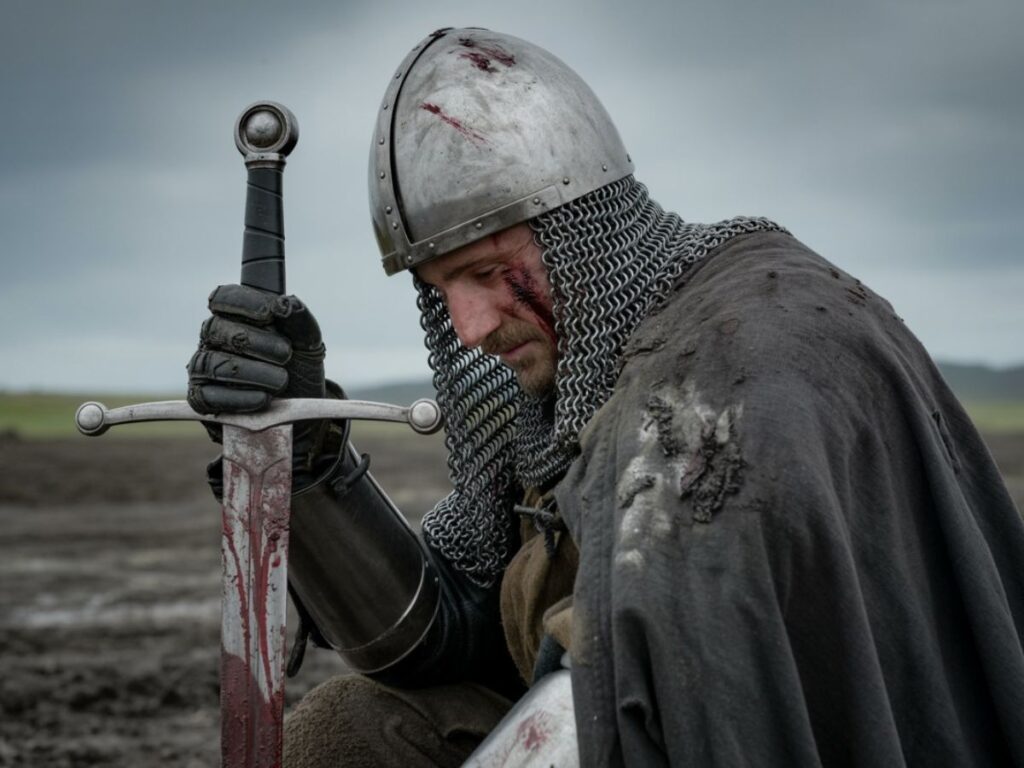
The English trial dragged on for years, with formal hearings taking place across multiple dioceses. The Templars were interrogated in London, York, and elsewhere. Most weren’t imprisoned in harsh conditions. Instead, they were held in religious houses. They weren’t tortured either. English law didn’t allow it, and that alone changed the whole tone of the trial. The “confessions” given were far less dramatic than their French counterparts, and many accused refused to admit anything.
The king’s interest was clearly more financial than spiritual. Detailed inventories of Templar properties were drawn up in 1308 and 1309, not to punish heresy but to figure out what the Order owned and how much money could be wrung from it.
Royal sheriffs listed everything from manors and mills to pots and oxen. Edward took the income for himself. Technically, the lands were supposed to go to the Hospitallers, but the Crown dragged its feet because too much money was at stake.
What Happened in Ireland
Ireland followed the same pattern. The Templars were rounded up and questioned, but the evidence was thin and often laughable. In some cases, the same friars who were supposed to be witnessing the interrogations ended up giving evidence against the Templars, blurring the lines and casting doubt over the whole process.
One of the Irish commanders, Brother Henry Danet, was released on bail by 1312, and many others quietly disappeared from the record. There’s no sign they were forced into monasteries like in England, nor is there evidence that torture was used. By 1318, some of the former Templars in Ireland were supported by a clergy tax. A few were even allowed to hold land again.
What Happened in Scotland
Scotland was chaos. Robert the Bruce had just been crowned, and the war with England was in full swing. Any official business was difficult to carry out, and the Templar inquest in 1310 was essentially a write-off. Officials noted they couldn’t finish the proceedings because of the ongoing raids and war. There’s almost no surviving record of what happened to the Scottish Templars, though we know that some lands were seized and redistributed, and the rest faded into silence.
So, What Did It All Mean?
In the end, the trials in the British Isles lacked the drama and cruelty of France, but the outcome was much the same. The Order was dissolved. Its wealth was carved up. The knights who had once stood shoulder-to-shoulder in Jerusalem ended up pensioned off or quietly absorbed into other orders.

Notable Templar Figures in the British Isles:
William de la More
William de la More was the last Grand Preceptor (or Master) of the Templars in England. A high-ranking and respected figure, de la More was arrested in 1308 and held at the Tower of London. He consistently denied all charges of heresy and refused to confess.
He died in custody sometime before the Order was formally dissolved in 1312. His steady refusal to confess is one reason England’s trials lacked the same drama as France’s. He simply didn’t give them the story they wanted.
Brother Henry of Haverford
One of the few Templars interrogated in Ireland. His testimony appears in the Irish records, though it’s brief. He denied wrongdoing and was released on bail not long after. We don’t know much more, but his name is one of the few to survive in the Irish context, showing just how thin the records became once the political usefulness of the trials wore off.
Robert the Scot
Mentioned in the English trial records as a Templar who also refused to confess to heresy. Not much is known about his background, but his name appears again and again in the diocesan hearings. He seemed to be part of a group that remained loyal to the Order and tried to defend its reputation throughout the proceedings.
What Happened to All That Land?
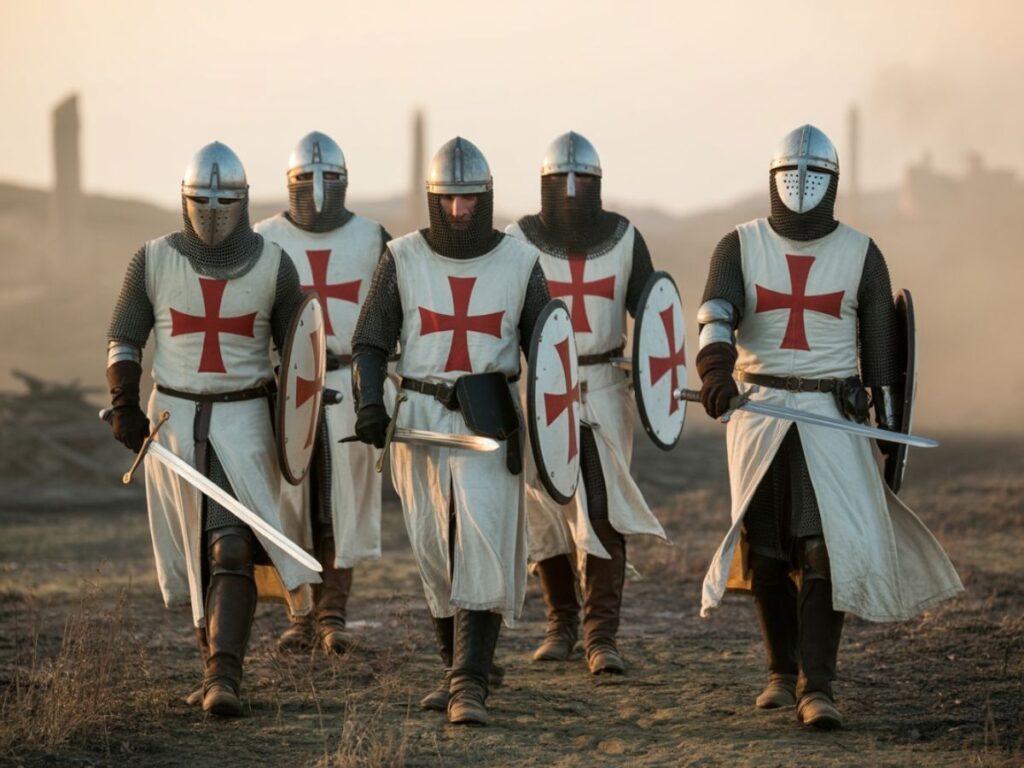
The Templars were rich, not in terms of piles of gold, but in land, livestock, tools, and property. When the arrests happened, all of it was counted, logged, and locked down. In England, the Crown sent out royal clerks to draw up inventories, line by line. Nothing was overlooked: oxen, horses, sickles, grain stores, church plates, and iron pots. It was the medieval version of asset seizure.
Technically, everything was supposed to go to the Knights Hospitaller. That was the Pope’s decision. But Edward II had other ideas. For four years, he hung onto the Templar income. That included rents, harvests, and everything else the estates brought in. In some places, he even replaced the Templars with royal bailiffs who ran the land directly for the king.
Eventually, under pressure, Edward handed most of the properties over to the Hospitallers. But the handover was patchy. Some manors were stripped clean. Others had been given to nobles or church officials who were owed favors. By the time the Hospitallers took control, many sites had lost value, been plundered, or simply left to decline.
In Ireland, it followed a similar pattern. Lands were held up in legal disputes and local politics. Some were officially transferred, but opportunists with good connections grabbed others. The further you were from Dublin, the less likely the Pope’s wishes mattered.
In Scotland, it’s even murkier. The political situation was so unstable that many former Templar estates ended up in the hands of the Scottish Crown or local warlords. A few may have gone to the Hospitallers, but no record exists.
As for the people who worked the land, not much changed at all. The plow still needed pulling. The taxes still needed paying. Whether it was a Templar knight, a royal bailiff, or a Hospitaller commander at the top didn’t matter much if you were the one shoveling manure or trying to keep the barley from rotting in the barn.

The Templar Legacy
The Order may have vanished, but it didn’t disappear. All across Britain and Ireland, there are traces of the Templars. In London, there’s Temple Church just off Fleet Street. Its shape mimics the Church of the Holy Sepulchre in Jerusalem, and it’s one of the few physical links we have to their original purpose. The church survived the trials, the Great Fire, and the Blitz. Today, it’s used by the legal profession.
Street names across the UK still carry the mark: Temple Guiting in Gloucestershire, Temple Bruer in Lincolnshire, and Templecombe in Somerset. In Ireland, Templemore and Templepatrick trace back to the same root. In some places, fragments of the old commanderies survive.
But the memory of the Templars never really left. It lingers in place names, crumbling walls. And maybe that’s what keeps us curious. Not the treasure stories or conspiracy theories, but the way real history leaves its fingerprints behind
Love a good medieval story?
Join our readers and get tales of kings, queens, castles and ordinary medieval lives straight to your inbox.

Kylie Lang is a nationally syndicated travel journalist with bylines on the Associated Press Wire & more, a medieval history writer, and the founder and lead author of Tales of the Middle Ages (talesofthemiddleages.com). She holds a BA (Honours) in History from the University of Kent and is a member of the British Guild of Travel Writers.
Related posts:
 Friday the 13th, Jedi Knights, and a Drug Cartel: The Legacy of the Knights Templar
 William Marshall, the Greatest Knight Who Ever Lived. But Who Was the Man Behind the Legend?
 Isabella of France: History Called Her a She-Wolf The Truth Is Far More Interesting
Isabella of France: The She-Wolf Who Would Not Be Tamed & Dared to Take a Throne
Isabella of France: History Called Her a She-Wolf The Truth Is Far More Interesting
Isabella of France: The She-Wolf Who Would Not Be Tamed & Dared to Take a Throne