
As a Plantagenet Princess, Joan of the Tower’s life was always going to be about marriage and producing heirs. She was the youngest daughter of the infamous She-Wolf of France, Isabella, and Edward II of England. Not the most auspicious of starts for Joan with those two for parents.
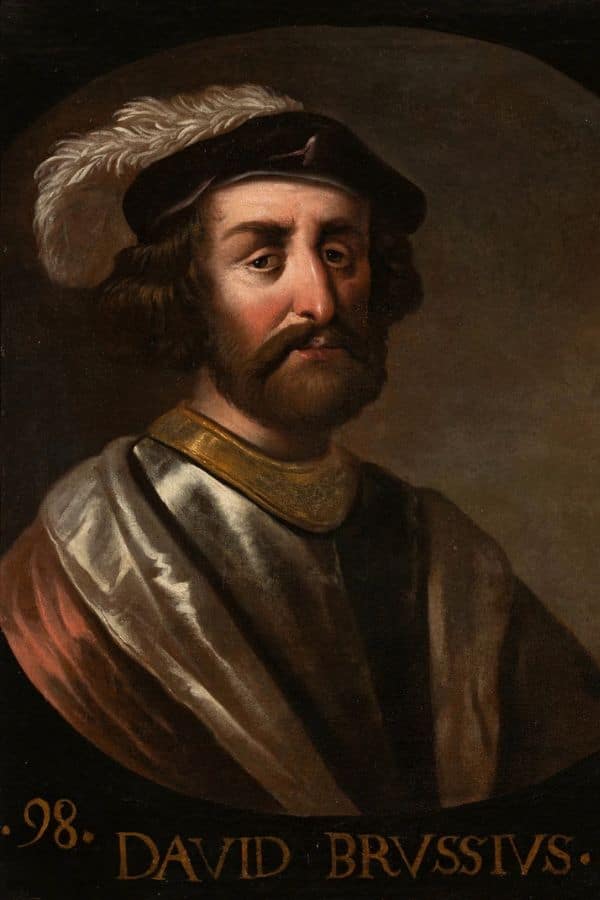
Their marriage wasn’t exactly harmonious. Isabella had a lover, Roger Mortimer, and Edward had his male favorites. So maybe it wasn’t so bad that she was taken from her family at the tender age of seven, betrothed in marriage to David of Scotland, the son and heir of Robert the Bruce.
Table of Contents
Seriously, you couldn’t write this stuff. And who needs to, when real life reads like a Netflix drama? But what happened to Joan, and why was she known as Joan of the Tower?
Born in the Tower of London
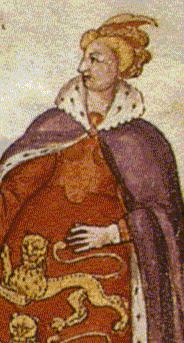
Joan was born on July 5, 1321, in the Tower of London. The location gave her the name she’s remembered by. She was the daughter of King Edward II of England and Isabella of France, herself the daughter of King Philip IV. Joan was Isabella’s last child. At the time of her birth, Isabella was growing bitter toward her husband, who openly favored his male companions and neglected her.
Little is known of Joan’s early life. What is certain is that she was born into turmoil. Her parents’ marriage had long since broken down, and the rift between them would soon erupt into open rebellion.
When Joan was only four years old, discussions began about her future marriage. Her first potential match was the son and heir of the King of Aragon, Jaime II. Later, another proposal came from Philip, Count of Valois, who would later become King Philip VI of France. Neither of these plans came to anything, but they showed how early royal children were drawn into the machinery of politics.

A Queen’s Coup
By 1327, the situation in England had collapsed. Joan’s mother, Queen Isabella, along with her lover, Roger Mortimer, overthrew King Edward II. Together they ruled as regents for Joan’s brother, the young Edward III. Their next move was to secure peace with Scotland.
The Battle of Bannockburn in 1314 had not ended the war between the two nations. Robert the Bruce wanted his kingship recognized by England once and for all. He demanded that the English crown renounce all claims of sovereignty over Scotland, something Edward II had always refused to do. Isabella and Mortimer saw this as an opportunity to settle old conflicts and strengthen their hold on power through diplomacy.

The Treaty and the Marriage
On March 1, 1328, Edward III issued letters patent recognizing Robert the Bruce as King of Scots. He agreed to establish the border between the two kingdoms as it had been during the reign of Alexander III. It was a major concession after decades of struggle. To cement the new alliance, English envoys began negotiating the marriage between Joan and Robert’s young son, David.
All sides counted on this marriage to secure lasting peace. Because the bride and groom were so young, the treaty included a clause stating that the marriage would not be considered fully valid until David reached the canonical age of fourteen in 1338. If the marriage were not consummated within two months of his fourteenth birthday, the entire agreement would be void.
If Joan died before that time, Edward III was required to provide another princess as her replacement. If David died, Joan would marry the next male heir. To provide for her, the Scots agreed that Joan would receive property that would bring in two thousand pounds a year in income.
The treaty made no mention of a dowry. But to keep the Scots from backing out before the marriage was complete, a heavy penalty was added. If the marriage had not been consummated by Michaelmas in 1338, Robert the Bruce would owe England one hundred thousand pounds, a staggering amount at that time.
The English wanted to ensure there was no easy way out of the agreement.
A Wedding Without Kings
The Treaty of Edinburgh-Northampton was finalized and signed on March 17, 1328, in the king’s chamber at Holyrood Abbey, where Robert lay ill. The English ratified it at Northampton on May 3.
That summer, Queen Isabella traveled to Berwick with young Joan. The royal children were formally married on July 17 in the church there. Isabella was present at the ceremony, though her son, King Edward III, was not. Robert the Bruce also claimed illness and did not attend.
Even without the two kings, the wedding was a grand affair. Robert spent 2,500 pounds on the celebrations, an enormous sum at the time.
After the wedding, the young couple visited Robert at Cardross. Some of Joan’s attendants returned to England, while Joan stayed behind in Scotland to begin her new life as queen.
Less than a year later, on June 7, 1329, Robert the Bruce died. David became king, and Joan, just eight years old, became queen consort of Scotland. Their double coronation took place on November 24, 1331, at Scone Abbey. James Ben, the Archbishop of St. Andrews, presided over the ceremony.
He was the first Scottish king to be both anointed and crowned, a distinction granted by the Pope when Scotland was officially recognized as an independent kingdom. A new crown and a smaller scepter were crafted for the occasion. Joan was also crowned and anointed, making her the first Scottish queen to receive that honor.
Hooked on the Middle Ages? Get more stories like this one in your inbox.
Silent Years and Political Strain
Little is known about Joan’s life in Scotland during the first six years of her marriage. Because of David’s youth, the kingdom was governed by a regency. Political intrigue grew as nobles fought to gain influence over the boy king.
Meanwhile, in England, Edward III was growing restless under his mother’s control. He was less than impressed with the Treaty of Edinburgh-Northampton, seeing it as a humiliation. People had begun calling Joan “Joan Makepeace,” a nickname mocking the treaty that made her queen. Edward hated it.
In November 1330, Edward finally seized power. He captured Roger Mortimer and had him executed. With Mortimer gone and Isabella sidelined, Edward began ruling in his own right. His eyes quickly turned north to Scotland, where he saw opportunity in the chaos of David’s minority.
Balliol’s Rebellion
Within a year of David and Joan’s coronation, Edward Balliol, the son of the former Scottish king, John Balliol, laid claim to the throne. He had the backing of Edward III, who hoped that Balliol would accept English overlordship.
Balliol’s army met David’s forces at the Battle of Dupplin Moor near Perth on August 12, 1332. The result was a disaster for the young king. Balliol’s troops won decisively, and he was crowned King of Scots at Scone on September 24.
Balliol even suggested to Edward III that he might marry Joan, assuming her current marriage could be annulled before it was consummated. But Balliol was in his fifties, and the idea went nowhere. His hold on the throne was short-lived.
Not long after his coronation, David’s supporters struck back. They launched a surprise night raid that forced Balliol to flee over the border into England.
Edward III used Balliol’s flight as an excuse to invade Scotland directly. His army met the Scots at the Battle of Halidon Hill on July 19, 1333. It was another crushing English victory. The power balance between the two kingdoms tilted once again, and the fragile peace that Joan’s marriage was meant to secure began to unravel.
Exile in France
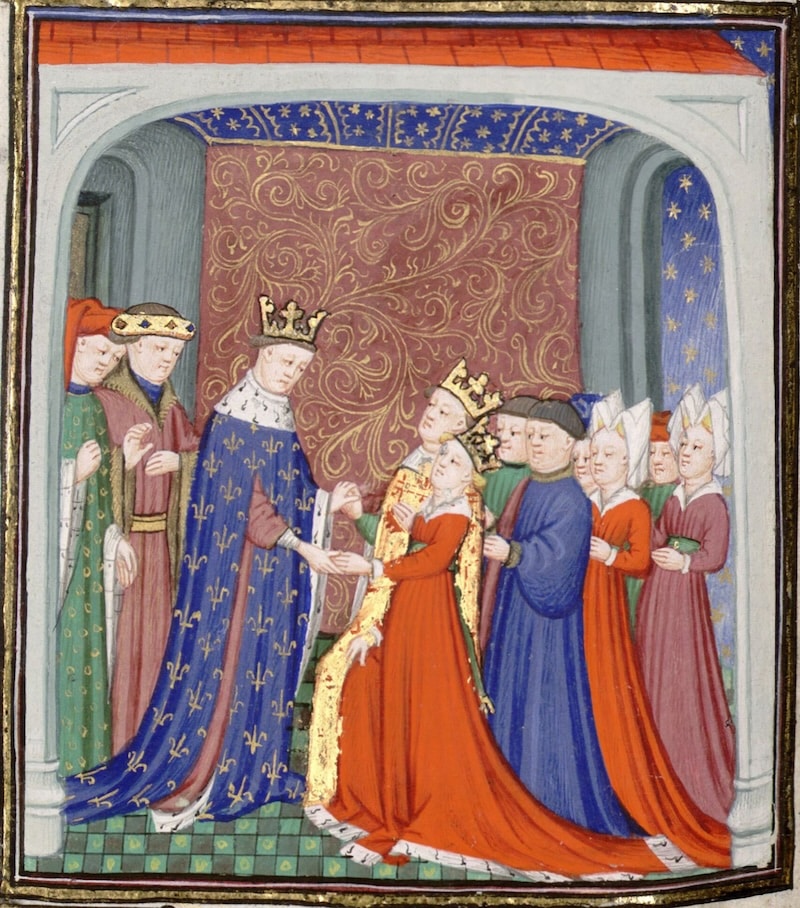
With Edward Balliol still threatening David’s rule, it became clear that Scotland was not safe for the young royal couple. In 1334, David and Joan were removed from Dumbarton Castle and taken to France for their protection at the invitation of King Philip VI, Isabella’s cousin.
Philip offered them refuge at Château Gaillard in Normandy. There, David and Joan lived comfortably for the next seven years, surrounded by Scottish attendants and courtiers. They enjoyed the security and refinement of the French court while Scotland continued to wrestle with instability.
Balliol never managed to gain full control of the Scottish kingdom, and his influence faded over time.
Return to a Divided Scotland
In May 1341, David and Joan returned home to a warm welcome from their people. But Scotland had changed in their absence. David quickly discovered that ruling his kingdom was not simple. Many lords had become powerful in their own right and were unwilling to submit to royal authority.
David’s efforts to strengthen his control met resistance from every corner. It was a difficult reign, filled with tension and political maneuvering.
When Edward III achieved his great victory at Crécy in August 1346, Scotland’s obligations under the Auld Alliance came due. As France’s ally, David was expected to invade England to divert Edward’s attention from the war on the continent.
The Battle of Neville’s Cross
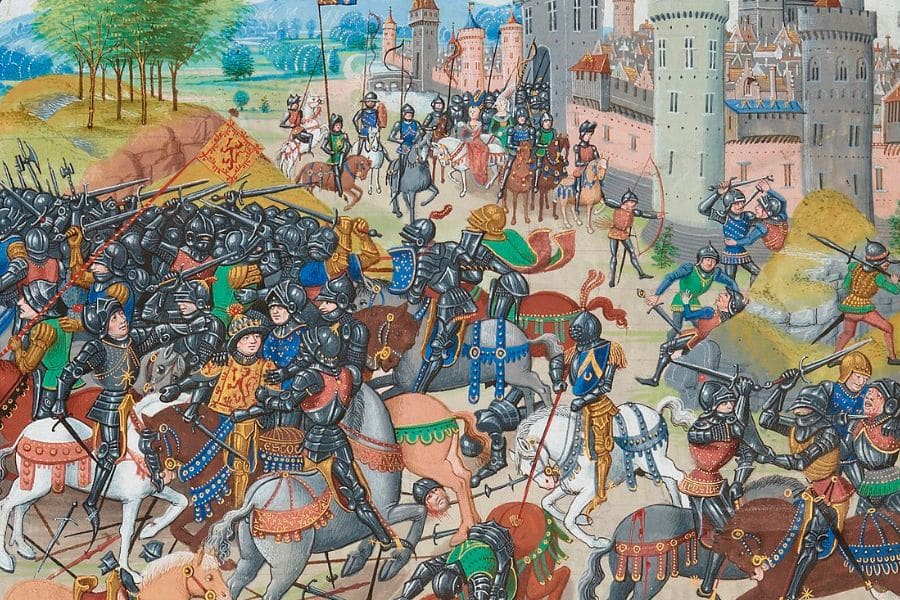
It was a disastrous campaign. On October 17, 1346, David’s army was crushed at the Battle of Neville’s Cross near Durham. Many Scottish nobles were killed, and the king himself was captured.
David was taken prisoner and brought to England, where he would remain in captivity for the next eleven years. He spent time in the Tower of London and later at Hertford Castle. There was one brief period, between 1351 and 1352, when he was allowed to return to Scotland, but it was short-lived.
Joan’s Whereabouts During David’s Captivity
It’s unclear where Joan lived during these years. Some sources suggest she stayed in Scotland; others say she divided her time between there and England. It’s possible she remained mostly in Scotland as a form of security for David’s good behavior.
While David was in captivity, his nephew Robert, the Steward of Scotland, ruled as regent. The relationship between the two men was cold. David distrusted Robert, though he remained his heir.
Despite their long marriage, more than 35 years, Joan and David had no children. Chroniclers note that while the marriage was consummated, there was never any sign of pregnancy or birth.
The Ransom
On January 17, 1357, Scottish ambassadors arrived in England to negotiate David’s release. By August, the preliminary terms were agreed, and the Scots Parliament ratified the treaty. Joan’s name was absent from all documents related to the discussions.
The Treaty of Berwick was finalized in November. David would return to Scotland in exchange for a payment of 100,000 merks, to be paid in ten equal installments. The full sum was never repaid.
On Christmas Day, Joan, along with the Bishop of St. Andrews and the Earl of March, received safe conduct to travel to England and arrange the first installment of the ransom.
Separation and Scandal
David’s return to Scotland marked the final break in his marriage. During his captivity, he had taken a mistress named Katherine Mortimer, and David was said to be deeply in love with her.
After his release, he made no effort to hide his attachment. The rift between him and Joan became permanent. She remained in England for the rest of her life, living apart from her husband. King Edward III granted her a pension of £200 per year, a respectable sum for a royal exile.
But tragedy soon followed. In the summer of 1360, Katherine Mortimer was murdered at Soutra in Scotland, stabbed to death, most likely at the urging of jealous Scottish nobles. David didn’t grieve for long and soon took up with another woman, Margaret Drummond, the daughter of Sir John Drummond and widow of Sir John Logie.
The Windsor Tournament
Meanwhile, across the Channel, England continued to celebrate its victories in France. In September 1356, Edward the Black Prince won the Battle of Poitiers, capturing King John II of France and his son, along with much of the French nobility.
Peace was finally made between England and France in March 1357. On May 5, the Prince of Wales landed at Plymouth, bringing the captive King of France back to English soil. A string of grand celebrations followed, culminating in a magnificent tournament at Windsor on St. George’s Day in 1358.
Joan attended the Windsor Tournament with her mother, Queen Isabella. Chroniclers described her as sweet, courteous, pleasant, and fair, a gracious presence at court despite the difficulties of her personal life.
After the tournament, Joan stayed with her mother, who had grown frail at sixty-six. She nursed Isabella through her final illness until the former queen died on August 22, 1358. It was a quiet end for one of the most notorious women in medieval history, and Joan, once taken from her as a child, was there to see her buried.
Joan’s Final Years
By 1362, records show that payments on Joan’s pension were running far in advance, suggesting that her expenses had exceeded what the crown had provided. She had likely been struggling to maintain the dignity expected of a queen living in England without a royal household of her own.
That same year, Joan died on September 7 at the age of forty-one while visiting her brother, King Edward III, at Hertford Castle. Her life, marked by politics and separation, ended quietly. She was laid to rest in the church of the Greyfriars in London, beside her mother.
About a year later, King David married Margaret Drummond, officially moving on from the union that had once symbolized peace between two kingdoms.
Joan of the Tower had lived and died as many royal women did, used as a token to seal a treaty, then forgotten when that treaty crumbled.
Love a good medieval story?
Join our readers and get tales of kings, queens, castles and ordinary medieval lives straight to your inbox.
Kylie Lang is a nationally syndicated travel journalist with bylines on the Associated Press Wire & more, a medieval history writer, and the founder and lead author of Tales of the Middle Ages (talesofthemiddleages.com). She holds a BA (Honours) in History from the University of Kent and is a member of the British Guild of Travel Writers.
Related posts:
 The Battle of Neville’s Cross 1346, How Scotland Lost Its King Outside Durham
 September 4, 925: The Day England’s First King, Æthelstan, Was Crowned, But Was He?
 Sweyn Forkbeard: The First Viking King of England
 The Battle of Poitiers: The Black Prince’s Boldest Victory and the Capture Of a French King