
In the year 945, a Kievan prince met one of the most gruesome fates recorded in medieval chronicles. Prince Igor I of Kiev, a ruler with Viking blood in his veins, was captured by his rebelling subjects and torn in half by bent birch trees.

This shocking execution at the hands of the Drevlians (an East Slavic tribe) was the dramatic climax of Igor’s reign, brought on by his own avarice according to the chronicles. Igor’s story is the tale of a Varangian (Viking) prince who inherited a burgeoning kingdom, led campaigns from the Caucasus to Constantinople, and whose violent end sparked one of history’s most legendary episodes of revenge and reform.
Table of Contents
His downfall came not at the hands of a mighty empire, but from the very people he ruled. And when his widow, Olga, took over, things got even wilder.

Varangian Roots: Vikings and the Rise of Kievan Rus
Igor of Kiev didn’t come from a quiet village or a long line of local farmers. He was born into a dynasty founded by Vikings. His father, Rurik, was one of the Varangians who rowed down the rivers of Eastern Europe in the 9th century in search of trade, land, and power. Whether they were invited in to bring order or simply took it by force, these Norsemen carved out a new kind of rule over the Slavic tribes they encountered.
Rurik died around 879, and instead of leaving power to his young son Igor, it went to a kinsman named Oleg. Oleg was a strategist. In 882, he took the child Igor with him to Kiev, killed the local rulers, and declared the city the new seat of power. That move turned Kiev into the political heart of what would become Kievan Rus.
From the start, this was a kingdom built on war, trade, and tribute. The Varangians demanded payment from the tribes they controlled and made sure no one forgot who was in charge. Igor grew up in that world. He had Viking blood, a Norse name, and a Slavic tongue. He inherited not just a throne but a way of ruling that relied on fear, loyalty, and strength.
By the time Igor came to power, he was carrying the legacy of a Norse warrior empire that had taken root in Slavic soil. And like the men who came before him, he would live and die by the sword.

Igor’s Rise: Holding Power, Keeping Tribute
When Oleg died around 912, Igor finally assumed the role of ruler of Kiev. He was no longer a boy under someone else’s protection. Now it was his job to hold together a loose collection of tribes, many of whom were already testing the limits.
One of the first to push back was the Drevlians. They’d been paying tribute under Oleg, but when he was gone, they stopped. Instead of sending payments to Kiev, they handed them over to a local strongman. Igor didn’t let it slide. He launched a campaign against them around 913 or 914 and forced them to cough up even more than before. It worked. For now.
Igor also strengthened his position through marriage. He married Olga early in his reign, maybe even earlier, depending on which version of the story you read. She was said to be from Pskov, possibly of Varangian blood like him. Later, she’d become famous for far more than being his wife, but at this point, she helped solidify his place as ruler and may have already been advising him.
Beyond the internal cracks, new threats were gathering on the edges of the kingdom. In 915, a nomadic group known as the Pechenegs emerged. They came out of the steppe and were renowned for fast raids and brutal tactics. Igor managed to avoid a fight that time by making peace. But peace with the Pechenegs never lasted. By 920, they were at war with Rus again.
He also had trouble to the south. The Ulichians, another Slavic tribe, weren’t keen on answering to Kiev. Igor launched another campaign, taking their stronghold at Peresichen. With that, he pushed Rus control deeper into the southern steppes. By the time he’d finished, about 20 local rulers had pledged allegiance to him. It wasn’t a unified state by modern standards, but it was something.
Igor didn’t go down in history as a clever or popular ruler. But he held the realm together during a rough stretch. He kept the tribute flowing and managed to keep the tribes in line. Still, it was that same cycle of warfare and tribute that would eventually come back to bite him. He pushed things too far.

War and Diplomacy: Igor’s Campaigns Across Steppe and Sea
Igor doesn’t get much praise from the old chronicles, but his reign was far from quiet. He spent years launching campaigns that took him from the shores of the Black Sea to the mountains of the Caucasus. Some were about trade. Some were about plunder. Most were about showing Kievan that Rus had teeth.
Here’s how his campaigns played out.
912 – Igor becomes ruler of Kiev after Oleg’s death. Right away, he gets stuck back into collecting tribute and keeping unruly tribes in line.
913 to 914 – A Rus fleet heads down to the Caspian Sea and raids the Persian coast. They take on cities like Barda’a and loot what they can. The whole thing ends badly. On the way home, the Khazars ambush the fleet and wipe out thousands of Rus warriors. Igor might have led the expedition. Some say he bailed early to deal with trouble back home. Either way, it was a disaster.
941 – Igor tries to copy Oleg’s famous raid on Constantinople. He sees an opportunity with the Byzantine navy tied up elsewhere and sends his fleet across the Black Sea. His men hit the coast of Asia Minor, burning towns and taking prisoners.
However, as they near Constantinople, the Byzantines counter with Greek fire. The Rus fleet is torched, and those who don’t drown or burn are captured and beheaded. Igor escapes with what’s left and heads back to Kiev. The campaign is a failure, and he’s mocked for it.

943 to 944 – Igor gives it another go. He heads south again and captures the city of Berdaa in the Caucasus. But the win doesn’t last. A disease outbreak hits the Rus camp and forces them to withdraw.
At the same time, Igor starts preparing for another campaign against Byzantium. This time, the Byzantines get ahead of it. They send envoys with offers of tribute and trade to avoid another war. Igor takes the deal.
The treaty they signed in 945 renewed trade but on weaker terms than Oleg had secured before him. Igor has to agree not to raid Byzantine land and even promise to help them if certain enemies attack.
944 to 945 – He sets out on a circuit through the lands under Kievan control. When he reaches the Drevlians, whom he had already crushed once before, he makes a choice that will cost him everything.

The Fatal Tax: Igor’s Death at the Hands of the Drevlians
After years of chasing campaigns across foreign lands, Igor’s downfall came from home. In 945, he led his armed retinue into Dereva, a Drevlian territory. Nothing unusual about that. Collecting annual tribute was part of the job. When he showed up, the Drevlians handed over what they owed without a fight. Igor turned to leave with the payment. That should have been the end of it.
But it wasn’t enough. On the way back to Kiev, Igor decided he wanted more. Maybe it was greed. Maybe it was pressure from the men who rode with him. Either way, he made a choice that sealed his fate. He turned around and went back to demand a second tribute. To speed things up, or maybe because he thought the Drevlians wouldn’t dare strike, he left most of his troops behind and returned with only a small group.
The Drevlians didn’t take it quietly. Igor had crossed a line. There was an understanding about how tribute worked, and he had broken it. The Drevlians saw it as betrayal. Their leader, Prince Mal, decided enough was enough.
When Igor arrived in the city of Iskorosten, the Drevlians were waiting. They captured him. What followed is one of the most horrifying executions recorded in early medieval history. According to later accounts, they bent two birch trees to the ground, tied one of Igor’s legs to each, and let the trees go. The force tore his body in two. But even if the details were exaggerated, no one doubts he was killed violently and deliberately.
Igor had pushed too far. He tried to take more than was fair, and the Drevlians responded with murder. In their version, they told his widow that Igor was like a wolf, always prowling, always taking. And that wolves don’t stop unless someone stops them.
Some historians think the story of the birch trees was added for effect. Maybe it was. But it doesn’t change the fact that Igor died at the hands of the people he ruled. Not in battle. Not in exile. But on his own turf, killed by a tribe that had once paid him tribute.
His death shook Kievan Rus. He left behind a kingdom composed of loosely held alliances and a young son too young to rule. On paper, that looked like a recipe for disaster.
But Igor wasn’t the last word. His wife, Olga, was still standing. And she wasn’t about to let it end like that.
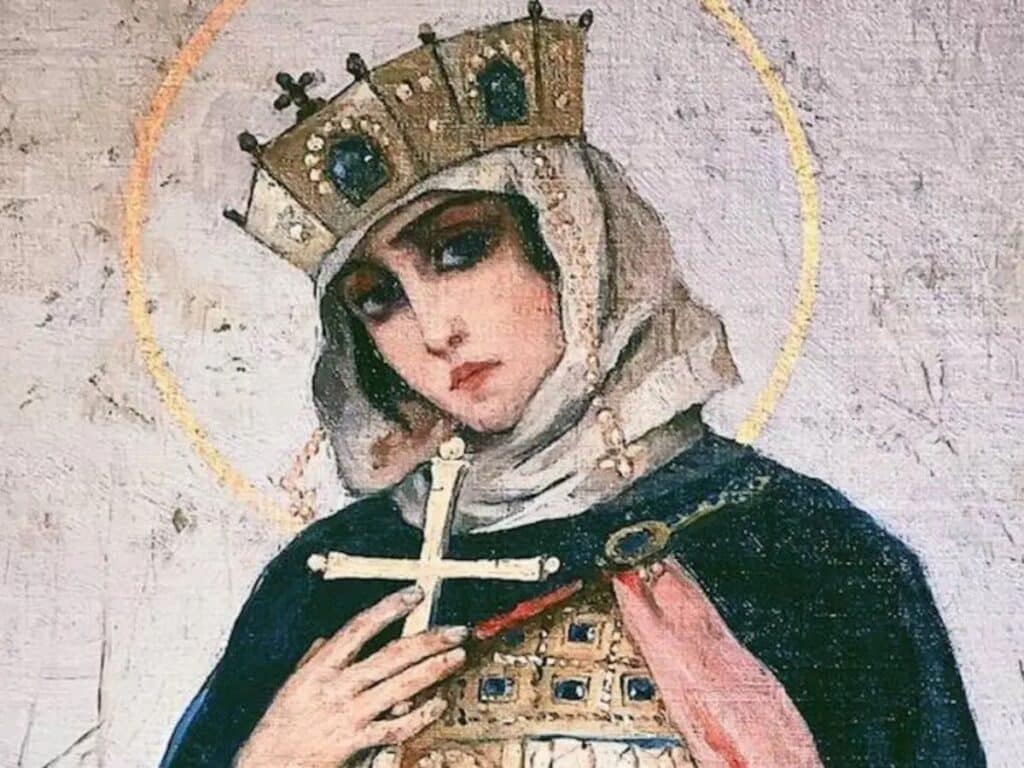
Aftermath: Olga’s Vengeance and the Birth of Reform
When Igor was killed, his son Sviatoslav was just three years old. A toddler with a crown is easy pickings in a kingdom like Kievan Rus. But his mother, Olga, wasn’t about to let the vultures circle. She took control immediately and made it clear she wasn’t there to play nice.
Olga became the first woman to rule Rus, and her primary goal was to exact revenge against the Drevlians for their actions.
The Drevlians thought they’d won. With Igor dead, their prince, Mal, actually sent a marriage proposal to Olga, hoping to incorporate Kiev into his domain and make the whole thing appear to be a clean transfer of power. He sent twenty high-ranking envoys to deliver the message in person.
Olga welcomed them. She even offered them a public ceremony the next day where they’d be honored by the people of Kiev. The envoys arrived proudly, climbed into their longboat, and were carried through the streets by Olga’s men, straight into a massive trench where the boat was dumped and the envoys were buried alive. Olga stood over the pit and asked if they liked the honor she’d shown them. That was step one.
Next, with no idea what had happened to the first group, the Drevlians sent another delegation, this time with their top advisors and noblemen. Olga welcomed them warmly and suggested they relax in a bathhouse before formal talks began. As soon as they were inside, her men barred the doors and set the place on fire. Not a single man walked out.
Step three was personal. Olga traveled to the Drevlian capital, Iskorosten, saying she wanted to hold a funeral feast at Igor’s grave. She asked them to prepare plenty of mead, saying it was part of the mourning tradition. The Drevlians went all in, drank themselves into a stupor, and right in the middle of the feast, Olga gave the signal. Her men killed five thousand of them on the spot. She left the city standing, but not for long.
In 946, she returned with a full army and laid siege to Iskorosten. The Drevlians held out for a year. Olga knew force alone wouldn’t break them, so she switched tactics. She offered peace. All she asked, she said, was a small token from each household, three pigeons and three sparrows. The Drevlians agreed, thinking they’d gotten a bargain.
Olga had other plans. Her soldiers tied sulfur-soaked cloth to the birds and set them on fire before releasing them at night. The birds flew home to their nests in the wooden roofs of Iskorosten. The entire city went up in flames from the inside. As people ran, Olga’s troops cut them down or took them captive. The rebellion was crushed.
With the Drevlians defeated, Olga put systems in place to ensure nothing like this would happen again. She kept the survivors under heavy tribute and personally toured their lands with her son and soldiers, laying down new laws and rules about how things would be run. But she didn’t stop there.
She completely overhauled the process of collecting tributes. The old method, where the prince and his men would show up and take what they wanted, was scrapped. In its place, Olga set fixed tribute amounts and designated collection centers across the realm. No more random visits. No more intimidation. These centers became hubs for trade, administration, and local governance. It was one of the first legal reforms recorded in Eastern Europe.
Her reforms brought order to a scattered federation of tribes. They helped turn Kievan Rus into something closer to a functioning state. Her network of tribute posts and standard dues laid the groundwork for the rulers who came after her. Later generations would call her a saint. That would come after her conversion to Christianity. But long before that, she had already proven herself as one of the sharpest and most ruthless rulers of her time.
And it all started with the death of a man who pushed his luck one tax too far.
Legacy and Historical Perspectives
Igor’s death became a turning point. And from that mess came something more lasting: reform. After Igor, no Kievan ruler was ever killed over tribute again. Olga made sure of that.
His son Sviatoslav eventually took the throne in 964. He became the kind of warrior prince Igor probably wished he’d been. Sviatoslav pursued large targets, such as the Khazars and the Balkans, and led with a boldness that earned him fame.
Olga ruled as regent and built the systems that allowed Sviatoslav to lead a stronger, more stable state. She was the one who cleaned up the fallout from Igor’s failure and gave her son a fighting chance.
Looking at Igor’s life, you see the clash of two worlds. He was a Viking prince in a Slavic land, trying to rule like a warlord in a place that was starting to need something more. The chronicles paint him as a warning. They show him as greedy, reckless, and blind to limits. And they present Olga’s revenge and reforms as a kind of balance being restored.
Modern historians warn us not to take every detail as fact. The old sources mix story with truth, and the timeline of Igor’s reign is probably off. Some argue he only truly ruled from 941 to 945. Earlier records are either lost or misattributed.
Whether he was actually torn apart by trees or not, the image still lingers. It’s shocking. It’s cruel. And it fits the tone of a time when power was raw and unforgiving.

Kylie Lang is a nationally syndicated travel journalist with bylines on the Associated Press Wire & more, a medieval history writer, and the founder and lead author of Tales of the Middle Ages (talesofthemiddleages.com). She holds a BA (Honours) in History from the University of Kent and is a member of the British Guild of Travel Writers.
Related posts:
 Genghis Khan had 16 Million Descendants and Counting, But Here’s What They Don’t Teach You About Him
16 Million Descendants Later Genghis Khan Changed the World But His Legacy Has Nothing To Do With DNA
Genghis Khan had 16 Million Descendants and Counting, But Here’s What They Don’t Teach You About Him
16 Million Descendants Later Genghis Khan Changed the World But His Legacy Has Nothing To Do With DNA
 The Pretender Prince: Perkin Warbeck and the Plot to Overthrow Henry VII
 The Battle of Poitiers: The Black Prince’s Boldest Victory and the Capture Of a French King