
The Gestapo called her the most dangerous of all Allied spies and plastered wanted posters all over occupied France with a sketch of her face and a warning that she had to be found and destroyed.
Klaus Barbie, the Butcher of Lyon, who would later be convicted of personally torturing and executing thousands of resistance fighters, made hunting her his personal obsession. And Virginia Hall knew they were coming for her.
Table of Contents
She spent nearly three full years operating behind enemy lines in Nazi-occupied France. And she did all of it with a seven-pound wooden prosthetic leg she’d named Cuthbert after a medieval English saint.
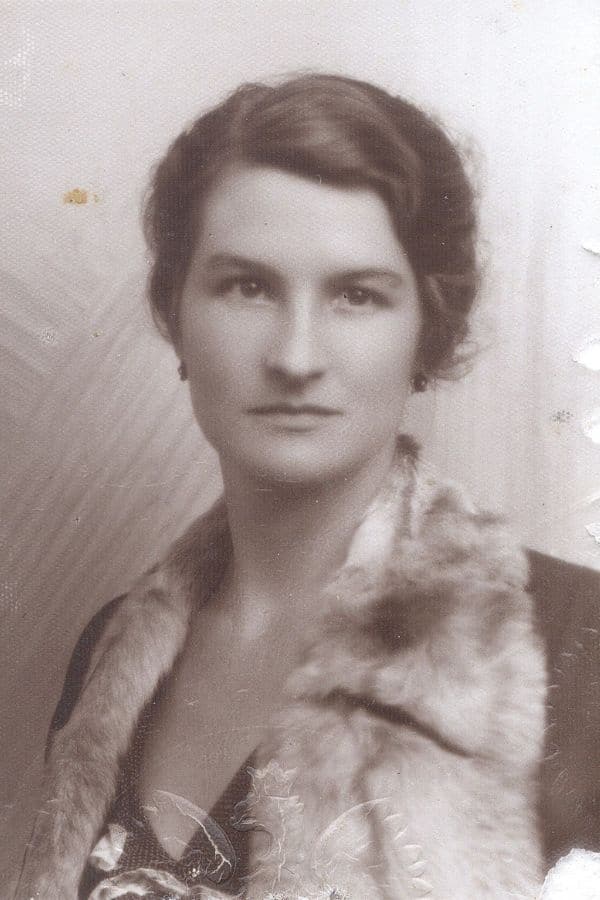
The Girl Who Wanted Adventure
Virginia Hall was born on April 6, 1906, to a wealthy Baltimore family that owned a farm called Boxhorn outside the city in Parkton, Maryland. Her father, Edwin, was a successful businessman, and her mother, Barbara, came from money. Virginia was raised in an upper-class world where girls were expected to marry well, host dinner parties, and settle into quiet lives of respectability.
Virginia wanted absolutely none of that. She was cantankerous and capricious, as she later described herself, and she spent her childhood doing things that horrified the other mothers at her private school. She wore live snakes around her wrists as bracelets. She hunted and fished and rode horses like she was training for a cavalry charge.
She was athletic and sharp and funny, and her high school classmates voted her the most original in the class, which was probably the nicest way they could say she was completely bonkers and unlike anyone else they’d ever met.
After high school, Virginia attended Barnard and Radcliffe, but she finished her studies in Paris and Vienna, becoming fluent in French, German, and Italian with enough Russian thrown in to get by.
She fell in love with Europe and decided to spend her life there, working for the U.S. Foreign Service. She applied to become a diplomat and got rejected. Not because she wasn’t qualified, but because the State Department in the 1920s had exactly six women among its 1,500 Foreign Service officers, and none of them were ambassadors.
Virginia wasn’t the kind of person who gave up easily, so she found a back door. She took a clerical job at the U.S. Embassy in Warsaw in 1931, figuring she’d work her way up from the inside.
In 1933, Virginia was transferred to the U.S. Consulate in Smyrna, Turkey. That December, she went bird hunting with some American friends, and her life changed forever. She was climbing over a wire fence when she stumbled, and the 12-gauge shotgun she was carrying discharged into her left foot. The blast mangled her foot so badly that gangrene set in, and the doctors at the hospital had no choice but to amputate her left leg below the knee. She was just 27 years old.
Virginia spent the summer of 1933 on her family’s farm in Maryland, learning to walk again with a seven-pound wooden prosthetic. She named it Cuthbert, and historians think she was referencing Saint Cuthbert, an Anglo-Saxon monk and miracle worker from seventh-century England. By November 1933, she was back at work, this time at the U.S. Consulate in Venice.
In 1937, Virginia applied to the Foreign Service again. This time, they rejected her not because she was a woman, but because she was an amputee. There was an archaic rule that barred disabled people from serving in diplomatic positions, and that was that.
Virginia could have given up then, gone back to Baltimore, married into money, and lived the life her mother had always wanted for her. Instead, she kept working at U.S. embassies across Europe, and when war broke out in 1939, she volunteered to drive ambulances for the French army.
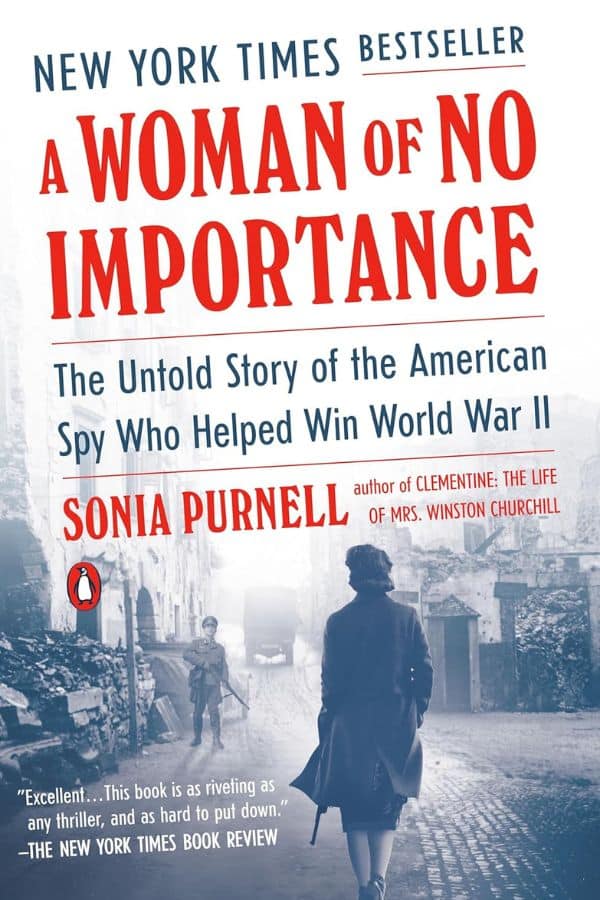
A Woman of No Importance: The Untold Story of the American Spy Who Helped Win World War II
A never-before-told story of Virginia Hall, the American spy who changed the course of World War II, from the author of Clementine.
The Spy Who Came in From the Wreckage
On June 22, 1940, France surrendered to Germany. British intelligence agents stationed in France were being arrested and killed, and the country collapsed into chaos. Virginia made her way to Spain, and at a train station in the border town of Irun, she met a man named George Bellows, who was a British intelligence officer.
Bellows was impressed by her intelligence, courage, ability to read a situation, and passionate hatred of the Nazis. He gave her a phone number for a friend in London and told her to call if she made it to England.
Virginia got to London and spent months doing clerical work at the U.S. Embassy, watching the war from a distance and hating every minute of it. Finally, she used the phone number Bellows had given her. The friend turned out to be Nicolas Bodington, an officer in a brand-new British organization called the Special Operations Executive.
Winston Churchill had created SOE with a simple directive to set Europe ablaze, and they were desperately looking for people who could operate behind enemy lines in occupied territory. There were no rules against women or disabled people serving in SOE, which made it just about the only organization in the British military that would have Virginia Hall.
SOE put her through training in weapons, communications, security, and how to survive a Gestapo interrogation, which included realistic simulations with water torture. They gave her forged papers identifying her as a correspondent for the New York Post, and in August 1941, they sent her to Vichy France.
She was the first female SOE agent to take up long-term residence in France, and her supervisors weren’t particularly optimistic about her chances. They figured she’d last maybe a few days before the Gestapo arrested her. They were spectacularly wrong.
The Heckler Network
Virginia based herself in Lyon, which was the center of resistance activity in southern France. The city was crawling with plainclothes Gestapo officers, and the punishments for working with the resistance were brutal.
People who got caught were tortured, executed, or sent to concentration camps, and the French police were offering big rewards for anyone who turned in a resister. It was about as hostile an environment as you could imagine for a spy who walked with a noticeable limp and spoke French with an American accent.
Virginia turned away from her chic Parisian wardrobe and made herself inconspicuous. She constantly changed her appearance, using makeup and disguises, and became an expert at blending into crowds. She built a network of contacts that became known as Heckler, and over the next 15 months, she proved herself indispensable to the Allied war effort.
She organized resistance movements across southern France, supplied agents with money and weapons, helped downed British pilots escape to Spain, and set up safe houses for agents on the run. An American diplomat at the U.S. Consulate in Lyon allowed her to use the diplomatic bag to send intelligence reports back to London, and escaping Allied airmen were told to go to the consulate and ask for Olivier, which was one of Virginia’s code names.
One of Virginia’s most important allies was Germaine Guérin, the owner of a local brothel. The two women hit it off immediately, and Germaine turned out to be exactly the kind of person Virginia needed. German officers paid Germaine in gasoline, which she used to transport refugees and resistance fighters.
She offered spare rooms in her establishment as safe houses, and the women who worked for her would ply German officers with alcohol and loosen their tongues to gather intelligence. Germaine’s doctor, Jean Rousset, hid refugees in a false psychiatric hospital and stashed radical literature in the furniture in his waiting room.
Virginia was building an underground network that touched every corner of Lyon, and SOE headquarters in London started relying on her reports more than anyone else’s.
But when SOE decided to appoint an official leader for their Lyon operations, they chose a man named Georges Duboudin instead of Virginia. It didn’t matter that she’d been running the show for months and knew the territory better than anyone. It was too radical to think that a woman could lead a network of agents, so they brought in a man to supervise her. Virginia told SOE to lay off and kept doing her job.

Hooked on the Middle Ages? Get more stories like this one in your inbox.
The Prison Break at Mauzac
In October 1941, the French police arrested 12 SOE agents and resistance fighters and threw them in prison. By March 1942, Virginia learned they’d been transferred to an internment camp at Mauzac, near Bergerac, and she decided to get them out.
She traveled to Vichy to meet with U.S. Admiral William Leahy and used every diplomatic connection she had to secure their release through official channels. When that didn’t work, she decided to break them out herself.
Virginia recruited Gaby Bloch, the wife of one of the prisoners, to help with the operation. Gaby visited the prison regularly to bring food to her husband, Jean-Pierre, and Virginia had her smuggle in tools and sardine tins hidden at the bottom of food containers.
One of the prisoners, wireless operator Georges Bégué, used the tools and tins to make a key to the door of the barracks where they were being held. A priest smuggled in a radio, and Bégué started transmitting messages to London from inside the prison.
Virginia couldn’t visit the prison herself because she was too well known, so she assembled safe houses, vehicles, helpers, and even two French police uniforms for the escapees to use. On July 15, 1942, all 12 prisoners escaped and disappeared into the woods. The French authorities launched an intense manhunt, but Virginia spread rumors through her contacts that RAF bombers had flown out the men, so the police started believing they were already back in England.
After two weeks, when the search had been called off, the prisoners made their way to Lyon by truck and train, and Virginia got them to Spain and back to England. The official SOE historian later called the Mauzac prison break one of the most useful operations of the war. Several of the escapees returned to France and became key leaders in SOE networks.
The Germans were furious. They flooded the Vichy zone with 500 extra Gestapo agents and focused all their attention on Lyon. Klaus Barbie, who was running Gestapo operations in the city, became obsessed with finding the woman who’d orchestrated the escape.
The French started calling her la dame qui boite, the lady who limps, and the Germans put her on their most wanted list. Wanted posters went up all over southern France, featuring a sketch of her face and the words “The Enemy’s Most Dangerous Spy. We Must Find and Destroy Her.”
The Betrayal
In May 1942, Virginia agreed to relay messages from a resistance network in Paris called Gloria. What she didn’t know was that Gloria had been infiltrated by a man named Robert Alesch, a Roman Catholic priest who was actually working for the Abwehr, German military intelligence.
In August, Alesch showed up in Lyon claiming to be a Gloria agent and offering Virginia intelligence that seemed incredibly valuable. Virginia had concerns about him from the start, especially after she learned that Gloria’s leadership had been captured, but she couldn’t prove he was a traitor.
On November 7, 1942, the American Consulate in Lyon warned Virginia that the Allies were about to invade North Africa, and the Germans would retaliate by occupying all of Vichy France. Virginia knew exactly what that meant. The Gestapo would flood Lyon with even more agents, her police contacts would no longer be able to protect her, and Klaus Barbie would finally have free rein to hunt her down. She had maybe hours to get out.
Virginia didn’t tell anyone she was leaving, not even her closest contacts like Jean Rousset and Germaine Guérin. She just disappeared. She took a train from Lyon to Perpignan, and from there she hired a guide to take her over the Pyrenees Mountains into Spain.
It was November, and the weather was bitterly cold. The route climbed 7,500 feet through heavy snow before descending into Spain, covering about 50 miles over two days. Virginia walked the entire way on Cuthbert, and the prosthetic was agonizing in the cold and the steep terrain.
At one point during the trek, Virginia sent a message to SOE headquarters in London saying she was fine, but Cuthbert was giving her trouble. SOE didn’t understand the reference and sent back a message saying that if Cuthbert was giving her problems, she should eliminate him.
Years later, the story would become one of the most famous anecdotes about Virginia Hall, and one of her biographers, a marathon runner, retraced her escape route and found it exhausting even with two working legs.
Virginia made it to Spain, but the Spanish authorities arrested her for crossing the border illegally. The U.S. Embassy eventually secured her release, and she made her way back to London. She’d been SOE’s longest-surviving agent in the field, and she was already a legend within the organization.
But when she asked to go back to France, Maurice Buckmaster, the head of F Section, refused. He said she was too well known, too compromised, and sending her back would be a suicide mission. Virginia didn’t accept that answer. If the British wouldn’t send her, she’d find someone who would.
The Milkmaid Who Mapped D-Day
In March 1944, Virginia joined the American Office of Strategic Services, which was essentially the U.S. version of SOE and would later become the CIA. She completed training as a wireless radio operator and asked to be sent back to France. The OSS agreed, even though everyone knew it was incredibly dangerous.
Virginia couldn’t parachute in because of Cuthbert, so they sent her across the English Channel on a British motor torpedo boat. She went ashore by dinghy on the coast of Brittany, and she was back in occupied France.
This time, Virginia took extreme measures to disguise herself. She was 38 years old, tall and athletic, with soft brown hair and white American teeth, and the Gestapo had wanted posters with her face all over the country. So Virginia transformed herself into an elderly French peasant woman.
She dyed her hair a dirty gray-black. She filed down her teeth so they looked like they belonged to someone who’d lived a hard rural life. She padded her clothes to add weight to her frame and wore full skirts and bulky sweaters. She shuffled her feet when she walked to disguise the limp from Cuthbert. She became Marcelle Montagne, daughter of a commercial agent from Vichy, and she was unrecognizable.
Virginia spent the spring of 1944 roaming around central France posing as an elderly milkmaid. She actually made cheese as part of her cover, and on one occasion, she sold cheese she’d made to a group of German soldiers who had no idea they were buying dairy products from the most wanted Allied spy in France.
She moved from farm to farm, listening to German soldiers’ conversations, noting convoy routes and troop numbers, and transmitting everything back to London on her suitcase radio. The intelligence she gathered was pivotal in planning the liberation of Paris.
In July 1944, Virginia was ordered to the Haute-Loire region in central France to establish headquarters in a barn near Le Chambon-sur-Lignon. The Allied invasion at Normandy took place on June 6, and now Virginia’s job was to organize the French resistance fighters, known as the Maquis, into an effective fighting force that could harass German troops and slow reinforcements heading north.
She had problems right from the start. As a woman with the rank of second lieutenant, the Maquis leaders didn’t want to take orders from her. These were self-proclaimed colonels who’d been fighting their own guerrilla war for years, and they didn’t appreciate some American woman showing up and telling them what to do.
Virginia complained to OSS headquarters that they’d sent people to work with her and for her but hadn’t given her the necessary authority. She told the Maquis leaders that she would finance them and provide weapons, but only if they took orders from her. The men continued to be difficult until Virginia arranged for three planeloads of supplies to be dropped in late July. After she distributed the money and weapons, the Maquis leaders grudgingly agreed to follow her lead.
Setting Europe Ablaze
Between July and August 1944, Virginia coordinated airdrops of arms and supplies, trained three battalions of resistance fighters, and directed sabotage operations across central France. Her team destroyed four bridges, derailed freight trains, severed a key rail line in multiple places, and cut telephone lines.
They were credited with killing about 150 German soldiers and capturing 500 more. Virginia transmitted 37 intelligence messages between July 14 and August 14, reporting German troop movements and General Staff relocations. She was the first agent to report that the German command was moving its headquarters from Lyon to Le Puy in the Haute-Loire region.
In mid-August, a three-man Jedburgh team arrived to reinforce her operations. Among them was Lieutenant Paul Goillot, a Paris-born New Yorker and a skilled chef who’d joined the OSS. Virginia and Paul worked together through the final months of the war and fell in love somewhere along the way, though it would take them years to finally get married.
On August 15, 1944, the Allies launched Operation Dragoon, the invasion of southern France, and Virginia’s Maquis fighters were ready. They’d been trained, armed, and coordinated, and they helped clear the Haute-Loire region of German soldiers before American troops even arrived in September.
By the time Virginia and her team left the region and arrived in Paris on September 22, the war in France was essentially over. She’d been operating behind enemy lines for nearly three full years across two different tours, and the Germans had never caught her.
Virginia and Paul were sent to Austria after Paris was liberated to try to foment anti-Nazi resistance, but the Third Reich was collapsing, and there wasn’t much resistance left to organize. They returned to Paris in April 1945, and Virginia wrote her final reports, identified people who had helped her and deserved commendations, and resigned from the OSS.
After the war, Virginia went back to Lyon to find out what had happened to the people who’d worked for her. Her closest allies, Germaine Guérin and Jean Rousset, had both been captured by the Germans and sent to concentration camps, but they’d survived.
Virginia arranged compensation from the British government for Germaine, though most of her other helpers received nothing. Many of the people she’d known hadn’t made it. The three men she called her nephews had been executed at Buchenwald concentration camp. Robert Alesch, the priest who’d betrayed Gloria and tried to infiltrate her network, was later tried and executed for treason.
The Spy Who Came in From the Cold War
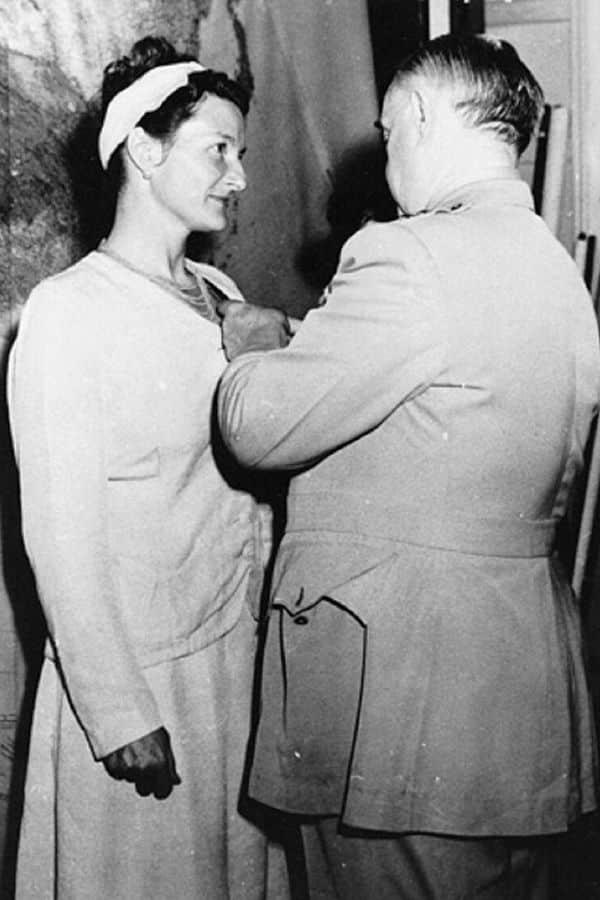
In September 1945, President Harry Truman wanted to present Virginia with the Distinguished Service Cross at a public ceremony at the White House. The DSC was the second-highest U.S. military decoration for valor, and Virginia was the only civilian woman in World War II to receive it. But Virginia refused the public ceremony. She was still operational, she said, and most anxious to get busy.
She wanted to keep working, and she didn’t want publicity that would make future intelligence work impossible. So the medal was presented in a small private ceremony in OSS chief William Donovan’s office, attended only by Virginia’s mother. Her response to receiving the award was typical Virginia Hall: Not bad for a girl from Baltimore.
Virginia had resigned from the OSS three days before President Truman disbanded the organization in September 1945, but she was eager to stay in intelligence work. In December 1946, she joined the Strategic Services Unit, which was essentially OSS under a different name. When that morphed into the Central Intelligence Agency in 1947, Virginia became one of the CIA’s first female operations officers.
For her SOE service, the British had made her a Member of the Order of the British Empire. The French awarded her the Croix de Guerre. She was one of the most decorated intelligence officers in the world.
But at the CIA, Virginia found herself stuck behind a desk. She handled relations with Estonian, Latvian, Lithuanian, Yugoslav, and Albanian exiles who were trying to keep the spirit of freedom alive in their countries behind the Iron Curtain. She interviewed refugees, translated documents, and advised resistance committees, but she never got to return to the field.
The CIA repeatedly passed her over for overseas assignments and promotions, and some of her male colleagues later said it was because she was so experienced and capable that she overshadowed them and they felt threatened by her.
In 1950, Virginia married Paul Goillot. They’d kept their relationship secret for years because Virginia’s mother didn’t approve, but they finally tied the knot in a quiet ceremony. The couple worked together at the CIA, and by all accounts, they were happy, though Virginia was increasingly frustrated with her desk job.
In 1952, she was one of only six female GS-13 officers in the CIA’s clandestine service, making her one of the highest-ranking women in the agency. But in her 14 years at the CIA, she was only promoted from GS-13 to GS-14, and she never got to do the fieldwork she craved.
Virginia reached mandatory retirement age in 1966 and left the CIA at 60. She and Paul moved to a farm in Barnesville, Maryland, where they spent their retirement years gardening daffodils and living quietly. Virginia rarely spoke about her wartime service, even to family members.
She left no memoir, granted no interviews, and kept her secrets to herself. One letter she sent home during the war mentioned that the Germans had caught some resistance fighters and hung them up on butcher’s hooks, but that was about as much as she ever said about what she’d seen.
Virginia Hall died on July 8, 1982, at the age of 76. Paul died five years later in 1987. They’re buried together in the Hall family plot at Druid Ridge Cemetery in Pikesville, Maryland.
The Recognition She Deserved
For years, Virginia Hall’s story was almost forgotten. The male OSS officers got their books and their movies, but Virginia had been so good at staying invisible that even after the war, most people didn’t know what she’d done. It wasn’t until historians started digging through declassified files that the full scope of her accomplishments became clear.
In 1988, six years after her death, Virginia’s name was posthumously added to the Military Intelligence Corps Hall of Fame. In 2016, the CIA named a new training facility the Virginia Hall Expeditionary Center in her honor. In 2019, she was inducted into the Maryland Women’s Hall of Fame.
Several biographies have been published about her life, including Judith Pearson’s The Wolves at the Door and Sonia Purnell’s A Woman of No Importance, both of which brought her story to new audiences. In 2020, the film A Call to Spy premiered, with Sarah Megan Thomas playing Virginia, and it won audience awards at film festivals in Canada and the U.S.

At the CIA headquarters in Langley, Virginia, there’s a painting by artist Jeffrey Bass that shows Virginia sitting in a barn in occupied France with her suitcase radio, transmitting intelligence back to London. The painting is titled Les Marguerites Fleuriront ce Soir, which means The Daisies Will Bloom Tonight. It was one of the code phrases the BBC would broadcast to alert resistance networks that supply drops were coming.
Next to Virginia in the painting is Edmund Lebrat, Léa Lebrat’s cousin, who built a hand-crank generator to power her wireless transmissions. The painting hangs in the CIA’s Fine Arts Collection, a reminder of the woman who proved that the most dangerous Allied spy of World War II walked with a limp and made cheese for German soldiers while planning their destruction.
Love a good medieval story?
Join our readers and get tales of kings, queens, castles and ordinary medieval lives straight to your inbox.
Kylie Lang is a nationally syndicated travel journalist with bylines on the Associated Press Wire & more, a medieval history writer, and the founder and lead author of Tales of the Middle Ages (talesofthemiddleages.com). She holds a BA (Honours) in History from the University of Kent and is a member of the British Guild of Travel Writers.
Related posts:
 Vera Atkins, Legendary Spymaster of the SOE Turned Nazi Hunter
 Violette Szabo: The Young Mother Who Became Britain’s Most Decorated Spy
 Josephine Baker: The Superstar Who Became a Spy in World War Two
 Marie-Madeleine Fourcade Escaped From a Gestapo Prison and Gave the Allies the Map That Made D-Day Possible