
It’s hard to imagine the hardships of war given the lives we live today. The atrocities have been romanticized in movies, but the stark reality was very different. We can’t even begin to imagine the horrors many went through in World War II.

Faye Schulman witnessed the murder of her family, her parents, sisters, and their husbands and children. The entire community where she lived was marched to trenches outside the town and lined up, ready to be shot, including Faye. How she escaped death was a cruel twist of fate.
Table of Contents
Only 26 people survived the massacre. A tailor. A shoemaker. A carpenter. A blacksmith. A barber. People with skills the Nazis deemed useful. And Faye, the photographer.
A Jewish Girl, Photographer and Partisan
The story of Faye Schulman is one of those stories I felt compelled to tell, although having never been through anything remotely like this, it’s hard to do it justice. Instead, I will give you an outline of her story, and if you’d like to know more, I suggest reading her biography, which is what I did to learn the harrowing truth.
Picture this. You’re standing in line with 1,850 other people from your town. You know what’s about to happen. The Nazis are marching everyone to trenches outside the town, where they’ll shoot everyone. Including you.
Then a Nazi officer walks over. You recognize him because he came to your photography studio a few weeks ago for a portrait. You remember looking at him through your camera lens, thinking he looked like an animal. Like a killer. Because he was.
He pulls you out of the line because he needs someone to photograph German officers, to develop their film, and document their occupation. You’re useful, that’s all.
That’s what happened to Faye Schulman on August 14, 1942, in the small town of Lenin, Poland (now part of Belarus). She was just 22 years old. Her entire family was in that line. Her parents, two sisters with their children and husbands, and her younger brother.
By the end of the day, they were all dead. Shot into three long trenches alongside 1,850 other Jews from the ghetto, apart from Faye and twenty-five others.
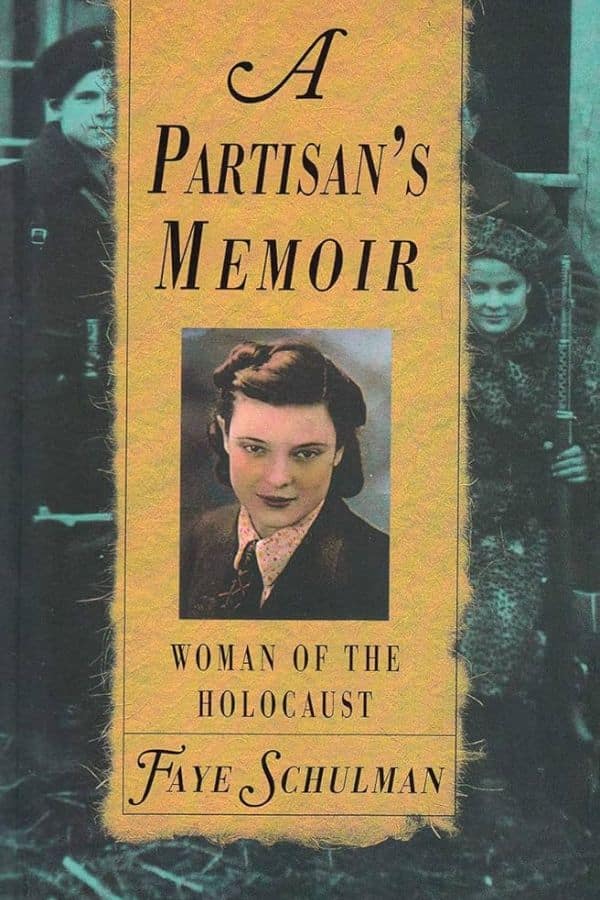
A Partisan’s Memoir: Woman of the Holocaust
Forced to Document Her Family’s Murder
The Gestapo commander was clear. “It better be good, or else you’ll be shot.” Faye stood there trembling, trying to ask him to smile for his vanity portrait. This was her life now. Photographing Nazi officers and developing their commemorative pictures. Sometimes, taking photos of them with their newly acquired mistresses.
The Nazis spared her because of two weaknesses: their vanity and their obsession with keeping records of everything. Every crime, atrocity, and triumph was documented, and they needed someone who knew how to work a camera.
The Germans handed Faye rolls of film to develop, and she set up her chemicals in the darkroom and processed the negatives. When the images appeared, she recognized what she was looking at. Three mass graves with bodies piled on top of bodies. And then she saw them.
Her mother, father, sister, and her two children, and her other sister with her husband, along with a little girl named Hannah Schuh, who had lived a few houses away from her family. Faye would never forget her name.
The Nazis wanted prints for their records, and Faye gave them what they asked for. But she also made copies and hid the negatives in a box of photo paper where no Nazi would think to look, so she had evidence, proof of what they’d done. Proof that her family had existed.
That’s when Faye decided. She would join the resistance and join the forces of the many other women who fought in various ways to rid the world of the Nazis.
Escape to the Forest
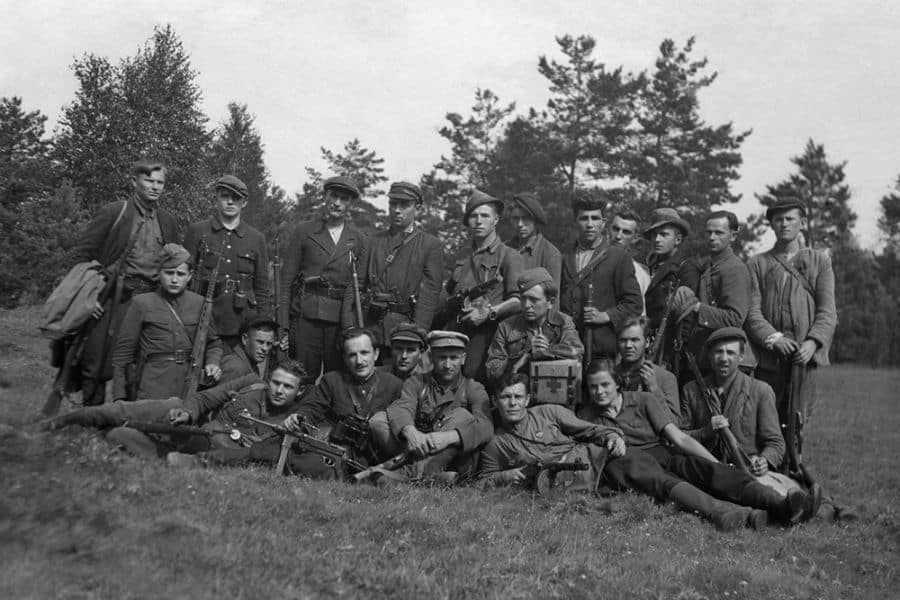
About a month later, Soviet partisans raided Lenin, and chaos erupted. In the confusion, Faye saw her chance, and she ran. She fled into the dense forests surrounding the town and found a group of fighters who called themselves the Molotava Brigade.
They were mostly escaped Soviet POWs. Russian soldiers who’d broken out of German prison camps. Rough, desperate men who hated Jews.
Faye stood there, a 22-year-old Jewish woman asking to join a brigade of battle-hardened soldiers, most of whom were violently antisemitic. This was the part nobody talks about when they tell hero stories. The resistance fighters who were supposed to be on your side? A lot of them wanted you dead, too. Just for different reasons than the Nazis.
She had one thing working in her favor. Her brother-in-law had been a doctor, and these men were desperate for medical help. They figured maybe she’d picked up something useful from him. Maybe she knew how to stitch a wound or could stop someone from bleeding out. But she didn’t.
Faye had zero medical training. She’d watched her brother-in-law work, sure, but watching isn’t the same as knowing. The brigade’s “doctor” was a veterinarian named Dr. Ivan Vasilewich, who was trying to keep partisans alive with almost no supplies and no real surgical training.
So she learned fast. For nearly two years, Faye worked as a nurse in conditions that would break most people. She washed the blood-soaked bandages and reused them over and over because there were no fresh supplies.
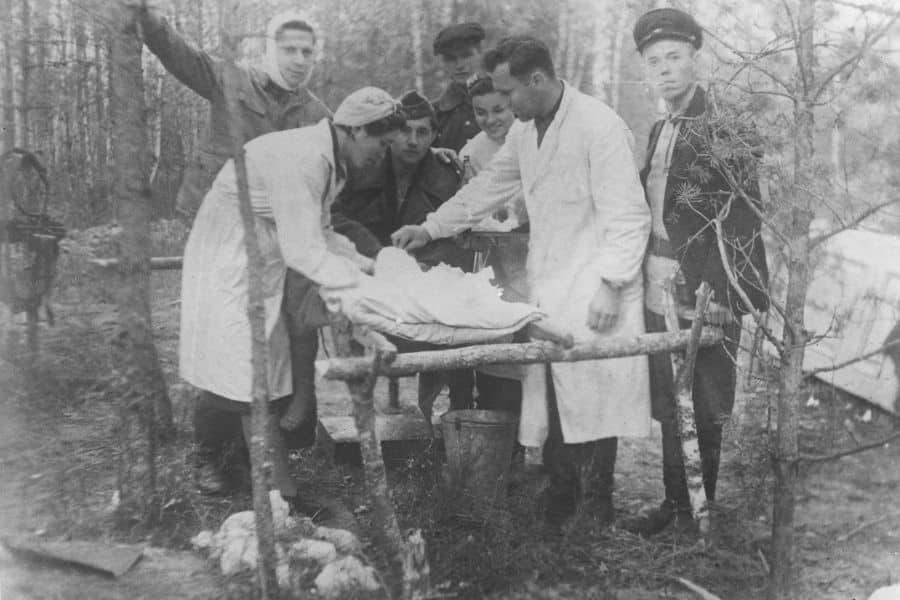
She helped Dr. Vasileich perform surgeries in a hospital in the woods where the operating table was made from tree branches. When one surgery finished, they’d put the patient back on the ground and bring up the next one who needed treatment.
Vodka was the anesthetic. That’s it. Hold the person down, pour vodka on the wound, and start cutting. She treated gunshot wounds, gangrene, and typhoid fever. Infections that should have killed people but somehow didn’t.
Dr. Vasileich taught her what he could, and Faye credited him with saving her life several times over those two years. She was the only woman in her entire detachment.
Think about that for a second. One Jewish woman hiding her identity among Russian soldiers who openly hated Jews. Sleeping in the same camps, working alongside them, proving herself every single day. They told her, “You are not like a Jewish girl. You are just like the Russian girls.” They meant it as a compliment.
The Camera Buried in the Ground
Before Faye had escaped into the forest, she’d done something smart. She’d buried her camera and negatives. Hidden them where the Nazis wouldn’t find them. She’d hoped, somehow, that if she survived, she could come back for them.
Weeks later, during one of the Molotava Brigade’s raids on Lenin, Faye went with them. The town had become a regional center for Nazi operations, and the partisans attacked it regularly, grabbing food, clothing, rifles, and ammunition. And Faye grabbed photographic supplies whenever she could.
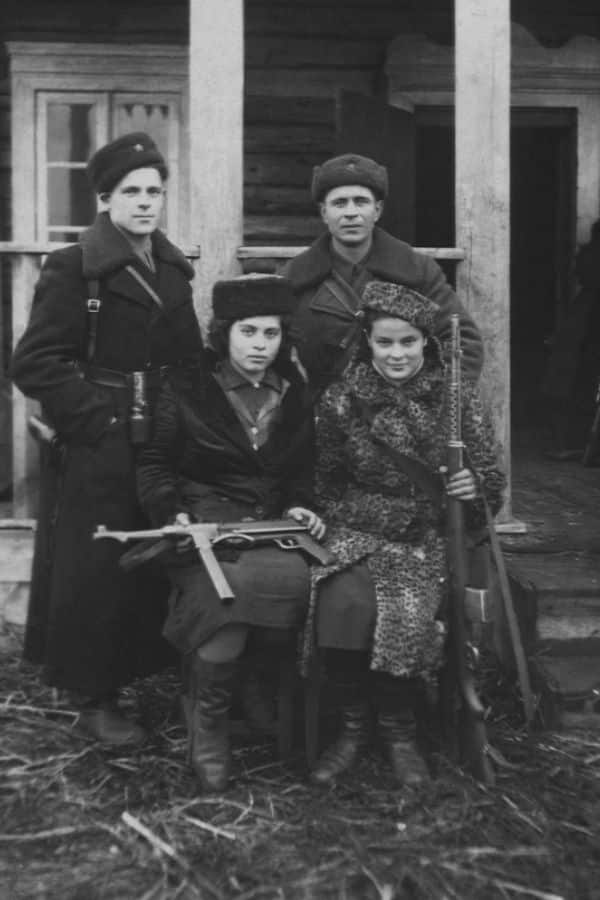
On one of these raids, she found her equipment, her old Compur camera, the folding bellows model she’d been using since 1939. She dug it up and brought it back to camp.
Over the next two years, she took more than 100 photographs. She was living in the forest, moving constantly, dodging Nazi patrols, and somehow developing film. She created a makeshift darkroom using blankets, mixed her own chemicals, memorized the formulas for developer, stop bath, and fixer.
She made sun prints during the day when there was enough light, and buried bottles of chemicals in the ground, then dug them up when she needed them.
“This camera was buried in the ground many times when I was in the partisans,” she said in an interview years later. “All my pictures that I took were all with this particular camera. I would never like to part with it as long as I live. It has so many memories and so many stories. This camera has seen everything.”
Her photographs showed what no one else was documenting. One image captured a funeral where two Jewish partisans were buried right alongside two Russian partisans. An inter-religious ceremony where, for once, the antisemitism stopped long enough to bury the dead together. A funeral that would never have happened in normal times.
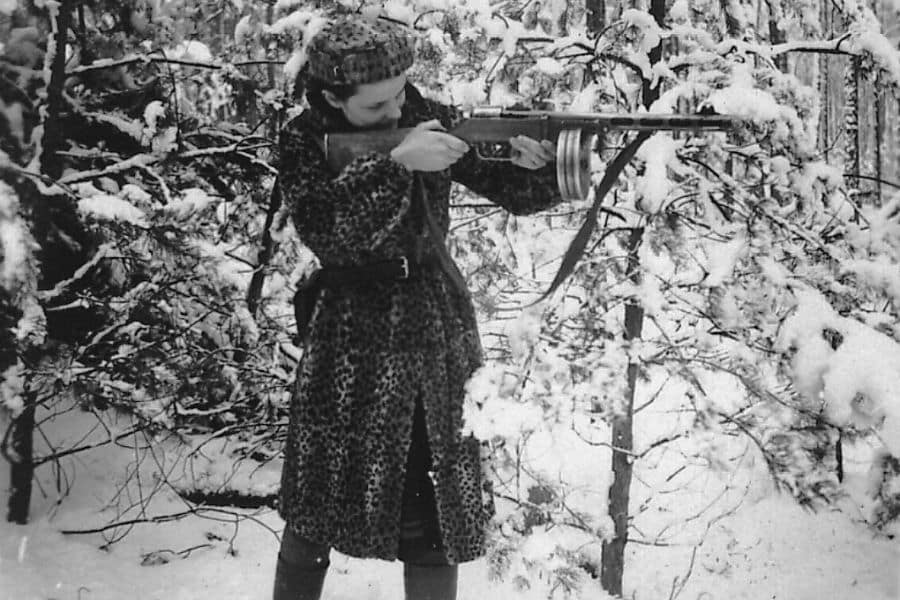
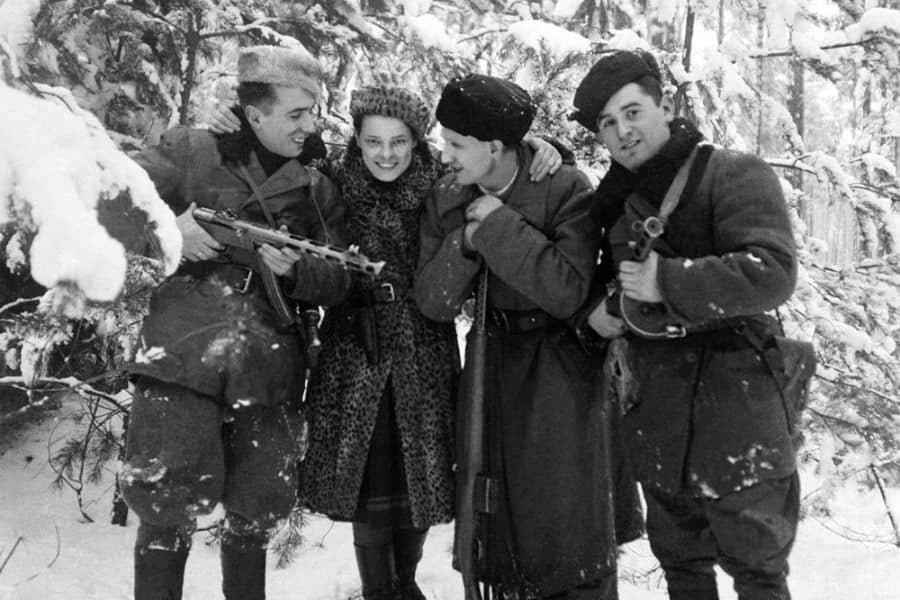
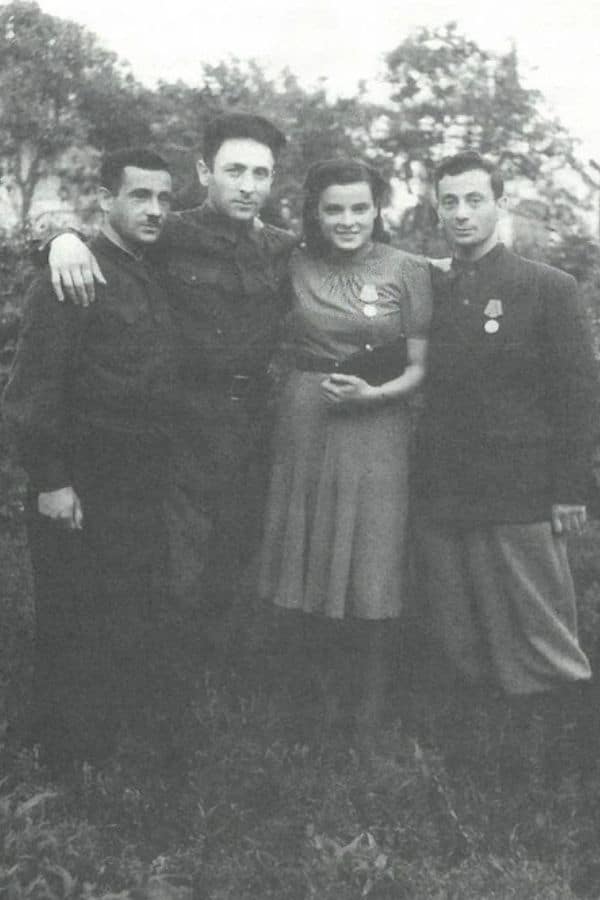
Another photograph shows Faye in a leopard print coat, standing with three young Jewish men, all smiling and holding rifles. Everyone in that photograph thought the others were dead. Faye had first met these three men back in 1939 when they’d escaped from Nazi-occupied Warsaw and came to Lenin.
She knew them before the war, and when the ghetto was liquidated, with everyone scattering, they all ended up in different partisan groups operating in separate parts of the forest. And then one day in the winter of 1944, they ran into each other by chance in the middle of the forest. Each believed the others had been killed.
So Faye set up her camera on a tripod, adjusted the settings, and had someone press the shutter. That photograph became one of the most famous images of Jewish resistance. A moment of pure joy captured in the middle of hell.
The partisans raided Lenin multiple times because they needed food, weapons, and supplies. And on each raid, Faye would gather more photographic equipment while her comrades took what they needed to survive.
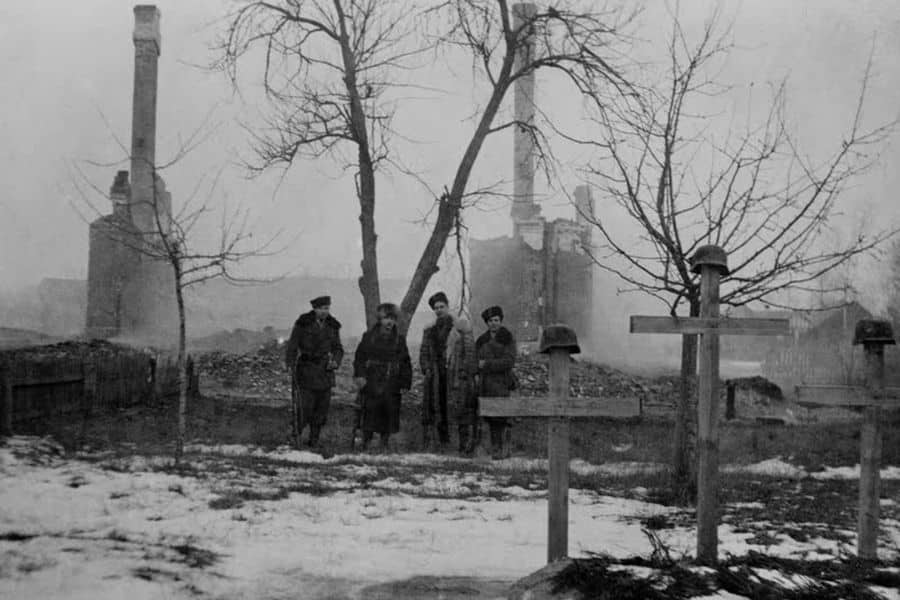
During one of these raids in 1944, Faye discovered the Nazis had turned her childhood home into their headquarters. German police were living in the house where she’d grown up and where her family had lived.
Her commander gave the order. Burn all the large houses where Nazis were stationed. Faye walked inside first, needing to see it one more time. And when she stepped through the door, it was like walking backward in time, and the memories came flooding back.
Another partisan walked in behind her. “What do you think?” he asked. Faye didn’t hesitate. “Burn it.”
The partisan poured gasoline through the rooms, and Faye lit the match herself. She stood there and watched her childhood home go up in flames. She would never live there again, and her family was gone. She refused to leave anything for the enemy, especially her home. On the next raid, she came back and photographed what remained.
What It Was Really Like
Faye’s life during that time was not a Hollywood depiction of war; it was a brutal struggle for survival. The partisans blew up Nazi trains, destroyed railway tracks, and raided German bases. And they did all of it while living in the forest through freezing Eastern European winters with barely enough to eat and constant danger at every turn.
Faye carried a rifle and learned to shoot. She learned to fight and learned to kill. “When it was time to be hugging a boyfriend, I was hugging a rifle,” she said years later. While other women her age were thinking about marriage and family, Faye was thinking about ammunition and survival.
And the antisemitism never went away. One of Faye’s photographs from late in the war shows her with two men and horses they’d captured from the Nazis. The man on the right was one of her escorts on a photography mission, who had no idea Faye was Jewish. As they stood there, a Jewish girl walked past them, and the man turned to Faye and said, “I hate Jews.”
Faye said nothing. She couldn’t. She just took the picture and kept moving.
After the War
When Soviet forces finally liberated Belarus in July 1944, Faye learned that two of her brothers had survived. They’d been sent to a labor camp and somehow made it through. Her brother Moishe, the one who’d taught her photography in the first place, had escaped and joined a different partisan group.
Out of a family of nine, three survived.
Faye married Morris Schulman, also a Jewish partisan who’d fought alongside Moishe. They tried to stay in Pinsk after the war, but everywhere they looked reminded them of death. So they left. They spent three years stuck in a displaced persons camp in Germany, waiting for permission to go somewhere, anywhere that wasn’t haunted by what they’d lost.
While they were there, they helped smuggle weapons into Palestine to support Jews fighting for independence. When Faye got pregnant in 1948, they finally got visas to Canada, and they settled in Toronto. Faye worked in a dress factory and later as an artist, hand-tinting photographs and painting in oils.
For decades, Faye carried survivor’s guilt that never left. She wouldn’t let herself enjoy music, and she cried herself to sleep every night. Only toward the very end of her life did she allow herself to feel joy again, singing old Russian and Polish songs.
“I Have Pictures. I Have Proof.”
In her later years, Faye traveled to schools and shared her story. She published her memoir in 1995. She appeared in documentaries and kept everything: her camera, boots, medals, and certificates. Physical proof that what she’d lived through was real.
“I want people to know that there was resistance,” she said. “Jews did not go like sheep to the slaughter. I was a photographer. I have pictures. I have proof.”
She died in Toronto on April 24, 2021, surrounded by her family. She was 101 years old. She left behind a son, a daughter, six grandchildren, three great-grandchildren, and more than 100 photographs that document both Nazi war crimes and Jewish resistance in ways no one else captured.
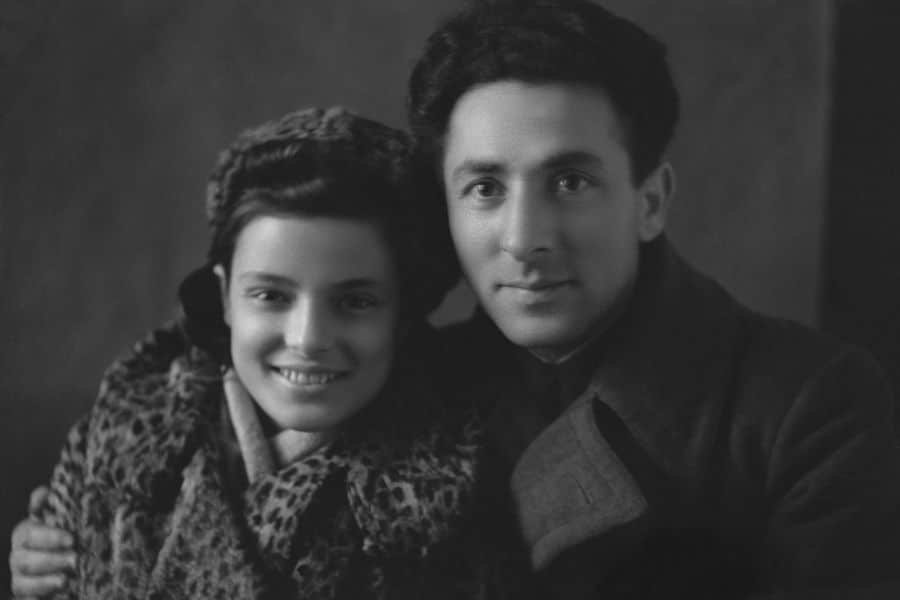
Faye Schulman is the only known Jewish partisan photographer who documented the resistance in Eastern Europe during World War II. Her images are proof that in the darkest moments imaginable, some people fought back.
Proof that a 22-year-old woman with a camera could survive two years in a forest full of men who hated Jews. Proof that she could hide her identity, photograph the unthinkable, and live long enough to make sure the world would never forget.
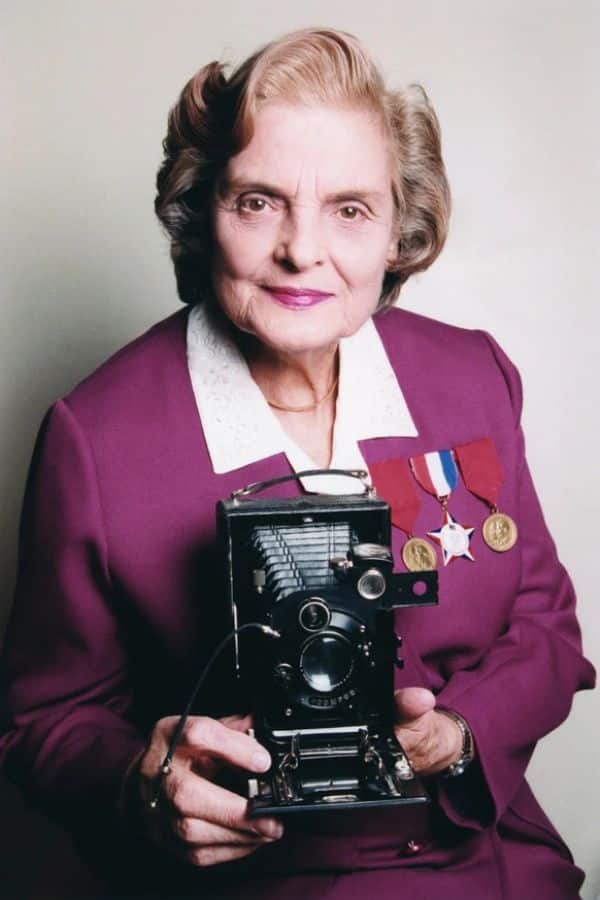
The camera that captured Nazi atrocities, that documented partisan life, that got buried in the dirt dozens of times, and somehow kept working, and is now in a museum. But the images Faye risked everything to create? Those will never be buried.
She will never be forgotten, along with the many other men and women who fought against Hitler.

Kylie Lang is a nationally syndicated travel journalist with bylines on the Associated Press Wire & more, a medieval history writer, and the founder and lead author of Tales of the Middle Ages (talesofthemiddleages.com). She holds a BA (Honours) in History from the University of Kent and is a member of the British Guild of Travel Writers.
Related posts:
 Vera Atkins, Legendary Spymaster of the SOE Turned Nazi Hunter
 Josephine Baker: The Superstar Who Became a Spy in World War Two
 Marie-Madeleine Fourcade Escaped From a Gestapo Prison and Gave the Allies the Map That Made D-Day Possible
 Virginia Hall: The American Spy the Gestapo Couldn’t Catch Who Helped Win World War II