
In the courts of medieval Europe, a fool could be far more dangerous than he looked. Behind the silly outfits and jokes, many jesters held a rare kind of power. They were the only ones who could mock a king to his face and live to tell the tale. But their lives were a constant balancing act. One wrong word could win them a bag of coins, and the next might cost them their head.

No one knew this better than Nicolas Ferrial, better known as Triboulet. He served King Francis I of France in the 1500s, and his quick tongue made him both famous and feared. Triboulet understood how to use humor as a weapon.
Table of Contents
He exposed hypocrisy with a punchline, mocked the powerful while making them laugh, and turned ridicule into influence. But he also pushed his luck too far, and his story shows just how fine the line between wit and death could be.
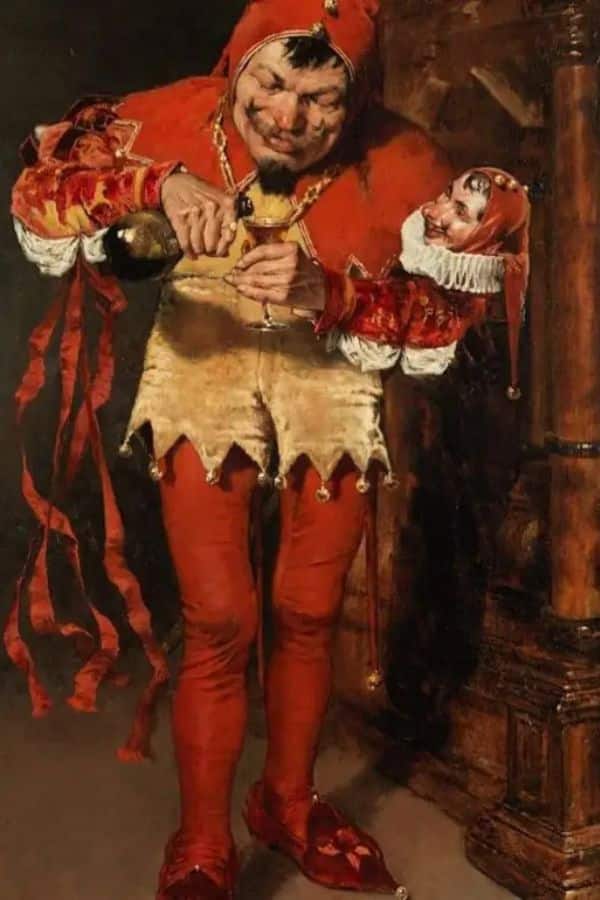
The Role of the Court Jester in the Middle Ages
Today, we picture the court jester as a harmless clown in a ridiculous hat, dancing around to make people laugh. In reality, a court jester’s job was far more complicated, risky, and influential than that.
These were not simple entertainers but licensed fools. They were given a rare privilege that no one else in a royal court had: they could insult the powerful without losing their heads. At least, most of the time.
Jesters held a unique position in a world built on hierarchy and fear. Most courtiers spent their days carefully watching their words, terrified of offending the king or upsetting a noble. A fool could do the opposite. He could mock a lord’s arrogance, tease the queen, or even criticize a king’s decision, all under the cover of comedy. It was a clever system. Rulers knew that a skilled jester could say the things others wouldn’t dare and, in doing so, offer a kind of honesty they rarely heard.
But a fool’s value didn’t end there. They were also crucial for keeping the royal court’s mood in check. Jesters lightened tense moments during political negotiations, entertained foreign visitors with biting humor, and kept the king amused during long, dull ceremonies. A skilled fool was as much a strategist as a comedian, using words to defuse anger, distract enemies, and soften criticism.
Yet, for all their influence, jesters lived under a constant threat. The same jokes that earned them laughter and reward one day could cost them their lives the next. They walked a razor’s edge between humor and humiliation, and they knew that one poorly chosen punchline could be their last. Few understood that risk better than Triboulet, who would take that dangerous game further than most dared.
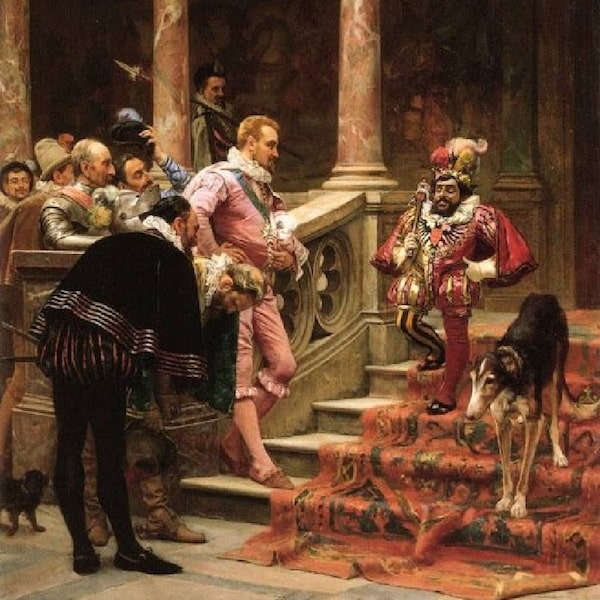
Meet Triboulet, the Court Jester of King Francis I
Nicolas Ferrial, better known by his stage name Triboulet, was one of the most infamous fools to ever step foot in a royal court. He served King Francis I in the early 1500s, a monarch whose reign shaped France’s Renaissance. Francis was a powerful, cultured king who filled his court with poets, philosophers, and artists. But among them all, it was his jester who often stole the spotlight.
Triboulet’s life at court was anything but ordinary. He lived close to the king, joined conversations with nobles, and witnessed some of the most important political decisions of the time. Triboulet could ridicule a duke in front of an audience and still be invited to dinner that night. His quick wit earned him a rare freedom in a world where even the slightest insult could land a man in a dungeon.
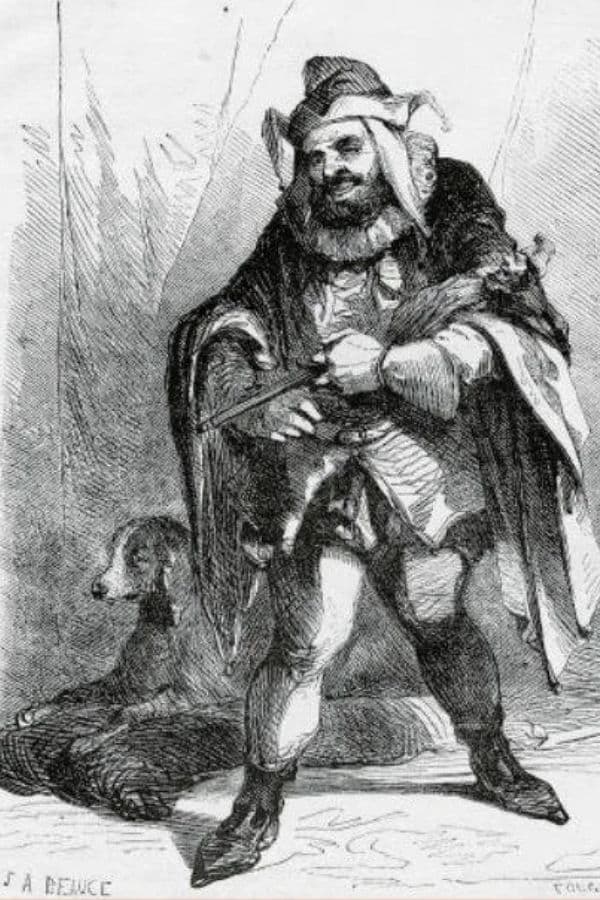
Part of Triboulet’s persona came from his unusual appearance. Accounts from the time describe him as having a hunched back, twisted legs, and arms that seemed too long for his body. Some said he looked more like a monkey or a bird than a man.
Rather than hide it, he turned these features into part of his act. His body became a tool of performance, exaggerating his jokes and giving him a memorable presence that no one could ignore.
He mocked powerful men to their faces, often pointing out uncomfortable truths behind the jokes. Nobles feared becoming the target of his ridicule, yet they couldn’t silence him without losing the king’s favor. Triboulet understood the dangerous game he was playing, and he played it better than almost anyone else.
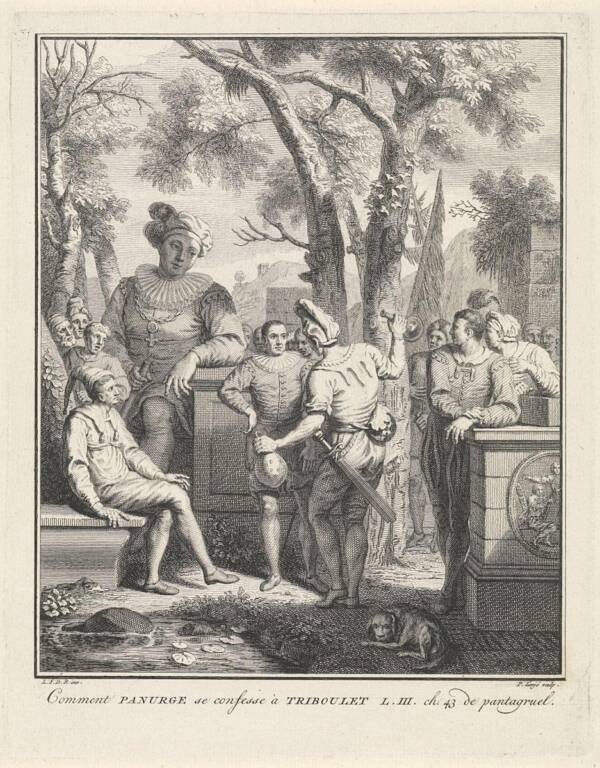
The Slap That Nearly Cost Him His Head
For all his cleverness, Triboulet eventually pushed his luck too far. The story goes that during one of King Francis I’s gatherings, the jester decided to take a joke beyond words. As the king turned his back, Triboulet crept up behind him and delivered a slap squarely to his backside. It was the sort of thing that might draw laughs in a tavern, but in a royal court, it was an outrageous act of disrespect.
To insult a king was dangerous enough. To lay hands on him was unthinkable. The royal body was considered sacred, and mocking it was as much an act of defiance as it was of humor. What might have been a harmless prank anywhere else became, in that setting, an offense worthy of death.
Francis’s reaction was immediate and furious. The joke had crossed a line that few dared even approach, and the king declared that Triboulet would pay for it with his life.
Still, Francis had a soft spot for the fool who had served him so long. He offered Triboulet a final chance to save himself. If the jester could deliver an apology that was even more insulting than the original prank, the king might show mercy. It was a twisted challenge, but it gave Triboulet a sliver of hope.
The jester didn’t hesitate. Looking at the king, he bowed and said, “I’m so sorry, Your Majesty, that I didn’t recognize you. I mistook you for the Queen.” It was a bold and reckless reply, one that did exactly what the king had asked while guaranteeing his own ruin.
The insult landed harder than the slap itself. If there had been any chance of forgiveness before, it vanished in that moment. Triboulet had gone too far, and the order was given: he would be put to death.
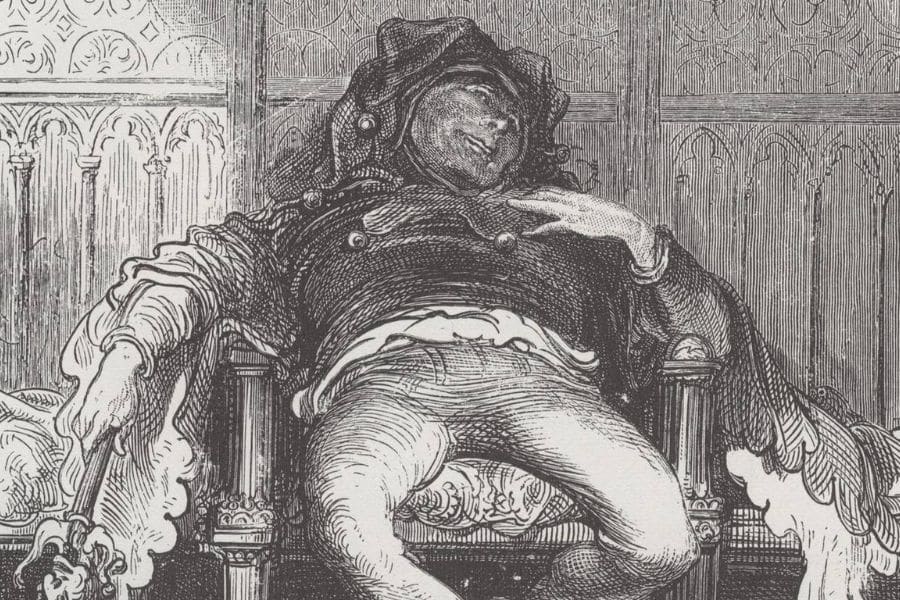
The Joke That Ended Up Saving His Life
Yet even in his anger, Francis I hesitated. The fool had served him loyally for years and brought laughter to his court when few others dared to speak so freely. Perhaps out of lingering affection, or simply a sense of sport, the king offered him one final privilege. Triboulet could choose the manner of his death.
It was meant as a grim jest, a final humiliation before the end. But Triboulet saw an opportunity. He didn’t pause to think or beg for mercy. Instead, he looked at the king and said, “Good sire, I choose to die from old age.” The response was perfect. It followed the king’s instructions exactly, but it turned the situation on its head. It was clever without being defiant, and funny enough to make even Francis I laugh.
That single sentence changed everything. Humor had always been Triboulet’s greatest weapon, and this time, it saved his life. The absurdity of the answer made it impossible for the king to stay furious. The laughter cooled his anger, and the desire for punishment softened. In the end, Francis decided he couldn’t execute a man who had entertained him so brilliantly, even in the face of death.
Triboulet would not lose his head, but he would lose his place at court. The king spared his life on one condition: he was never to return. Banished from France, Triboulet disappeared from public life. Yet his wit had ensured that his name lived on, long after his footsteps left the palace halls.
A Mouth That Never Stopped Getting Him Into Trouble
Triboulet’s knack for causing trouble didn’t end with the slap that nearly cost him his head. Even before that infamous moment, his sharp tongue had already landed him in danger more than once.
One story tells of a nobleman who grew furious after being ridiculed by Triboulet during a gathering. Humiliated in front of his peers, the man swore he would hang the jester from the nearest tree. Most courtiers would have begged for forgiveness or hidden behind the king’s authority. Triboulet did neither. Instead, he went straight to Francis I to warn him of the threat and ask for protection.
The king, amused, reassured his fool that justice would be swift. “If he hangs you,” Francis said, “I will have him beheaded fifteen minutes later.” It was meant to calm him, but Triboulet wasn’t satisfied. Quick as ever, he replied, “Well, couldn’t you hang him fifteen minutes before?”
It was a perfect example of how he operated. Triboulet’s jokes were weapons, shields, and strategies. He could turn a threat into a punchline and flip the power dynamic with a few words. That fearlessness was what made him so dangerous and so valuable at court. No matter how many times he risked his life with a joke, he never learned to hold his tongue.
Triboulet in Legend, Literature, and Opera
Triboulet’s story didn’t end with his banishment. If anything, that’s when his legend truly began. Over the centuries, his quick wit and fearless humor transformed him from a historical figure into a symbol of the fool who defies power and survives. His name passed into stories and plays, and his antics became part of a larger cultural memory that outlived the king he once mocked.
The most famous version of his story came from Victor Hugo, who was fascinated by the dangerous dance between power and mockery that defined Triboulet’s life. In 1832, he wrote Le roi s’amuse (“The King Amuses Himself”), a play that turned the real jester into a tragic figure. The play was controversial and quickly censored for its criticism of the monarchy, but it cemented Triboulet’s place in literature.
Two decades later, Italian composer Giuseppe Verdi took Hugo’s play and adapted it into one of the most famous operas of all time: Rigoletto. In Verdi’s version, the jester’s name changes, but his spirit remains the same. He is still the fool who mocks the powerful and pays a heavy price for it, torn between the role he plays for the king and his own personal tragedy.
What Happened to the Role of Court Jester?
By the 17th century, the world that had given jesters their power was changing. Royal courts became more formal, politics more controlled, and rulers less tolerant of public mockery. The rise of theater and professional comedy also gave audiences new ways to be entertained, and satire moved from the palace hall to the stage and the printed page.
The fool’s role as truth-teller was taken over by playwrights, pamphleteers, and political commentators, leaving the once-essential court jester as a relic.


Kylie Lang is a nationally syndicated travel journalist with bylines on the Associated Press Wire & more, a medieval history writer, and the founder and lead author of Tales of the Middle Ages (talesofthemiddleages.com). She holds a BA (Honours) in History from the University of Kent and is a member of the British Guild of Travel Writers.
Related posts:
 The Queen Who Blew Up the Tudor Court: Catherine Howard’s Rise and Catastrophic Fall
 September 4, 925: The Day England’s First King, Æthelstan, Was Crowned, But Was He?
 Sweyn Forkbeard: The First Viking King of England
 The Ones That Got Away. The Six Women Who Kept Their Heads, By Not Marrying Henry VIII