When most people picture a medieval pope, they picture an old man in white, blessing crowds from a balcony. The reality, for several stretches of the Middle Ages, was closer to a Mafia boss.
Between roughly 880 and 1500, the Holy See was bought, sold, fought over, and occasionally garroted. Popes fathered children by Roman noblewomen, dug up their predecessors to put them on trial, hired mercenaries to murder cardinals, and ran the papal court like a private bank with a gift shop attached.
Table of Contents
What follows are the popes who turned the Church of Rome into a political weapon, and the women, soldiers, and rival cardinals who got in their way.
The Cadaver Synod: When a Pope Put a Corpse on Trial
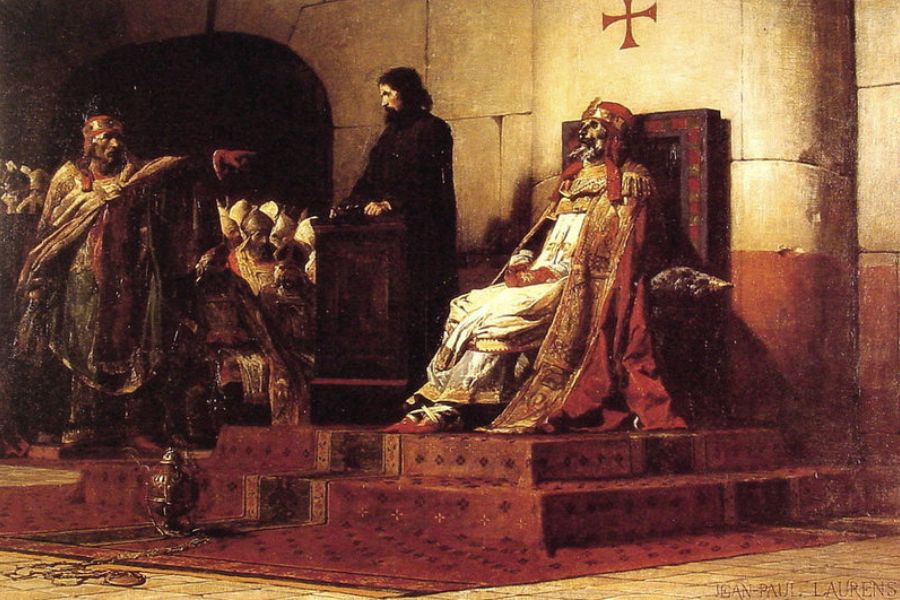
In January 897, Pope Stephen VI did something no pope before or since has matched for sheer ghoulish ambition. He had the body of his predecessor, Pope Formosus, dug out of its tomb in Saint Peter’s, dressed in full papal vestments, propped up on a throne in the Lateran basilica, and put on trial for perjury and other ecclesiastical crimes.
A deacon was assigned to stand beside the corpse and speak for it. Formosus, unsurprisingly, lost the case. Stephen had three fingers of the dead pope’s right hand, the ones used for blessing, hacked off; the vestments were stripped away, and the body was thrown into the Tiber, fished out by a monk, and eventually reburied.
The Cadaver Synod, as it came to be known, was Roman factional politics played out on a corpse. Formosus had crowned a rival emperor, and Stephen’s backers wanted every act of his pontificate declared null, including the ordinations he’d performed.
The Roman mob, who’d had enough, eventually rose up and seized Stephen himself. He was thrown into prison and strangled in his cell within months.
The Pornocracy: When Roman Noblewomen Ran the Vatican
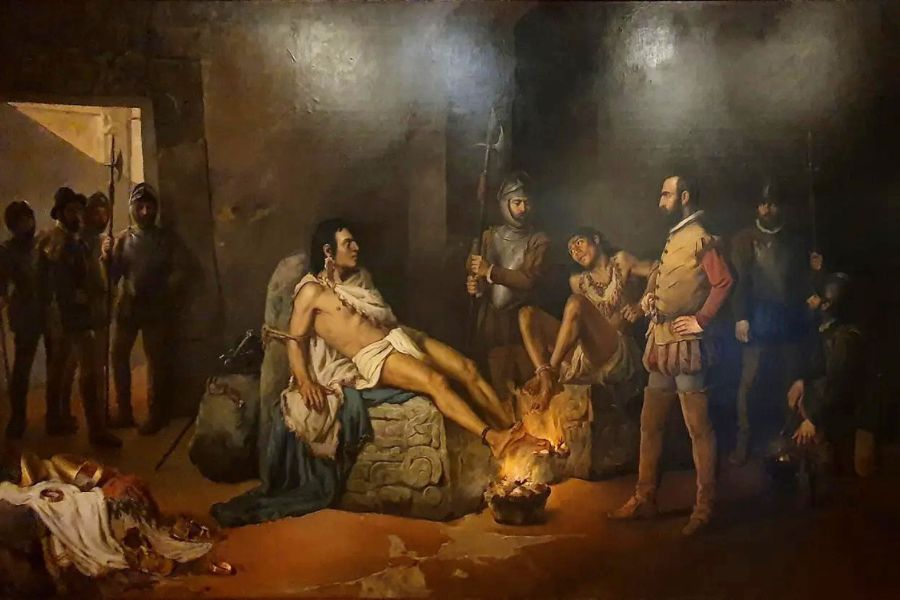
The decades after the Cadaver Synod produced what later chroniclers, with their usual restraint, called the Pornocracy, or the Rule of the Harlots. The label was unfair to one of the most politically gifted operators in papal history, but the underlying story is real enough.
From around 904 to 964, the papacy was effectively controlled by the Theophylact family, particularly by two women: Theodora and her daughter Marozia. Marozia is the one to remember.
Born around 890, she became the mistress of Pope Sergius III as a teenager and, according to the chronicler Liutprand of Cremona, bore him a son, who later became Pope John XI. Marozia also arranged the elevation of several other popes, married three times to consolidate her power, and, at her peak, ruled Rome from the fortress of Castel Sant’Angelo as the most powerful person in the city.
She’s also widely believed to have had her predecessor in influence, Pope John X, smothered in the Castel Sant’Angelo around 928. Liutprand is a hostile source and loved a lurid story, so historians don’t believe it is entirely correct, although no smoke without fire.
Marozia was eventually overthrown by her own son, Alberic II, in 932, imprisoned in the same fortress where she’d allegedly killed John X, and disappeared from the record. Her grandson became Pope John XII, who took office at around 18 and managed, in a short reign, to be accused of adultery with multiple women, of ordaining a deacon in a stable, of invoking pagan gods at dice, and of dying, depending on the chronicler, either of a stroke during sex or at the hands of a furious husband who caught him in the act.
Simony, Bribery, and the Papacy for Sale
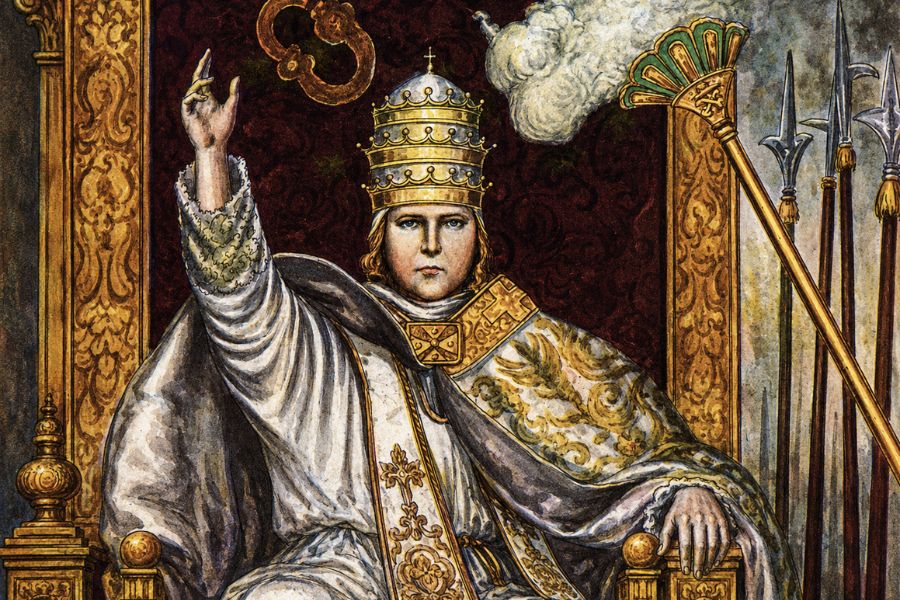
The 11th century brought a different flavor of scandal. Less murder, more money. Simony, the buying and selling of church offices, had been technically banned since the time of the apostles, but by 1000, it was simply how the system worked.
The most blatant case came in 1045, when Pope Benedict IX, a man so disreputable that even his contemporaries struggled to find anything good to say, decided he wanted to get married. He sold the papacy to his godfather, the archpriest John Gratian, for a substantial sum of money.
Gratian became Pope Gregory VI. Benedict then changed his mind, came back, and tried to reclaim the office. At one point, there were three rival popes in Rome at the same time, each excommunicating the other two. The Holy Roman Emperor Henry III eventually marched south and deposed all three at the Council of Sutri in 1046.
Benedict IX is the only person in history to have sat on the throne of Saint Peter on three separate occasions. He was also, by some accounts, around 20 when he was first elected in 1032, having been installed by his father, who had bribed the right Roman families.
The reformers who came after Sutri, men like Hildebrand of Sovana (the future Gregory VII), spent the rest of the century trying to drag the Church out of this swamp. Although they had some success, they also created the conditions for the next round of scandals by making the papacy powerful enough to corrupt on a much grander scale.
Two Popes, Three Popes, and the Great Western Schism
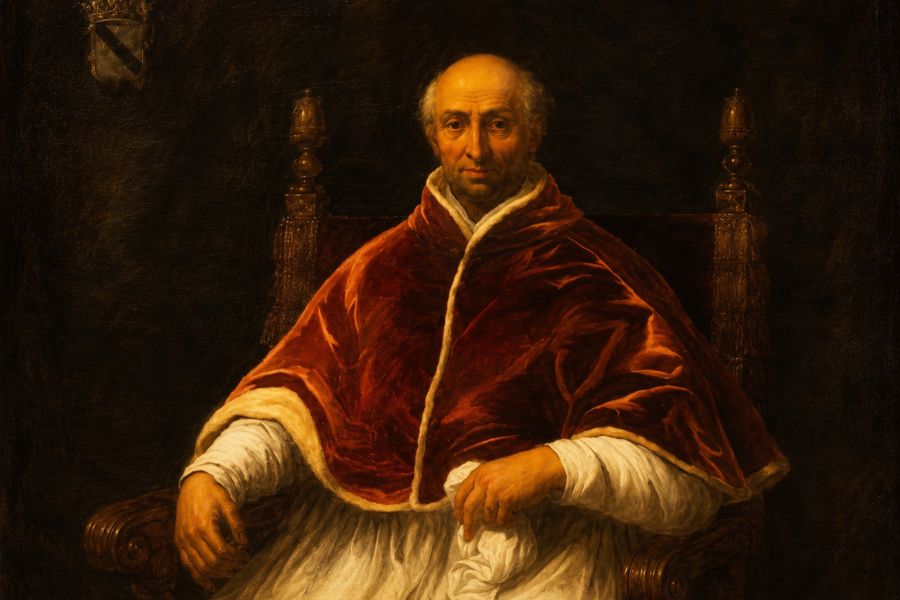
By 1378, the papacy had spent nearly 70 years in Avignon, in southern France, under heavy French influence. That period had its own catalog of sins. The Avignon popes weren’t the murderous figures of the 10th century, but lawyers and bureaucrats, and their failings were of a different kind: nepotism on a colossal scale, a tax system that bled every diocese in Europe, and a court so luxurious that the poet Petrarch called it the Babylon of the West.
Clement VI, pope from 1342 to 1352, kept a famously magnificent table, openly maintained a mistress (the Countess of Turenne), and remarked that his predecessors hadn’t known how to be popes.
When Gregory XI finally returned the papacy to Rome in 1377 and died the following year, the cardinals elected an Italian, Urban VI, under heavy pressure from the Roman mob. Urban turned out to be a paranoid disaster who screamed at cardinals during meetings and, on one notable occasion in 1385, had five of them tortured and executed for plotting against him.
The French cardinals fled, declared the election invalid, and elected a second pope, Clement VII, who set up shop back in Avignon.
For the next 40 years, Europe had two popes. Then, after a failed council at Pisa in 1409, they tried to depose both and elected a third, with each one trying to excommunicate the others. Kingdoms picked sides based on politics, not theology. France backed Avignon; England, at war with France, backed Rome; and Scotland backed Avignon because England backed Rome.
The Great Western Schism was only resolved at the Council of Constance in 1417, which deposed or accepted the resignations of all three claimants and elected Martin V. One of the deposed, the Pisan pope John XXIII, was accused at Constance of piracy, murder, sodomy, rape, and incest.
The historian Edward Gibbon later quipped that the most scandalous charges were suppressed. Surely it doesn’t get much worse than rape and incest?
The Renaissance Popes: Mistresses, Bastards, and the Borgia Court
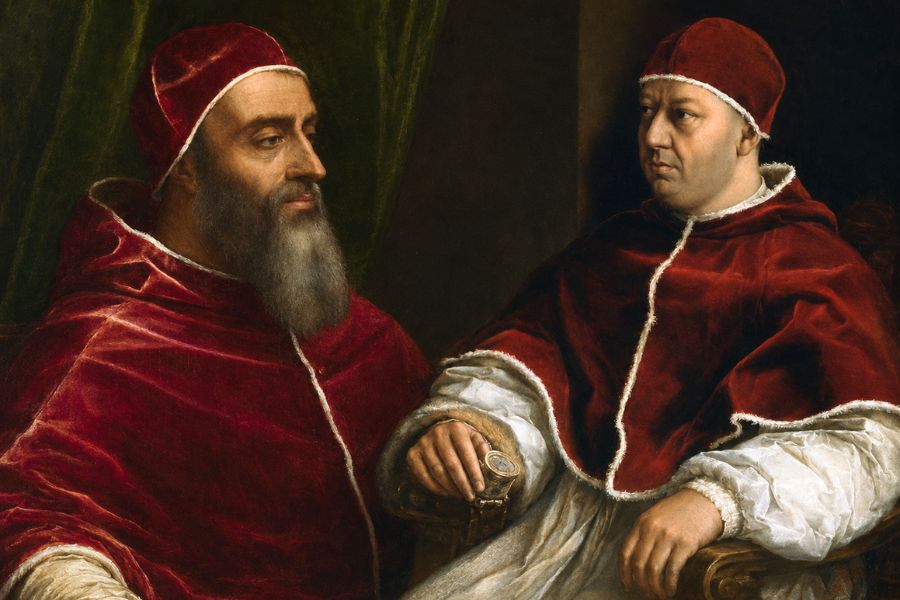
By the time the Italian Renaissance got going, the papacy had become one of the great prizes of European politics, and the men who fought for it behaved accordingly. Sixtus IV (1471 to 1484), who commissioned the Sistine Chapel, also gave the world the Pazzi Conspiracy of 1478.
He sanctioned, at the very least tacitly, a plot to murder Lorenzo and Giuliano de’ Medici during High Mass in Florence Cathedral on Easter Sunday. Giuliano was stabbed 19 times and died on the cathedral floor, but Lorenzo escaped. When the Florentines hanged the conspirators, including an archbishop, Sixtus excommunicated the entire city.
Innocent VIII, who followed Sixtus, was the first pope to openly acknowledge his illegitimate children and arrange court marriages for them. His son Franceschetto married a Medici daughter.
Innocent’s nickname in Rome was “the father of his people,” and the Romans meant it literally. He’s also the pope who, in 1484, issued the bull that turbocharged the witch hunts in northern Europe, the Summis desiderantes affectibus, on the recommendation of the inquisitor Heinrich Kramer.
Then came Rodrigo Borgia, Alexander VI, elected in 1492 after what was openly described as the most expensive papal election in history. He’d been buying votes for decades and had at least four children by his long-term mistress Vannozza dei Cattanei, including Cesare and Lucrezia, and later took a teenage mistress, Giulia Farnese, whose brother he made a cardinal (and who later became Pope Paul III).
His pontificate produced poisonings, political assassinations, the murder of his own son, Juan, in 1497 (dragged from the Tiber with nine stab wounds, the killer never identified), and Cesare Borgia’s brutal campaigns to carve out a personal kingdom in central Italy.
What the Borgia reputation tends to obscure is that Alexander wasn’t an outlier, but simply the most efficient practitioner of a craft his predecessors had spent six centuries refining.
The medieval papacy ended with Martin Luther, an Augustinian friar who in 1517 nailed a list of complaints to a church door in Wittenberg because Leo X was selling indulgences to fund the rebuilding of Saint Peter’s.
Leo, a Medici, reportedly responded to the early reports of the German trouble by saying it was a quarrel among monks. He died in 1521, in debt, with the Reformation already past the point of suppression, while in a Roman palace built largely with the proceeds of selling forgiveness to peasants who couldn’t read the Latin they were buying.