
Close your eyes and picture the inside of a medieval castle. I’d bet most of you just imagined grey stone walls, a smoky hall, rushes underfoot, and a long wooden table with a dog gnawing a bone beside it. Maybe a guttering torch in an iron bracket, a roaring fire, and a draft coming through the window.

That picture is wrong in almost every detail. The medieval castles most of us carry around in our heads is a Victorian invention, dressed up later by Hollywood and then reinforced by every fantasy film since. The real thing, the version a noblewoman would have walked through in 1380, was loud with color, padded with textiles, lit with surprising care, and far more comfortable than the bare ruins we visit today.
Table of Contents
I want to walk you through what was actually on the walls, on the floor, in the beds, and on the tables of a working castle in the High and late Middle Ages. The evidence is there if you look for it. Inventories, surviving paint fragments, household accounts, and the occasional miraculous survival, such as the chambers at the Palais des Papes in Avignon, give us a much better picture of medieval life.
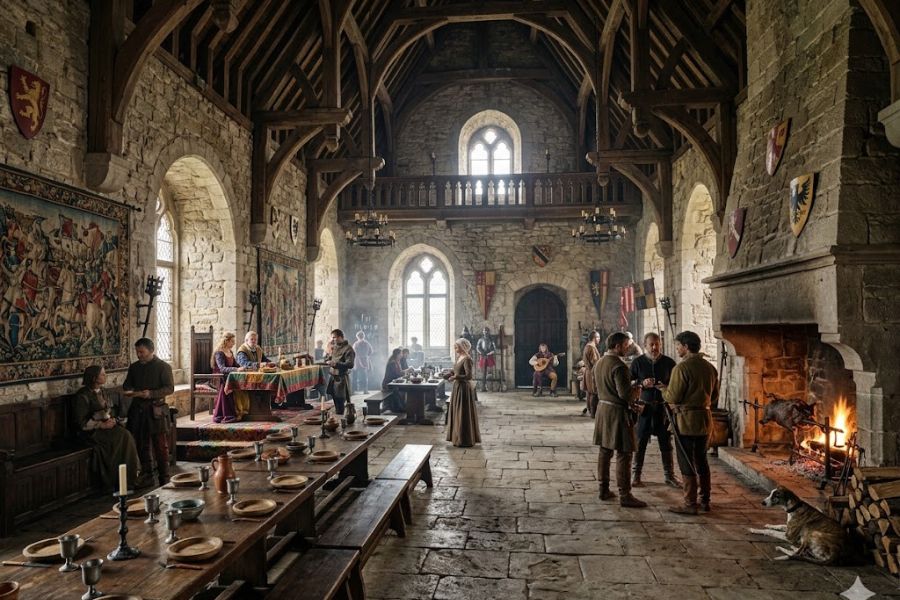
Why We Get Medieval Castles So Wrong
Walk into any English castle today, Bodiam, Conwy, or even the Tower of London, and you’ll see bare stone. The rooms feel cold and echoing, floors are scrubbed flagstone, and windows are empty holes. It’s no wonder visitors come away thinking medieval life was lived in a sort of upmarket cave.
The problem is that almost everything that made these rooms livable was perishable or portable. Wall paintings flaked off once roofs failed, textiles rotted or were sold, and wooden screens, beds, and chests were broken up for firewood or carted to the next house.
By the time the antiquarians arrived in the eighteenth century with their sketchbooks, the castles were already shells, and they drew them as such. Gothic novels and Victorian restorers did the rest, giving us the moody, candlelit ruin that still shapes the films we watch.
The second reason is class. Most popular histories of castles get filtered through the soldiers and servants who lived in the outer wards, not the lord and lady upstairs. A garrison’s quarters really were spartan. The solar where the lady embroidered, the great chamber where the lord received guests, the private chapel with its painted saints, these were a different world, and that world is the one I want to show you.
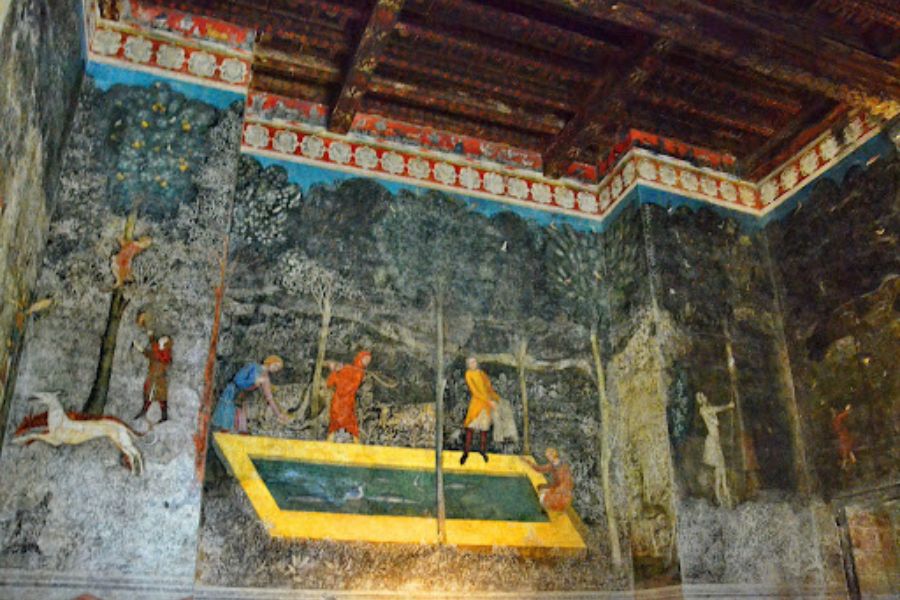
The Walls Were Loud With Color
Medieval people loved color the way we love high-definition screens. They had spent centuries living in a world where most things were brown, grey, or undyed wool, so when they could afford pigment, they slathered it on.
The interior of a high-status castle room in the 13th or 14th century would have been painted floor to ceiling, often in patterns that imitated more expensive materials.
We know this from surviving fragments. The Painted Chamber at Westminster, recorded in detail before it burned in 1834, had walls covered in scenes from the Old Testament in deep reds, blues, and gold leaf. The chapel of St Stephen in the same palace was painted with vermilion, azurite, and verdigris.
At the Palais des Papes in Avignon, you can still walk into Pope Clement VI’s study, the Chambre du Cerf, and see the original 1343 hunting scenes covering every wall, deer leaping through stylized forests in green and ochre.
Henry III spent a fortune on paintings for his castles, and the Liberate Rolls record specific orders, like the one in 1240 for a Jesse Tree to be painted on the wall of the queen’s chamber at Winchester.
Less grand rooms got cheaper treatments. Plastered walls were often whitewashed and then lined in red to imitate ashlar masonry, with a flower or star painted at the center of each fake stone.
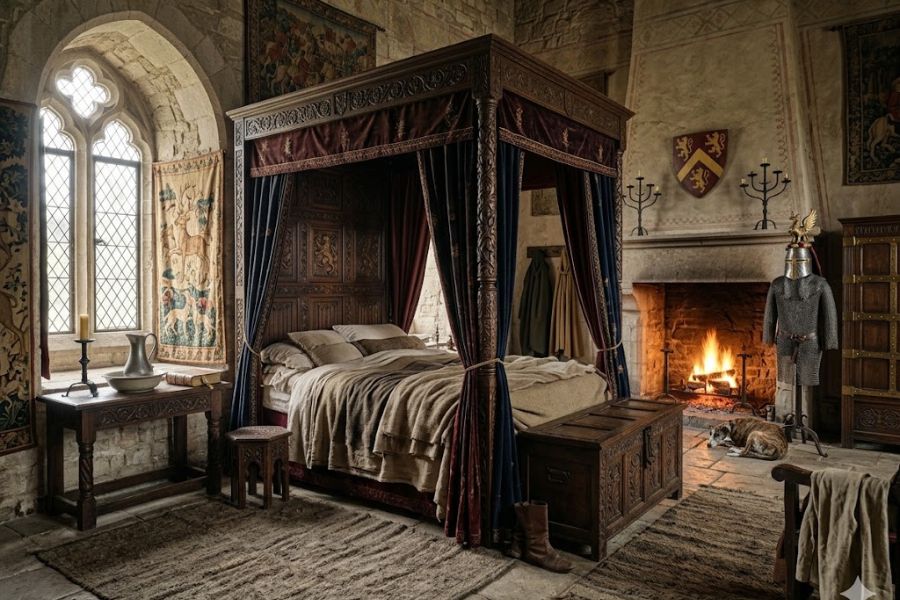
Textiles Were Everywhere
If color did the visual work, cloth did everything else. A medieval great chamber was layered with textiles in a way that’s hard to picture now because we live with central heating and hard surfaces.
Walls were hung with painted cloths, woven hangings, or, at the top end, the Flemish and Arras pieces that cost more than a manor. Floors in important rooms got rush matting woven in patterns, sometimes with herbs worked through it. Tables were covered, benches cushioned, beds curtained on four sides.
The inventories tell the story plainly. When the Black Prince died in 1376, his goods included beds of red worsted, hangings of green tartaryn embroidered with swans, and cushions of cloth of gold.
The 1397 inventory of Thomas of Woodstock at Pleshey Castle ran to hundreds of items: arras hangings showing the story of Charlemagne, beds with celures (the canopy over the head) of blue silk worked with stars, banker cloths for the benches, dorsers for the walls behind the high table.
Even a modest knight’s hall would have had painted cloths, cheaper imitations of woven hangings, often depicting biblical or romantic stories.
All of this had a purpose beyond decoration. Textiles deadened sound, blocked drafts, and made stone rooms feel like rooms instead of caves. Pull the curtains around a tester bed on a winter night, and you’ve made a small warm tent inside a cold building.
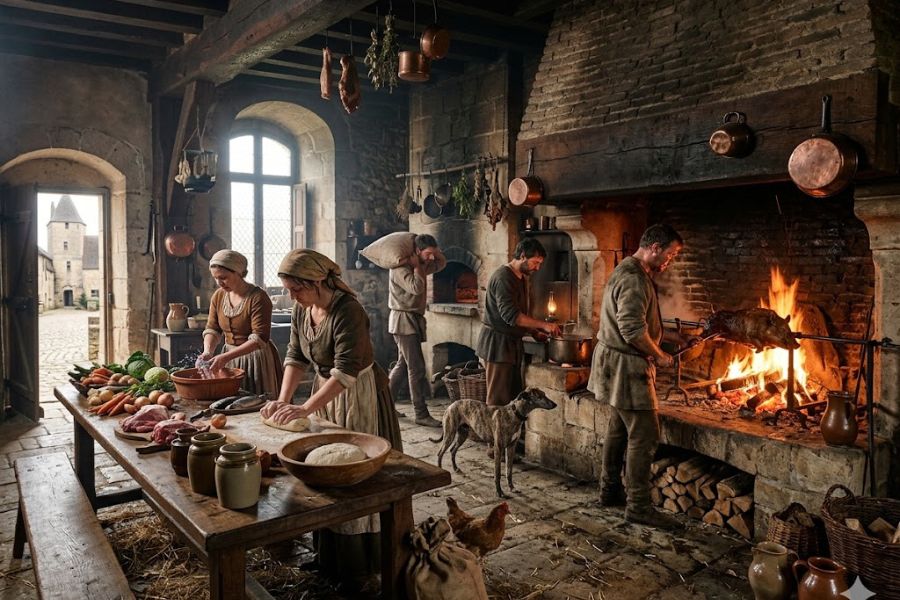
Fires, Candles, and the Question of Light
The idea that medieval castles were lit only by smoky torches set into the walls is another piece of film mythology. Torches were used outside and in passageways, but no one was sticking pitch torches in the lord’s private chamber. Indoor lighting meant candles and oil lamps, and the quality of the light depended on what you could afford.
Beeswax candles burned cleanly and smelled pleasant. They were expensive, restricted by custom and price to chapels, halls of important households, and the chambers of the wealthy.
Tallow candles, made from rendered animal fat, were what most people used. They smoked, smelled of mutton, and needed constant trimming, but they worked. Oil lamps using olive oil in the south and fish or animal oils in the north filled in the gaps.
Henry III’s accounts include orders for hundreds of pounds of wax at a time. Edward I’s wardrobe in 1300 listed silver candlesticks and standing wax tapers as standard equipment for the king’s chamber.
The other piece people miss is the fireplace. Wall fireplaces with proper chimneys were in use in castles from the twelfth century onward, well before they reached ordinary houses. By the 1300s, any decent castle chamber had one, often with a carved stone hood and an iron firedog.
Glazed windows, plain or stained, were spreading through high-status rooms in the same period, so a late-medieval solar in summer could be a flood of colored light hitting a painted wall, and in winter a fire-warmed room with shuttered windows and curtains drawn against the dark.
I’ve stood in the North Tower at Stokesay Castle and seen the remains of a wall painting, and you can suddenly see how the room was designed to be lived in, not endured.
Furniture That Was Built to Travel
Medieval furniture has a reputation for being crude. Heavy oak benches, a trestle table, a chest. Some of that is fair for ordinary households, but the picture changes once you get into noble interiors, and it changes for a reason most people don’t think about: aristocrats moved constantly.
A great lord might rotate through five or six castles in a year, and his furnishings traveled with him. This is why so much medieval furniture was designed to come apart. Trestle tables were broken down into boards and supports. Beds were disassembled into headboards, side rails, and tester frames that could be loaded onto carts.
Chests doubled as luggage and seating, and when the household arrived, servants reassembled everything, hung the textiles, laid the carpets, and turned a cold, empty stone box into the lord’s bedchamber by nightfall.
The pieces that stayed put were the showpieces. Carved oak cupboards, sometimes painted, for displaying a plate, aumbries built into the wall for storing books and documents, and settles, joined stools, lectern desks in private chapels.
And the bed itself, when it wasn’t traveling, was the most expensive piece of furniture most people would ever own. A great bed at the end of the fifteenth century could have a carved headboard, embroidered hangings, feather mattresses, linen sheets, woolen blankets, a fur counterpane, and bolsters stuffed with down.
Henry V’s will mentions specific beds by name, the way someone today might mention a house.
The Sensory Experience We’ve Lost
Put it all together, and the medieval castle interior begins to feel like a different building from the one we tour. A noble chamber at the end of the 14th century would have hit every sense at once.
Beautiful painted walls in vermilion, azure, and gold leaf. Wool and silk hangings showing knights, saints, or hunting scenes. A tiled or matted floor, carved and painted furniture, much of it folded away or stacked against the walls until needed. Wax candles in silver or latten holders, and a fire crackling under a stone hood.
The smells were strong and constant. Woodsmoke from the fire, beeswax from the candles, the herbs scattered in the rush matting, perfumed waters used to wash hands before meals, the lavender and rosemary tucked into chests with the linen.
Underneath all that, in less aristocratic spaces, the less pleasant medieval smells my last castle post got into. The two coexisted. A 14th-century countess could walk from a perfumed solar through a passage that stank of latrine, and she’d have noticed neither, because both were ordinary.
Medieval aristocrats lived within their own decorative scheme, the way we live on a phone screen, surrounded by images and colors that told them who they were, who their ancestors had been, and which stories mattered.
Strip the textiles off the walls, and the paint off the plaster, and the building goes quiet. We’ve been touring that silence for two centuries and mistaking it for the original sound.


Kylie Lang is a nationally syndicated travel journalist with bylines on the Associated Press Wire & more, a medieval history writer, and the founder and lead author of Tales of the Middle Ages (talesofthemiddleages.com). She holds a BA (Honours) in History from the University of Kent and is a member of the British Guild of Travel Writers.