
If you enjoy history, especially the Medieval period and the constant war between France and England, you’ll have heard of this powerful woman from the Middle Ages.
History hasn’t been kind to Isabella of France. Branded the She-Wolf, blamed for toppling a king, and cast as a cold-hearted traitor, she’s often painted as the medieval femme fatale. But behind the scandalous nickname lies a far more complicated and fascinating story.
Table of Contents
Daughter of a powerful French king and wife to one of England’s weakest monarchs, Isabella was raised in a world where women were meant to be quiet, obedient, and ornamental. She was none of those things. Instead, she was clever, calculating, and unafraid to fight back when her dignity and kingdom were on the line.
This is the story of the queen who outplayed them all.
Isabella at a Glance
Born: 1295, Paris
Father: Philip IV of France (also known as Philip the Fair)
Married to: Edward II of England
Crowned: Queen of England in 1308
Children: Four, including Edward III
Nickname: The She-Wolf of France
Known for: Overthrowing her husband, invading England, and rewriting her role in history
Who Was Isabella of France?
Isabella of France was born in 1295 into one of the most powerful families in Europe. Her father, Philip IV, ruled France with an iron fist and a sharp mind. He had a reputation for being handsome, ruthless, and determined to keep his kingdom firmly under control. He’d later dismantle the Knights Templar to fill his coffers. Isabella inherited more from him than just royal blood.

At just 12 years old, Isabella was married off to Edward II of England as part of a political alliance. It was a high-stakes match between two medieval powerhouses. On paper, it looked perfect. In reality, it was a mess from the start.
The marriage treaty was a masterstroke of diplomacy, requiring Edward to pay homage to France for the contested region of Gascony. This clause would later ignite tensions, but for now, Isabella was a pawn in her father’s game. Yet even pawns can become queens.
Raised in the opulent French court, Isabella was schooled in statecraft by watching her father manipulate nobles and clergy. She learned early that power wasn’t given, it was taken. By the time she crossed the Channel, she was already sharper than most of Edward’s advisors. Her youth masked a steely resolve, and her bloodline, descended from Charlemagne, gave her a claim to thrones across Europe.
A Young Queen in a Troubled Court

Isabella’s early years in England were a masterclass in survival. Edward II’s court was a vipers’ nest, riddled with factions vying for influence. The king’s obsession with his favorite, Piers Gaveston, a charismatic but arrogant knight, alienated the barons and humiliated Isabella.
Gaveston flaunted jewels meant for the queen, mocked her as “the Frenchwoman,” and wielded power far beyond his station. Chroniclers noted that Edward lavished Gaveston with lands and titles while Isabella’s own household funds were slashed.
By 1312, tensions boiled over. The barons, fed up with Gaveston’s excesses, executed him. Edward wept openly, but Isabella, now 17, saw opportunity. She began quietly building alliances with disgruntled nobles, positioning herself as a voice of reason in a court spiraling into chaos.
When Edward replaced Gaveston with Hugh Despenser the Younger, a man whose greed rivaled his predecessor’s, Isabella’s patience snapped. Despenser seized her lands, threatened her safety, and even intercepted her letters to France. Once a diplomatic bride, the queen became a prisoner in all but name.
Hooked on the Middle Ages? Get more stories like this one in your inbox.
The King’s Favorites: A Thorn in Her Side
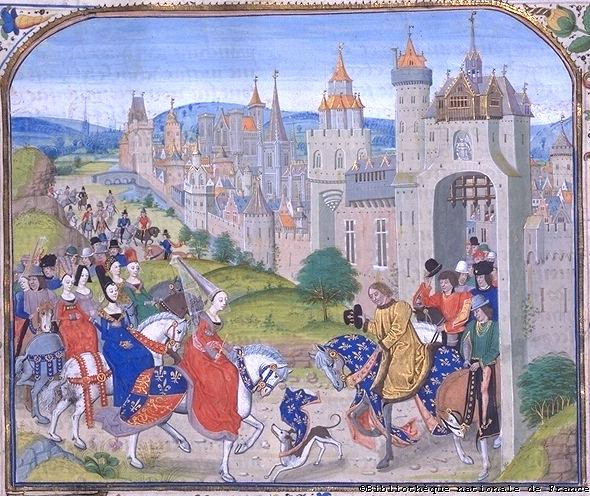
Hugh Despenser’s rise marked a turning point. Unlike Gaveston, whose sins were largely personal, Despenser’s ambitions were systemic. He manipulated royal grants, monopolized trade, and strong-armed nobles into surrendering estates.
His grip on Edward was absolute; the king signed documents without reading them, trusting Despenser to rule in his stead. England was falling apart under Edward’s rule, the Despensers were running the show, and Isabella had lost her lands, income, and freedom. In 1324, Edward sent Isabella to negotiate peace with her brother, King Charles IV of France, a move orchestrated by Despenser to sideline her. But the mission backfired.
In Paris, free from Despenser’s shadow, Isabella rediscovered her political teeth. She brokered a truce that returned Gascony to England, but when Despenser spread rumors she’d slept with the French king to secure it, Isabella refused to return. “I will not come back,” she declared, “until Despenser is removed.”
An Unlikely Alliance with Roger Mortimer
Exile became Isabella’s crucible. In France, she allied with Roger Mortimer, a baron who’d escaped the Tower of London by drugging his guards. Mortimer was everything Edward wasn’t: ruthless, strategic, and hungry for revenge. Their relationship, romantic and political, was a partnership forged in mutual desperation.
Together, they courted European allies, including Count William of Hainaut, who bankrolled their invasion in exchange for a marriage between his daughter and Isabella’s son, Prince Edward.
The plan was audacious: invade England with a mercenary army, overthrow Edward II, and place Prince Edward on the throne. But Isabella knew victory hinged on perception. She framed herself as a “protector of the realm,” circulating tales of Despenser’s tyranny and Edward’s weakness. By 1326, England was primed for rebellion.
The Invasion That Toppled a King
In September 1326, Isabella landed in Suffolk with 1,500 soldiers. What followed wasn’t a war; it was a landslide. The English public, weary of Edward’s mismanagement, flocked to her banner. Nobles defected daily; even Edward’s half-brother joined her cause. Despenser, cornered in Wales, was captured and subjected to a traitor’s death: hanged, drawn, quartered, and his genitals fed to dogs. Edward, abandoned by all, was imprisoned in Berkeley Castle.
The deposition was swift. In January 1327, Edward II “abdicated” under duress, though rumors swirled that he was murdered, smothered, perhaps, or killed with a red-hot poker. Isabella, now regent for her 14-year-old son, Edward III, ruled alongside Mortimer. For a time, they were hailed as liberators.
The Death of Edward II: Truth or Torture Tale?
Officially, Edward II died in 1327 at Berkeley Castle. The story that stuck? He was murdered with a red-hot poker shoved into his body so there’d be no visible wounds.
Gruesome, theatrical, and possibly total fiction.
Some historians believe he may have survived in secret exile, with reports of sightings years later. The truth is still debated. But in medieval politics, a dead king was often more useful than a living one.
The Rise and Fall of Isabella’s Power

Isabella’s regency began with promise. She reduced taxes, pardoned rebels, and restored confiscated lands. But power corrupted. By 1328, she and Mortimer were embezzling funds, executing rivals, and even staging a fake funeral for Edward II to quash rumors he’d survived. Their excesses mirrored the tyranny they’d overthrown.
Edward III, now 17, chafed under their control. In 1330, he orchestrated a coup, storming Nottingham Castle where Mortimer and Isabella held court. Mortimer was dragged to Tyburn and hanged. Isabella, spared execution, was retired to Castle Rising, a comfortable prison with tapestries, a library, and all the wine she could drink.
Legacy of the She-Wolf
Isabella’s reign was brief but transformative. Her invasion marked the first successful deposition of an English monarch, proving kings weren’t untouchable. Parliament’s role grew in the aftermath, as nobles demanded checks on royal power. Yet history branded her a “She-Wolf,” a term popularized by Shakespeare, painting her as a vengeful adulteress.
Modern scholars see nuance. Yes, she was ambitious and ruthless, but so were her male counterparts. Her actions laid groundwork for future queens, showing that women could wield power in a man’s world. When Elizabeth I took the throne 250 years later, she studied Isabella’s playbook.
Influence on Future Queens
Isabella’s audacity reverberated through history. Margaret of Anjou, wife of Henry VI, echoed her strategies during the Wars of the Roses. Elizabeth I, though careful to avoid Isabella’s mistakes, embraced her legacy of female authority. Even Mary Tudor’s bloody reign owes a debt to the She-Wolf’s precedent: queens could rule as fiercely as kings.
Echoes in Modern Culture

From Maurice Druon’s The Accursed Kings to modern TV dramas, Isabella’s story captivates. She’s portrayed as a feminist icon, a tragic antihero, and a Machiavellian schemer. Her life reminds us that history’s most compelling figures are rarely saints; they’re survivors.
Isabella of France died in 1358, outliving her son’s reign. Her tomb at Greyfriars Church was destroyed during the Reformation, but her legacy endures. She proved that queens could be more than consorts; they could be kingmakers, rebels, and rulers. In a world that demanded her silence, she roared.
Closing Thoughts
Isabella’s tale is a blueprint for resistance. She dared to defy a king, rewrite the rules, and pay the price. Love her or loathe her, the She-Wolf of France remains history’s ultimate disruptor.
Love a good medieval story?
Join our readers and get tales of kings, queens, castles and ordinary medieval lives straight to your inbox.

Kylie Lang is a nationally syndicated travel journalist with bylines on the Associated Press Wire & more, a medieval history writer, and the founder and lead author of Tales of the Middle Ages (talesofthemiddleages.com). She holds a BA (Honours) in History from the University of Kent and is a member of the British Guild of Travel Writers.
Related posts:
 The She-Wolf Who Invaded England. Isabella of France Would Not Be Tamed
Isabella of France: History Called Her a She-Wolf The Truth Is Far More Interesting
Isabella of France: History Called Her a She-Wolf The Truth Is Far More Interesting
The She-Wolf Who Invaded England. Isabella of France Would Not Be Tamed
Isabella of France: History Called Her a She-Wolf The Truth Is Far More Interesting
Isabella of France: History Called Her a She-Wolf The Truth Is Far More Interesting
 Must-Read Books on the Hundred Years War. These Page-Turners Nail It