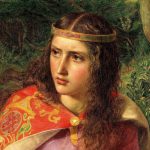
Imagine being a teenage Italian heiress thrown into the ruthless world of the French court. Most would crumble, but Catherine de’ Medici? She turned herself into the most powerful woman in France. Her story isn’t just about survival—it’s about mastering the art of power in an era dominated by men.
From hostage to queen, Catherine played the long game, outmaneuvering rivals, manipulating court politics, and shaping the fate of France through sheer intelligence and strategy. Whether through diplomacy, espionage, or carefully orchestrated alliances, she built a legacy that still echoes through history.
Table of Contents
From Hostage to Queen
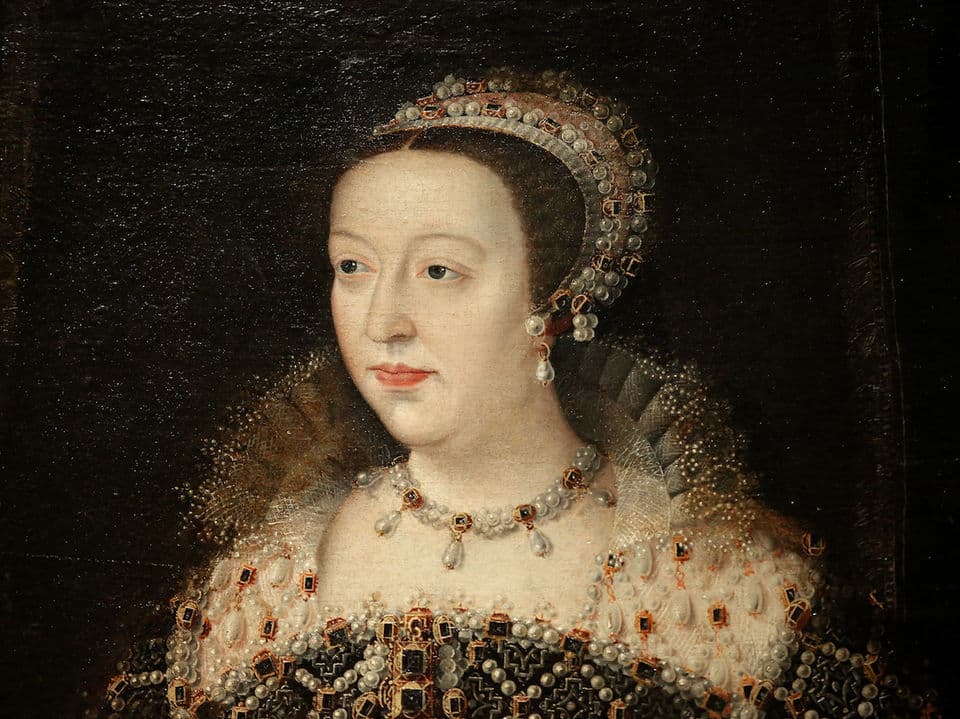
Born in Florence in 1519, Catherine started life with everything against her. Both her parents died within weeks of her birth: her mother from childbirth complications and her father from disease shortly after. But being born a Medici meant something – she inherited both immense wealth and powerful enemies.
When rebels took over Florence, young Catherine became a political hostage. They kept her in various convents, sometimes changing her location in the middle of the night to prevent rescue attempts. Yet somehow, this same girl ended up marrying the future King Henry II of France in 1533.
The Waiting Game
For the first ten years of her marriage, Catherine couldn’t produce an heir – a medieval queen’s worst nightmare. The king’s mistress, Diane de Poitiers, literally had more power at court than the queen. Diane got the fancy rooms and the king’s attention and even wore the crown jewels.
But Catherine was smarter than anyone realized. Instead of throwing tantrums (which was the style at the time), she studied. She learned French politics inside and out. She built alliances. She waited. And finally, she gave birth to ten children, including three future kings of France. That’s what I call job security.
The Power Behind the Throne

When Henry II died in 1559 from a tournament injury (note: jousting with real lances is never a good idea), Catherine transformed from a quiet queen to a political mastermind. Her oldest son, Francis II, was only 15 when he became king. Everyone thought they could push around a teenage king and his Italian mother. Everyone was wrong.
Catherine didn’t just advise her son – she ran the whole show. She established her elite intelligence network, using everything from court ladies to palace servants as spies. Those beautiful Renaissance galleries in the Louvre? They weren’t just for art – they were designed so Catherine could eavesdrop on courtiers’ conversations.
The Queen of Manipulation

Let’s talk about how she controlled people. She created what became known as the “Flying Squadron” – a group of beautiful, intelligent women she planted at court to gather information and influence powerful men. Was it scandalous? Absolutely. Did it work? Like a charm.
She also mastered the art of the political feast. Her elaborate court entertainments weren’t just parties – they were power moves. She’d spend fortunes on spectacles that showed off French wealth and culture while simultaneously terrifying foreign ambassadors with displays of royal might.
Hooked on the Middle Ages? Get more stories like this one in your inbox.
The Religious Powder Keg

Here’s where things get intense. France was splitting apart over religion. Catholics and Huguenots (French Protestants) were killing each other in the streets. Most rulers would have picked a side. Catherine? She tried to balance both.
She started with the Edict of Saint-Germain in 1562, giving Protestants some religious freedoms. When that didn’t work, she arranged a marriage between her Catholic daughter and the Protestant Henry of Navarre. But this led to the infamous St. Bartholomew’s Day Massacre of 1572, when wedding celebrations turned into a bloodbath that left thousands of Protestants dead.
The Astrologer Queen
You can’t talk about Catherine without mentioning her fascination with astrology. She built an entire observatory at her Blois palace and kept her personal astrologer, Nostradamus, on speed dial (well, the 16th-century equivalent). His prophecies influenced major political decisions.
But she wasn’t just into stargazing. Her personal study at Blois contained hundreds of books on science, medicine, and what we’d now call psychology. She was running a Renaissance think tank while everyone else was still playing with tarot cards.
The Black Legend
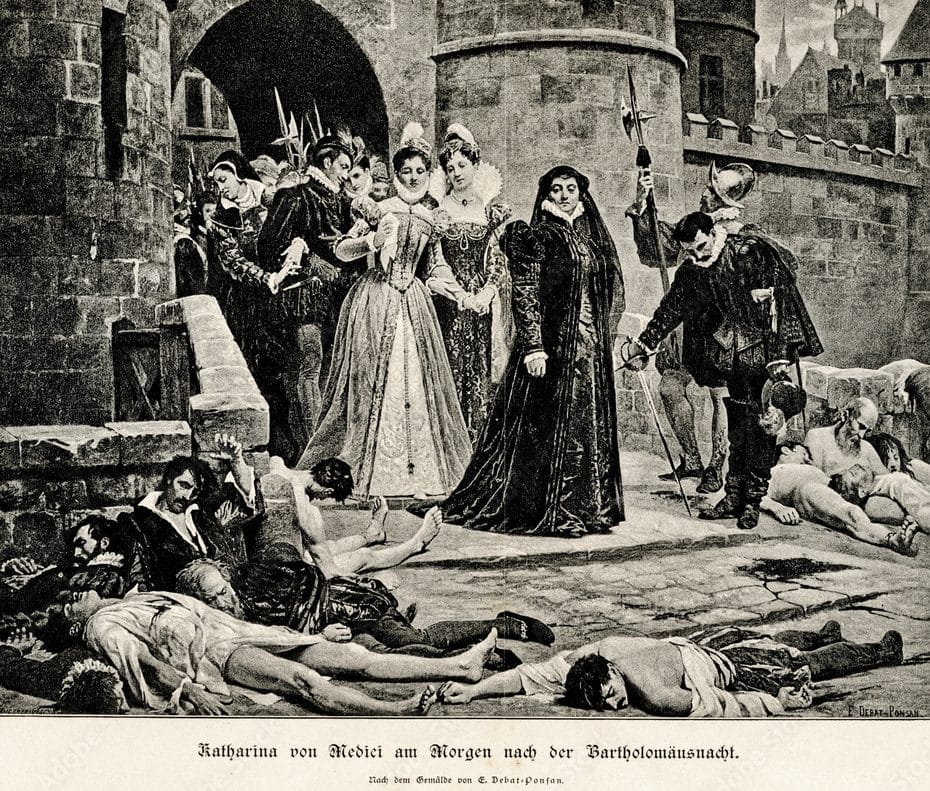
After her death, Catherine’s enemies painted her as this ruthless poisoner who kept toxic potions in her private cabinet. Sure, she probably had some sketchy substances in there – but show me a 16th-century ruler who didn’t. The real poison was in her political maneuvering.
Contemporary records show she was more interested in collecting scientific instruments, exotic artifacts, and precious manuscripts than poison rings. Though I have to say, her collection of astronomical devices would have made any Bond villain jealous.
Mother of Kings
Through it all, Catherine’s main focus was protecting her children’s power. She had three sons who became kings of France (Francis II, Charles IX, and Henry III), but honestly, none of them lived up to mom’s political skills.
When her favorite son, Charles IX, died in 1574, she took over running the country while riding around France to suppress rebellions. Remember, she was in her fifties by then – in an age when most people didn’t see forty.
The Last Power Play

Even at the end, Catherine kept playing the game. She died in 1589, reportedly exhausted from trying to manage the latest political crisis. Her last words were supposedly about business as usual – advising about ruling to her last surviving son.
A Legacy Written in Stone

Catherine’s architectural projects still dominate Paris. The Tuileries Gardens? That was her project. Those black-and-white Renaissance additions to Blois Castle? All her. She wasn’t just building palaces; she was creating stages for power plays.
The Enduring Influence of Catherine de Medici
Catherine de’ Medici’s influence on French history extends far beyond her reign. Her architectural legacy transformed Paris and the Loire Valley, while her political strategies influenced European statecraft for generations. The Tuileries Palace and Gardens, though the palace no longer stands, remain a testament to her vision of royal power and prestige.
Her political methodology – the careful balance of faction against faction, the use of cultural patronage as a political tool, and the creation of an elaborate court system – became a model for future monarchs. She established practices at the French court that would continue until the Revolution, from the organization of royal ceremonies to the use of art and architecture as expressions of royal authority.

Love a good medieval story?
Join our readers and get tales of kings, queens, castles and ordinary medieval lives straight to your inbox.

Kylie Lang is a nationally syndicated travel journalist with bylines on the Associated Press Wire & more, a medieval history writer, and the founder and lead author of Tales of the Middle Ages (talesofthemiddleages.com). She holds a BA (Honours) in History from the University of Kent and is a member of the British Guild of Travel Writers.