
Imagine sending secret agents behind enemy lines, knowing they’d probably not make it. Knowing they’d more than likely be captured, tortured, and then shot by the Nazis. Then, having to look their families in the eye and tell them you’d sent their daughter to France.

That was Vera Atkins’s job during World War II. When the war finally ended, she refused to let those deaths go unanswered. She spent the next year hunting Nazis.
Table of Contents
She hunted down every Nazi officer, camp guard, and Gestapo agent who’d laid hands on her agents. Those who had interrogated them days before their executions. She made damn sure the world knew exactly what they’d done.
The Romanian Jew Who Hid Her Past
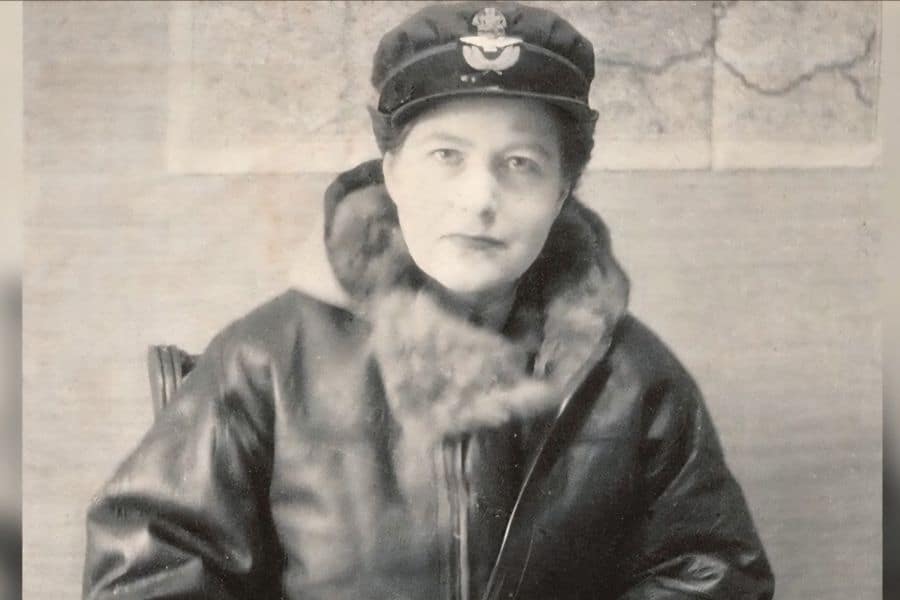
Vera Atkins was a Romanian Jew who changed her name, hid her past, and somehow talked her way into running Britain’s most secretive spy operation while technically being an enemy alien. Her father had gone bankrupt in 1932 and died a year later, leaving Vera and her mother to watch as antisemitism spread through Romania like wildfire.
By 1937, they’d had enough and left for London. Vera spoke perfect French, German, English, and Romanian, and somewhere along the way, she started feeding intelligence to British diplomats posted in Bucharest. Nobody knows exactly when or how, but by the time war broke out, Vera had important connections.
In May 1940, Vera did something that would haunt her for the rest of her life. She traveled to Belgium with $150,000 in cash to bribe an Abwehr officer, Hans Fillie, for a passport so her cousin, Fritz, could escape Romania.
The Germans invaded on May 10 while she was still there, and she went into hiding until a Belgian resistance network smuggled her back to Britain later that year. She never told anyone at SOE (the Special Operations Executive), a secret British WWII organization created by Winston Churchill, about this because the secret could have destroyed her career, exposed her as compromised, and possibly seen her interned as an enemy alien.
A Life in Secrets: Vera Atkins and the Missing Agents of WWII
A biography of Vera Atkins, a female British intelligence officer during World War II who played a crucial role in the Special Operations Executive (SOE) and made it her mission to find missing agents after the war.

Running Churchill’s Secret Army
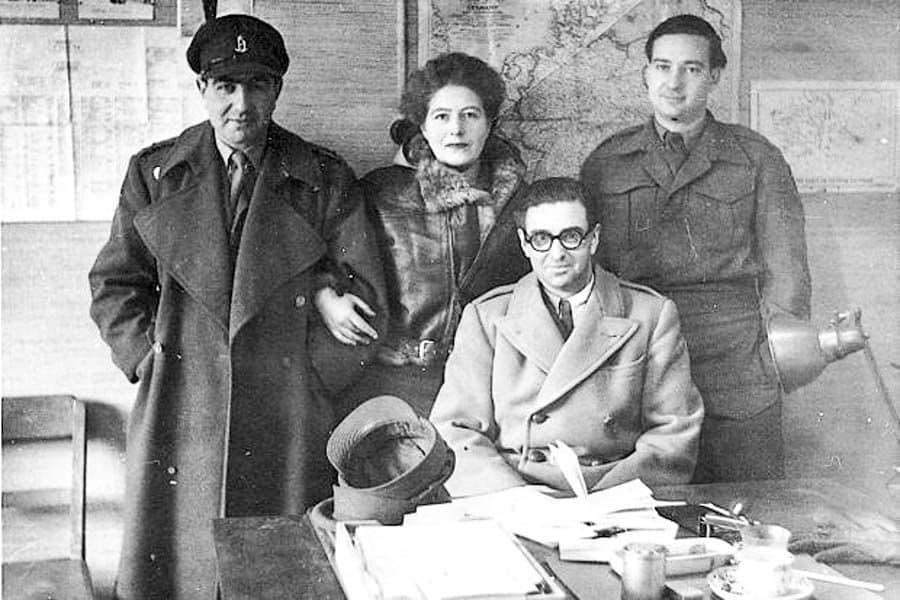
In February 1941, SOE hired Vera as a secretary for F Section, the division handling operations in Nazi-occupied France. Within months, she’d become indispensable to Colonel Maurice Buckmaster, the section head, and was promoted to Intelligence Officer even though she wasn’t a British citizen and had no official military rank until August 1944.
She finally got naturalized in February 1944, but by then she’d been running agents into France for three years. Winston Churchill had created SOE with a simple directive: to set Europe ablaze. Vera’s job was to make sure the people doing the burning had everything they needed to succeed, or at least to die trying.
Vera recruited, trained, and sent 470 agents into France during the war. Thirty-nine of them were women, which was controversial because women in the British military weren’t supposed to serve in combat roles at all.
The lawyers at SOE argued that there was no legal protection for women captured behind enemy lines, that they’d be shot as spies with even less mercy than the men. Colin Gubbins, the head of military operations, didn’t care. He was a whole hogger, as his colleagues called him, and he figured women could do the job just as well as men. Turned out he was right.
Preparing Agents for Death
Vera interviewed recruits in hotel rooms and asked them questions in French to test their fluency, and told them straight up that their chances of survival were about even. If they wanted to back out, this was the time. Most of them didn’t.
Then came the training, which Vera monitored obsessively even though she rarely visited the schools herself. She read every report from every instructor, and the comments drove her crazy. The male officers couldn’t get past the fact that these were women. They wrote things like painstaking, lacking in guile, and innocent. What they really meant, in Vera’s opinion, was that women shouldn’t be doing this at all.
But once training was done, Vera took care of everything else. She checked their clothing to make sure nothing looked wrong, inspected their papers to ensure every detail was perfect, wrote anodyne letters to their families at regular intervals so no one would worry, and made sure the agents got their pay.
On the night they left, Vera drove them to the airfield herself. She sat with them in the car as they drove through the English countryside, both of them knowing this might be the last time they’d see each other. Years later, Vera admitted the burden was crushing. She stayed safe while they flew into danger, and that knowledge never left her.
The atmosphere at SOE headquarters on Baker Street was deliberately informal. Women smoked, handsome men wandered through speaking French, and nobody ever knew who anyone really was because everyone used aliases. Vera had three different aliases herself.
There was a bar on the corner where people would go to relax, but if any non-SOE people walked in, everyone shut up like clams. The green phone on Vera’s desk was for scrambled conversations. She’d get the latest intelligence from agents in the field, or learn that another one had gone missing.
Noor Inayat Khan and the Silver Bird
Vera personally gave Noor Inayat Khan a silver bird brooch before she left for France. Noor was a 29-year-old Indian-British woman who’d been educated in Paris, spoke perfect French, and wanted to be a writer. She was shy, childlike, and by her own admission incapable of lying. Vera had serious doubts about whether Noor could handle the mission.
Paris was the most dangerous assignment in France, and nearly one in four female agents didn’t make it back. Vera told Noor it wasn’t too late to drop out. Noor said her only concern was how her death might affect her mother. So Vera gave her the brooch and watched her fly away on June 16, 1943.
Noor’s capture came through betrayal. In October 1943, a Frenchwoman named Renée Garry sold her out to the Germans for 100,000 francs. The Gestapo arrested Noor at her apartment in Paris, and despite her shy demeanor and admission that she couldn’t lie, she refused to give them anything useful.

The Prosper Disaster
The Prosper network was the biggest SOE operation in France, and it was a disaster. Francis Suttill, the network’s leader, was a charismatic 34-year-old lawyer who’d built an organization spanning 12 departments across northern France, with hundreds of members receiving weapons drops every week.
His courier was Andrée Borrel, a 25-year-old French woman who’d impressed Suttill so much that he made her his second-in-command. His radio operator was Gilbert Norman, who sent coded messages back to London from different locations every day to avoid detection. And their air movements officer, the man who organized the secret flights bringing agents in and out of France, was Henri Déricourt.
The Double Agent
Déricourt was a French pilot who’d had pre-war contacts with Germans and somehow convinced SOE to hire him anyway. MI5 had investigated him and said they couldn’t guarantee his reliability, but Nicolas Bodington, Buckmaster’s deputy and an old friend of Déricourt, vouched for him enthusiastically. So SOE put him to work.
Between February and July 1943, Déricourt successfully arranged over 67 agent transports. He was brilliant at his job. He was also copying every letter, report, and piece of mail the agents gave him to send back to London, and handing the copies to the Gestapo.
The Germans knew everything. They knew where the agents were landing, who was arriving, what their missions were, and how the networks were organized. They could have arrested everyone immediately, but they didn’t.
Instead, they watched and waited, building files on every agent and every French collaborator until they had enough information to destroy the entire resistance network in northern France in one coordinated strike. On June 23, 1943, they made their move.
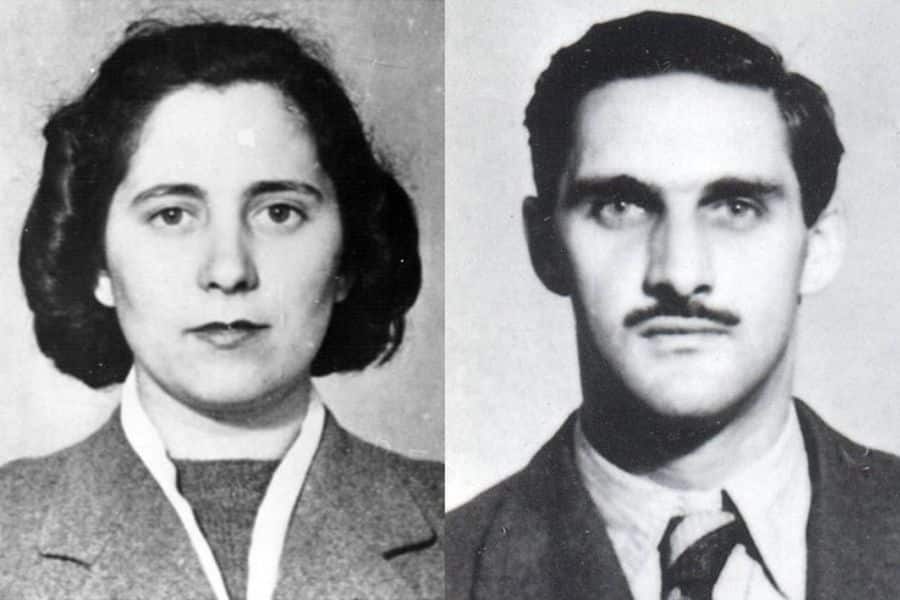
Gilbert Norman and Andrée Borrel were arrested at an apartment near the Bois de Boulogne late that night. The next morning, Francis Suttill found German agents waiting for him at his hotel in the working-class district of Porte St. Denis.
The Ignored Warning Signs
The Gestapo took all three to their headquarters at 84 Avenue Foch and showed them Déricourt’s file. They knew everything about Prosper. Norman cracked first. He was exhausted, and seeing the breadth of information, the Germans broke him completely. He agreed to send radio messages back to London under German control and to warn headquarters that he’d been captured. He deliberately left out his security check.
The security check was how radio operators proved they were sending messages freely and not under duress. SOE headquarters in London received Norman’s first message without the security check and sent back a reply telling him not to forget it next time. They thought he’d just made a mistake. Norman was dumbfounded. He tried again. And again. And each time, London accepted the messages and sent instructions for new operations.
Over the next three months, the Gestapo arrested hundreds of people connected to Prosper. About 180 SOE agents and French resistance members were captured, and roughly 80 of them were executed or died in concentration camps. The Germans seized 160 plane loads of armaments, including 2,600 containers full of sten guns and explosives.
But London didn’t realize how bad things were until June 25, when an agent radioed that Suttill, Norman, and Borrel had disappeared and were believed arrested. By then, it was far too late.
On October 1, 1943, F Section received a message from Jacques, an agent in Berne, passing along information from Sonja that Madeleine and two others had had a serious accident and were in hospital. That was code for captured by the Germans.
Jacques was Jacques Weil, a radio operator who’d escaped to Switzerland. Sonja was his fiancée, Sonia Olschanezky, who was still operating in Paris. And Madeleine was Noor Inayat Khan. The information was accurate. Buckmaster did nothing. He probably didn’t know who Sonja was because she’d been recruited locally, and F Section continued to regard Madeleine’s messages as genuine for several months after Noor’s arrest. There’s no evidence that Vera even saw this message.
The question everyone asks is whether Vera and Buckmaster should have known something was wrong. The answer is complicated. Yes, there were clues. Agents in France complained about Déricourt’s faulty security, and radio operators left out their security checks. Intelligence suggested the networks had been penetrated.
But SOE was also getting constant messages from captured radios that the Germans were using to feed them false information, and it’s hard to distinguish signal from noise when you’re getting reports from dozens of agents operating under impossible conditions.
Vera later refused to testify at Déricourt’s treason trial, which protected both him and the reputation of F Section. She never explained why, and some historians think Déricourt was actually a triple agent working for MI6, and that SOE agents were deliberately sacrificed as part of a deception plan to make the Germans think the D-Day invasion would come in 1943. Others think that’s conspiracy theory nonsense. Either way, the agents died.
Violette Szabo’s Last Stand
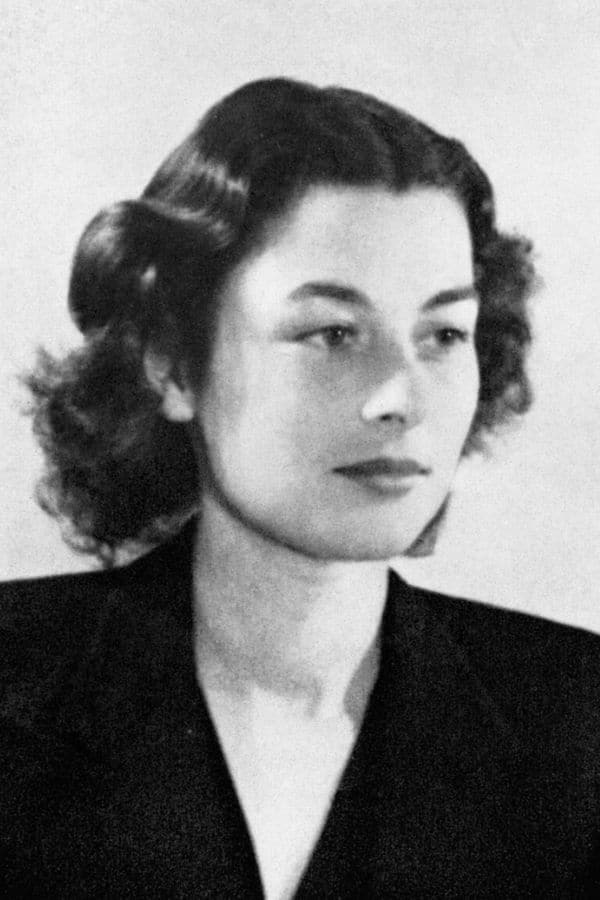
Violette Szabo was born in Paris in 1921 to a French mother and English father. She spent her childhood between the two countries and spoke both languages fluently. In July 1940, she met Étienne Szabo, a French Foreign Legion officer, at a Bastille Day celebration her mother had organized to entertain a homesick Frenchman. They married five weeks later. Violette gave birth to their daughter, Tania, on June 8, 1942. Four months later, Étienne was killed in action at El Alamein in North Africa, and Violette wanted revenge.
She joined the Auxiliary Territorial Service and then the SOE, where she trained in navigation, weapons, demolition, cryptography, and communications. She was a crack shot who’d grown up comfortable around guns and target practice, and under SOE training, she became an accomplished markswoman. Reports described her as persistent, physically tough, self-willed, and not easily rattled.
She badly sprained her ankle on her first parachute jump, which delayed her deployment, but she passed on the second attempt. Her first mission to Rouen in April 1944 was successful. Her second mission, which began on June 8, 1944, the day after D-Day and two years to the day after Tania’s birth, was not.
Half an Hour of Covering Fire
Three days into the mission, Violette and a French resistance fighter encountered a German roadblock near Limoges. They tried to turn around, but Violette’s weak ankle gave way. She told her companion to run and provided covering fire for close to half an hour, emptying magazine after magazine at the Germans until she ran out of ammunition.
The Germans captured her and turned her over to the Gestapo, who interrogated, tortured, and sexually assaulted her at Fresnes prison in Paris. She refused to cooperate. They transferred her to various camps and prisons across France. On one transport near Paris, British planes strafed the train. The German guards ran for cover, leaving a group of male prisoners trapped in a car that was being hit by bullets. Violette secured a jug of water from a bathroom and crawled to the wounded, even with another woman chained to her ankle, so she could pass the jug around and calm them.
By the end of 1944, Violette had arrived at Ravensbrück concentration camp, still wearing the summer dress she’d been captured in months earlier. She was put to hard labor with two other SOE agents, Denise Bloch and Lilian Rolfe, digging wells and clearing boulders for an airfield. They were fed meager rations, slept in frozen barracks without blankets, and had no protection against the winter temperatures.
According to Christine Le Scornet, a 17-year-old French girl whom Violette befriended, she maintained her morale, remained optimistic about liberation, and continued to plan escape attempts. On January 19 or 20, 1945, the three British agents were recalled to Ravensbrück and sent first to the Strafblock, where they were possibly brutally assaulted, and then to the punishment bunker, where they were kept in solitary confinement. Rolfe could barely walk by this point. On or before February 5, 1945, all three women were executed by a shot to the back of the head. Violette Szabo was 23 years old.
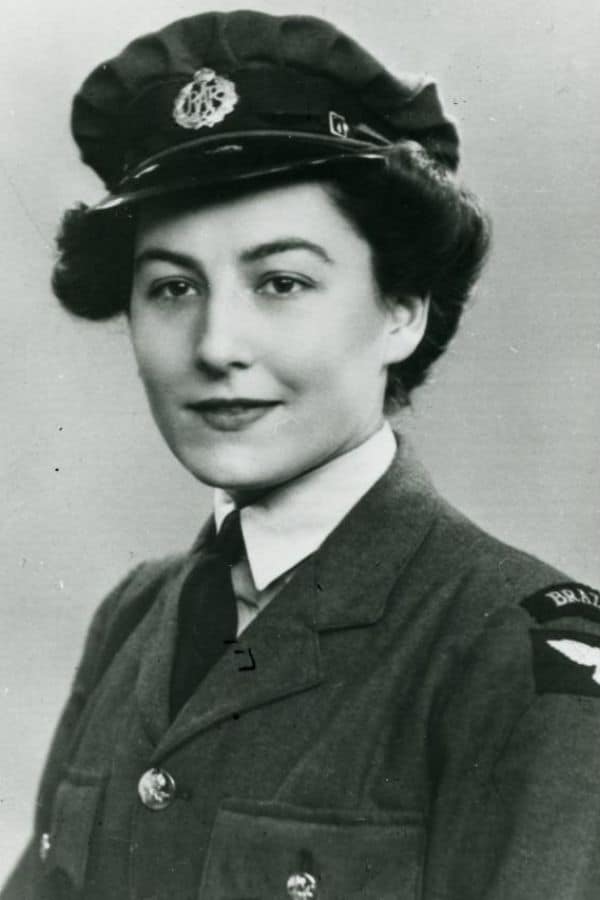
The Nazi Hunter
When the war ended in May 1945, Vera refused to go home. Out of the 470 agents she’d sent to France, 118 were missing. Fourteen of them were the women she’d personally seen off at airfields across England, women she’d driven through the countryside, women whose families she’d written to with fake cheerful letters.
Vera wanted to know what had happened to every single one of them. The Foreign Office, MI6, and the War Office all opposed her request to investigate. They didn’t want SOE’s blunders exposed. But Vera pointed out that she was the only person with the background knowledge to conduct the interviews effectively. Eventually, they gave in.
In September 1945, Vera was commissioned as a Squadron Officer in the Women’s Auxiliary Air Force and attached to the British War Crimes Investigation Team. She traveled to France first, then crossed into Germany. The country was in chaos. Refugees clogged the roads, cities lay in ruins, and the concentration camps were just beginning to reveal the full scope of Nazi atrocities.
Vera drove through it all with a list of names and a determination that bordered on obsession. She interviewed survivors, camp guards, Gestapo officers, and SS commanders. She tracked down crematorium workers, Abwehr agents, and Vichy police. She followed paper trails, chased down leads, and pieced together the final days of agents who’d vanished into the Nazi system without a trace.
The First Survivors
On May 3, 1945, Vera received a telegram stating that a British woman had been in a Red Cross convoy carrying prisoners out of Ravensbrück. Arrangements were made for the woman to meet Vera in London. It was Yvonne Baseden, an SOE agent who’d been working as a courier in France when she was captured.
Yvonne told Vera she’d met Violette Szabo, Lilian Rolfe, and Denise Bloch in a holding camp. They’d been taken to Ravensbrück on a transport, but Yvonne never saw them there. Other inmates told her they’d been taken away. Vera knew what that meant.
Later in May, Odette Sansom arrived in England. Odette had been working as a courier when she and her organizer, Peter Churchill, were captured by the Germans. When they were arrested, Odette told the Gestapo her name was Mrs. Churchill because she thought it might help if the Nazis believed she was related to Winston Churchill by marriage.
The Gestapo pulled out her toenails and burned her on the back with an iron bar, but she refused to give them any information. Eventually, she was sent to Ravensbrück, where the commandant Fritz Suhren kept her in solitary confinement but made sure she had adequate food.
As the Russians advanced, Suhren took Odette with him when he fled, hoping she’d vouch for him so the Americans would spare his life. She told the Americans he’d been the Ravensbrück commandant, and he was arrested. Odette looked through photographs for Vera and identified seven women who’d been at Karlsruhe prison with her: Madeleine Damerment, Vera Leigh, Diana Rowden, Yolande Beekman, Andrée Borrel, Eliane Plewman, and one other. But Odette didn’t know where they’d gone after leaving Karlsruhe.
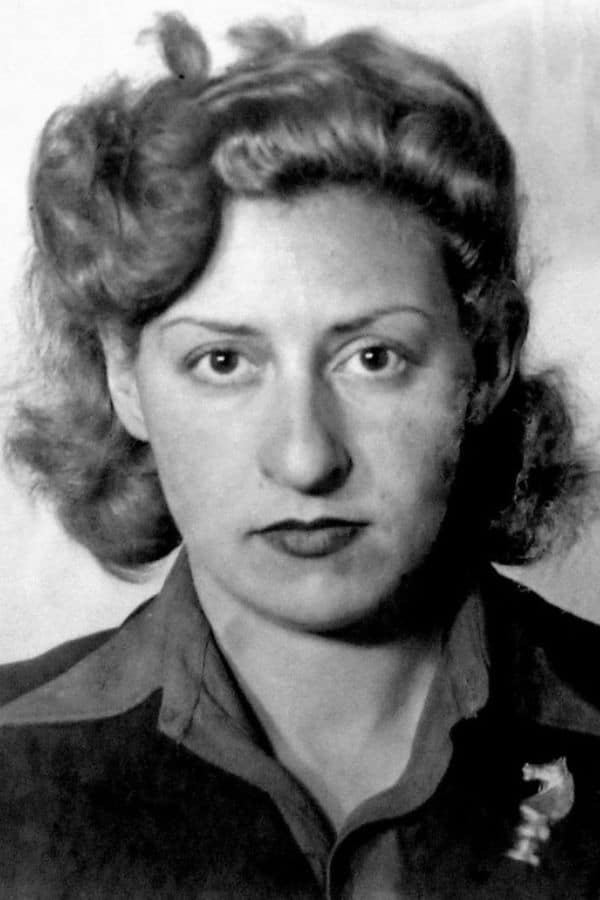
Interrogating the Crematorium Stoker
Vera interviewed Franz Berg, the crematorium stoker at Natzweiler-Struthof concentration camp. He recalled seeing a group of Englishwomen arrive. Vera asked him to describe each British agent he remembered in as much detail as possible. After the interview, Vera wrote that it had been definitely established that Vera Leigh, Diana Rowden, Andrée Borrel, and Noor Inayat Khan had been killed at Natzweiler on July 6, 1944.
They’d been given lethal injections and then incinerated. Vera was wrong about one thing. Years later, she learned that the fourth woman wasn’t Noor. It was Sonia Olschanezky, Jacques Weil’s fiancée, the woman who’d sent the warning about Noor’s capture that nobody had acted on. Vera never told Sonia’s family what had happened to her.
Prison Tomato
On March 11, 1946, Vera learned that SS Officer Johann Schwarzhuber, who’d worked at Ravensbrück, was being held at a small British prison near Minden. The prison was called Tomato, which wasn’t named after the vegetable but was an anagram that blended the names of two war crimes investigators.
When Vera arrived, she interrogated Schwarzhuber, showing him photographs until he identified Lilian Rolfe, Denise Bloch, and Violette Szabo. He recalled Violette’s name specifically. Schwarzhuber said he’d witnessed all three agents being shot and their remains put into the crematorium shortly after he was transferred to the camp on January 12, 1945. He filled in all the details Vera wanted to hear about how the women had died bravely and how the SS men had been impressed with their bearing. Schwarzhuber was convicted and executed on May 3, 1947.
Vera also tracked down Christian Ott, a Karlsruhe Gestapo man who’d transported four women from Karlsruhe to Dachau. Ott told Vera he’d been surprised that women were being sent to Dachau when he’d believed the camp was only for men. He’d been shown a telegram from the Reich Security Head Office stating the women were to be executed at Dachau, signed by RSHA head Ernst Kaltenbrunner.
Ott said the four prisoners had made a good impression on him, and he regretted their fate. He’d tried to give them no clue about what was coming as he chatted with one of the Englishwomen who spoke some German. Those four women were Noor Inayat Khan, Yolande Beekman, Madeleine Damerment, and Eliane Plewman. They were executed by shooting at Dachau on September 13, 1944.
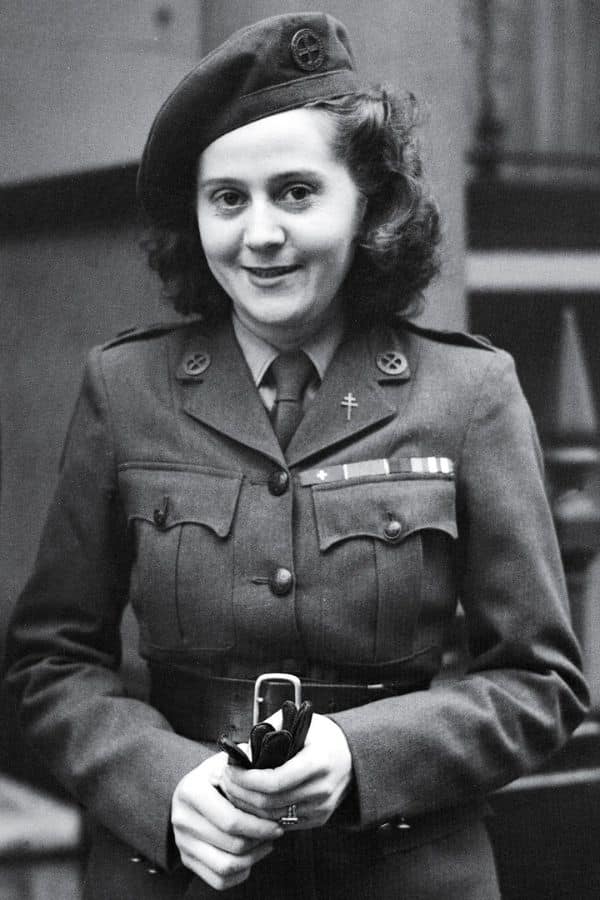
Finding Noor
In November 1946, Vera received a letter from a survivor providing evidence that Noor had been in prison in Pforzheim in September 1944, which meant she couldn’t have been murdered at Natzweiler three months earlier, as Vera had originally concluded. Through a series of interviews, Vera eventually determined that Noor had been held in Pforzheim for ten months with her hands and feet shackled before being transferred to Dachau on September 12, 1944, and executed the next day.
The Gestapo chief in Paris, Hans Kieffer, later testified that Noor never gave him a single piece of information but lied constantly. On the morning of her execution, Noor spoke only one word: Liberté.
The Final Accounting
Vera eventually traced 117 of the 118 missing F Section agents and established the circumstances of death for all 14 women. Twelve of them had died in concentration camps: Andrée Borrel, Vera Leigh, Sonia Olschanezky, and Diana Rowden at Natzweiler-Struthof; Yolande Beekman, Madeleine Damerment, Noor Inayat Khan, and Eliane Plewman at Dachau; Denise Bloch, Lilian Rolfe, and Violette Szabo at Ravensbrück; and Cecily Lefort in the gas chamber at Uckermark Youth Camp adjacent to Ravensbrück. Yvonne Rudellat died of typhus at Bergen-Belsen eight or nine days after liberation. Muriel Byck died of meningitis in a hospital in Romorantin, France.
Vera also persuaded the War Office that the twelve women who’d been executed in camps, who were technically regarded as civilians, should not be recorded as having died in prison but should be listed as killed in action. She made sure each woman received official recognition from the British government. Violette Szabo was posthumously awarded the George Cross in 1946.
Vera fought especially hard for Noor Inayat Khan, who received the George Cross in 1949 largely due to Vera’s efforts. In 1996, Vera wrote to the Daily Telegraph defending the decision to send Noor to France, describing her initial success in evading capture, her two escape attempts, and her detention in Pforzheim prison, manacled in chains as a dangerous prisoner.
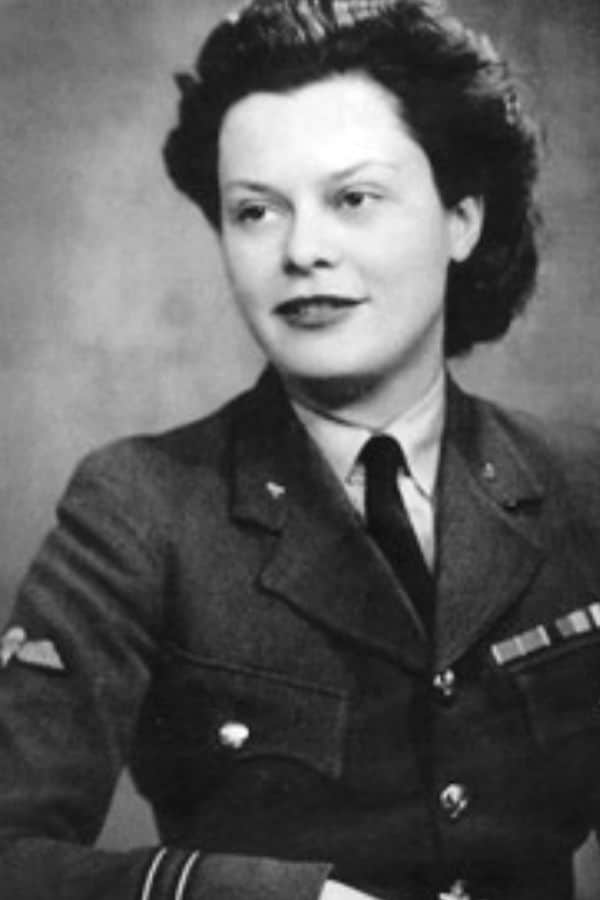
The Secrets She Kept
Vera went to considerable lengths to hide her errors, and her refusal to acknowledge when she was wrong led her to behave badly in several cases. She refused to testify at Henri Déricourt’s treason trial, which almost certainly contributed to his acquittal.
She failed to disclose the full content of her interview with Hans Kieffer before his execution, which would have shed light on whether Francis Suttill had betrayed information to save his agents’ lives.
She never informed Sonia Olschanezky’s family that Sonia had died at Natzweiler, although she later protested when the organizing committee for the SOE memorial at Valençay decided not to include Sonia’s name because she was a local agent and not one sent from England.
Vera returned to England in October 1946 and was demobilized in 1947. Although she was nominated for an MBE, she wasn’t awarded a decoration in the postwar honors lists. She went to work for UNESCO’s Central Bureau for Educational Visits and Exchanges, first as office manager from 1948 and then as director from 1952.
She never married. She remained a strong defender of F Section’s wartime record for the rest of her life, ensuring that each of the twelve women murdered in concentration camps was commemorated by memorial plaques close to where they were killed. She also supported the memorial at Valençay in the Loire Valley, unveiled in 1991, which is dedicated to the agents of SOE in France killed in the line of duty.
Vera Atkins died on June 24, 2000, at the age of 92. She covered her life in mystery so thoroughly that even her closest family knew almost nothing of her past. It wasn’t until her biographer Sarah Helm asked mourners at Vera’s funeral about her early life that the truth about her trip to Belgium in 1940 came to light.
Vera had spent decades protecting secrets, and some of them died with her. But the work she did hunting down Nazi war criminals in 1945 and 1946, the detailed depositions she took from guards and commanders, the evidence she gathered about what happened in the camps, that work formed the foundation for the first Ravensbrück war crimes trials.
It ensured that the women who’d served under her were remembered not as civilians who died in prison but as soldiers who were killed in action. That legacy, at least, was one Vera never tried to hide.

Kylie Lang is a nationally syndicated travel journalist with bylines on the Associated Press Wire & more, a medieval history writer, and the founder and lead author of Tales of the Middle Ages (talesofthemiddleages.com). She holds a BA (Honours) in History from the University of Kent and is a member of the British Guild of Travel Writers.
Related posts:
 Violette Szabo: The Young Mother Who Became Britain’s Most Decorated Spy
 Virginia Hall: The American Spy the Gestapo Couldn’t Catch Who Helped Win World War II
 Marie-Madeleine Fourcade Escaped From a Gestapo Prison and Gave the Allies the Map That Made D-Day Possible
 September 4, 925: The Day England’s First King, Æthelstan, Was Crowned, But Was He?