
It’s no great secret that I’m a huge fan of Eleanor of Aquitaine. Living not far from Poitiers in southwest France, I live in a region once part of the Duchy of Aquitaine, which Eleanor ruled over after her father died. A lot has been written about her life and that of two of her famous sons, Richard the Lionheart and John Lackland, but what about her other children?
What happened to her daughters? How did their lives pan out? Two questions I wanted to know the answers to.
Table of Contents
Over the next few weeks, we’ll examine the lives of her five daughters, two of whom were born to Louis VII of France and three to Henry II of England. But we’re starting with Joan, Queen of Sicily, often referred to as Joanna. While her brothers made history as kings, her life was no less dramatic. She lived through two royal marriages, joined the Crusades, and challenged kings.
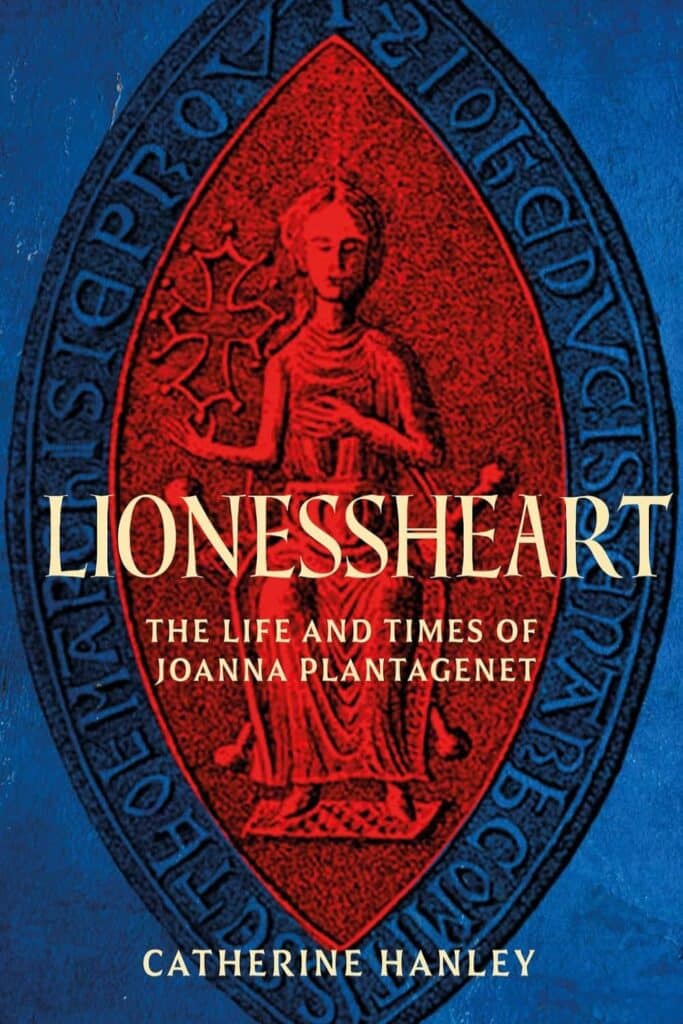
Great new book about Joanna Plantagenet
I recently listened to a podcast episode with author Catherine Hanley about her new book, which will be released in September 2025, all about Joanna Plantagenet. It’s available for pre-order now if you’re interested in finding out more about the life of Joan, Queen of Sicily. Pre-order the book here >>>
Who was Joanna?
Joanna was born in 1165 at Angers Castle, the youngest daughter of Eleanor of Aquitaine and Henry II of England. Royal daughters weren’t raised to rule. They were raised to marry, and Joanna was duly betrothed to William II of Sicily. She was raised in a world where duty came before comfort and obedience came before choice.
Like most women of her rank in the twelfth century, Joanna had no say in who she would marry or where she would live. Her role in the family was to support the crown’s power, which usually meant being sent far away to marry a man she had never met. Daughters were useful tools for diplomacy, and Joanna’s life was planned around that fact from the start.
Growing up between England and Aquitaine, she was part of a family that ruled more land than the French king himself. But all that power came with constant pressure and plenty of conflict. Her parents, Eleanor of Aquitaine and Henry II, weren’t exactly the picture of domestic bliss. Their marriage was a political alliance that turned sour over time, especially when Eleanor backed her sons in a rebellion against their father. That move landed Eleanor in confinement for over a decade.
Joanna spent the first part of her childhood with her mother in captivity. Still, once she was a little older, she was sent to Fontevraud Abbey with her brother John to be educated in religion, courtly manners, and languages, in preparation for her married life as Queen of Sicily.
The Plantagenet Family Tree
Eleanor of Aquitaine (1122–1204) married second: Henry II of England (1133–1189)
Together, they had eight children, including five sons and three daughters:
- William IX (b. 1153, died in infancy)
- Henry the Young King (b. 1155)
- Matilda of England (b. 1156) – Duchess of Saxony
- Richard I (the Lionheart) (b. 1157) – King of England
- Geoffrey II (b. 1158) – Duke of Brittany
- Eleanor of England (b. 1161) – Queen of Castile
- Joanna of England (b. 1165) – Queen of Sicily
- John (Lackland) (b. 1166) – King of England

Queen of Sicily at Age 12
At just 12 years old, Joanna was married off to William II of Sicily. She left everything and everyone she knew behind her to embark on married life. The wedding took place in Palermo in 1177, after a long journey south across the Alps and through Italy, no small feat in the twelfth century. The marriage was part of a political strategy, linking the powerful Norman kingdom of Sicily with the English crown. It gave Henry II another ally and William a prestigious English bride. Joanna’s feelings on the matter don’t appear in the records. No one asked.
Not long after arriving, she was crowned Queen of Sicily, making her one of the most prominent women in southern Europe. She held her own court and likely played a ceremonial role at William’s side, though there’s not much detail about her day-to-day life. Most accounts agree that the marriage was relatively stable, though it remained childless.
She was queen for twelve years. Then, in 1189, William died, and Joanna’s status changed overnight.
Hooked on the Middle Ages? Get more stories like this one in your inbox.
Captive Queen to Crusading Sister
The Death of William II
When William II of Sicily died in 1189, Joanna’s world shifted overnight. She’d been queen for twelve years, but without any children to secure her place, her position was suddenly fragile. Queens with children to rule still have a place in court as Dowager Queens, but without any children, they have no position.
William had wanted his aunt, Constance de Hauteville, daughter of Roger II, to succeed him, and Joanna supported that. Unfortunately, not everyone wanted Constance on the throne because she had married Frederick Barbarossa, the Holy Roman Emperor, in 1184. That made people nervous. So with Constance out of the country and her ties to the Empire raising eyebrows, her nephew Tancred, Count of Lecce and the illegitimate grandson of Roger II, seized the chance. By early 1190, he’d taken the throne for himself.
Joanna was pushed aside and imprisoned. Tancred took away all her lands and money and locked her up in a fortress. It could have ended there for her, quietly forgotten in a Sicilian stronghold. But Joanna had powerful family ties and a brother with a crusader army.
Richard the Lionheart, on his way to the Holy Land, stopped in Messina in 1190 and found out what had happened. He demanded Joanna’s release. When Tancred dragged his heels, Richard took matters into his own hands. He seized a key fortress, sacked parts of the city, and forced Tancred to the table.
Joanna was freed. But Richard, without consulting Joanna, had agreed to take cash for Joanna’s confiscated lands and pocketed the money for himself, thus leaving Joanna penniless and completely reliant on Richard. She had no choice but to join her brother’s crusading entourage.

Going on Crusade with Richard the Lionheart
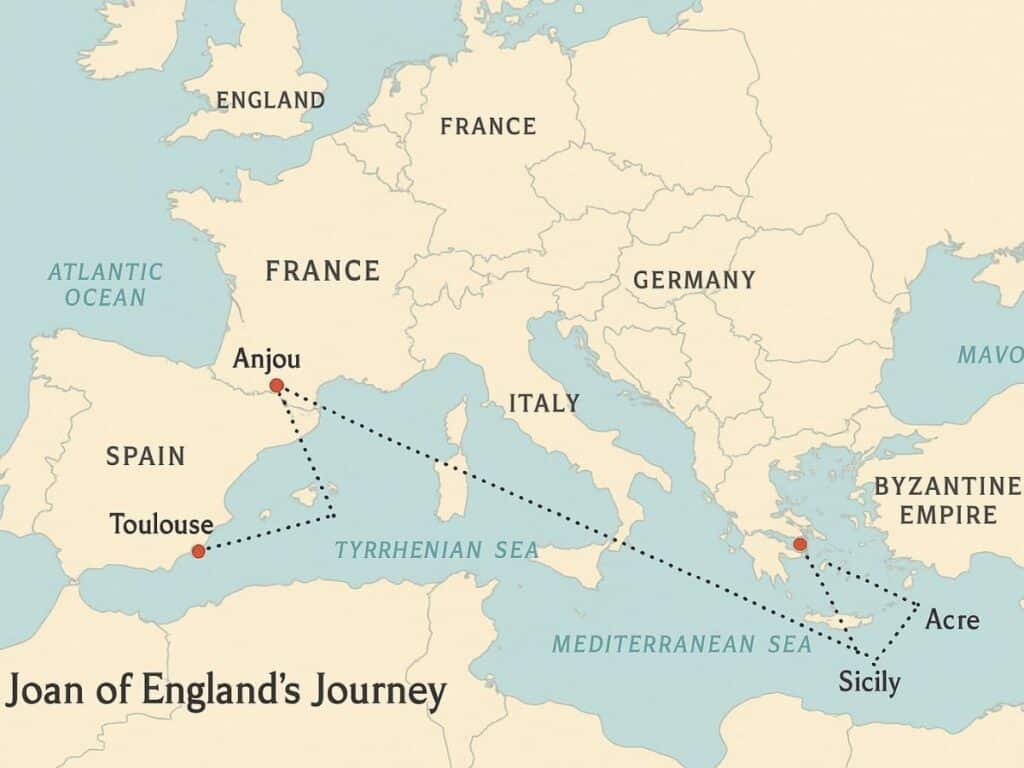
Part of this entourage included Berengaria of Navarre (Richard’s soon-to-be wife), so Joanna joined Berengaria and acted as her chaperone. Now the two women were travelling on a different ship from Richard and, during some particularly heavy storms, were separated from him and forced to wait out the storm in the Cypriot port of Limassol, ruled by Isaac Komnenos, the self-styled emperor of Cyprus.
Not a very nice man as it turns out, but he was no match for Joanna. She spent two weeks or so negotiating with him as he kept them prisoner on their ship. She knew, if he got his hands on the treasure they were carrying that might well be the end of them. Luckily, Richard, learning of where they were stranded came to the rescue, having been blown off course himself by the storms.
He captured the port city of Limassol, chased Isaac inland, and won a series of battles along the way. Isaac tried to fight back, but his army was quickly defeated. Richard marched on Nicosia, took it, and forced Isaac to surrender. As a sign of good faith, Isaac handed over his imperial tent and promised compensation for the trouble he’d caused.
Then he ran.
The very next day, Isaac fled after hearing a rumor that Richard planned to chain him in irons, something Isaac was terrified of. Richard gave chase again. More skirmishes followed, and once Isaac had nowhere left to run, he surrendered properly this time. He begged not to be shackled in iron.
So Richard, ever the showman, had him chained in silver instead.

The Siege of Acre
After Cyprus, the next major stop for Richard, Joanna, and Berengaria was Acre. The city had already been under siege by Christian forces for nearly two years when they arrived in 1191. Conditions were brutal. Disease was rampant in the camps, morale was low, and tempers flared easily. Joanna would’ve seen all of it up close — the stench, the blood, the endless waiting between assaults.
Richard’s arrival changed everything. He brought fresh troops, strategy, and sheer determination. He didn’t wait long to take charge. His forces launched a massive assault on the city walls, coordinating with Philip II of France, who had arrived earlier. After weeks of heavy bombardment and fierce fighting, Acre finally surrendered in July 1191.
Joanna witnessed the surrender firsthand. And not long after, she was drawn into one of the more unusual diplomatic proposals of the entire Crusade.
To secure peace, Saladin’s brother, al-Adil (known in the West as Saphadin), was floated as a potential husband for Joanna. The idea, pushed by Richard and without passing it by Joanna first, was to create a marriage alliance that might end the conflict. Saphadin was Saladin’s closest advisor. Politically, it made sense.
But there was one problem. Joanna flatly refused to marry a Muslim, and she wasn’t shy about it. It’s unclear how far the negotiations went, but the match never materialized. Some accounts suggest Saphadin wasn’t especially keen either.
A Second Marriage to the Count of Toulouse
After the Crusade, Joanna didn’t return straight to England. She spent time with Richard in France, staying close to the Plantagenet court as he tried to rebuild his influence across the continent. Her next chapter came not long after, when Richard arranged a second marriage for her, this time to Raymond VI, Count of Toulouse.
The match was political, as always. Toulouse had long been a thorn in the side of the English crown. It sat right at the edge of Eleanor’s old territory of Aquitaine, and Richard wanted a firmer grip on it. Joanna, royal, well-traveled, and experienced, was the perfect candidate. The marriage took place in Rouen in 1196, and Joanna then made her way south to join Raymond in Toulouse.
The route from Acre to Toulouse wouldn’t have been simple. She likely returned by ship through the Mediterranean, possibly landing in Marseille, then traveled inland. This would have been months of hard, slow travel. She was probably exhausted. But she did what was expected of her, again, and settled into life in Toulouse as Raymond’s wife.
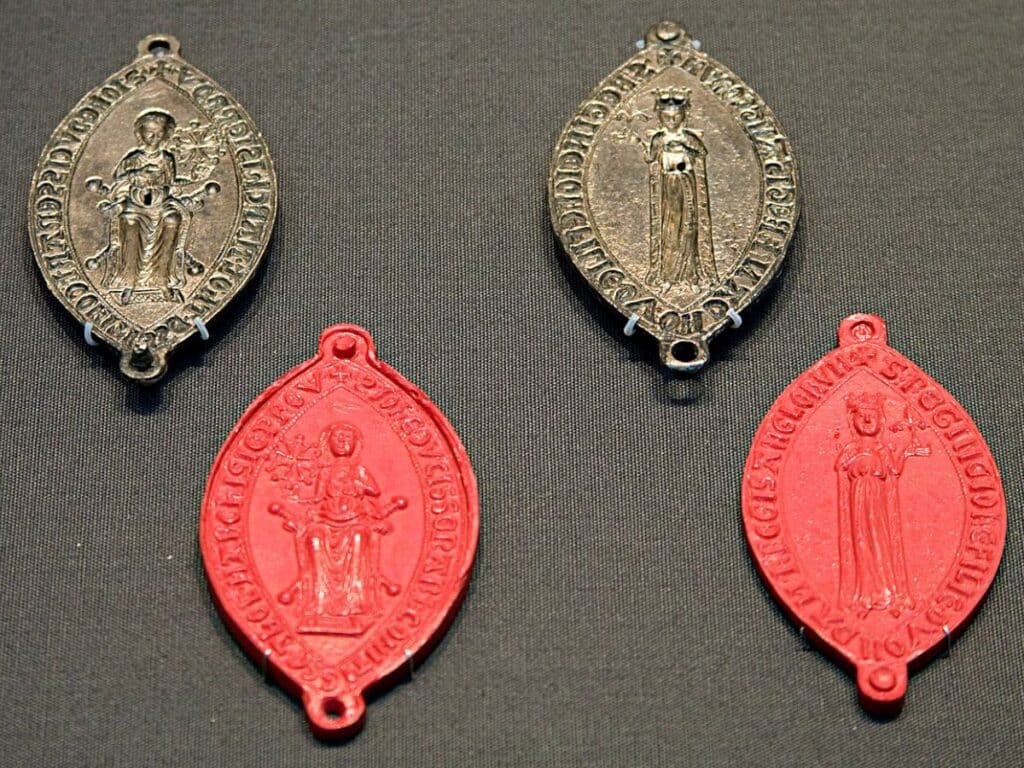
Joanna vs. Raymond – A Political Showdown
Joanna’s second marriage to Raymond VI of Toulouse was meant to be a clever political move. It gave the Plantagenets a foothold in southern France and helped calm the long-standing tensions between Toulouse and Aquitaine. On paper, it made sense. In real life, it was a different story.
Raymond had a reputation. This wasn’t his first marriage, and he’d already been excommunicated once for marrying his third wife whilst still married to his second. He was known for taking lovers, including, reportedly, a mistress from Joanna’s own household.
Despite all this, in 1199, while Raymond was away dealing with rebellions in the Languedoc, whilst heavily pregnant, Joanna led a siege against a rebel stronghold at Les Cassés, supporting her errant husband. Unfortunately, this didn’t go to plan, and her own troops turned traitor on her, setting fire to her camp. Joanna barely escaped with her own life.
It was the final straw. Her marriage to Raymond had broken down, and instead of supporting her, he started stripping her of the lands and rights she was owed. That included her dower, the income and properties she was entitled to as his wife and former queen.
Wounded, pregnant, and completely worn out, Joanna set off to find her brother Richard, only to learn partway through the journey that he’d died. With nowhere else to turn, she changed course and made her way to Niort, where her mother Eleanor was staying. Her husband, Raymond, had cut her off financially, so Eleanor persuaded King John to grant Joanna a yearly pension of 100 marks.
Say what you like about John. There’s a lot to say, but one of his only redeeming features was his genuine affection for Joanna. They’d grown up together at Fontevraud, and he’d always had a soft spot for her. She came to him for help, and he backed her.
Joanna’s Final Days
By now, Joanna knew her time was short. She was desperate to take holy vows and be veiled as a nun before the end. It was an unusual request. Married women, especially those heavily pregnant, weren’t usually allowed to join a religious order. But Eleanor, seeing just how determined her daughter was, asked Hubert Walter, the Archbishop of Canterbury, to make an exception.
At first, the archbishop tried to talk her out of it. But her conviction left a mark. He gathered a group of clergy and nuns to consider the request, and together they agreed. In Eleanor’s presence, the archbishop admitted Joanna into the Order of Fontevraud.
She was too weak to stand. Not long after taking her vows, Joanna died. Her baby son, Richard, was born shortly after and lived just long enough to be baptized.
Joanna was buried at Fontevraud Abbey, alongside her son. Her mother and her brother John personally accompanied the funeral procession. She was only 33.

Love a good medieval story?
Join our readers and get tales of kings, queens, castles and ordinary medieval lives straight to your inbox.

Kylie Lang is a nationally syndicated travel journalist with bylines on the Associated Press Wire & more, a medieval history writer, and the founder and lead author of Tales of the Middle Ages (talesofthemiddleages.com). She holds a BA (Honours) in History from the University of Kent and is a member of the British Guild of Travel Writers.
Related posts:
 William Marshall, the Greatest Knight Who Ever Lived. But Who Was the Man Behind the Legend?
 Eleanor of Aquitaine: The Queen Who Ruled Two Kingdoms
 Did They or Didn’t They? Was Catherine of Aragon Still a Virgin When She Wed Henry VIII?
 What History Got Wrong About Mary Boleyn: The Other Boleyn Sister Who Outlived Them All