
In July 1518, the streets of Strasbourg (then part of the Holy Roman Empire) erupted into a macabre spectacle. A woman named Frau Troffea stepped into the cobblestone square and began dancing, not the rhythmic sway of a festival, but a frenzied, jerking motion, her limbs thrashing, her face contorted in terror.
She danced for six days straight, her feet bleeding, her breath ragged. By the end of the week, 34 others had joined her. By August, nearly 400 people were caught in the grip of the same inexplicable compulsion. They danced until their ribs cracked, until they collapsed from exhaustion, until some dropped dead.
Table of Contents
This was the Dancing Plague of 1518, a historical mystery that defies easy explanation. Was it mass hysteria? A toxic hallucination? Or a chilling glimpse into the human psyche under siege?
Historical Accounts: A City in Chaos
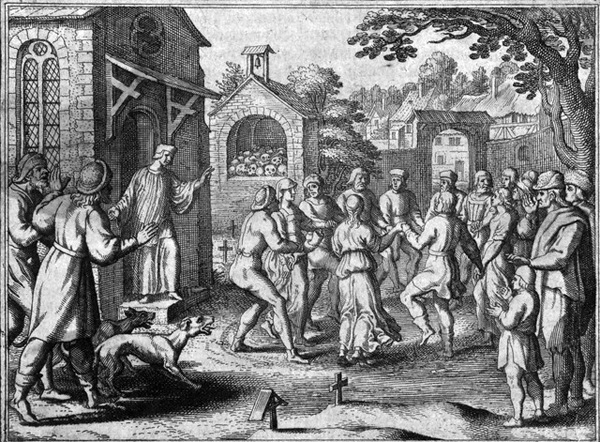
The Dancing Plague wasn’t a solitary oddity. Chroniclers like physician Paracelsus and historian Johann Fischart documented the event in grim detail. Fischart wrote of “men, women, and children, dancing as if possessed by demons, their bodies no longer their own.” City council records reveal desperate measures: stages were built in the horse market and guildhall, musicians were hired to “match the tempo of the afflicted,” and guards were stationed to prevent collisions with walls or wells.
The plague peaked in mid-August. Dancers’ feet swelled; their shoes filled with blood. Deaths mounted, contemporary accounts cite heart failure, strokes, and dehydration. By September, the frenzy ebbed as suddenly as it began. The survivors, hollow-eyed and broken, returned to lives forever marked by trauma.
What triggered it? Strasbourg had no shortage of horrors in 1518. The city was reeling from famine after a brutal winter, a syphilis epidemic, and oppressive feudal taxes. The poor ate moldy rye bread and rotten meat, while the elite hoarded grain. It was a tinderbox of despair.
Contemporary Explanations: Saints, Sinners, and Scapegoats

To medieval Europeans, the supernatural was as real as hunger, and superstitions ran rife. The Church blamed divine wrath. Strasbourg’s clergy accused the dancers of sinning against St. Vitus, a 4th-century martyr believed to curse sinners with compulsive dancing. Processions were held to appease him. Barefoot pilgrims trudged to shrines, relics of the saint were paraded through streets, and priests sprinkled holy water on the afflicted.
But not all explanations were pious. Some were accused of witchcraft. A 1518 pamphlet claimed the dancers had “trodden on a fairy ring” or “insulted a woodland spirit.” Others pointed to astrological alignments; a comet had blazed across the sky that spring, interpreted as a portent of doom.
The city council, however, took a bizarrely pragmatic approach. Believing the dancers needed to “expel the fever,” they paid for musicians and even built a wooden stage, a decision that backfired spectacularly. The music acted like gasoline on a fire, drawing more people into the frenzy.
Hooked on the Middle Ages? Get more stories like this one in your inbox.
Modern Theories
1. Mass Psychogenic Illness (MPI): The Power of the Mind
The leading theory is mass psychogenic illness (MPI), a phenomenon where physical symptoms spread through a group without a biological cause. MPI often strikes communities under extreme stress, and Strasbourg in 1518 was a pressure cooker.
Psychiatrist Walter Cannon coined the term “voodoo death” in 1942 to describe stress-induced fatalities, but the concept applies here. The dancers’ bodies, flooded with cortisol and adrenaline, literally danced themselves to death. MPI is contagious; seeing others collapse or writhe can trigger similar symptoms. In 2022, a TikTok “tic” outbreak among teens mirrored this, with social media amplifying involuntary movements.
2. Ergot Poisoning: The LSD Link (and Its Flaws)

Ergot, a fungus that grows on damp rye, contains lysergic acid precursors, the building blocks of LSD. In 1951, historian Linnda Caporael revived the theory that ergotism caused the plague. But critics pounced: Ergot poisoning (St. Anthony’s Fire) typically causes gangrene, burning sensations, and seizures, not dancing.
Historian John Waller, author of A Time to Dance, A Time to Die, dismantles the ergot theory: “Why would hallucinations compel coordinated dancing? Why weeks-long endurance?” Modern cases of ergotism, like the 1951 Pont-Saint-Esprit outbreak in France, involved violent psychosis, not a rhythmic movement.
3. Cultural Triggers: Dance as Devotion or Delusion
Dancing manias weren’t unique to Strasbourg. In 11th-century Italy, Tarantism, a belief that tarantula bites caused compulsive dancing, led to annual rituals where victims “danced out” the venom. Similarly, the 1374 Rhineland Dancing Plague saw thousands across Germany and the Netherlands leaping in agony.
Anthropologist Erika Bourguignon suggests these events were dissociative trances, a psychological escape from unbearable reality. In societies where overt rebellion was impossible, dance became a language of desperation. Strasbourg’s plague may have been a collective cry for help, a body’s rebellion when words failed.
4. The Forgotten Theory: Heatstroke and Malnutrition
Less discussed is the role of environmental factors. The summer of 1518 was sweltering, with temperatures soaring above 90°F (32°C). Combined with malnutrition, dehydration, and hypoglycemia, heatstroke could have triggered delirium. Malnourished brains, starved of glucose, might misfire, creating hallucinations or compulsive behavior.
Similar Outbreaks: Echoes of Hysteria
History is littered with dancing plagues:
1. 1237, Erfurt: The Children Who Danced to Death
In a field outside Erfurt, dozens of children suddenly began leaping, twitching, and spinning until their bodies gave out. Clergy blamed “demonic airs,” but historians point to famine-induced hypoglycemia. Starving and malnourished, their brains, starved of glucose, may have short-circuited, triggering convulsive movements mistaken for possession.
Parents, too desperate to feed them, dismissed early signs as “playfulness.” The episode ended as mysteriously as it began, leaving behind a legacy of trauma and unanswered questions.
2. 1374, Rhineland: A Plague of Dancing Despair
At the height of the Black Death’s aftermath, thousands across the Rhineland writhed in agonized dance. Chroniclers described dancers tearing off clothes, screaming for death, or collapsing mid-step. Authorities blamed a “curse from the East,” scapegoating travelers and outsiders.
Societies shattered by plague and feudal oppression weaponized dance as a cry for help. This wasn’t a celebration; it was a full-body rebellion against a world offering no mercy.
3. 1727, Madrid: Nuns, Cats, and the Devil’s Tongue

In a Madrid convent, nuns began meowing, hissing, and crawling on all fours, claiming the devil “possessed their tongues.” The Church staged exorcisms; physicians prescribed purges. Historians now see it as a breakdown from repression, cloistered women, isolated and silenced, expressing trauma through grotesque theatrics. The episode exposed the dark side of religious rigor: when minds snap, bodies speak in tongues even demons wouldn’t recognize.
Societal Context: A World on the Brink
Strasbourg was a city teetering on collapse in 1518. The Little Ice Age had decimated crops, leading to a tripling of grain prices. The poor ate bark and rats; the wealthy accused them of laziness. The Church, meanwhile, sold indulgences to fund lavish cathedrals while peasants starved.
Women bore the brunt. Frau Troffea, like most early dancers, was a working-class wife. Historian Laura Spinney notes that women in famine often faced accusations of witchcraft or hysteria. The dancing plague may have been a twisted form of agency, a way to command attention in a society that silenced them.
Final Thoughts: A Dance Through Time
The Dancing Plague remains one of history’s greatest mysteries, a chilling reminder of the fragile line between individual agency and collective madness. Whether caused by psychological distress, toxic exposure, religious fervor, or cultural influences, its legacy lingers as a testament to humanity’s capacity for both wonder and bewilderment.

Love a good medieval story?
Join our readers and get tales of kings, queens, castles and ordinary medieval lives straight to your inbox.

Kylie Lang is a nationally syndicated travel journalist with bylines on the Associated Press Wire & more, a medieval history writer, and the founder and lead author of Tales of the Middle Ages (talesofthemiddleages.com). She holds a BA (Honours) in History from the University of Kent and is a member of the British Guild of Travel Writers.