Outlander has aired its final episode. After ten years of Jamie and Claire, standing stones, Culloden, Paris, the American colonies, and more knife fights than most of us could count, the show is done. I watched the finale with tears pouring down my face and an aching feeling of loss.
But all is not lost, because the good news is that the prequel, Blood of My Blood, returns for its second season on September 18th, dragging us back to the Highlands in the early 18th century.
Table of Contents
The better news is there’s a whole stack of shows already out there that scratch the same itch: time-slip romance, espionage in petticoats, men in breeches making terrible decisions, women navigating worlds that didn’t want them thinking too much.
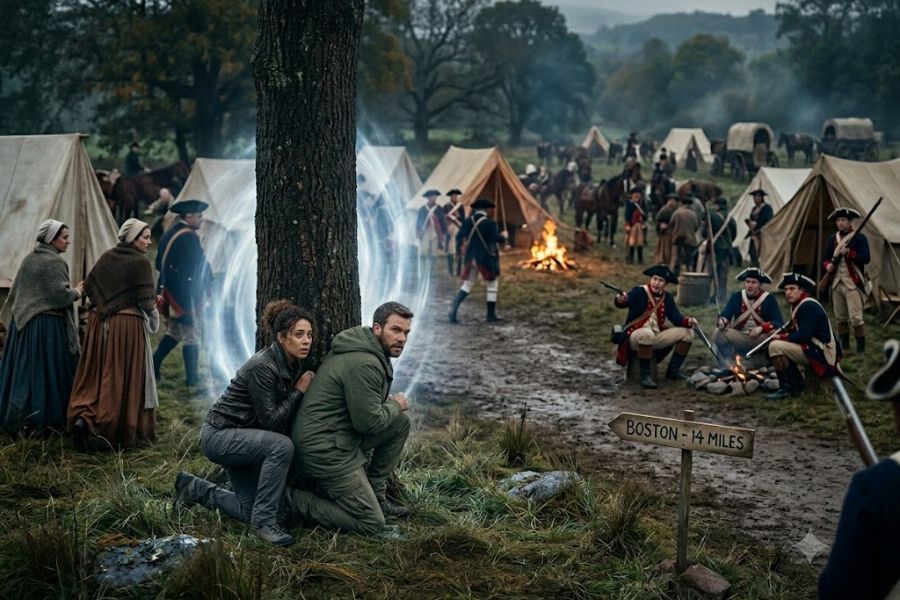
7 Historical TV Shows For Those Missing Outlander
Some of the seven below use the time-travel trick that made Outlander what it is, while others just drop you into the past and let you sit there. I’ve watched all of them at least once, and a few of them more times than I’ll admit in writing.
Blood of My Blood
If you’ve somehow not started this one yet, Blood of My Blood is the Outlander prequel that ran its first season in 2025 and returns for season two on September 18th. It tells the love story of Jamie Fraser’s parents, Brian Fraser and Ellen MacKenzie, alongside Claire’s parents, Julia Moriston and Henry Beauchamp, in two timelines: the Scottish Highlands of the 1710s and England during the First World War.
Ellen MacKenzie is a laird’s daughter being shoved toward a strategic marriage she doesn’t want, and Brian Fraser is the wrong man in every possible political sense. Their courtship plays out under the watchful eye of Colum and Dougal MacKenzie, both younger and less powerful here than the versions we met in Outlander, and it’s a real pleasure to see the brothers before they hardened into the men who ran Castle Leoch.
The WWI timeline is thinner so far, but the show is doing the same trick Outlander did: pairing two romances across centuries and drawing you into the story.
The Time Traveler’s Wife
HBO’s 2022 adaptation of Audrey Niffenegger’s novel got one season before it was canceled, which is such a shame. Theo James and Rose Leslie played Henry and Clare, and the premise is the inverse of Outlander’s: Henry is the one with the time-travel problem, and Clare is the one who has to keep loving him through it.
It isn’t a period drama in the strict sense because Henry skips between his own past and future, so we get glimpses of 1970s Chicago, the 80s, the 90s, a snowy meadow where a small child meets a naked grown man, and somehow this turns out to be a love story rather than the alternative.
The show handles the strangeness of that better than the 2009 film did, mostly because it had the room and time to do so.
What it shares with Outlander is the central question: what do you do when the person you love keeps disappearing, and you can’t go with them? Rose Leslie, who Game of Thrones fans know as Ygritte and Downton Abbey fans as Gwen, the lady’s maid who was friends with Lady Sybil, is superb as Clare. If you watch nothing else on this list, watch this for her.
Hooked on the Middle Ages? Get more stories like this one in your inbox.
Turn: Washington’s Spies
AMC ran Turn for four seasons between 2014 and 2017, and it’s the show I keep recommending to people who tell me they’ve finished Outlander and don’t know what to do with themselves.
It’s the true story of the Culper Ring, the spy network Washington set up on Long Island during the American Revolution. Abraham Woodhull, a Setauket cabbage farmer, ends up running intelligence under the noses of British officers who are billeted in his own town.
The show takes liberties, as all historical dramas do, but its bones are real. Major John Andre, the British officer hanged as a spy after Benedict Arnold’s betrayal, is played by JJ Feild.
Rogers, the rogue ranger turned British asset, is an unsettling figure. And Anna Strong, the woman who used a clothesline to signal whaleboat captains across Long Island Sound, gets a fuller story here than most school textbooks ever bothered with.
The Revolutionary War tends to get either flag-waving or ignored on screen. Turn does neither. It’s mud, betrayal, hangings, broken families, and very tired men trying to outwit each other. The Setauket sequences were filmed in Virginia, and the period detail is hard to fault.
John Adams
HBO’s 2008 miniseries with Paul Giamatti as Adams and Laura Linney as Abigail is, to my mind, the best thing American television has ever done. I binge-watched it one rainy weekend a couple of years ago.
Seven episodes, based on David McCullough’s biography, covering Adams from the Boston Massacre trial in 1770 through to his death on July 4th, 1826, on the same day as Thomas Jefferson.
Giamatti plays Adams as the prickly, vain, brilliant, often insufferable man he was. The marriage between John and Abigail is the spine of the whole thing, conducted half in person and half by letter across an ocean while he was in Paris, trying to keep the new republic from collapsing in its first decade.
The smallpox inoculation scene, where Abigail has the children variolated on the kitchen table while John is away, is based on a real letter she sent him about it.
Tom Wilkinson’s Benjamin Franklin is a sly, exhausted delight, and Stephen Dillane plays a Thomas Jefferson who feels exactly as cold and remote as the historical Jefferson seems to have been to most of the people who knew him.
If Outlander gave you a taste for the late 18th century and you want the American side of the same decades, this is the show.
Goodnight Sweetheart
Now for something completely different. Goodnight Sweetheart is a BBC sitcom that ran from 1993 to 1999, and is my guilty pleasure. I’ve watched the entire series at least three times now. It stars Nicholas Lyndhurst as Gary Sparrow, a TV repairman in 1990s London who finds an alley that takes him back to the Blitz.
He ends up married to a woman in 1940 and a woman in the 90s, and spends six seasons running between the two with increasing panic.
It’s a sitcom, so the tone is nothing like Outlander. There are no battles, no torn bodices, and nobody gets flogged. What it does have is a wonderful look at wartime London and the camaraderie that built around it, particularly in the East End.
The 1940s sets are studio-bound, but the period songs, the costumes, and the supporting cast (including a young Michelle Holmes as Phoebe, Gary’s 1940s wife) make it incredibly watchable. If you want a little wartime time travel without the violence, it’s perfect, even if Gary himself deserves a slap.
A Discovery of Witches
Adapted from Deborah Harkness’s All Souls trilogy, A Discovery of Witches ran for three seasons on Sky from 2018 to 2022. Teresa Palmer plays Diana Bishop, a historian at Oxford who is also a witch, and Matthew Goode plays Matthew Clairmont, a 1,500-year-old vampire who’s also a geneticist.
They find a missing alchemical manuscript in the Bodleian Library, and things go downhill from there.
The reason it belongs on this list is season two, which sends Diana and Matthew back to Elizabethan London in 1590. They land in the household of Matthew’s old friends, including Christopher Marlowe (played with venomous brilliance by Tom Hughes) and the School of Night.
Queen Elizabeth I turns up, and so does Rudolf II in Prague. The production design in those episodes is the strongest in the series, with the kind of grimy, candlelit Elizabethan London that period dramas depict so well.
The show is more openly fantastical than Outlander, with vampires and daemons and witch trials, but the time-slip romance at the center will feel familiar. Diana is a historian dropped into the period she’s spent her life studying, which is exactly the fantasy that the secret half of academia secretly entertains.
Timeless
NBC’s time-travel adventure ran for two seasons from 2016 to 2018, with a two-part finale movie tacked on after fans campaigned to save it. The show follows three people, a history professor, a soldier, and a coder, who chase a rogue time traveler through American history, trying to stop him from rewriting it.
Each episode lands in a different period, which means in 28 hours of television, you get the Hindenburg disaster, the Alamo, Lincoln’s assassination, Bonnie and Clyde, the moon landing, Salem in 1692, the Watergate break-in, and a memorable detour to Hedy Lamarr’s Hollywood.
The history is sometimes stretched, but the writers’ room clearly did the reading, and the show is honest about the parts of American history that period dramas tend to airbrush.
It does something clever with Rufus, who is Black, and the matter-of-fact way it acknowledges that time travel to most of American history is dangerous for him in ways it isn’t for the other two.
If you want the Outlander feeling of stepping into another era without committing to one storyline across multiple seasons, this gives you a different period every week, and the Highlands will still be waiting on September 18th when Blood of My Blood comes back.

Love a good medieval story?
Join our readers and get tales of kings, queens, castles and ordinary medieval lives straight to your inbox.
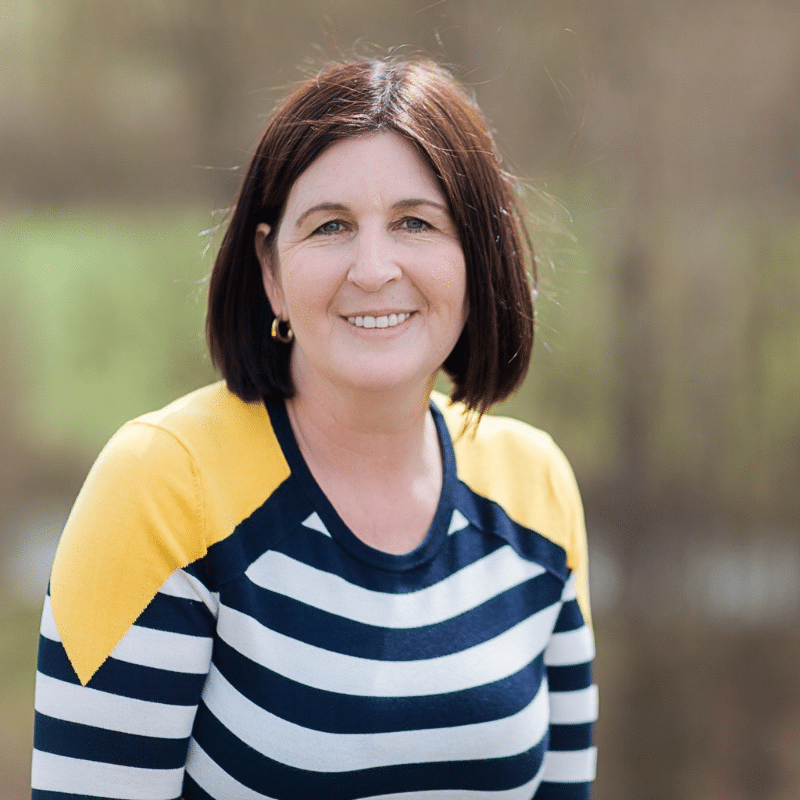
Kylie Lang is a nationally syndicated travel journalist with bylines on the Associated Press Wire & more, a medieval history writer, and the founder and lead author of Tales of the Middle Ages (talesofthemiddleages.com). She holds a BA (Honours) in History from the University of Kent and is a member of the British Guild of Travel Writers.
Related posts:
 13 TV Series Set in the Middle Ages You’ll Want To Binge Watch
 10 Historical Novels Set in the Middle Ages That Are Impossible to Put Down
 Virginia Hall: The American Spy the Gestapo Couldn’t Catch Who Helped Win World War II
 15 Medieval Movies to Watch if You Love History, the Middle Ages and Being Transported to Another Era