Think road trips are stressful today? Try traveling in the Middle Ages, when every journey felt like rolling the dice with your life. Bandits, deadly diseases, and impassable roads weren’t just minor inconveniences—they were constant threats. So, unless you had an army escorting you, stepping outside your village was a huge risk.
Roads? What Roads?
Forget nicely paved highways and clear signage. Medieval roads were basically muddy trails, riddled with potholes and blocked by fallen trees. In bad weather, they turned into swamps.
Table of Contents
In winter? Forget it—you weren’t going anywhere unless you wanted to freeze solid. And if you thought traveling by horse was easier, think again. Horses could easily break a leg on uneven paths, leaving travelers stranded miles away from civilization.
Your Medieval Packing List
Packing for a medieval journey was less about comfort and more about not dying horribly. Your survival kit needed military-grade planning that would make modern preppers look casual.
First up: weapons – not just one sword, but backups for your backups. Smart travelers carried daggers in their boots, and sleeves, and even sewn them into their hats.
Money management was an art form. The trick? Hide coins everywhere – sewn into clothes, hidden in bread, stuffed in shoe soles. Never keep your wealth in one place, because you’d definitely get robbed at least once.
Religious tokens weren’t optional – you needed blessed medallions, prayer scrolls, and saint relics (fake ones worked too – demons couldn’t tell the difference). Food and water were crucial because medieval inns were trying to kill you with their cooking. Pack dried meat, hard bread, and a water testing kit (aka a unicorn horn that was actually narwhal).
Your Medieval Travel Insurance Policy
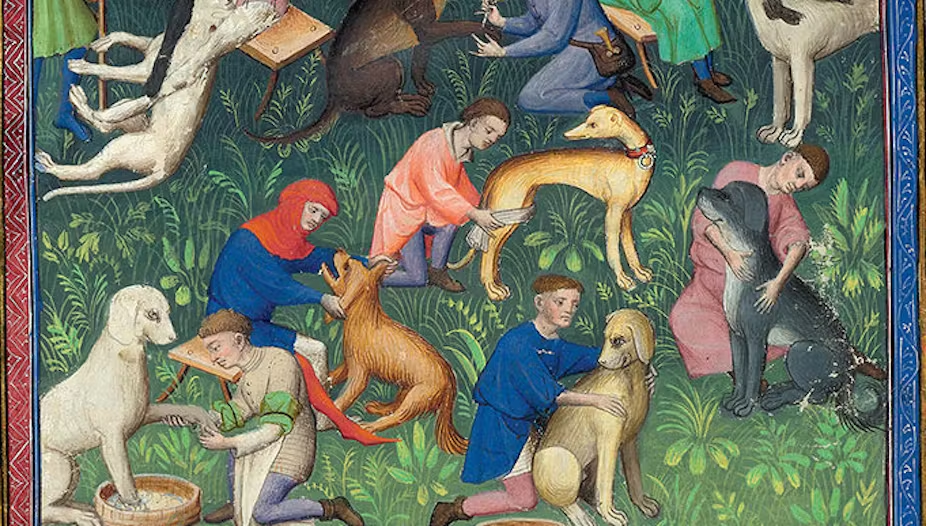
Your spiritual prep was as crucial as your physical packing list – medieval travelers needed backup plans for both body and soul. Before hitting the road, you’d make a full confession (clean slate in case of sudden death), write your will (because chances were high you’d need it), and get blessed by every priest in town.
Think of it as medieval travel insurance, but instead of calling an emergency hotline, you carried saint medals, holy water, and enough prayer scrolls to wallpaper a church. Most travelers memorized specific prayers for different types of death – drowning, stabbing, falling off cliffs – because you never knew which one you’d need in your final moments.
Why Cities Hated Travelers
Medieval cities had trust issues, and travelers were walking red flags. Every stranger at the gate was a potential disaster waiting to happen. Cities had seen too many “merchants” turn out to be spies, too many “pilgrims” spread plague, and too many “noble travelers” skip out on their inn bills.
Guards at city gates were like medieval TSA, only with more weapons and less patience. They’d interrogate you about your business, check your papers (if you had any), and sometimes quarantine you for days just to make sure you weren’t carrying disease.
Rich travelers got shaken down for taxes, poor travelers got turned away, and middle-class travelers got both.
Bandits: The Medieval Travel Tax
If the roads didn’t kill you, the bandits might. Travel routes were crawling with outlaws who had zero patience for pleasantries. These weren’t just petty thieves looking for spare change—they were ruthless gangs who’d strip you of everything, including your life if you resisted.
Kings and nobles often traveled with heavily armed guards, but if you were a merchant or pilgrim, you had to rely on sheer luck—or pay for protection.
Hooked on the Middle Ages? Get more stories like this one in your inbox.
Inns Were Rare (and Often Worse Than Sleeping Outside)
Think you’d just stop at a cozy inn for the night? Good luck finding one. Most medieval travelers had to rely on monasteries, barns, or just sleeping under the stars. And even when you did find an inn, it might be worse than roughing it outside.
Dirty straw beds, fleas, and food that could (and often did) make you sick were common. Plus, inns were prime hunting grounds for thieves who waited for exhausted travelers to let their guard down.
Disease Was Always One Step Behind You
Medieval travelers didn’t just have to worry about bandits and bad roads—disease was everywhere. Dirty water, spoiled food, and exposure to the elements made getting sick almost inevitable.
And if you were unlucky enough to wander into a town hit by the plague, you might not be leaving at all. Some places even locked their gates to outsiders, fearing they’d bring in illness.
Crossing Borders Could Get You Killed
Traveling between different territories wasn’t just a matter of walking across a line on a map. Lords and rulers controlled their own lands, and crossing into a new domain without the right paperwork (or bribe) could mean imprisonment—or worse. Even speaking the wrong language or looking suspicious could land you in serious trouble.
The Real Reason Nobody Traveled at Night
Traveling after dark in medieval times meant choosing between fifty different flavors of death, none of them pleasant. Darkness wasn’t just about poor visibility – it was when the line between the natural and supernatural world blurred, and neither side was friendly to travelers.
Wolves were actually the least of your problems, ranking below bandits, boggy terrain, and what everyone swore were demons. Those mysterious lights in the distance? Either bandits luring you into a trap or will-o’-the-wisps leading you into a swamp.
That inviting campfire? Probably thieves waiting to rob you. The strange noises? Could be anything from highway robbers to the Wild Hunt itself (a supernatural hunting party that collected unfortunate travelers’ souls).
When Maps Were More Fantasy Than Fact
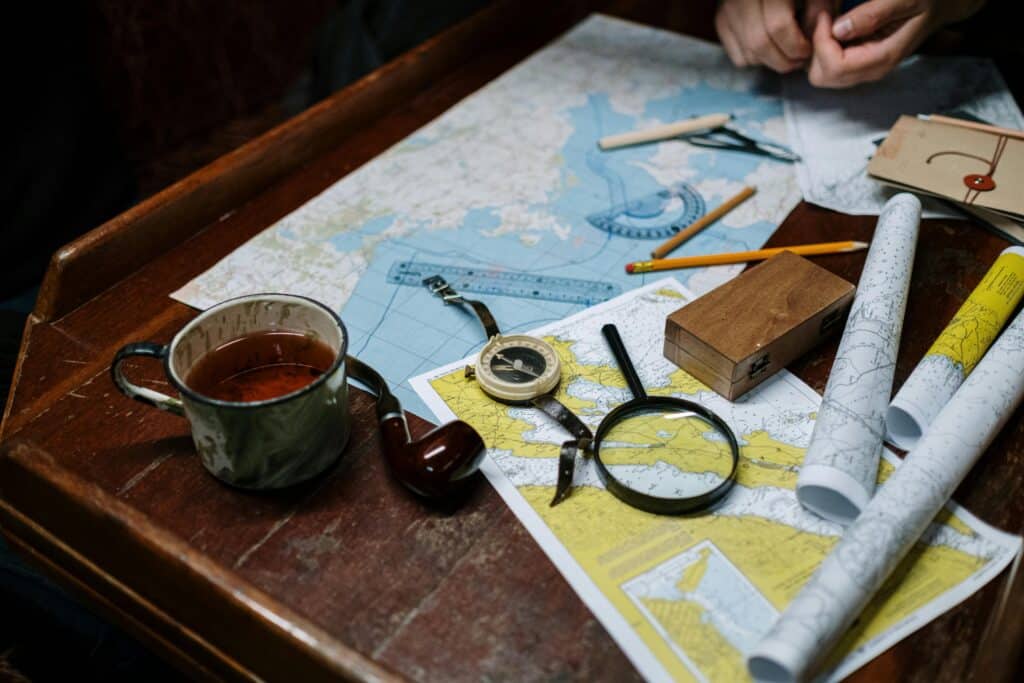
Medieval maps were like a drunk storyteller’s version of geography – entertaining but likely to get you killed if you took them seriously. These weren’t just bad maps; they were illustrated fairy tales with dragons swimming around the edges and Jerusalem conveniently placed at the center of everything.
Distance calculations were basically medieval fanfiction, measured in units like “a day’s journey” or “the time it takes to drink a barrel of ale.” The most popular medieval map was basically a T drawn inside an O, with Asia taking up half the world because someone heard it was big.
Africa? Just a vague blob where they drew pictures of people with faces in their chests because… why not? The seas were more monster than water, filled with detailed illustrations of giant squid and mer-bishops (yes, that’s bishops with fishtails).
Some maps even included the Garden of Eden, usually placed somewhere just past India, with helpful notes like “mind the angel with the flaming sword.”
The Truth About Medieval Travel
Unless you had deep pockets, strong connections, or sheer luck, traveling in the Middle Ages was a gamble with your life. One wrong turn could leave you robbed, diseased, or locked in a dungeon. So next time you complain about traffic, just remember—it could be so much worse.
Would you have risked medieval travel, or would you have stayed safe in your village forever? Let me know in the comments!
Love a good medieval story?
Join our readers and get tales of kings, queens, castles and ordinary medieval lives straight to your inbox.

Kylie Lang is a nationally syndicated travel journalist with bylines on the Associated Press Wire & more, a medieval history writer, and the founder and lead author of Tales of the Middle Ages (talesofthemiddleages.com). She holds a BA (Honours) in History from the University of Kent and is a member of the British Guild of Travel Writers.
Related posts:
 Did Medieval People Really Smell That Bad? What Hygiene Was Really Like In the Middle Ages
Did Medieval People Really Smell That Bad? The Truth About Hygiene in the Middle Ages
Did Medieval People Really Smell That Bad? What Hygiene Was Really Like In the Middle Ages
Did Medieval People Really Smell That Bad? The Truth About Hygiene in the Middle Ages
 The 7 Most Brutal Battles of the Wars of the Roses: How England’s Crown Was Won in Blood
 What Did People Actually Eat in Tudor England?