
Living in France, I’ve always been fascinated by Marie Antoinette and her tragic demise. By 1793, she was held in a cell within the Conciergerie in Paris, a far cry from the luxury of Versailles. France had been torn open by revolution, and she now sat on the losing side of history.
The woman who once lived under the weight of court etiquette now faced the weight of public anger. Her husband had already been executed. Crowds gathered outside the prison gates every day. They waited to hear what would happen to the former queen, though most people believed they already knew the answer.
Table of Contents
When her trial finally arrived, it happened fast. Witnesses lined up with accusations that stretched from political betrayal to personal scandal. This is the truth behind the last days of Marie Antoinette.
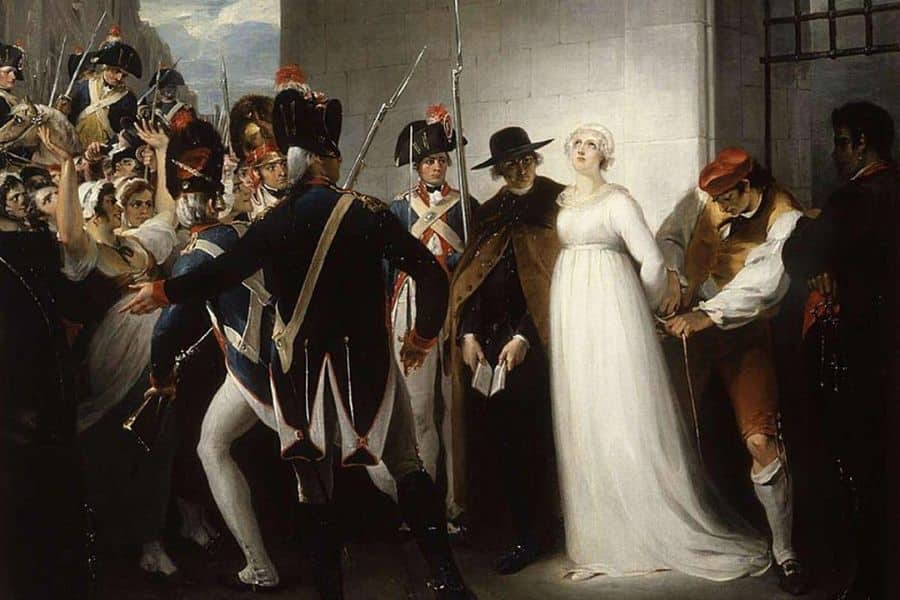
The Last Days of Marie Antoinette
Marie Antoinette spent months inside the Conciergerie before her trial. The cell was small, cold, and constantly watched. Guards stayed only a few steps away at all times, which meant she never had a moment alone. Noise from other prisoners echoed through the corridors, and sleep came in short fragments.
The conditions wore down her health. She lost weight, her strength faded, and the long hours of isolation took a heavy emotional toll. She asked for updates about her children whenever she could, though answers rarely came.
Reports from the time claim that her hair turned white during this period. People who saw her before the trial described a woman aged beyond her years, marked by stress, grief, and exhaustion. Whether every detail was accurate or embellished by witnesses, the change in her appearance was widely noted and became one of the most frequently observed changes during her final months.
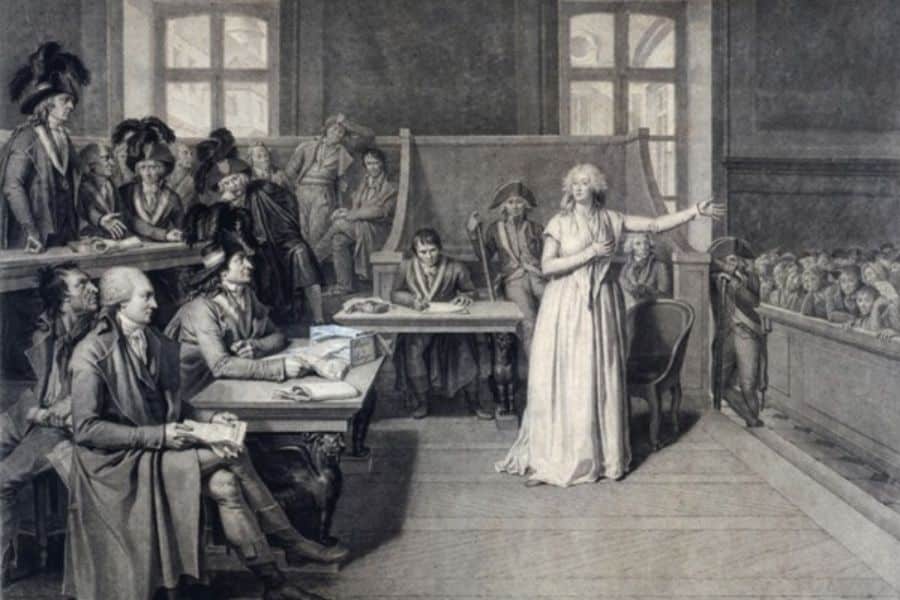
The Trial of 14 October 1793
Marie Antoinette’s trial began on October 14, 1793, inside the Revolutionary Tribunal in Paris. The outcome was already decided before the proceedings even started. Public opinion had turned against her long ago, shaped by years of propaganda that painted her as a symbol of royal excess and foreign influence.
Newspapers and pamphlets had called her “Madame Déficit,” blaming her for France’s financial ruin. By the time she entered the courtroom, she was no longer seen as a queen or even a person. She was the embodiment of everything the revolution wanted to destroy.
The trial lasted only two days. Antoine Quentin Fouquier-Tinville served as the public prosecutor, while a hastily selected jury listened to testimony that often mixed rumor with outright fabrication. Her defense lawyers, Chauveau-Lagarde and Tronson du Coudray, had almost no time to prepare. They faced a tribunal determined to secure a guilty verdict and a public eager to see her condemned.
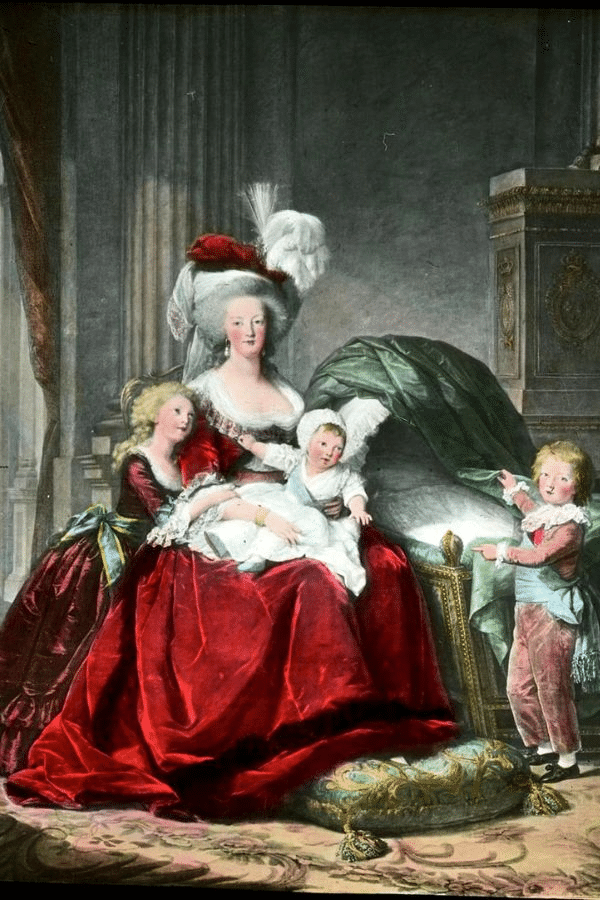
A Predetermined Outcome
There was little chance of fairness. The atmosphere inside the courtroom was hostile, filled with onlookers who wanted a spectacle rather than justice. The National Convention needed to show strength after the king’s execution and growing unrest in the streets.
Marie Antoinette’s death would serve as a political statement, a way to silence royalist sympathies and reinforce the revolution’s authority. Each accusation echoed that goal.
Witnesses included former servants, guards, and revolutionaries, many of whom were eager to win favor or prove their loyalty to the new order. Their testimonies often contradicted each other, but the details hardly mattered. Within hours, the prosecution had piled accusation upon accusation, creating an image of guilt that no defense could undo.
Hooked on the Middle Ages? Get more stories like this one in your inbox.
Charges Brought Against Her
The list of charges was long and vicious. She was accused of conspiring with Austria, her homeland, by sending vast sums of money to support the enemy. The claim carried weight among revolutionaries already convinced she placed foreign interests above France’s. In reality, no proof of such transactions ever existed.
She was also accused of hosting obscene gatherings at Versailles, orgies, they claimed, where corruption and immorality ran unchecked. These stories had circulated for years, often spread by scandal sheets and political pamphlets aimed at tarnishing her reputation. None of the witnesses could offer evidence beyond gossip.
The most shocking accusation came near the end of the proceedings: that she had committed incest with her young son, Louis-Charles. The boy, then only eight years old, had been held prisoner and placed under the care of a cruel jailer named Simon. Historical records suggest he was beaten, starved, and manipulated until he repeated whatever he was told.
When asked about this charge in court, Marie Antoinette stood silent for a long moment before answering simply, “If I have not replied, it is because nature itself refuses to respond to such a charge made against a mother.” The room fell quiet. Even some of her accusers appeared uneasy.
The Verdict and the Death Sentence
The tribunal delivered its decision in the early hours of October 16. Marie Antoinette was found guilty of depleting the National Treasury, conspiring with foreign powers, and threatening the security of the state. The charges had been shaped to fit the fears and anger of the moment, and the jury delivered exactly what the revolution’s leaders expected.
Her lawyers had believed the worst outcome would be exile or life imprisonment. They understood how deeply the public despised her, yet they still thought the tribunal would stop short of killing the mother of two surviving children. Even with the political pressure surrounding the trial, they held onto a small hope that the court would choose a punishment that kept her alive.
The sentence shocked them. The tribunal declared that she would die by guillotine, and she learned this without any pause or chance to speak privately with her counsel. The decision left her with almost no time to prepare. She returned to her cell and was told she had only a short window to compose herself, write a final letter, and face the morning that waited for her.
Her Final Letter to Madame Élisabeth
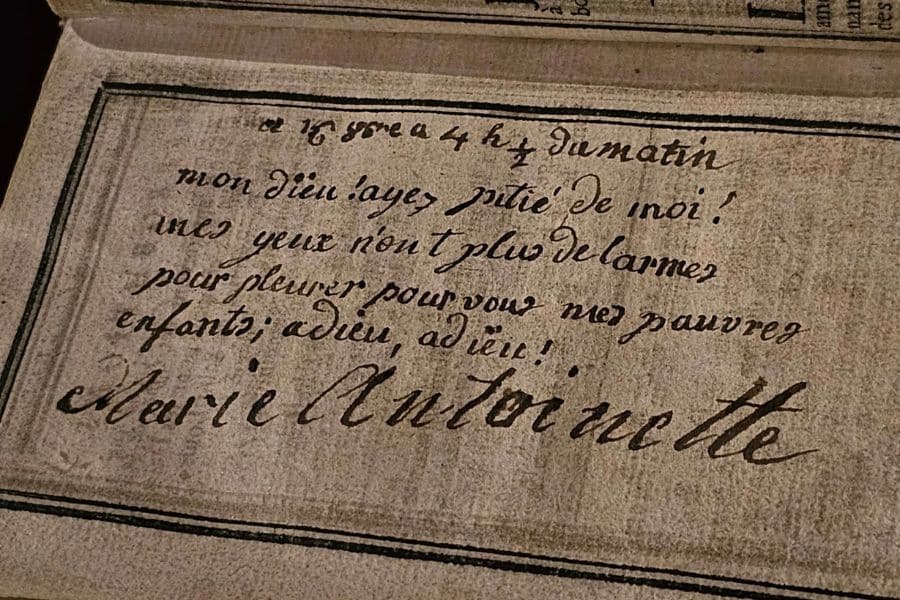
Back in her cell, Marie Antoinette used the short time she had left to write a final letter to her sister in law, Madame Élisabeth. The words came from a place of exhaustion and clarity. She wrote openly about her grief, especially the pain of leaving her children behind. She told Élisabeth that her life had been tied to them and that the thought of never seeing them again cut deeper than anything the tribunal had done.
The letter is steady and controlled, yet every line carries a weight that shows how much she trusted Élisabeth. She thanked her for her kindness, leaned on memories of their shared life, and offered comfort even though she had none for herself. The loyalty between them was unmistakable. She did not ask for rescue or pity. She focused on her family and the hope that her children would be protected.
She ended the letter with repeated farewells. The language is simple and direct, with no attempt to soften the reality she faced. Each adieu marked the final separation from the people she loved most. It is one of the clearest windows into her state of mind in those last hours.
The letter never reached Élisabeth. It was kept by the authorities and hidden away, becoming part of the record of her final day rather than the personal goodbye she meant it to be.

The Execution of Marie Antoinette
At dawn on October 16, the guards entered her cell and told her to change into a plain white dress. It was the color traditionally worn by widowed queens, though she had no control over the symbolism. Her hair was cut very short so the blade would fall cleanly and the execution would happen easily. The guards then tied her hands behind her back.
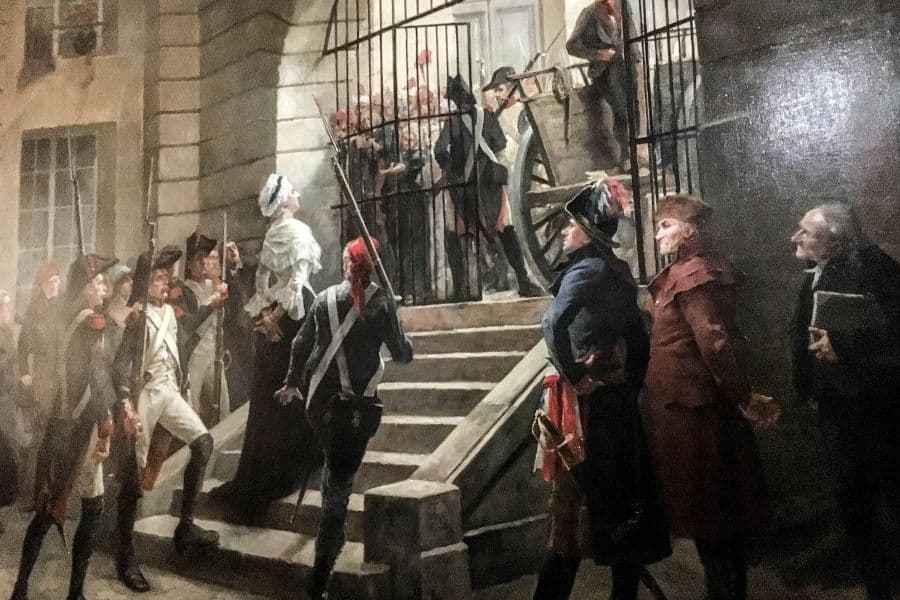
She was led to an open wooden cart waiting in the courtyard. Other condemned prisoners had traveled to their deaths in the same type of cart, exposed to everyone who gathered along the route. The cart began its slow journey through Paris, moving at a deliberate pace that stretched the moment into something almost unbearable. Crowds filled the streets, and many shouted insults as she passed.
People pushed forward to catch a glimpse of her. Some came to mock. Others came simply because it was an event that promised spectacle. Through all of it, she held her composure. Witnesses noted that she sat upright in the cart, her face pale but steady.
It took more than an hour to reach the Place de la Révolution. The scaffold stood high above the crowd. When the cart stopped, she climbed the steps with her hands still bound, moving carefully and without hesitation.
Her Final Moments
As she reached the platform, she accidentally stepped on the executioner’s foot. Her response came instinctively. She apologized and told him she had not meant to do it. Those words became the last she ever spoke.
At 12:15 p.m., the blade fell. Her body was taken away and placed in an unmarked grave in the Madeleine Cemetery. There was no ceremony, no marker, and no effort to preserve her remains. Her final hours passed as the revolution demanded: quickly, publicly, and without mercy.

Love a good medieval story?
Join our readers and get tales of kings, queens, castles and ordinary medieval lives straight to your inbox.

Kylie Lang is a nationally syndicated travel journalist with bylines on the Associated Press Wire & more, a medieval history writer, and the founder and lead author of Tales of the Middle Ages (talesofthemiddleages.com). She holds a BA (Honours) in History from the University of Kent and is a member of the British Guild of Travel Writers.
Related posts:
 The Poison Plot That Shook Paris: The Execution of Madame Marie de Brinvilliers
The Scandal of the Marquise de Brinvilliers Murders: The Poison Plot That Shook Paris
Lust, Murder, and Arsenic: The Scandalous Life of Madame de Brinvilliers
The Poison Plot That Shook Paris: The Execution of Madame Marie de Brinvilliers
The Scandal of the Marquise de Brinvilliers Murders: The Poison Plot That Shook Paris
Lust, Murder, and Arsenic: The Scandalous Life of Madame de Brinvilliers
 Anne of Austria: The Queen Who Defied Richelieu and Ruled France