
In November 1918, as revolutionary crowds surged through Vienna and the Austro-Hungarian Empire crumbled into dust, Emperor Charles I made a decision. He ordered Count Leopold von Berchtold to secure the royal jewels and get them out of Austria before the mob could seize them.
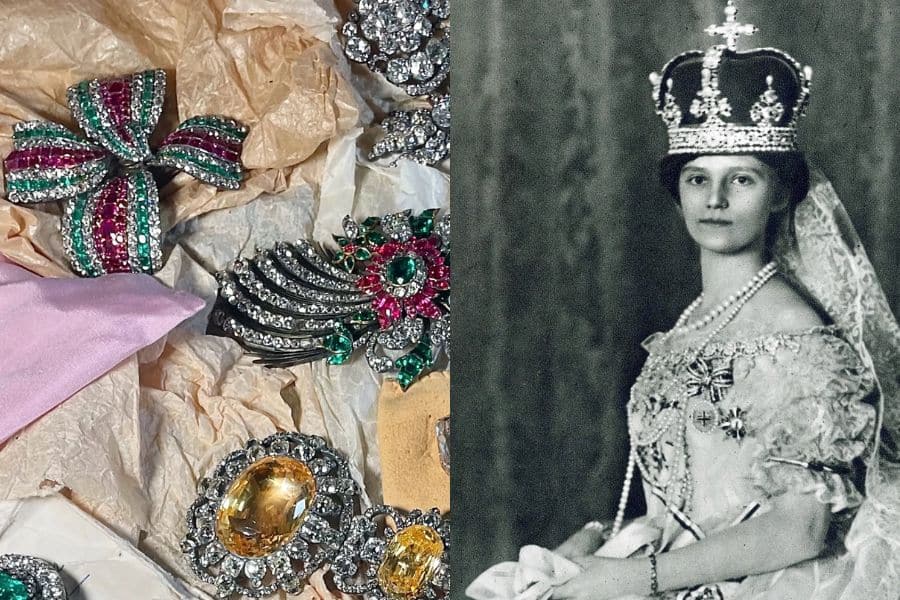
Among those treasures was the Florentine Diamond, a 137-carat yellow gem that had belonged to the Medici family before passing to the Habsburgs. There was Empress Sisi’s bodice bow set with rubies, emeralds, and diamonds in the Hungarian national colors. There were jeweled badges, hat pins, and pieces that had adorned some of the most powerful women in European history.
Table of Contents
On November 4, 1918, the treasures arrived in Switzerland. Then, three years later, they vanished without a trace. For over a century, historians speculated about what happened to the Habsburg jewels. The Florentine Diamond became the subject of novels, films, and conspiracy theories. Most experts assumed the legendary stone would never be seen again. They were wrong.
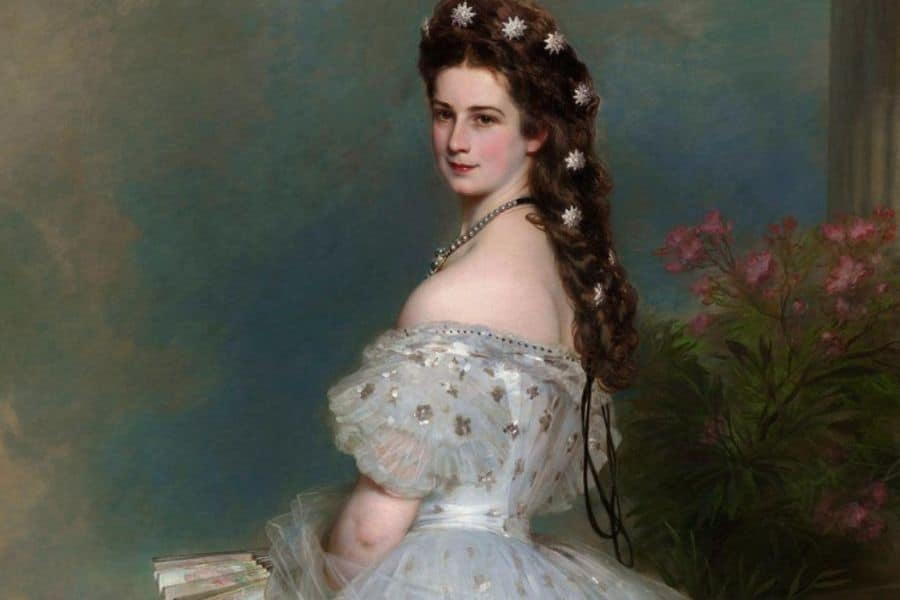
What Actually Happened to Empress Sisi’s Lost Jewels
Empress Elisabeth, known as Sisi, was the wife of Emperor Franz Joseph. She married into the Habsburg dynasty in 1854 and became one of the most famous women in Europe, known for her beauty, rebellious spirit, and iconic diamond-studded hair ornaments.
When she was assassinated in Switzerland in 1898, her personal jewelry collection was auctioned off for charity, but many pieces remained in the imperial treasury at the Hofburg Palace in Vienna. Her ruby and emerald bodice bow in the Hungarian national colors stayed with the family.
Fast forward twenty years. Emperor Franz Joseph died in 1916, and his great-nephew Charles I became the new emperor. Charles’s wife was Empress Zita of Bourbon-Parma, born into Italian nobility in 1892. When World War I ended in 1918 and the Austro-Hungarian Empire collapsed, Zita became the guardian of centuries’ worth of Habsburg treasures, including pieces that had once belonged to Sisi, Maria Theresa, and other imperial women.
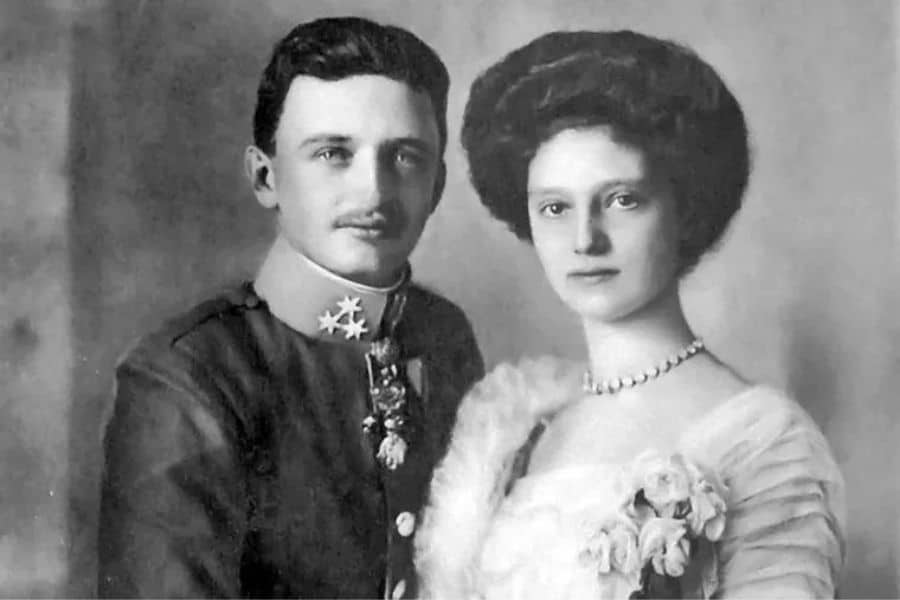
When Charles died of pneumonia in 1922 on the island of Madeira, Zita was left with eight children and the remnants of a dynasty. The family moved from Spain to Belgium, always one step ahead of political upheaval. And Zita became the keeper of the imperial jewels that her husband had smuggled out of Austria in 1918.
When Germany annexed Austria in 1938, Zita’s eldest son, Otto, was proclaimed an enemy of the state. The family had to run again. This time, Zita grabbed her small cardboard suitcase containing the family jewels and, with American assistance, fled to the United States in 1940.
From there, they settled in the French-speaking province of Quebec, where they lived modestly in the suburb of Sillery. Zita chose a Catholic university for her children and gave talks to supporters while her sons worked for the Allied cause.
But she never told anyone what was in that suitcase.
When Zita arrived in Canada, she went straight to a bank and placed the suitcase in a safe deposit box. She told only two people about it: her sons, Robert and Rodolphe. And she made them swear to keep the secret for 100 years after Charles’s death in 1922. Even when Zita returned to Europe later in life, she left the jewels in Canada. She died in 1989 at age 96, and the secret stayed buried.
Robert and Rodolphe kept their mother’s confidence. Before they died, they told their own sons, Lorenz and Simeon, about the vault. But the family continued paying the rental fees on the safe deposit box year after year, despite questions from historians and journalists who wanted to know what had happened to the missing Habsburg treasures.
Karl von Habsburg-Lothringen, the current head of the Habsburg family, didn’t even know the jewels existed until recently. His cousins Lorenz and Simeon finally told him about them after the 100-year mark passed in 2022.
Hooked on the Middle Ages? Get more stories like this one in your inbox.
Opening the Canadian Vault
On a rainy afternoon in 2025, Karl and his two cousins traveled to the bank in Quebec. None of them had ever actually seen the jewels before. Standing around a table, Karl slowly opened the battered suitcase. Inside, each piece was wrapped in yellowed paper. One by one, he unwrapped them.
There were jeweled badges and hat pins, bows set with old-cut diamonds and yellow sapphires, and there was the bodice bow that had once belonged to Empress Sisi. It glittered with rubies, emeralds, and diamonds, arranged in the red, white, and green of the Hungarian flag.
And then there was the Florentine Diamond itself.
Even after decades wrapped in paper and stored in a cardboard suitcase, the stone was still beautiful. Cut as a double rose with 126 facets, the pale yellow gem glowed, and one person who saw it described the color as resembling wine mixed tenfold with water. A jeweler compared it to good Scotch whisky.
Karl was most moved by the diamond-encrusted medal commemorating the Order of the Golden Fleece, the house order of the Habsburg family, founded in 1430 in Bruges by Philip the Good, Duke of Burgundy. Some of the pieces in the collection had been crafted or modified by his own ancestors.
To verify the jewels were authentic, the family called in Christoph Köchert from A.E. Köchert, the Viennese jewelry firm that had served as the imperial court jeweler for six generations. Köchert flew to Canada with the catalog of imperial treasures and the only existing photograph of the Florentine Diamond, a black and white image taken before 1918 showing it as part of a hat brooch.
When Köchert examined the stone, he was certain. The cut pattern, the weight, the measurements, everything matched the historical records perfectly. “All of this gives me certainty that this is the genuine, historical Florentine Diamond,” he said.

The History of the Florentine Diamond
The Florentine Diamond’s history stretches back centuries. The gem likely originated in the famous Golconda mines of India, the same source that produced some of the world’s most legendary diamonds. The first documented mention dates to 1657, when French jeweler Jean Baptiste Tavernier saw it among the treasures of Ferdinando II de’ Medici, Grand Duke of Tuscany.
The Medicis were one of history’s most powerful dynasties, amassing their wealth through banking and using it to fund artists such as Michelangelo, Leonardo da Vinci, and Botticelli. The Florentine Diamond became a symbol of their might and Renaissance excess.
When the last of the Medici line died out in 1737, the diamond passed to the Habsburg family through marriage. Francis Stephen of Lorraine married Empress Maria Theresa of Austria in 1736, and the stone was transported from Florence to Vienna, where it was displayed at the Hofburg Palace alongside other Habsburg crown jewels. In 1745, Francis Stephen was crowned Holy Roman Emperor with the diamond set in his crown.
The gem remained in Vienna for nearly two centuries, surviving wars, revolutions, and the slow decline of imperial power. Then came World War I and the empire’s final collapse. The Florentine Diamond disappeared into that cardboard suitcase and vanished from history.
Until now.
What’s Still Missing
Not everything from the 1918 treasury made it into Zita’s suitcase. Sisi’s diamond crown is still missing, and so is Maria Theresa’s famous rose necklace. A brilliant-cut diamond tiara with a 44-carat diamond hasn’t been found. Neither has an emerald set consisting of a tiara, corsage, and necklace.
Some historians believe these pieces were among the jewels that a financial advisor stole from the family in the early 1920s, when Charles and Zita were attempting to regain the Hungarian throne. The advisor took the jewels as collateral for a loan and then disappeared when the restoration attempt failed. When Zita returned to Switzerland to retrieve them, she discovered they were gone. Their fate remains unknown.
What Will Happen to the Jewels Now?
The Habsburg family has announced they won’t sell the jewels. Instead, they plan to display them in a Canadian museum as a gesture of gratitude to the country that sheltered Empress Zita and her children during the war.
“It should be part of a trust here in Canada,” Karl von Habsburg-Lothringen told reporters. “It should be on exhibition in Canada sometimes, so that people can actually see those pieces.”
The announcement has sparked some controversy. Austrian officials are investigating whether the gems are actually the property of the Austrian government rather than the Habsburg family. The question of ownership remains unresolved.
But for now, the focus is on the remarkable story of survival. These jewels endured wars, revolutions, and exile, crossed an ocean in a refugee’s suitcase, and sat in a bank vault while the world changed around them. And through it all, a family kept a promise to a dying empress who wanted to make sure that some fragment of her world would survive.

Love a good medieval story?
Join our readers and get tales of kings, queens, castles and ordinary medieval lives straight to your inbox.

Kylie Lang is a nationally syndicated travel journalist with bylines on the Associated Press Wire & more, a medieval history writer, and the founder and lead author of Tales of the Middle Ages (talesofthemiddleages.com). She holds a BA (Honours) in History from the University of Kent and is a member of the British Guild of Travel Writers.
Related posts:
 Inside the Spanish Habsburg Legacy of Inbreeding and Their Eventual Collapse
 Six Women Who Dodged a Bullet, or Axe, by Not Marrying Henry VIII
 The Ones That Got Away. The Six Women Who Kept Their Heads, By Not Marrying Henry VIII
 The Tragic Life of Charles II of Spain: Illness, Inbreeding, and the Fall of a Dynasty