
Never has a story about women in war intrigued me quite as much as the Night Witches. This group of Russian women was the only females to fight in the skies in aerial combat during World War II. They dropped bombs on the Germans at night, switching off their engines as they approached so the enemy wouldn’t hear them.
They put the fear of God into German troops, and these women, some only teenagers, had more guts than any man. Each night, they took to the skies to wreak havoc, often at huge cost to themselves.
Table of Contents
Bravery doesn’t even begin to cover it. These women weren’t frightened to die for their country and face the Luftwaffe in their flimsy, outdated planes. This is their story.
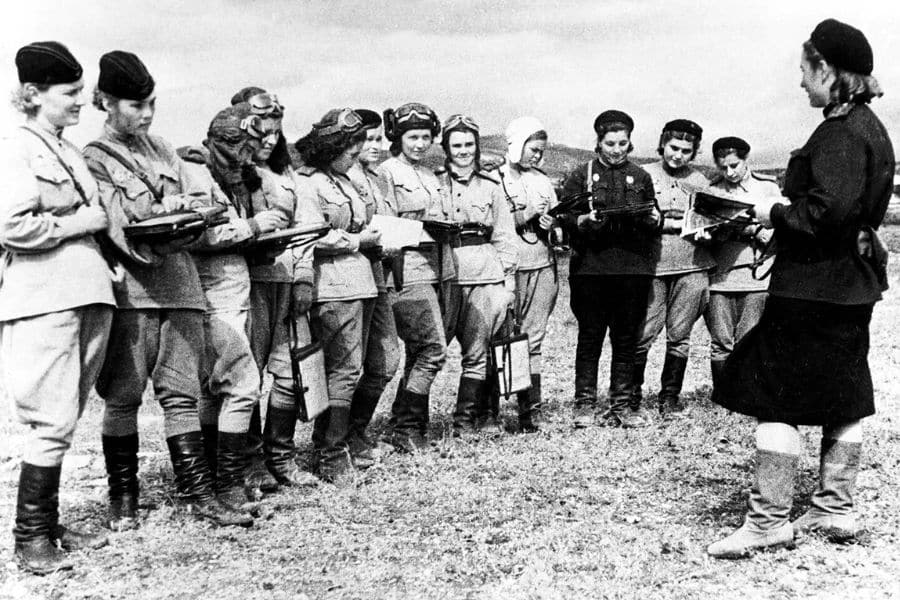
The Night Witches of Russia
I first heard about the Night Witches while reading The Huntress by Kate Qunin, a fantastic novel mainly set in 1950, after the war, where one of the Night Witches is hunting a Nazi with the nickname, The Huntress. I was immediately drawn to the sheer courage of these women and how they were treated.
Russia was the only country where women flew in combat during World War II. They were fighter pilots and bombers who went head-to-head with the Germans in the skies. And they did it in aircraft that were so outdated and fragile they were almost laughable, if not for the deadly precision of the women flying them.
The Night Witches became the stuff of legend. German soldiers dreaded the sound of their engines cutting out in the darkness. They would glide silently before dropping their bombs and then vanish back into the night. The Luftwaffe came up with the name because the sound of the wind through their planes reminded them of broomsticks.
Marina Raskova: The Woman Who Started It All
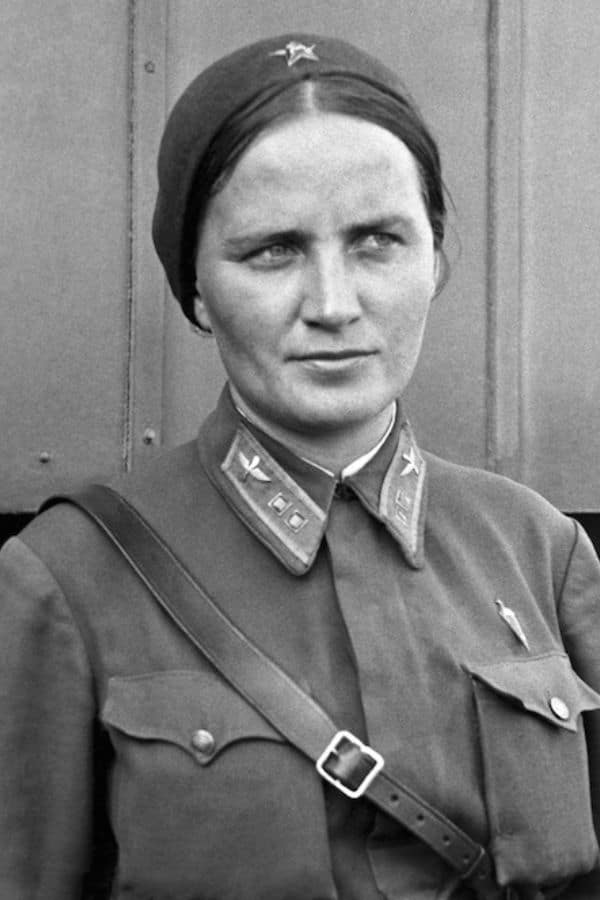
It all started with Marina Raskova, often called the Russian Amelia Earhart. Born in 1912, she broke record after record in aviation and became the first woman to serve as a navigator with the Soviet Air Force. By 1933, she was already teaching at the prestigious Zhukovskii Air Academy, something no other woman had ever done.
Before the war, Raskova and two other female pilots flew from Moscow to the Far East of Russia in a record-breaking non-stop flight. When the war began, she and hundreds of other women pilots offered to serve, but the military refused them. Russia was not ready to let women fight.
That changed in 1942. Hitler’s army had invaded the Soviet Union, millions of Russian soldiers were captured, and the air force was desperate. Raskova saw her chance. She went straight to Stalin and made her case for an all-female air unit. Stalin agreed, and three women’s regiments were formed.
The 588th Night Bomber Regiment
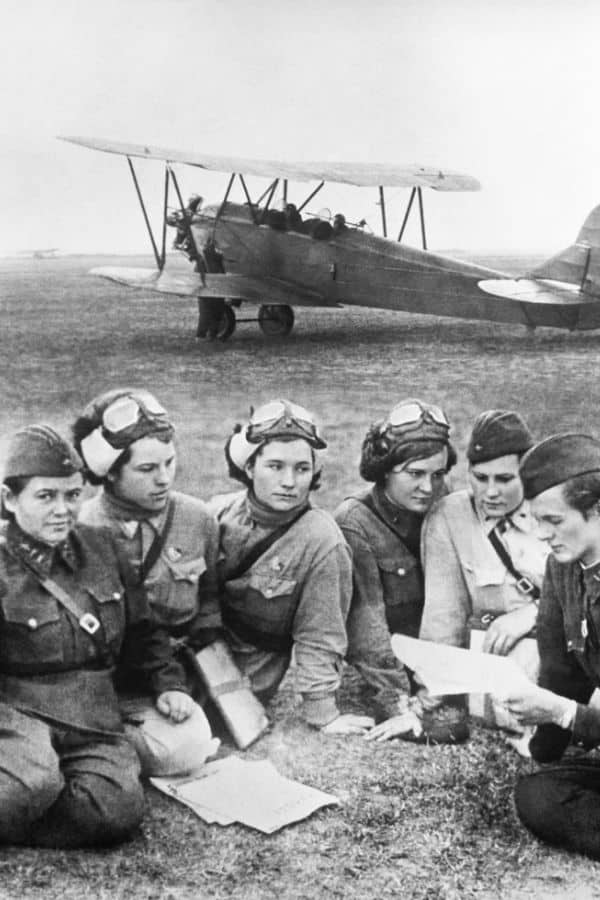
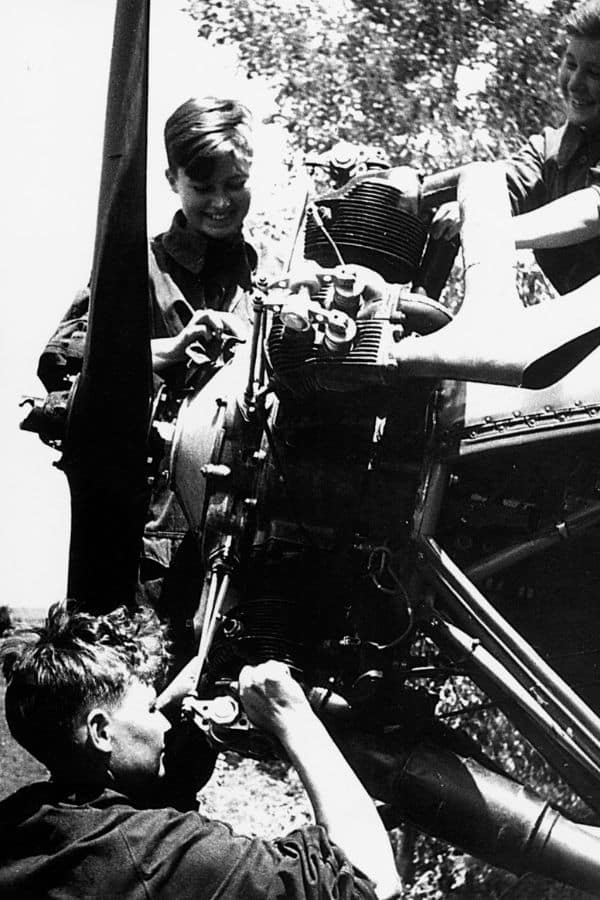
One of those units became the 588th Night Bomber Regiment. The pilots flew outdated Polikarpov Po-2 biplanes made of wood and canvas. They had no parachutes, no radio, and no armor. Yet these women went out every single night, sometimes eight or more missions in one night, to drop bombs on German camps, supply lines, and railways.
Their success rate was astonishing. The Germans couldn’t catch them. Their low, slow planes flew under radar, and their silence made them almost impossible to track. To the soldiers on the ground, it felt like the witches of the night had come to curse them.

In 1943, the 588th was renamed the 46th Taman Guards Night Bomber Aviation Regiment. To the Soviets, they were “Stalin’s Falcons,” but to the Germans, they would forever be the Night Witches.
Tragically, Marina Raskova never lived to see how legendary her airwomen would become. In January 1943, her plane crashed during landing, killing her instantly. She was only thirty years old. The state gave her a hero’s funeral in Moscow, laying her to rest in Red Square.
Her legacy lived on through the women she inspired. They kept flying long after her death, through freezing nights, through enemy fire, and through losses that would have broken lesser souls.
The Women Who Flew Into History
Altogether, eighty women served as pilots in the Soviet Air Force during World War II. Between 1942 and 1945, the three all-female regiments flew more than 30,000 missions, dropping their bombs on German positions night after night until the war pushed all the way back to Berlin.
Most of these women were barely out of school when they enlisted. Teenagers and young women in their early twenties found themselves fighting seasoned German pilots. They became heroes across the Soviet Union, though today their names are rarely remembered outside Russia.
Two of them earned the status of fighter aces, and twenty-three received the highest military honor, the Hero of the Soviet Union. Thirty women died in combat, including their commander and inspiration, Marina Raskova.
Mariya Dolina: The Siberian Pilot
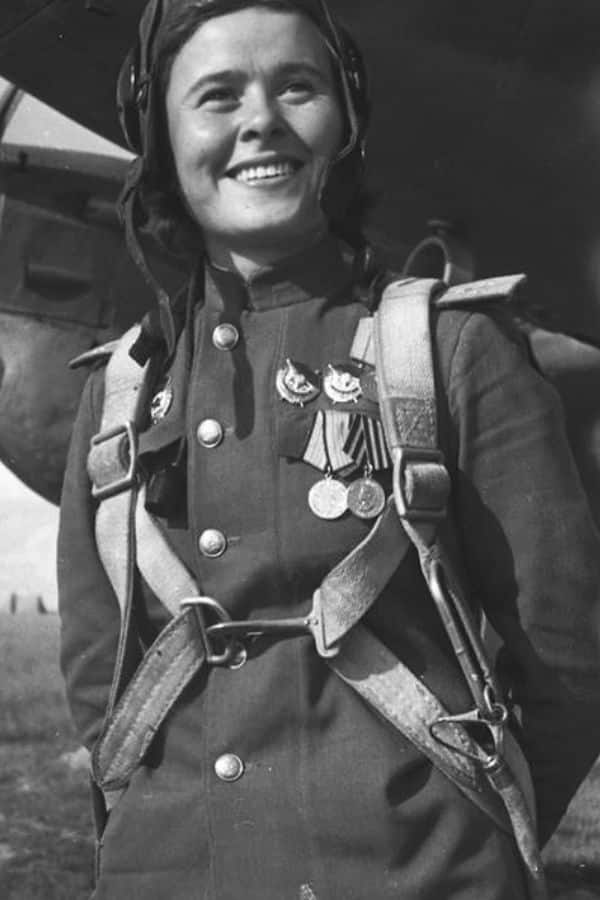
One of the most remarkable of these pilots was Mariya Dolina. Born in Siberia, she later moved to Ukraine with her family and learned to fly as a teenager. Her skill and determination earned her a place in Raskova’s 125th Regiment, where she quickly became one of its top pilots.
Dolina once called herself “impulsive and excessively restless,” but her flying record showed complete control and courage. She completed seventy-two successful missions during the war, a record that placed her among the finest of the Soviet airwomen. After the war, she lived a long life and passed away in 2010.
Hiuaz Dospanova: The Kazakh Trailblazer
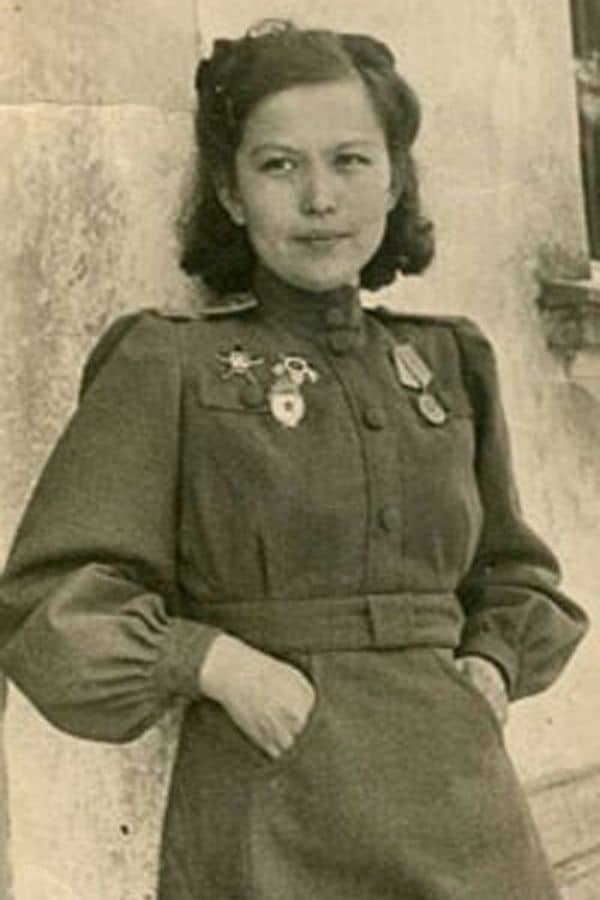
Another of the Night Witches was Hiuaz Dospanova, born in Kazakhstan in 1922. She was the only woman from her country to serve as a combat pilot with the Soviet Air Force. When the Germans invaded in 1941, Dospanova rushed to the front, determined to defend her homeland. But her heart was in the air.
Knowing that Marina Raskova commanded an all-female air unit, Dospanova sought her out and was accepted immediately. After Raskova’s death in 1943, she rose to become head of communications for the 46th Guards Regiment.
Dospanova flew more than 300 missions during the war. During one night landing in blackout conditions, her aircraft crashed, breaking both her legs. Most people would have been grounded for life. Within three months, she was back with her regiment, flying again.
For her service, she received the Order of the Red Star. Decades later, in 2004, Kazakhstan honored her as a National Hero. She died in 2008, remembered as a pioneer who opened the skies for generations of women.
Natalya Kravtsova: The Tireless Flier

Natalya Kravtsova was born in Ukraine and fell in love with flying at an early age. In 1940, she joined the glider school in Kiev, and just two years later, at nineteen, she became one of the Night Witches.
She served with the 588th Regiment and by the end of the war had flown an astonishing 980 night missions. Each one meant flying through freezing darkness, often under enemy fire, with nothing but courage and instinct keeping her alive.
Nadia Popova: Patriot and Avenger
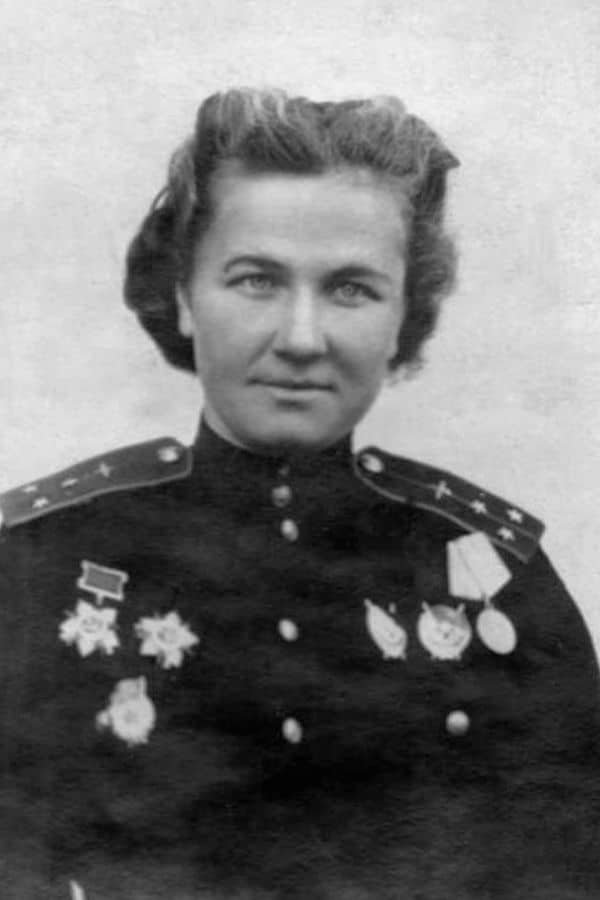
Among the first volunteers was Nadia Popova, a pilot driven by both love for her country and anger at what she had seen. She once said she could still picture “the smiling faces of the Nazi pilots” as they fired on women and children trying to escape.
Her brother was killed after the Germans invaded, and the Gestapo seized her family’s home. They smashed the windows and cut down the cherry trees her family had tended for years. Popova joined the 46th Night Bombing Regiment with her co-pilot, Katya Ryabova. The two became one of the most effective pairs in the air.
Hooked on the Middle Ages? Get more stories like this one in your inbox.
How the Night Witches Ruled the Skies
The Night Witches always flew in pairs, a pilot and a navigator. Their biplanes could only carry two small bombs at a time, so they flew mission after mission in a single night. Sometimes up to eighteen.
Their Polikarpov Po-2 planes were tiny, slow, and light, with a top speed lower than the stall speed of most German aircraft. But that gave them an advantage. The planes could twist and turn in ways that faster German fighters could not. When a Luftwaffe pilot tried to line up a shot, the Night Witch had already turned away, forcing the German to overshoot while she looped back unseen.

Even so, many didn’t make it back. The planes were flammable and had no armor. Bullet holes were common. Burn marks, too. They often returned to base with the smell of smoke still clinging to the cockpit.
Silent Death from the Sky
To avoid detection, they flew low, skimming the treetops or following the line of hedges. Flying at night gave them some protection, and their dark planes blended into the sky. When they neared the target, they cut their engines and glided silently. Then came the release, two small bombs falling into the darkness, before restarting the engine and escaping into the night.
The sound of wind through the plane’s bracing wires made an eerie whooshing noise. German soldiers said it reminded them of witches flying on broomsticks, and the name stuck: the Night Witches.
They flew so low they could see the flare of a match when a soldier lit a cigarette below. Many German troops refused to sleep at night, terrified of the unseen enemy that haunted them from above.
Fearless Beyond Measure
Sometimes their old biplanes stalled mid-flight. The only way to restart the propeller was to climb out onto the wing, thousands of feet in the air, and do it by hand. They did it without hesitation.
The Luftwaffe grew so frustrated that it offered the Iron Cross to any pilot who could shoot down a Night Witch. It was easier said than done. In an interview with PRI’s The World in 2009, Nadia Popova described what it was like to fly with the Night Witches.
“We flew in sequence. One after another, and during the night, we never let them rest, so they called us ‘Night Witches.’ And the Germans made up stories. They spread the rumour that we had been injected with some unknown chemicals that enabled us to see so clearly at night.”
They had no radar, no radio, and no guns. Only maps, a compass, and raw nerve. To save weight, they left their parachutes behind. If they were hit, there was no escape.
Sisterhood in the Sky
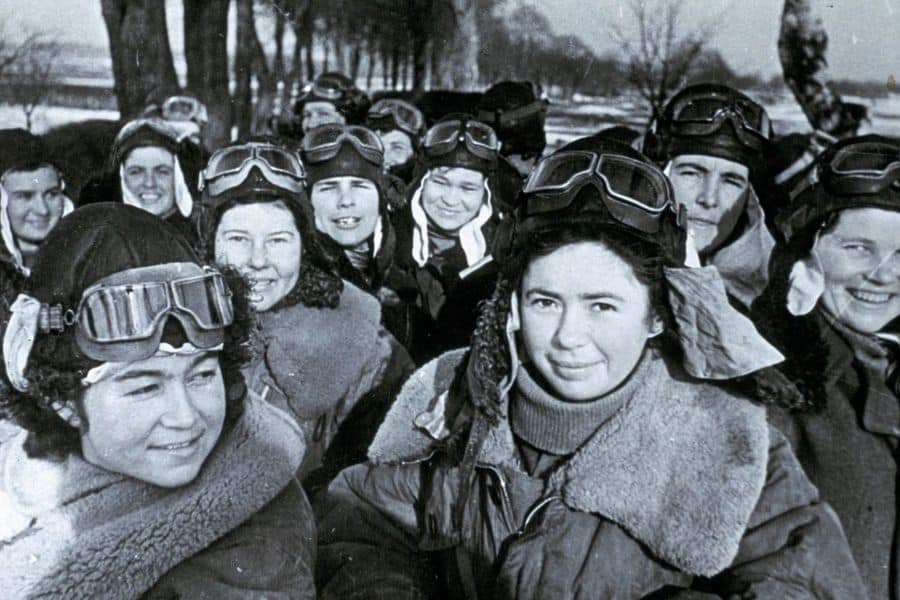
Nadia Popova never softened the truth about what the Night Witches faced. “We were flying without parachutes,” she recalled. “We were not able to bail out. The whole crew that was shot during the night flight burned alive, and it was awful. It was an absolutely unbearable sight. This was the most tragic part.”
Mariya Smirnova, one of the most decorated pilots in the regiment, spoke just as honestly.
“You shouldn’t think we faced death openly and bravely,” she said. “It is not true. We never became accustomed to fear. Before each mission and as we approached the target, I became a concentration of nerves and tension. My whole body was swept by fear of being killed.”
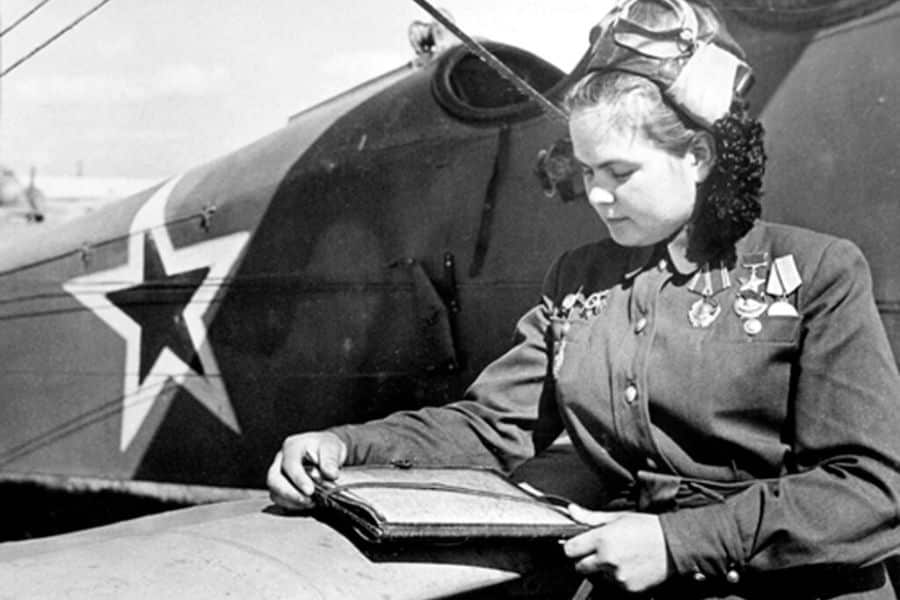
Fighting Prejudice and the Enemy
Even after proving themselves, the Night Witches had to fight another battle, one against prejudice. They were eventually awarded Guards Regiment status, one of the highest honors in the Soviet military, but respect came slowly. Many male officers refused to take them seriously.
Their uniforms were castoffs from men’s units, oversized and often falling apart. Boots were so big that they had to stuff them with newspaper. They received just six months of training for what was meant to take two years. To some male pilots, they were nothing more than the “skirt regiment.” Some even refused to let female ground crews service their planes.
But within their own regiments, they formed a bond that nothing could break. Every role in the unit was filled by women: pilots, navigators, mechanics, and ground crew.
They also refused to give up their sense of self. Between missions, they decorated their planes with flowers and used their navigation pencils as lipstick. Between missions, Nadia Popova would fix her hair, flattened by her leather cap, using her tortoiseshell mirror. It was a small act of defiance in a world of death and destruction.
The motto of the 588th Regiment said it best: “You are a woman, and you should be proud of that.”
The White Rose of Stalingrad
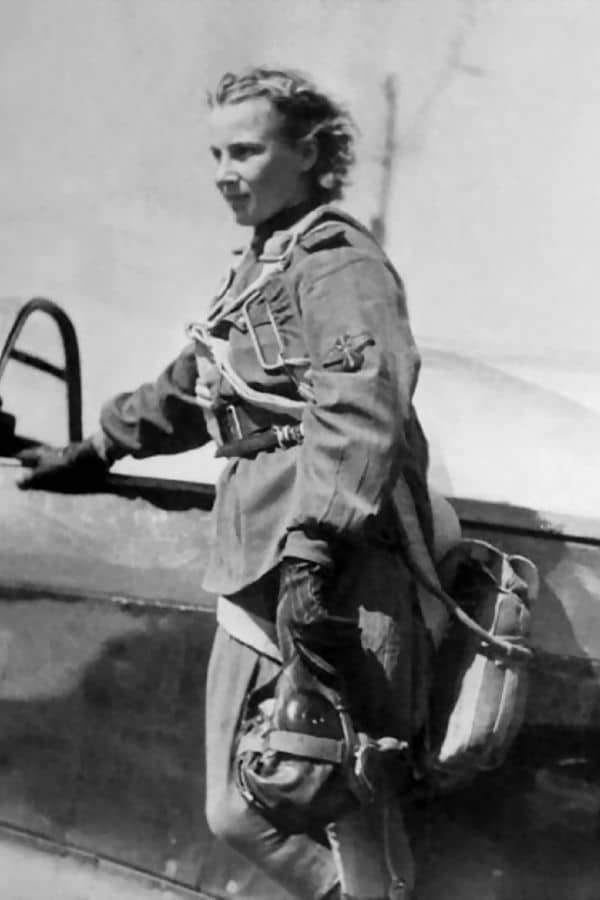
Few lived up to that motto more than Lydia Litvyak, known as the “White Rose of Stalingrad.” She flew with one of the Night Witches’ sister regiments and became the first woman in history to earn the title of fighter ace, credited with multiple confirmed kills.
Litvyak painted a white rose on the nose of her Yak-1 fighter, kept wildflowers in her cockpit, and made scarves out of parachute silk. She even used peroxide from nearby hospitals to bleach her hair. Her courage and individuality made her a legend among her peers.
Forgotten Then, Remembered Now
Not all lived to see victory. Lydia Litvyak died in 1943 after being ambushed by German fighters. She was only twenty-one. Popova, however, survived. When she returned home, crowds greeted her with flowers and a marching band, a celebration that echoed Raskova’s state funeral in Moscow. It was a rare public tribute to women who had risked everything for their country.
Despite their achievements, the Night Witches and their sister regiments were disbanded after the war. Like many women in Britain and America, they were expected to return quietly to domestic life. Their bravery faded from public memory until the 1980s, when stories of their missions began to resurface as the Soviet Union crumbled.
Nadia Popova went on to work as a flight instructor, still teaching others to fly long after her combat days were over. When she died on July 8, 2013, at the age of ninety-one, tributes poured in from across the world. She had outlived her comrades but never their story.
The Night Witches remain one of the most extraordinary groups in military history. They fought, loved, feared, and persevered in ways that defied expectation. In the dead of night, in planes made of wood and canvas, they helped change the course of a war.

Love a good medieval story?
Join our readers and get tales of kings, queens, castles and ordinary medieval lives straight to your inbox.

Kylie Lang is a nationally syndicated travel journalist with bylines on the Associated Press Wire & more, a medieval history writer, and the founder and lead author of Tales of the Middle Ages (talesofthemiddleages.com). She holds a BA (Honours) in History from the University of Kent and is a member of the British Guild of Travel Writers.
Related posts:
 The Truth About Witchcraft in the Middle Ages
 The Terrifying Origins of Europe’s Medieval Witch Trials
 Genghis Khan had 16 Million Descendants and Counting, But Here’s What They Don’t Teach You About Him
16 Million Descendants Later Genghis Khan Changed the World But His Legacy Has Nothing To Do With DNA
Genghis Khan had 16 Million Descendants and Counting, But Here’s What They Don’t Teach You About Him
16 Million Descendants Later Genghis Khan Changed the World But His Legacy Has Nothing To Do With DNA