Growing up in the UK in England, I learned about the Battle of Hastings in Junior School when I was about ten years old. After all, it was a big battle with even bigger consequences. It took place on October 14, 1066, and is one of the most decisive battles in European history.
It’s widely recognized as the battle that changed the course of English history forever, with William the Conqueror defeating King Harold II and claiming the throne of England. I blame this battle on the fact that I had to learn French at school and, despite living in France as an adult, the language still doesn’t come naturally.
Table of Contents
Anyway, despite the battle’s importance, there’s a lot about this historic clash that history books don’t always tell you, and certainly wasn’t taught in my history class.

1. Harold Didn’t Have the Army You Think He Did
For centuries, we’ve been told that Harold’s army during the Battle of Hastings was weak, exhausted, and disorganized after fighting off King Harald Hardrada and his Viking forces just days earlier at Stamford Bridge.
While it’s true that the English soldiers were fatigued, Harold did not have the depleted force often portrayed. The Anglo-Saxon army was battle-hardened and quite capable. Estimates suggest Harold had about 7,000 soldiers with him, many of whom were experienced warriors from throughout England.
In contrast, William’s forces were much larger, possibly as many as 12,000 men. Yet despite the disparity in numbers, Harold’s army was still a formidable force. The myth of an underdog army is just that: a myth.
2. The Battle Was Over Much Faster Than You Think
Another popular misconception is that the Battle of Hastings was a long, drawn-out conflict. In reality, the battle likely lasted no more than 9 hours. The fighting began at dawn and concluded by the afternoon.
Many people imagine the battle as a prolonged struggle, but in truth, the two armies engaged in a relatively quick series of clashes, ending with the Normans’ overwhelming victory.
3. The Arrow in the Eye Might Be a Myth
The iconic image of Harold II dying with an arrow in his eye, as depicted in the Bayeux Tapestry, is one of the most enduring images in history. However, historians aren’t entirely convinced that this is how Harold met his end.
There’s speculation that Harold may have been killed by a sword blow, rather than the arrow shown in the tapestry. The evidence for this is based on accounts from chroniclers like William of Poitiers, who suggested that Harold was slain by an English nobleman in hand-to-hand combat. The arrow story is dramatic, but it may be more myth than fact.

4. The Normans Fought Dirty
William’s Norman army is often romanticized as a noble and chivalrous force, but the reality was far more ruthless. One of the most effective tactics used by the Normans was the feigned retreat.
The Normans would pretend to flee from the battlefield, luring the English soldiers to break their formation and chase after them. Once the English forces were scattered and out of position, the Normans would turn around and ambush them.
This tactic was a brilliant military strategy, but it was also treacherous. It effectively exploited the English soldiers’ sense of confidence and military discipline. The result was chaos within the English ranks, and the Normans used this advantage to break through their lines.
Hooked on the Middle Ages? Get more stories like this one in your inbox.
5. There Were More Foreign Mercenaries Than You Think
The popular image of the Norman army is that it was made up of French knights and French-only soldiers, but in reality, William’s forces were far more diverse. The army was made up of soldiers from all over Europe, including Bretons, Flemish, and Vikings who had been hired as mercenaries. These mercenaries brought their fighting styles and tactics to the battlefield, making William’s army more versatile and unpredictable.
The involvement of foreign mercenaries also helped William maintain his grip on power after the conquest, as he was able to rely on a range of military support from different regions. These mercenaries were not just fighters; they were also politically important, helping to solidify William’s position in England after the battle.

6. Harold’s Army Didn’t Have Archers
One of the biggest disadvantages for Harold’s army was their lack of archers. While William’s forces were equipped with a significant number of archers, which allowed them to rain down arrows on their opponents from a distance, the Anglo-Saxons lacked this capability.
The English army primarily relied on infantry armed with swords, axes, and shields, making them more vulnerable to attacks from a distance.
Harold’s forces fought valiantly in close combat, but the absence of archers left them at a serious disadvantage against William’s army, which could strike from afar and wear down the English ranks before the real fighting began.
7. William Didn’t Really Want to Be King of England
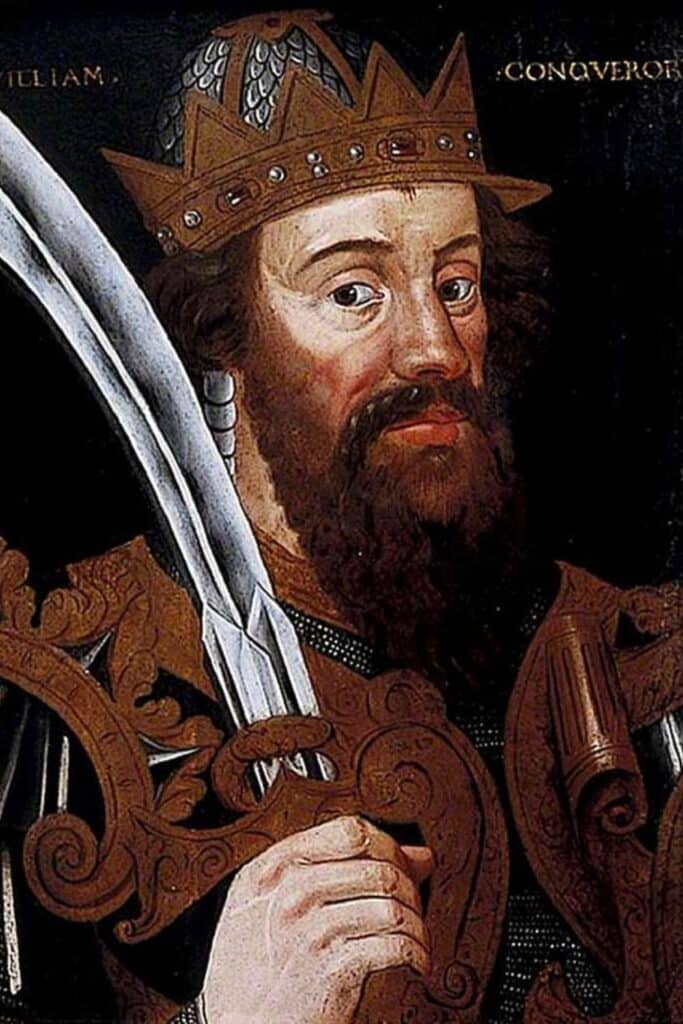
While William the Conqueror is remembered as one of the greatest military leaders in history, it’s important to note that his original ambition wasn’t to become King of England. William of Normandy had been promised the throne of England by King Edward the Confessor, but when Edward died in January 1066, the throne was unexpectedly claimed by Harold II.
At first, William’s primary goal was to secure his control over Normandy and expand his influence in Europe. However, after Harold’s coronation, William believed his royal claim had been usurped, and his invasion of England was less about seeking a new kingdom and more about righting a perceived wrong.
His conquest of England was driven more by a sense of betrayal and desire for power than by a true aspiration to rule England.

8. The English Were Fighting on Foot, While the Normans Were Mounted
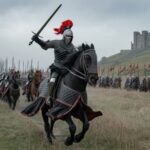
One of the greatest advantages the Normans had was their mounted cavalry. The Norman knights fought on horseback, making them highly mobile and capable of charging with incredible force. They could maneuver quickly around the battlefield, creating chaos among the English ranks, which were primarily composed of infantry.
In contrast, the English forces relied mainly on foot soldiers, who were slower and more vulnerable to the Norman cavalry. The English shield wall was strong and could hold off attackers, but it was far less effective against the rapid strikes of mounted knights. This difference in tactics gave William’s forces a clear advantage on the battlefield.
9. Harold’s Army Didn’t Form a Shield Wall
The famous “shield wall” formation, often depicted as the defining feature of the English defense at the Battle of Hastings, is likely a later romanticized image. While the English army did have soldiers grouped in tight formations, there’s little evidence to suggest they used the rigid, unbreakable shield wall we often see in depictions of the battle.
The shield wall might have been a later invention by chroniclers trying to emphasize the English resistance. In reality, the formation was probably more flexible, and it was easier for the Normans to break through once they employed their feigned retreat tactic, which caused the English ranks to collapse.
10. The Battle Wasn’t Just About English vs. Normans
Many people think of the Battle of Hastings as a straightforward confrontation between the Anglo-Saxons and the Normans, but the reality was more complex. The forces involved came from across Europe, with a mix of Vikings, Bretons, and Flemish mercenaries fighting on both sides.
The English army wasn’t just made up of Anglo-Saxons; it included soldiers from various parts of England, each with different backgrounds and motivations. Similarly, the Normans weren’t solely French; they were an amalgamation of European soldiers from different regions. The Battle of Hastings, therefore, wasn’t just an English-Norman affair; it was a European clash of cultures, military tactics, and political ambitions.
The Battle’s True Legacy
The Battle of Hastings was a turning point in history, but it’s not the simple narrative of a clash between the Anglo-Saxons and the Normans that we often read about and I was taught at school.
From Harold’s complex forces to William’s dirty tactics, the battle was far more nuanced than history books often portray. The facts behind the battle show that William’s victory was not simply a result of military superiority; it was a mix of clever strategies, political ambition, and sheer determination that ultimately led to the conquest of England.
The Battle of Hastings set in motion a new era of European domination and political upheaval that would shape the continent for centuries to come.
Love a good medieval story?
Join our readers and get tales of kings, queens, castles and ordinary medieval lives straight to your inbox.

Kylie Lang is a nationally syndicated travel journalist with bylines on the Associated Press Wire & more, a medieval history writer, and the founder and lead author of Tales of the Middle Ages (talesofthemiddleages.com). She holds a BA (Honours) in History from the University of Kent and is a member of the British Guild of Travel Writers.