Have you ever wondered why we’re still talking about a noblewoman’s naked horse ride nearly 1,000 years later? Most people fixate on the famous ride, but they’ve been looking at the wrong story all along. While the legend is captivating, the real scandal is far more fascinating: how an Anglo-Saxon woman built one of medieval England’s most powerful business empires right under everyone’s noses.
Forget everything you think you know about Lady Godiva. The real story isn’t about a nude protest – it’s about a brilliant medieval powerbroker who owned more land than some kings, outmaneuvered the Norman Conquest, and turned a backwater town into a commercial powerhouse. And trust me, that’s way more interesting than a horse ride.
Table of Contents
Early Life and Origins
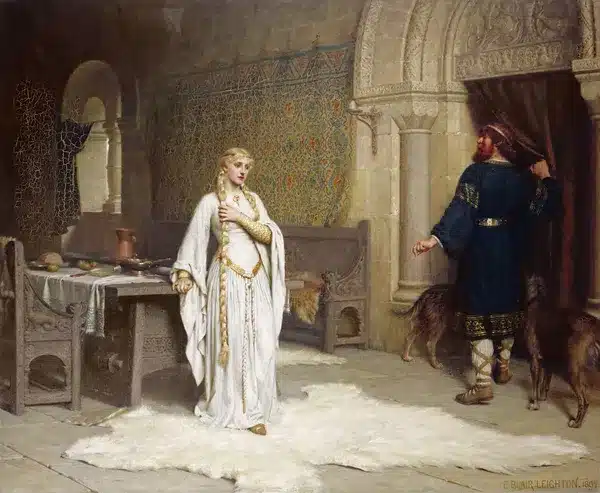
While Hollywood would have you believe she was a young rebel, Lady Godiva came from the powerful Anglo-Saxon aristocracy. Born around 990 CE, she belonged to a family that wielded significant influence across central England. Recent excavations have uncovered luxury goods from Constantinople and the Mediterranean at sites associated with her family, showing they were players in international trade long before she made her mark.
Her early education was comprehensive for a woman of her time. Historical records suggest she was literate in Latin and Old English, skills that would later prove crucial in managing her vast estates and negotiating with religious institutions.
The Power Couple of Medieval Mercia
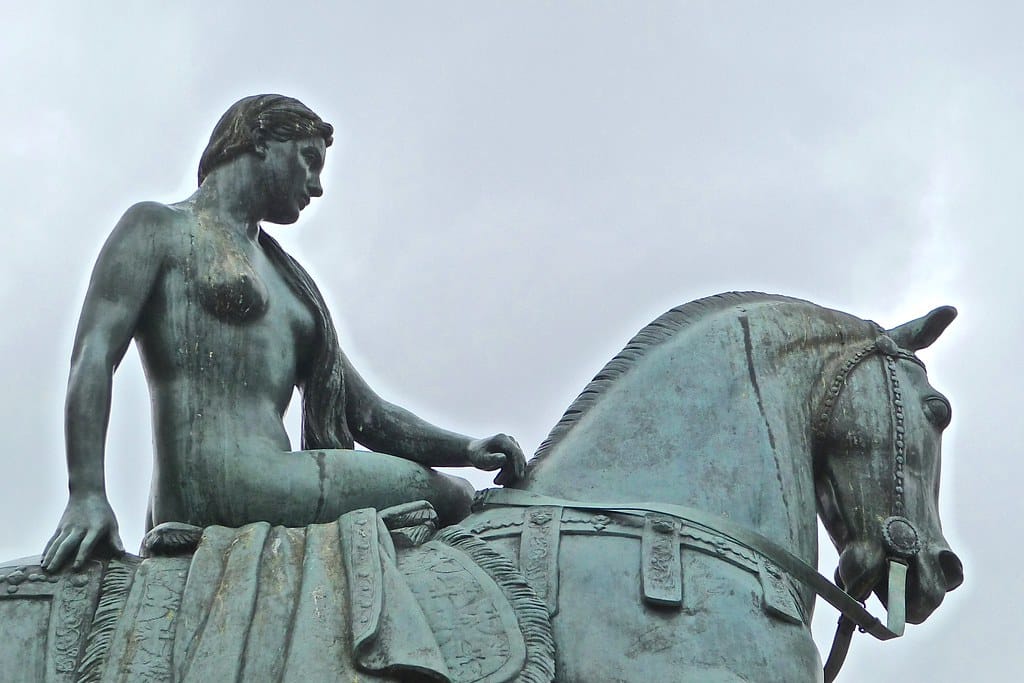
Lady Godiva (Godgifu in Old English) became one of the largest landowners in England before the Norman Conquest. By 1066, she held more than 60 manors across England in her name. These weren’t just small farms – we’re talking about entire estates with villages, markets, and tax revenues that would make a modern billionaire jealous.
The marriage to Leofric, Earl of Mercia wasn’t just a political alliance. Together, they formed what medieval chronicles describe as a formidable partnership. While Leofric handled military matters, Godiva managed their vast economic empire. She appears as a witness on numerous legal documents, suggesting she was actively involved in the administration of justice.
The Truth Behind the Famous Ride
The naked ride story? Pure medieval fan fiction. It doesn’t appear until the 1190s, more than 100 years after her death, when Roger of Wendover, a monk with a flair for dramatic storytelling, first wrote it down. The tale claims she rode through Coventry covered only by her long hair to protest her husband’s harsh taxation.
But the historical record tells a different story. Multiple Anglo-Saxon chronicles mention her challenging local tax policies through legal means. She used her position and wealth to negotiate better terms for merchants and craftsmen in her territories. The real Godiva was more boardroom than protest ride.
Hooked on the Middle Ages? Get more stories like this one in your inbox.
Building a Medieval Empire

Together with Leofric, she founded and endowed the Benedictine monastery in Coventry around 1043. This wasn’t just about scoring points with God – it was a power move that transformed Coventry from a backwater village into a medieval economic hub.
Archaeological excavations at the monastery site have revealed something extraordinary. They’ve uncovered evidence of a planned economic center: extensive workshops, a mint producing official coinage, and imported luxury goods across Europe. The monastery wasn’t just a religious institution – it was the medieval equivalent of a business district.
The Business Mastermind

Her business strategy was brilliant. She established churches in Stow St Mary, Lincoln, and several other strategic locations, each positioned along major trade routes. These weren’t just places of worship – they were medieval trading posts, offering protection to merchants and collecting valuable tolls.
The wool trade became her empire’s foundation. She positioned her estates to dominate England’s most profitable export. Recent research in the Pipe Rolls shows her estates were strategically located near major wool-producing areas and transport routes to continental Europe.
A Medieval Financial Network

She developed a sophisticated system of estate management. Each manor specialized in specific products – some focused on wool production, others on grain, while some served as distribution centers. This network of specialized estates was centuries ahead of its time.
Her influence extended beyond England. Records from Flemish trading houses mention dealings with her estates, and archaeological evidence shows her trading connections reached as far as the Mediterranean. She wasn’t just a local powerhouse – she was an international business operator.
Surviving the Norman Storm
When William the Conqueror invaded in 1066, most Anglo-Saxon nobles lost everything. But Godiva? The Domesday Book of 1086 shows she kept most of her lands. This wasn’t luck – it was calculated political maneuvering.
Her survival strategy was masterful. While other nobles fought and lost everything, she negotiated. Historical records suggest she worked through intermediaries in William’s court, particularly with Queen Matilda. This diplomatic approach saved not just her wealth but her family’s position.
The Dynasty Builder
Her influence went beyond business. Her son Ælfgar inherited the Earldom of Mercia after Leofric’s death, expanding the family’s power. Her granddaughter, Ealdgyth, married Harold Godwinson, the last Anglo-Saxon king of England.
But it wasn’t just about marriages and titles. She created a network of loyal administrators and merchants who helped manage her estates. Many of these families would continue to be influential in the English trade for generations.
A Legacy Worth More Than Legend
Look, I get why the naked horse ride story has stuck around – it’s dramatic, it’s scandalous, and it makes for great pub conversations. But the real Lady Godiva deserves better. She wasn’t just some noblewoman who took off her clothes to protest taxes. She was a medieval mogul who built an economic empire that lasted generations, navigated one of the most dangerous political upheavals in English history, and showed that women could be major players in a man’s world.
Next time someone brings up Lady Godiva, skip the tired old legend. Tell them about the woman who owned half of central England, ran an international trading network, and managed to keep her wealth when almost every other Anglo-Saxon noble lost everything. Tell them about the businesswoman who turned Coventry from a village into a commercial hub that still thrives today. Because that’s not just a better story – it’s the real one.
And honestly? A woman building an economic empire in 11th-century England? That’s way more shocking than any naked horse ride.
Love a good medieval story?
Join our readers and get tales of kings, queens, castles and ordinary medieval lives straight to your inbox.
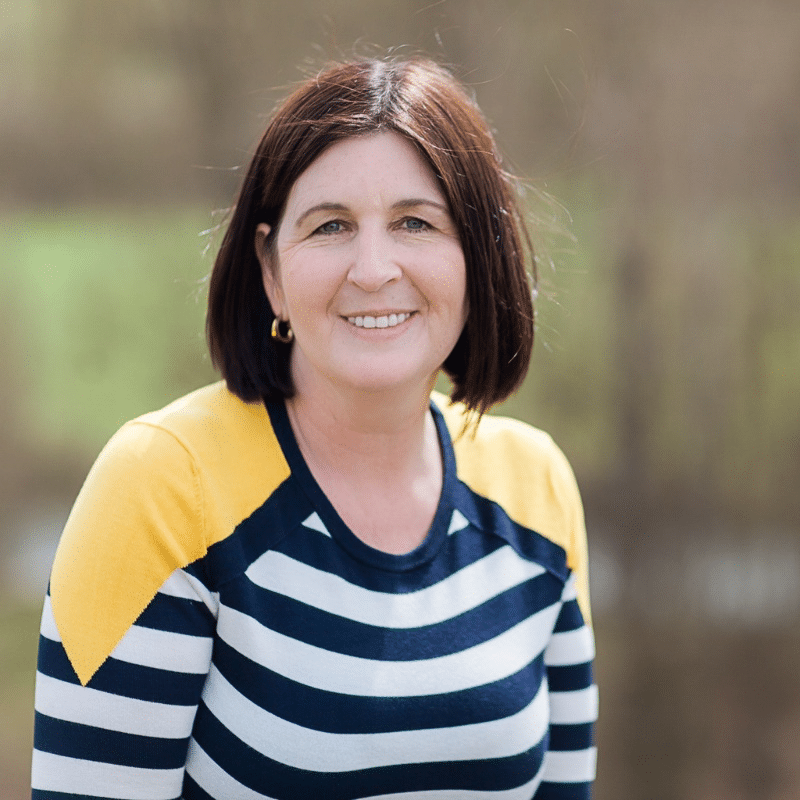
Kylie Lang is a nationally syndicated travel journalist with bylines on the Associated Press Wire & more, a medieval history writer, and the founder and lead author of Tales of the Middle Ages (talesofthemiddleages.com). She holds a BA (Honours) in History from the University of Kent and is a member of the British Guild of Travel Writers.