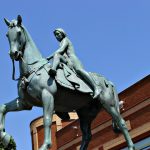
If you’ve never heard of Æthelflæd, you’re not alone. Most people can name her dad, Alfred the Great. But his daughter? The woman who led armies, built fortresses, and helped drive the Vikings out of England? Not so much.
Æthelflæd grew up in the middle of a war zone. She watched towns burn and lived through the constant threat of invasion. Instead of being packed off to a quiet marriage and a forgettable life, she rose to power in a time when women didn’t rule. And then she led. Properly led. Not behind the scenes or pulling strings quietly, but out front, sword raised, running the show.
Table of Contents
This is the story of a real medieval powerhouse. A woman who helped shape the foundations of England.

Early Years in Alfred’s Wessex (c.870–882)
Æthelflæd was born around 870, the eldest child of King Alfred the Great and his wife Ealhswith, who came from Mercian nobility. She entered the world at a time when everything was up in the air. England wasn’t even a united kingdom yet, and Viking armies were tearing through the countryside, burning towns, killing leaders, and putting entire kingdoms on edge.
As a child, Æthelflæd lived through that chaos. In 878, when she was probably still under ten, her family had to flee into the swamps of Somerset while the Vikings overran Wessex. They were hiding in the marshes, living rough, clinging to whatever power they still had. That kind of experience changes you. It toughens you up fast and forces you to understand power, loyalty, and fear better than any tutor could.
But Æthelflæd had tutors too. Her father made sure of it. While most noble girls were trained in religion, needlework, and the art of keeping quiet, Æthelflæd got the kind of education normally reserved for kings’ sons. She learned to read, to strategize, to understand law and diplomacy. Alfred clearly saw her potential and didn’t hold her back because of her gender.
In Wessex, even the king’s wife wasn’t given the title of queen. Women were expected to stay in the background. But Æthelflæd was being trained to lead. She grew up knowing she’d need more than grace and good manners to survive the world she was stepping into.
Marriage to Æthelred: Alliance with Mercia (c.883–911)
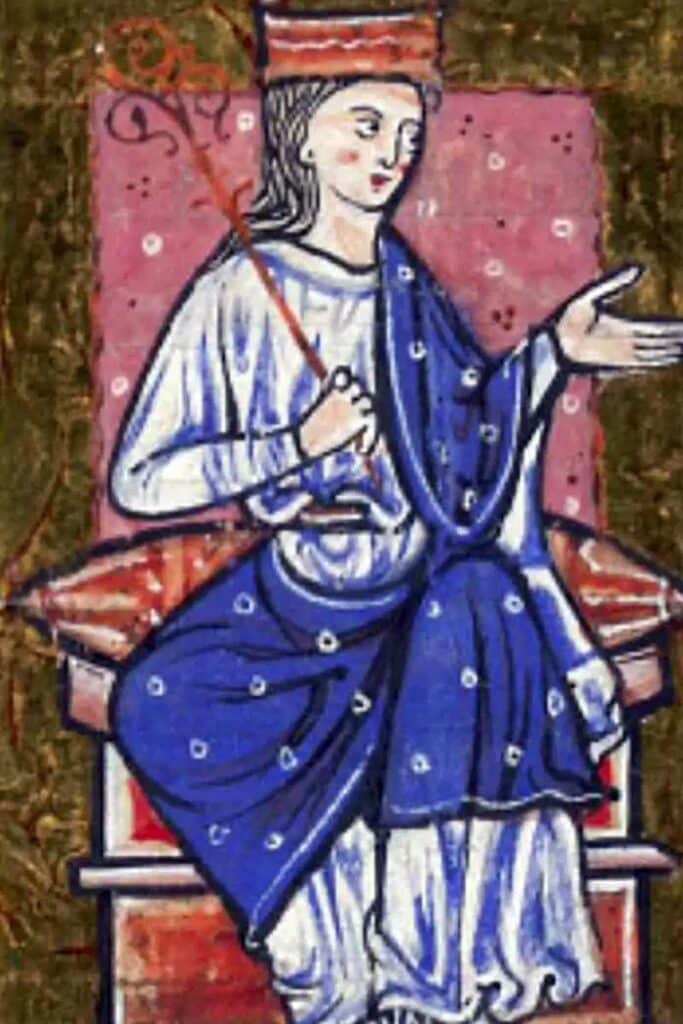
When Æthelflæd was around sixteen, she was married off to Æthelred, the ruler of Mercia. It wasn’t a love match. It was a smart political move. Wessex and Mercia were the last strong Anglo-Saxon kingdoms still standing against the Vikings, and joining forces through marriage was one way to keep that resistance alive. Her father, Alfred, had just taken back London, and this union helped lock in that win with a formal alliance.
It helped that Æthelflæd already had Mercian blood on her mother’s side. She wasn’t a total outsider. When she moved to the Mercian court in Tamworth, she was stepping into a world where women could hold more influence than they typically did in Wessex. That mattered. Mercia had a history of strong women at court, and Æthelflæd had the background and brains to fit right in.
She and Æthelred raised her nephew, Æthelstan, under their roof. He’d go on to become one of the greatest kings England ever had. That arrangement helped tighten the bond between the two royal houses.
By the end of the 890s, things started to shift. Alfred died in 899, and Æthelred’s health was failing. He was older and struggling, and it was Æthelflæd who stepped up. She began handling matters such as diplomacy, decision-making, and strategy. The Mercians noticed. Long before she officially ruled, she was already leading.
Hooked on the Middle Ages? Get more stories like this one in your inbox.
Lady of the Mercians: A Female Ruler in a Warrior Age (911–918)
When Æthelred died in 911, the Mercian nobles turned straight to Æthelflæd. They named her Lady of the Mercians, and she ruled in her own right. That might not sound like a big deal now, but back then it was huge. She was the only woman known to have led an Anglo-Saxon kingdom outright. No husband pulling the strings. No king behind the curtain. Just her.
Mercia wasn’t Wessex. In Mercia, there had been powerful women before, and that history worked in her favor. The people already respected her. She’d proven herself long before Æthelred died, so this wasn’t a sudden shift. It was a natural handover to someone who had already been running the show.
Her brother Edward was now king of Wessex, and the two of them worked together. Edward took control of some of the southern border towns like London and Oxford, but Æthelflæd held the heart of Mercia. They shared power in a way that held the alliance together. She may have given up a bit of territory to keep things peaceful, but it meant she could keep leading Mercia on her terms.
What Æthelflæd managed during this time was nothing short of remarkable. She was respected by her allies, feared by her enemies, and praised even in the records written by men who normally ignored or sidelined women. One chronicler called her “a king in all but name.” That about sums it up. She led armies, built defenses, managed diplomacy, and made decisions that shaped the future of England. She didn’t need to call herself queen to make it clear who was in charge.
Defender of Mercia: Fortifications and Military Campaigns
Æthelflæd got out there and built defenses with real strategy behind them. Following in her father’s footsteps, she created a ring of fortified towns, known as burhs, to shield Mercia from Viking attacks. It wasn’t just about walls and gates. It was about controlling key rivers and roads, cutting off enemy movement, and locking down the territory.
She moved fast. In 912, she fortified Bridgnorth. The following year, she focused on Tamworth and Stafford. By 914, she had strengthened Eddisbury and Warwick. Then she turned her attention west, building defenses near Wales and the Mersey in 915. These weren’t random projects. She was tightening a net around the Viking-held areas. Each burh was a calculated step in reclaiming land and holding the line.
But Æthelflæd wasn’t just a builder. She was a fighter, too.
Back in 910, before she officially took power, a joint Mercian and West Saxon army smashed a Viking force from Northumbria at the Battle of Tettenhall. The Viking threat from the north was wiped out in a single brutal blow. Æthelflæd was already taking the lead while her husband was in poor health, and this battle cleared the path for Mercia and Wessex to go on the offensive, finally.
One of her sharpest moves came at Chester. In 907, she restored the old Roman fortress there, right on Mercia’s northern border. Later, when some Viking exiles asked to settle nearby, she allowed it, maybe thinking they’d be useful as a buffer. But when a Viking army later turned on her and laid siege to Chester, her defenses held. According to legend, she even managed to convince some of their Irish mercenaries to switch sides mid-battle. The attack collapsed, and her reputation for outsmarting her enemies only grew.
In 916, she showed she could hit hard when needed. After a Mercian abbot and his companions were killed in the Welsh kingdom of Brycheiniog, she didn’t waste time with diplomacy. She launched a fast, fierce raid. Her troops stormed a crannog on Llangorse Lake, capturing the queen of Brycheiniog and over thirty members of her court. It was a warning to everyone watching: don’t mess with Mercia.
By 917, she was on the offensive again, this time with her brother Edward. Together, they launched a massive campaign to take back the Danelaw. Æthelflæd led Mercian forces straight into Viking-held territory. Her troops took Derby in a brutal fight that cost the lives of four of her trusted thegns. She kept pushing. In early 918, she headed for Leicester. This time, there was no battle. The garrison surrendered without a fight. That’s how strong her reputation had become.
And then came the moment no one saw coming. The Vikings of York, the power center of the last major Viking kingdom in England, opened negotiations with her. They offered to submit to her rule. A Viking city, ready to bend the knee to a Saxon woman. That tells you everything you need to know about how far her influence reached. But just as she was about to secure that win, Æthelflæd died. It was June 918. She was probably around 48. She died at Tamworth, the heart of her kingdom, right at the height of her power.

Anecdotes and Legendary Tales
People couldn’t quite believe a woman had done what she did, and they made sure it got written down in ways that made it feel almost mythical.
One medieval writer, Henry of Huntingdon, went all in. “O mighty Æthelflæd!… Nature made you a girl, but you were a queen and a king who won victories – more illustrious than Caesar!”
Even outside of England, she earned serious respect. An Irish chronicler referred to her as “famosissima regina Saxonum,” “the most famous queen of the Saxons.” That’s a big deal when you realize her own people didn’t even call her queen.
Stories about her carried on long after she was gone. In the Midlands, people remembered her not just as a ruler but as a builder, someone who left a physical mark on their towns. Tales of her founding fortresses or outwitting enemies got passed down through generations.
And now, she’s being rediscovered. She has appeared in novels, documentaries, and shows such as The Last Kingdom. Yes, some of those modern versions exaggerate things a bit, but the core truth remains intact. Æthelflæd earned her place in history through grit, strategy, and sheer presence. The fact that people are still talking about her over a thousand years later speaks for itself.
Love a good medieval story?
Join our readers and get tales of kings, queens, castles and ordinary medieval lives straight to your inbox.
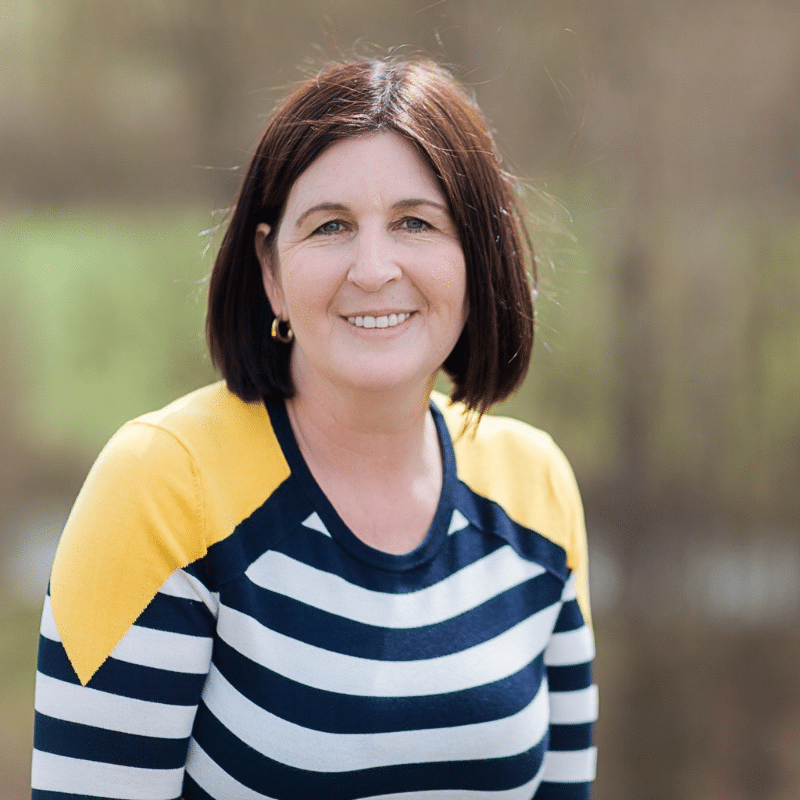
Kylie Lang is a nationally syndicated travel journalist with bylines on the Associated Press Wire & more, a medieval history writer, and the founder and lead author of Tales of the Middle Ages (talesofthemiddleages.com). She holds a BA (Honours) in History from the University of Kent and is a member of the British Guild of Travel Writers.