I love a good historical fiction novel as much as the next person, but few draw me in the way Ken Follett does. The Kingsbridge series, based on the building of a factional cathedral, had me hooked from the first chapter, and I’ve now read all five books. But did you know they made the first two books into two TV mini-series? We’re talking a stellar cast with some seriously good acting.

If you love to indulge in a little medieval madness in your downtime and get engrossed in what life was like in the Middle Ages, you might want to give these a watch.
Table of Contents

The Kingsbridge Series by Ken Follett
Ken Follett’s Kingsbridge series doesn’t just follow one story. It spans centuries. Five books, each one set in the same fictional English town, track how the place evolves through war, plague, political upheaval, and religious reform. And somehow, through it all, the cathedral always looms large in the background.
It all begins with The Pillars of the Earth, set in the 1100s, during a time of civil war known as the Anarchy. Then comes World Without End, set more than a hundred years later, just as the Black Death is making its brutal entrance. The next three books, A Column of Fire, The Evening and the Morning, and The Armour of Light, carry the story right through the Reformation and into the early days of the Industrial Age.
While each book focuses on a different cast of characters, they’re all linked by place, legacy, and the long shadow of power and ambition. Some parts are brutal. Others are unexpectedly moving. But what keeps you coming back is that gritty mix of survival, belief, and stubborn hope in the face of complete upheaval.
Pillars of the Earth
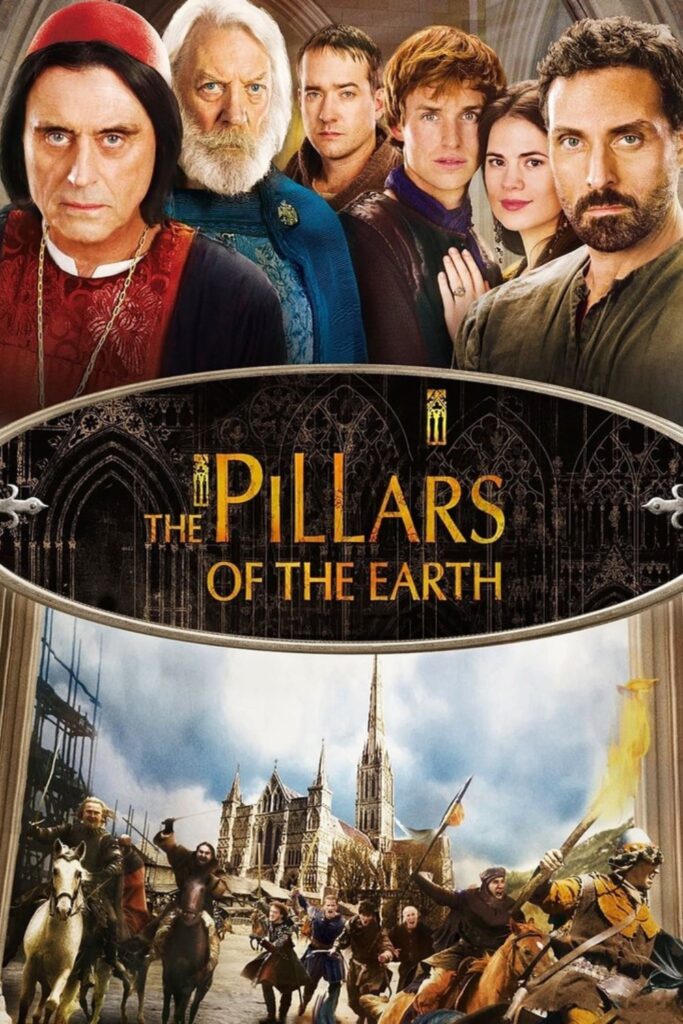
The story is set in 12th-century England during a brutal period of civil war between Empress Matilda and King Stephen, known as The Anarchy. At the heart of it all is the fictional town of Kingsbridge and the people determined to build a grand cathedral there. It’s a world of stonemasons, monks, outlaws, and scheming nobles. Nothing comes easy, and power is almost always gained through manipulation or bloodshed.
Tom Builder dreams of creating something that will outlast him. Prior Philip wants to bring order and peace to a corrupt church. Jack, a gifted outsider, finds his place in stone. Meanwhile, Aliena, the daughter of a disgraced nobleman, fights to survive in a system designed to crush her. Their lives are twisted together across decades as the cathedral slowly rises.
This isn’t just about architecture. It’s about love, betrayal, revenge, and resilience. The violence is shocking at times, but you’ll be gripped and unable to put it down.
The TV Series

The adaptation came out in 2010 as an eight-part mini-series. It was a big deal at the time, produced by Ridley Scott and Tony Scott and aired on Starz. The cast was packed with serious names: Ian McShane as Waleran Bigod, Rufus Sewell as Tom Builder, Matthew Macfadyen as Prior Philip, Eddie Redmayne as Jack, and Hayley Atwell as Aliena.
Reviews were mostly positive. Rotten Tomatoes gave it around 77 percent, and audiences praised the production quality and performances. Some critics didn’t love the historical changes, but for the most part, it was seen as a solid adaptation. As someone who read the book first, I thought it captured the spirit of the story really well.
What Worked Well
The Storytelling Held Up
For a book that spans decades, the show did a good job of keeping the momentum going. It hit the key emotional moments without dragging. The cathedral project stayed at the center, but the series made room for all the personal dramas without losing track of the bigger picture.
It didn’t shy away from the grim side of medieval life. There were public executions, food shortages, religious corruption, and scenes that showed just how fragile life could be. That added weight to every decision the characters made.
The Production Was Strong
The sets looked believable, from the muddy market squares to the half-finished cathedral. Costumes and lighting helped pull you into the time period without making it feel theatrical. You could almost smell the damp stone and hear the crunch of straw underfoot.
Battle scenes were intense without being overblown. And the sound design brought everything together.
The Acting Carried It
Matthew Macfadyen brought real depth to Prior Philip. You could see his inner conflict play out in his face. Rufus Sewell made Tom Builder feel like a man worn down by failure, but still quietly determined. Eddie Redmayne as Jack captured that restless, outsider energy from the book. Ian McShane was exactly the right kind of dangerous as Waleran.
The cast made the world feel lived in. Even minor characters had weight. It never felt like they were just reciting lines from a script.
World Without End

Set more than a century after Pillars of the Earth, this story returns to Kingsbridge, now a more established town with the cathedral still standing strong. But life in 14th-century England is no easier. The backdrop this time includes the early years of the Hundred Years’ War and the devastating arrival of the Black Death.
The story follows a new generation of characters: Merthin, a skilled but ambitious carpenter; Caris, a headstrong woman determined to become a doctor; Gwenda, born into poverty and determined to break free from it; and Ralph, Merthin’s violent and power-hungry brother.
Their lives cross and collide in ways that feel just as raw and unforgiving as the world around them. There are no easy choices. Everything comes at a cost, whether it’s love, justice, or survival. While the cathedral still anchors the setting, the bigger focus this time is on how people survive when the systems around them start to break down.
The TV Series

The series came out in 2012, also as an eight-part mini-series. It was again backed by Ridley Scott and aired on Reelz in the US. The cast included Cynthia Nixon as Petranilla, Charlotte Riley as Caris, Ben Chaplin as Sir Thomas Langley, and Tom Weston-Jones as Merthin.
It looked great on paper. But the reviews were mixed. Some praised the atmosphere and pacing in the early episodes, but many longtime fans of the book were disappointed by how far the series strayed from the original plot. Major events were changed or skipped entirely, and a few characters were rewritten in ways that didn’t sit right.
As someone who loved the book, I found it hard to stay invested. It had potential, but somewhere along the way, it lost the emotional depth that made the book so gripping.
What Worked Well
The Setting Looked the Part
Visually, the production held up. The series captured the feel of a town under pressure: tight streets, crowded markets, and a growing sense of unease as the plague approached. The costumes and set design felt believable and grounded the story in the time period.
Some of the plague scenes, in particular, were hard to watch, in the right kind of way. They didn’t shy away from how quickly things could fall apart or how desperate people became when faced with something they didn’t understand.
What Didn’t Work Well
The Tone Didn’t Quite Land
One of the things that made World Without End such a powerful book was its handling of big themes, including justice, power, corruption, and survival. Caris’s battle to study medicine and fight against the system felt bold and dangerous. Gwenda’s struggle to escape poverty hit hard. Even Merthin’s journey felt deeply personal, shaped by the weight of history and tradition.
The TV series hinted at these themes, but it rarely gave them the time or weight they needed. Moments that should have been sharp and affecting were rushed or diluted. The plague scenes looked convincing, but the emotional aftermath wasn’t explored deeply enough. The relationships that were so layered in the book felt thinner on screen.
There were glimpses of the book’s ambition, but the tone often shifted awkwardly. It sometimes leaned too far into soap-style drama, which undercut the story’s darker, more grounded edges. The stakes never felt as high as they should have, and that left the whole thing feeling flatter than the book deserved.
So, Are They Worth Watching?
Both series had a lot going for them. Pillars of the Earth came out swinging. It felt rich, layered, and emotionally close to the book. You could see the effort in every scene. It didn’t get everything right, but the heart of the story prevailed.
World Without End looked the part but didn’t feel as rooted. It glossed over some of the book’s strongest moments and lost its grip on the themes that made the story matter. I really wanted to like it. But it never fully captured the grit or intensity of the source material.
If you’ve read the books, I’d still say it’s worth watching both, just go in with different expectations. Pillars will probably leave you satisfied. World Without End might leave you a bit frustrated.
Either way, Kingsbridge on screen gives you a different way to see a world that already lives in your head. And that’s always worth a look.
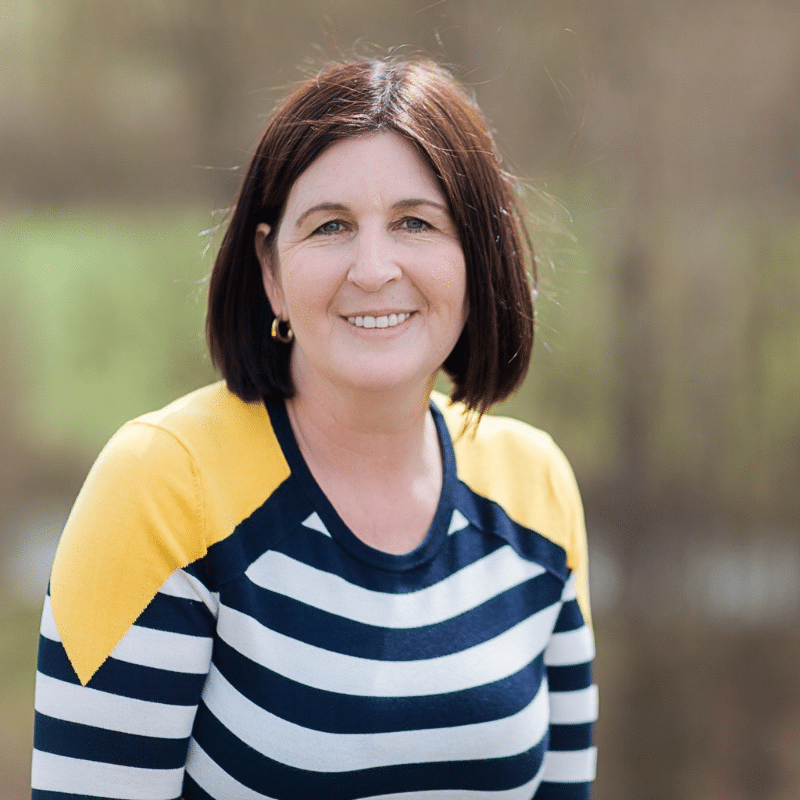
Kylie Lang is a nationally syndicated travel journalist with bylines on the Associated Press Wire & more, a medieval history writer, and the founder and lead author of Tales of the Middle Ages (talesofthemiddleages.com). She holds a BA (Honours) in History from the University of Kent and is a member of the British Guild of Travel Writers.