Genghis Khan’s own mother, Hoelun, was abducted by his father Yesugei from her first husband, a Merkit man, on the road home from her wedding.
Years later, the Merkits took revenge by seizing Genghis’s own wife Borte. She came back pregnant, and her son Jochi carried that question mark for the rest of his life.
Table of Contents
That is the family the empire was built out of. But what did the Mongols actually do with the women whose cities they took?
What Happened to Women When a City Fell to the Mongols?
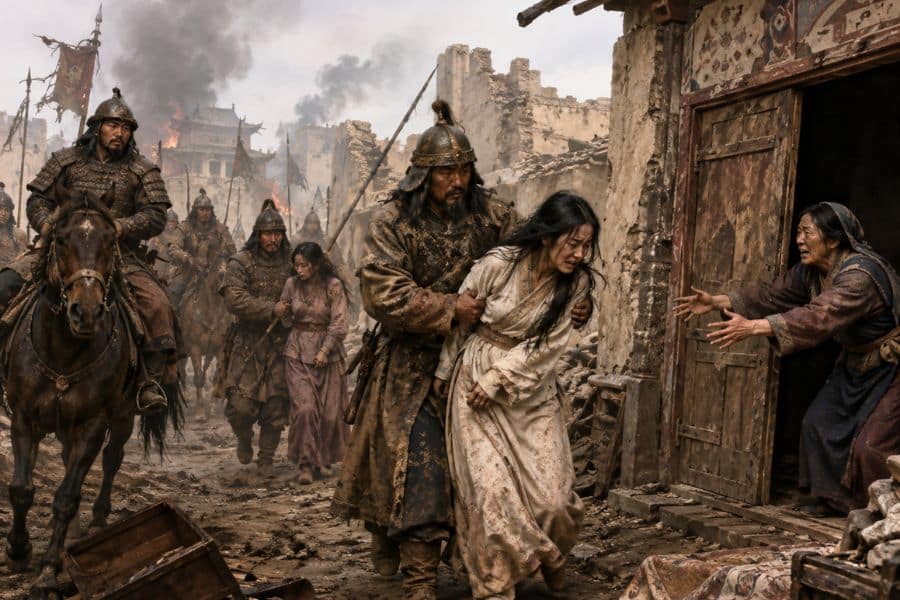
A city that resisted was stormed, the fighting men killed, and the surviving population driven out onto the plain outside the walls. There they were sorted.
Craftsmen went one way, to be sent east to Mongolia or Karakorum. Young men fit for labor or for the next siege were kept as auxiliaries, often shoved to the front of the assault on the next city. Women and children were counted and divided.
Ata-Malik Juvaini, who worked for the Mongols and wrote his History of the World Conqueror in the 1250s, describes the sack of Merv in 1221 in exactly these terms. The population was driven out, the artisans separated, and the rest distributed among the soldiers.
Ibn al-Athir, writing from Mosul and no friend of the invaders, gives a similar account for Bukhara in 1220 and Nishapur in 1221: the killing done in the open ground outside the walls, women and children taken as plunder, the city then burned.
Within that pattern, women were not treated as a single category. The pick went to Genghis and his sons. After that, senior commanders chose. Then the ordinary soldiers took their share.
Noblewomen of the conquered dynasty, and women with skills the Mongols valued, such as weavers, embroiderers, dyers, and midwives were often pulled out and kept alive on that basis. Everyone else was distributed like the horses and the sheep because, in the Mongol accounting of a successful campaign, that is what they were.
Were Conquered Women Enslaved or Absorbed Into Mongol Families?
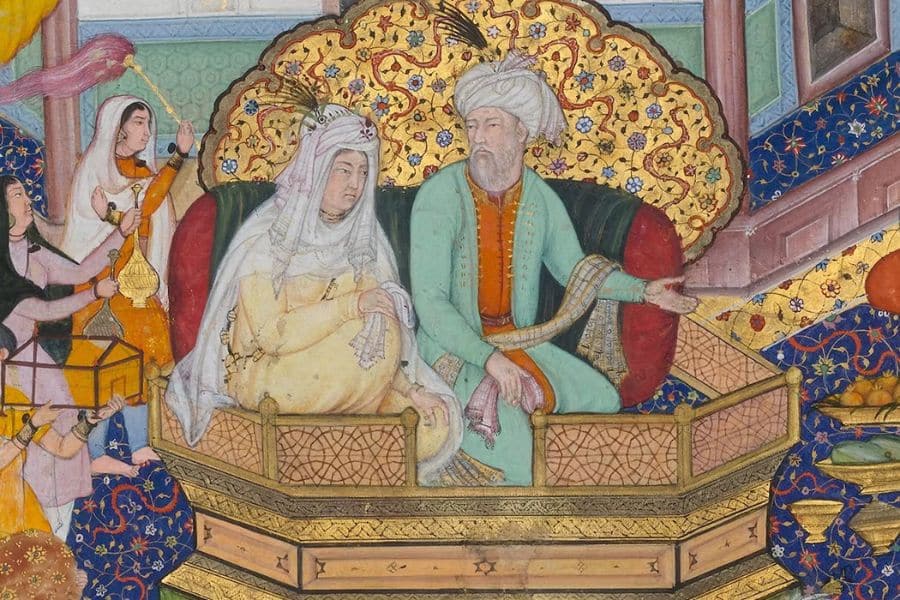
Both, and the line between the two was blurry. A captured woman might be a concubine in a commander’s tent one year and, if she bore a son who was acknowledged, something closer to a secondary wife the next.
Steppe household structure was polygynous and layered. A senior wife ran the ger and its dependents; junior wives and concubines lived under her authority; captured women slotted in below that, but not permanently outside the family.
The children complicate everything. A son born to a captured woman was recognized as his father’s son. Jochi, born to Borte after her captivity among the Merkits, was raised as Genghis’s eldest and given an enormous appanage, even as the whispers about his paternity followed him.
If the founding family itself could carry that ambiguity and continue functioning, ordinary Mongol households could absorb captive women and their children with little difficulty.
The steppe was thinly populated, and the empire was expanding faster than Mongol women could produce new soldiers and herders. Captured women were, among other things, a way to grow the population that fed the war machine.
Hooked on the Middle Ages? Get more stories like this one in your inbox.
What Was Life Like as a Captive in a Mongol Household?
Marco Polo, traveling through the empire in the 1270s and 1280s, describes Mongol households in the plainest terms: men could have as many wives as they could support, the first wife had the highest standing, and the camp’s labor fell heavily on women.
Milking, felt-making, packing and unpacking the ger, tending the smaller livestock, cooking, sewing, raising children. A captive woman was dropped into that workload at the bottom of the pecking order.
What that life looked like in practice depended almost entirely on who owned you. A woman in the household of a senior wife who chose to protect her was able to maintain a survivable existence.
A woman in the tent of a rank-and-file soldier moving from campaign to campaign had a much harder one. Persian and Arabic sources describe captive women marched hundreds of miles on foot behind the columns, and many did not survive the first winter.
Sexual use was a given. Steppe custom did not require a captive’s consent, and Mongol law, the Yassa as we know it from later sources, did not restrain a man’s treatment of his own slaves in this regard.
What the Yassa did do, according to the fragments preserved by Juvaini and the Mamluk historian al-Maqrizi, was punish adultery with another man’s wife harshly. A captive who had been formally taken into a household was, in that limited sense, protected from outsiders. She was not protected from her owner.
Did Mongol Women Have More Freedom Than the Women They Conquered?
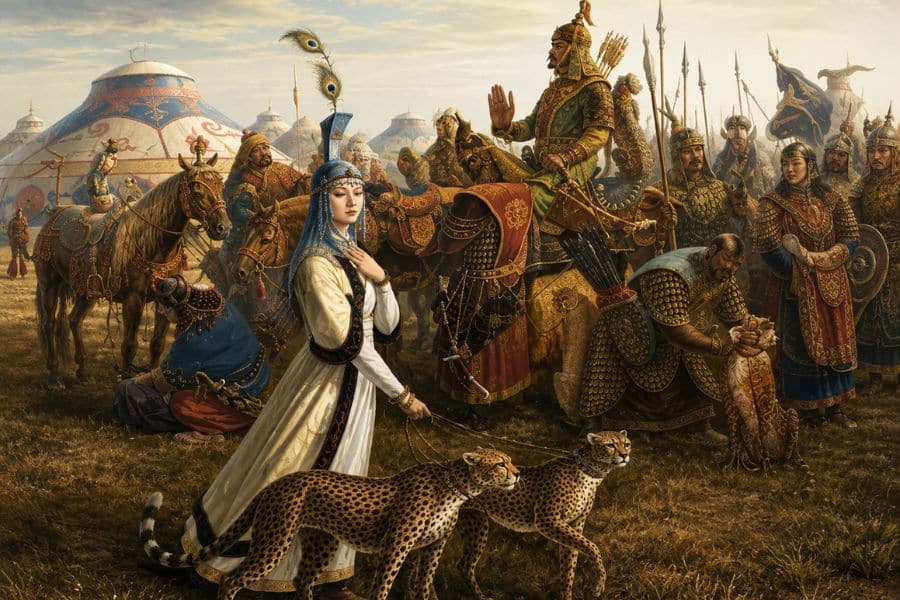
By the standards of the settled societies the Mongols overran, yes. Mongol women rode, shot, ran their own households and herds, and appeared at councils. When a khan died, his widow often held the regency until a successor was chosen, and these regencies were not ceremonial.
Toregene, the widow of Ogedei Khan, ran the empire for roughly five years after his death in 1241 and secured the throne for her son Guyuk in 1246.
Sorghaghtani Beki, the widow of Genghis’s youngest son Tolui, managed the appanage of her house so effectively that all four of her sons became khans: Möngke and Kublai in the east, Hulegu in Persia, Ariq Boke contesting the center.
The Persian historian Rashid al-Din, writing in the early 1300s at the Ilkhanid court, calls her the most intelligent woman of her age, and he was not given to flattery of women.
A Mongol noblewoman could command armies through her sons, hold court, arbitrate succession.
A woman taken from Nishapur or Merv, from a settled Islamic society in which she had at least legal standing under sharia, property rights through her mahr, a household that was hers, ended up milking someone else’s sheep on the steppe.
The freedom of the one was built partly on the unfreedom of the other.
Could a Captured Woman Rise in Mongol Society?
It happened, though the ceiling was low and the path went through childbearing. A concubine who bore a favored son could see that son given command, and her own standing rose with his.
Absorption into a senior household as a junior wife was another route. But the great political women of the empire, the Toregenes and Sorghaghtanis, came from Mongol and allied steppe lineages, not from the sacked cities.
Kublai Khan’s favored consort Chabi was Mongol, from the Khongirad, and her influence at his court is well attested by Rashid al-Din.
The Persian and Chinese women in Kublai’s household, by contrast, appear in the sources as presences rather than powers. They bore children, they lived in the harem quarters described by Marco Polo, and they mostly did not shape policy.
A captured woman’s best realistic outcome was a stable place in a household that did not discard her, and children whose paternity was acknowledged. Against the alternative of being sold south into the Central Asian and Middle Eastern slave markets, which is where a great many captives ended up.
The Y Chromosome That Spread Across a Continent
In 2003, a team led by Tatiana Zerjal, working with Chris Tyler-Smith at the Wellcome Trust Sanger Institute, published a paper in the American Journal of Human Genetics identifying a Y chromosome lineage carried by roughly 8 percent of men across a swathe of Asia that matches the former Mongol Empire.
Extrapolated to the world population, that came to something like 16 million men, about 0.5 percent of all men alive. The paper suggested the lineage had spread with the Mongol expansion, and the popular press promptly labeled it Genghis Khan’s chromosome.
A 2017 review by Marta Melé, Chiara Batini and Mark Jobling flagged the attribution as unproven. In the same year, a Chinese study examining the ancient DNA from high-status graves in Mongolia dated to between roughly 1130 and 1250, the window that should contain Genghis and his immediate descendants, found a different Y-chromosome lineage in those remains.
The star cluster identified by Zerjal may, in other words, trace back to ordinary Mongol warriors rather than to the ruling family itself.
Whether the lineage came from Genghis, his commanders, or the mass of ordinary Mongol men who moved through Central Asia with the armies, it spread because captured women bore children.
A demographic footprint that size is not the trace of a few dynastic marriages. It is the genetic residue of what Juvaini and Ibn al-Athir described in the 1220s, visible now in living men from the Caspian to Manchuria.
Were the Mongols Crueler Than the Armies They Fought?
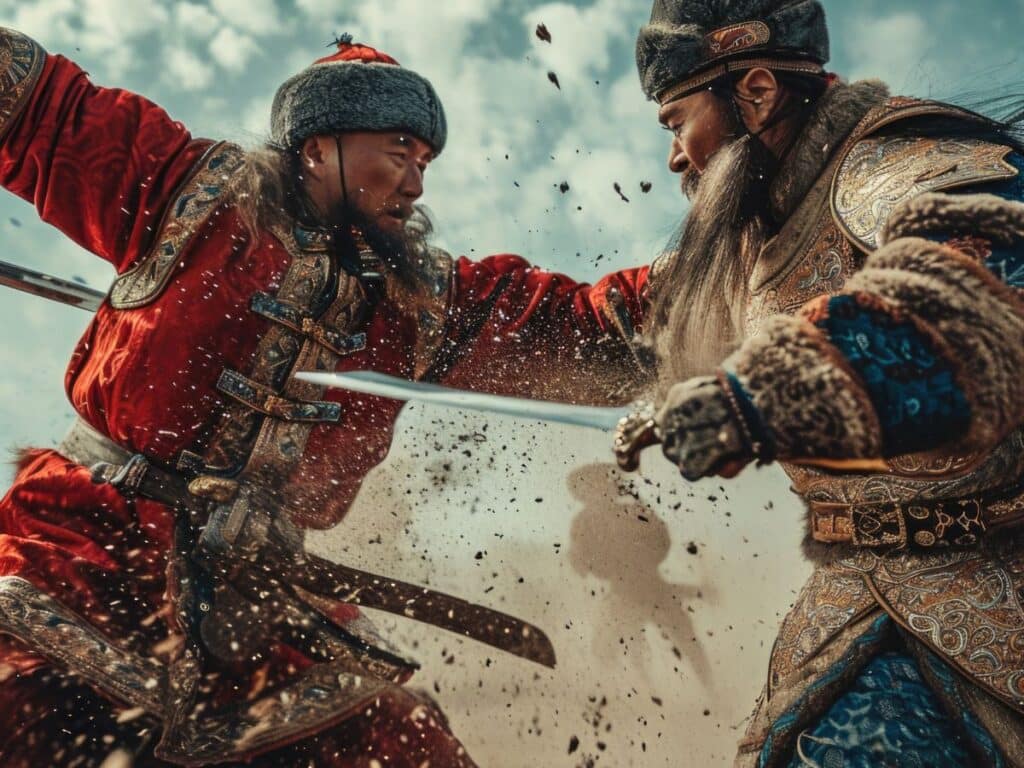
Mass killing after a siege, the enslavement of surviving women and children, and the deportation of skilled workers were not unique to the Mongols. Assyrian kings did the same 2,000 years earlier.
The Crusader sack of Jerusalem in 1099 and the Fourth Crusade’s sack of Constantinople in 1204 followed the same grim logic. Byzantine, Seljuk and Khwarezmian armies took captives as a matter of course. What the Mongols brought was scale and consistency.
Juvaini’s numbers for Merv and Nishapur, running into the hundreds of thousands killed, are almost certainly inflated. Modern estimates by historians such as David Morgan and Peter Jackson substantially pull them down.
But even a conservative reading leaves catastrophic depopulation in Khorasan, an irrigation-dependent region whose qanat systems, once broken, took generations to rebuild. Cities that had been centers of Persian learning and craft, Balkh, Merv, Nishapur, did not recover their pre-Mongol standing for centuries, if at all.
And the treatment of women was part of the strategy. Terror was policy. A city that surrendered on first summons could be spared the full program. A city that resisted knew what it was inviting: the men killed, the women and children distributed, the walls thrown down. Juvaini, working inside the Mongol administration, states this openly.
How Do We Know What the Mongols Did?
The Secret History of the Mongols, compiled in Mongolian probably in the 1240s, is the insider account. It is where we get Hoelun’s abduction, Borte’s captivity, the family logic of the early conquests.
It was written for a Mongol audience and has no reason to hide the taking of women; it treats it as the natural business of steppe war.
Juvaini, Persian, working for the Ilkhans, finished his history around 1260. Rashid al-Din, also at the Ilkhanid court, compiled his vast Jami al-Tawarikh in the early 1300s, drawing on Mongol informants and lost sources.
Ibn al-Athir, in Mosul, wrote his account of the first Mongol invasion within a decade of it happening and from the perspective of the invaded. Where these three converge is on the general pattern of sieges, the sorting of populations, and the enslavement of women.
The European sources, including Marco Polo, John of Plano Carpini, who traveled to Karakorum in 1246, and William of Rubruck, who followed in 1253, give texture to daily life inside Mongol camps.
They describe the household order, the standing of wives, the presence of captives from many nations. And the genetics, whatever the arguments over attribution, put a physical signature on the demographic story the written sources were already telling.
Love a good medieval story?
Join our readers and get tales of kings, queens, castles and ordinary medieval lives straight to your inbox.

Kylie Lang is a nationally syndicated travel journalist with bylines on the Associated Press Wire & more, a medieval history writer, and the founder and lead author of Tales of the Middle Ages (talesofthemiddleages.com). She holds a BA (Honours) in History from the University of Kent and is a member of the British Guild of Travel Writers.
Related posts:
 Genghis Khan had 16 Million Descendants and Counting, But Here’s What They Don’t Teach You About Him
16 Million Descendants Later Genghis Khan Changed the World But His Legacy Has Nothing To Do With DNA
Genghis Khan had 16 Million Descendants and Counting, But Here’s What They Don’t Teach You About Him
16 Million Descendants Later Genghis Khan Changed the World But His Legacy Has Nothing To Do With DNA
 11 Medieval Monarchs Who Got Lost in the History Books.
 15 Medieval Movies to Watch if You Love History, the Middle Ages and Being Transported to Another Era