You had two queens who shared a bloodline, a border, and a single throne that one of them wanted more than anything. They wrote to each other for nearly twenty years. They traded gifts, promises, warnings, and the odd veiled threat. And in all that time, across all those letters, Mary Queen of Scots and Elizabeth I never once stood in the same room.
By almost every practical measure, Elizabeth I was the more successful ruler. She held her throne for 44 years and died in her bed. Mary held hers for barely six years and died on a scaffold. But that isn’t the whole story.
Table of Contents
The gap between these two women is wider and stranger than the films would have you believe.

Who Was the Better Ruler, Mary Queen of Scots or Elizabeth I?
Judged purely as a ruler, Elizabeth I was the better of the two, and it isn’t especially close. She inherited a divided, near-bankrupt country in 1558 and handed on a stable one in 1603.
She built a religious settlement that outlasted her by centuries, saw off the most famous invasion fleet in English history, and presided over a golden age of theater and poetry.
Mary, by contrast, lost control of Scotland within six years and never regained it.
But there’s a fairer way to weigh them, and it complicates that verdict. Mary ruled a poorer, wilder, more fractious kingdom, and she ruled it as a Catholic in a country that had just turned Protestant.
Elizabeth had England’s deeper purse, a brilliant chief minister, and the priceless advantage of having grown up in the land she governed. Mary had none of that. She came home a stranger at eighteen.
And then there’s the bloodline. Hold that thought, because it’s where the whole question turns on its head.

How Were Mary and Elizabeth Related?
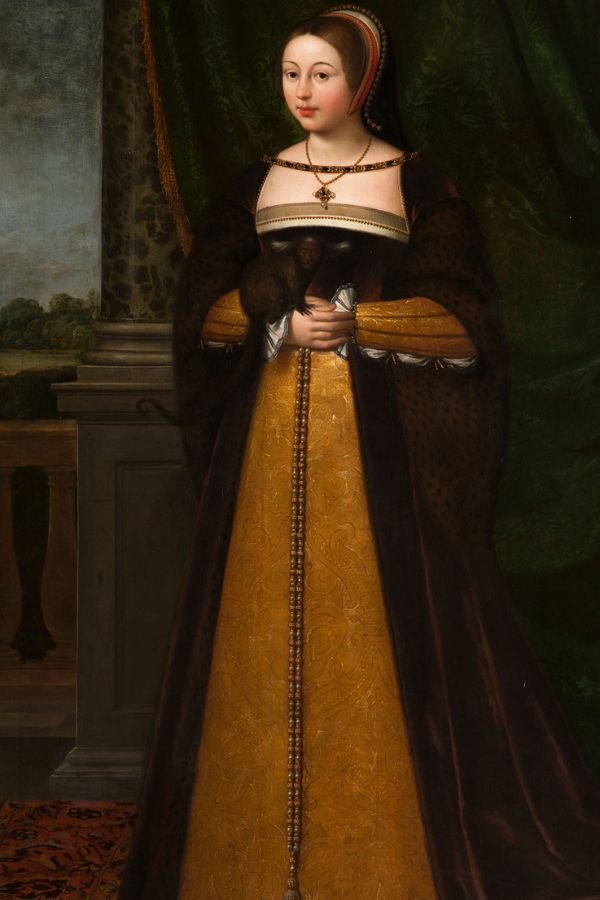
Mary and Elizabeth were first cousins once removed, both descended from Henry VII of England. Mary’s grandmother, Margaret Tudor, was the sister of Elizabeth’s father, Henry VIII, the king whose six marriages reshaped England.
That shared Tudor blood is the root of the whole rivalry. It gave Mary a strong claim to the English crown, and to England’s Catholics, who never accepted that Elizabeth was legitimate, Mary wasn’t a rival at all. She was the rightful queen.
That was the problem in a nutshell. Elizabeth’s mother was Anne Boleyn, executed when Elizabeth was barely two, and the marriage that produced her had split England from Rome.
In Catholic eyes, that made Elizabeth a usurper and Mary the answer to their prayers. You can see why Elizabeth slept badly.
How Long Did Each Queen Actually Rule?
Here’s the comparison at a glance, because the numbers tell their own story.
| Mary Queen of Scots | Elizabeth I | |
|---|---|---|
| Born | December 8, 1542, Linlithgow Palace | September 7, 1533, Greenwich Palace |
| Reign | Queen of Scots, 1542 to 1567, but only about six years of personal rule | Queen of England, 1558 to 1603, around 44 years |
| Religion | Catholic, ruling a Protestant kingdom | Protestant, ruling a divided one |
| Married | Three times: Francis II of France, Lord Darnley, the Earl of Bothwell | Never married, the “Virgin Queen” |
| Heir | One son, James | None, the last Tudor |
| How it ended | Forced abdication, then execution in 1587 | Died peacefully in 1603 |
| Remembered for | Scandal, tragedy, and a bloodline that conquered Britain | Stability, the Armada, and a golden age |
Mary became Queen of Scots when she was six days old, after her father died. But she was raised in France and didn’t return to rule in person until 1561.
Her actual hands-on reign lasted from 1561 to 1567. That’s it. Six years. Elizabeth ruled for the better part of half a century.
Hooked on the Middle Ages? Get more stories like this one in your inbox.
What Made Elizabeth I Such an Effective Ruler?
Elizabeth’s great gift was knowing when not to act. Within a year of taking the throne, she pushed through the Elizabethan Religious Settlement of 1559, a careful compromise that made her Supreme Governor of the Church of England without going hunting for Catholic blood.
She famously refused to “make windows into men’s souls.” After the bonfires of her half-sister’s reign and the chaos of the nine-day queen Lady Jane Grey, that restraint probably spared England the religious wars that tore France apart.
Then came 1588 and her finest hour. Philip II of Spain sent an armada of around 130 ships to invade England and topple her. Helped by sharp seamanship and worse weather, the English navy scattered it.
Elizabeth rode out to Tilbury in a silver breastplate and gave one of the most famous speeches in royal history. The victory turned her into Gloriana, Good Queen Bess, the Virgin Queen wedded to her country.
She wasn’t flawless, mind you. She dithered endlessly over decisions, left her successor large debts, and her final decade brought economic misery and a grinding war in Ireland. But the arts flourished under her like never before.
Shakespeare, Marlowe, and Edmund Spenser, who wrote The Faerie Queene in her honor, all belong to her reign. Not a bad legacy for a woman everyone expected to marry and hand power to a husband within the year.
Why Did Mary Queen of Scots Lose Her Throne?
Mary lost her throne through a run of disastrous decisions made in an impossible position. She came back to Scotland in 1561, a young Catholic widow walking into a Protestant kingdom run by hard, ambitious nobles who didn’t much want her.
For a while, she managed it well enough. Then she married her cousin Lord Darnley in 1565, and it all came apart.
Darnley was vain and dangerous. He helped murder Mary’s secretary, David Rizzio, in front of her while she was heavily pregnant. A year later, Darnley himself was killed in an explosion at Kirk o’ Field. The chief suspect was the Earl of Bothwell.
And then Mary did the one thing she could not afford to do. She married him. Three months after her husband’s murder, she wed the man most people blamed for it.
Scotland turned on her. Denounced as an adulteress and a murderer, she was imprisoned, forced to abdicate in July 1567 in favor of her one-year-old son, and defeated in battle when she tried to fight back.
In 1568, she fled across the border into England, throwing herself on Elizabeth’s mercy. It was the worst decision of all.
I won’t pretend the marriages weren’t her own undoing, because they were. But it’s worth remembering she was playing a far harder hand than her cousin ever held. Plenty of male monarchs ruled badly in calmer kingdoms and kept their heads.
Did the Two Queens Ever Meet?
No. For all the drama, Mary Queen of Scots and Elizabeth I never met in person, not once. Their entire relationship was conducted through letters, ambassadors, and intermediaries across nearly thirty years.
Films love to invent a dramatic face-to-face showdown between them, but it never happened. The closest they came was the steady, wary, deeply personal correspondence of two women who each held the other’s fate in her hands.
Why Did Elizabeth Execute Mary Queen of Scots?
Elizabeth executed Mary because she had become the living center of every plot to murder Elizabeth and put a Catholic back on the English throne. For 19 years, Mary was kept under guard, shuffled between castles and manor houses like a queen quietly locked away from her own power.
She was the obvious figurehead for Catholic hopes, and the plots kept coming: the Ridolfi plot, the Throckmorton plot, and finally the Babington plot of 1586, which aimed squarely at killing Elizabeth.
This time, the evidence was damning. Mary was tried, found guilty, and sentenced. Elizabeth agonized over it. Signing the death warrant of an anointed queen, and her own cousin, was a terrible precedent, and she knew it.
On February 8, 1587, Mary was beheaded at Fotheringhay Castle. She was 44. It was the first legal execution of a crowned European monarch, a moment that shook every royal court on the continent.
You can read the grisly details alongside the era’s other scaffold stories in this account of the most gruesome Tudor executions.
Did Mary Queen of Scots Win in the End?
In the way that mattered most to her, yes. And this is the twist that turns the whole question on its head.
Elizabeth, for all her triumphs, died childless in 1603. She was the last of the Tudors. The dynasty her father had broken with Rome to secure ended with her. And who inherited the throne of England? Mary’s son. James VI of Scotland became James I of England, uniting the two crowns for the first time.
The boy Mary was forced to give up at one year old, grew into the king who ruled both kingdoms.
Every British monarch, since right down to today, descends from Mary Queen of Scots. Not one descends from Elizabeth. Mary lost her throne, her freedom, and her head, yet it was her blood, not her cousin’s, that went on to rule.
Her own motto, embroidered during those long years of captivity, reads like a prophecy: “In my end is my beginning.”
So Who Was the Better Ruler?
If “better ruler” means who governed more skillfully and left a stronger, steadier country behind, the answer is Elizabeth, and I don’t think it’s a close call. She was patient where Mary was rash, calculating where Mary was passionate, and she understood that survival was its own kind of victory.
She turned indecision into a political weapon and ruled for 44 years in an age when most monarchs were lucky to die in their beds.
But Mary wasn’t the foolish romantic of legend either. She was clever, brave, and dealt an appalling set of cards in a kingdom that never truly accepted her. She lost the throne, won the bloodline, and in the long game of dynasties, that turned out to be the only crown that lasted.
FAQ About Elizabeth I and Mary Queen of Scots
Were Mary Queen of Scots and Elizabeth I cousins?
Yes. They were first cousins once removed, both descended from Henry VII of England. Mary’s grandmother, Margaret Tudor, was the sister of Elizabeth’s father, Henry VIII. This shared Tudor blood gave Mary a strong claim to the English throne and lay at the heart of the rivalry that eventually cost Mary her life.
Who was older, Mary or Elizabeth?
Elizabeth was older. She was born on September 7, 1533, while Mary was born on December 8, 1542, making Elizabeth roughly nine years Mary’s senior. Elizabeth also came to her throne first, in 1558, three years before Mary returned from France to rule Scotland in person.
Why did Elizabeth I have Mary Queen of Scots executed?
Mary had become the focus of repeated Catholic plots to assassinate Elizabeth and seize the English throne. After the Babington plot of 1586, Mary was tried and convicted of conspiring against Elizabeth’s life. Elizabeth reluctantly signed the death warrant, and Mary was beheaded at Fotheringhay Castle on February 8, 1587.
Who succeeded Elizabeth I
Elizabeth died childless in 1603 and was succeeded by James VI of Scotland, who became James I of England. He was Mary Queen of Scots’ only son. His accession united the English and Scottish crowns for the first time, and every British monarch since has descended from Mary, not from Elizabeth.
Was Mary Queen of Scots a good queen?
Mary was an intelligent and courageous queen who governed a difficult kingdom reasonably well at first, but a series of disastrous personal choices, above all her marriage to the Earl of Bothwell, destroyed her authority. She lost her throne after just six years of personal rule. Her lasting achievement was dynastic: her bloodline went on to rule Britain.
Love a good medieval story?
Join our readers and get tales of kings, queens, castles and ordinary medieval lives straight to your inbox.

Kylie Lang is a nationally syndicated travel journalist with bylines on the Associated Press Wire & more, a medieval history writer, and the founder and lead author of Tales of the Middle Ages (talesofthemiddleages.com). She holds a BA (Honours) in History from the University of Kent and is a member of the British Guild of Travel Writers.
Related posts:
 What History Got Wrong About Mary Boleyn: The Other Boleyn Sister Who Outlived Them All
 Six Women Who Dodged a Bullet, or Axe, by Not Marrying Henry VIII
 The Ones That Got Away. The Six Women Who Kept Their Heads, By Not Marrying Henry VIII
Mary Wasn’t Just the “Other Boleyn Girl,” She Was the First (this is her story)