The Viking Age has never felt more alive thanks to shows like Vikings and The Last Kingdom. Battle axes, longships, and brooding warriors have stormed their way into pop culture. These seafaring Norsemen were raiders and warriors, but they were also skilled navigators who dared to push the limits of the known world.
But one question keeps coming up over and over again. Did the Vikings really sail to America and truly reach the continent centuries before Columbus? And if so, what did they find? Stories of a mysterious place called Vinland have fascinated people for centuries. But separating real history from saga stories is not always easy.
Table of Contents
The legend of Vinland, Viking North America, remains one of history’s most intriguing mysteries. Let’s journey back to a time when wooden ships, wild oceans, and untamed lands ruled the imagination.

The Vikings: Masters of the Sea
The Vikings were a fearsome force during the 8th to 11th centuries, known for their longships, fearsome raids, and exploration. Hailing from Scandinavia, mainly modern-day Norway, Denmark, and Sweden. They lived in small communities, farming the land, raising livestock, and crafting tools and ships.
Adventure ran deep in their veins. Harsh winters and rugged landscapes pushed them to look beyond their shores. They built some of the finest ships the world had ever seen, sleek wooden vessels that could easily ride the open sea. These longships were the key to their reach. They allowed the Vikings to raid, trade, and settle across huge parts of Europe and beyond.

Their ability to sail vast distances across the unpredictable waters of the North Atlantic was unmatched, and they used these skills to establish settlements as far as Greenland and Iceland.
Family ties, loyalty, and honor mattered a great deal to them. So did bravery. Life was difficult in Viking society, but it was full of opportunity for those bold enough to take it.
Though their reputation is often shaped by tales of plunder and pillage, the Vikings were also keen explorers. Many of their voyages were driven by curiosity and the need for new land to settle. Their journeys didn’t stop at the European coasts. The Vikings, led by the legendary Leif Erikson, are said to have sailed even further across the Atlantic to what they called Vinland.
Vinland: The Elusive Land
Vinland is a name that appears in the medieval sagas, which were passed down through generations of Norse storytellers. According to these sagas, Leif Erikson, son of Erik the Red (the founder of Greenland), sailed westward from Greenland around the year 1000. He and his crew reportedly landed in a fertile, wooded area they called “Vinland,” which translates to “Wineland” in Old Norse.
The sagas describe Vinland as a lush, distant land full of wild grapes, fresh rivers, and rich pastures. To Viking explorers, who were used to the rocky coasts and cold winds of Scandinavia, it must have sounded like paradise.
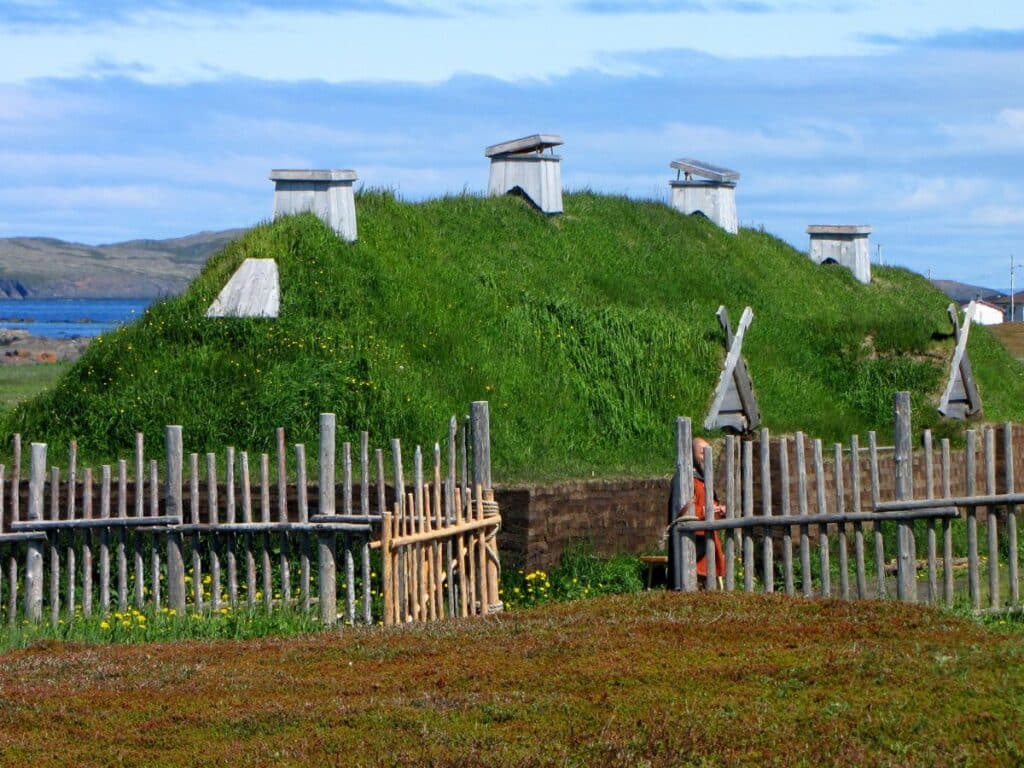
But where exactly was Vinland? That is the million-dollar question. The sagas give us just enough clues to make us curious but not enough to pin it down with certainty. Some described sailing west from Greenland, hitting rocky shores, dense forests, and places where the air felt warmer than anything they knew back home.
Over time, historians and archaeologists have tried to match the descriptions to real places. Was it Newfoundland? Part of Canada’s Atlantic coast? Or could it have been even farther south? Even today, the true location of Vinland is still debated. It is one of history’s most intriguing puzzles, hiding somewhere between myth and reality.
Hooked on the Middle Ages? Get more stories like this one in your inbox.
The Vinland Sagas: Myth or Reality?
The primary sources of the Vinland story come from two sagas: the Grœnlendinga saga (The Saga of the Greenlanders) and the Vinland saga (The Saga of Erik the Red). Both sagas were written in the 13th century, centuries after the events they describe, and are filled with legendary elements. These sagas tell of Erikson’s journey to the mysterious land of Vinland, but what’s fact and what’s fiction?
Historians and archaeologists have long debated whether these sagas are accurate historical accounts or simply fanciful stories passed down through generations. After all, medieval sagas often blended fact with fiction, and the written versions we have today were transcribed long after the original events. While the sagas provide tantalizing clues, they offer little concrete evidence about the exact location of Vinland or how long the Vikings may have stayed there.
Archaeological Evidence
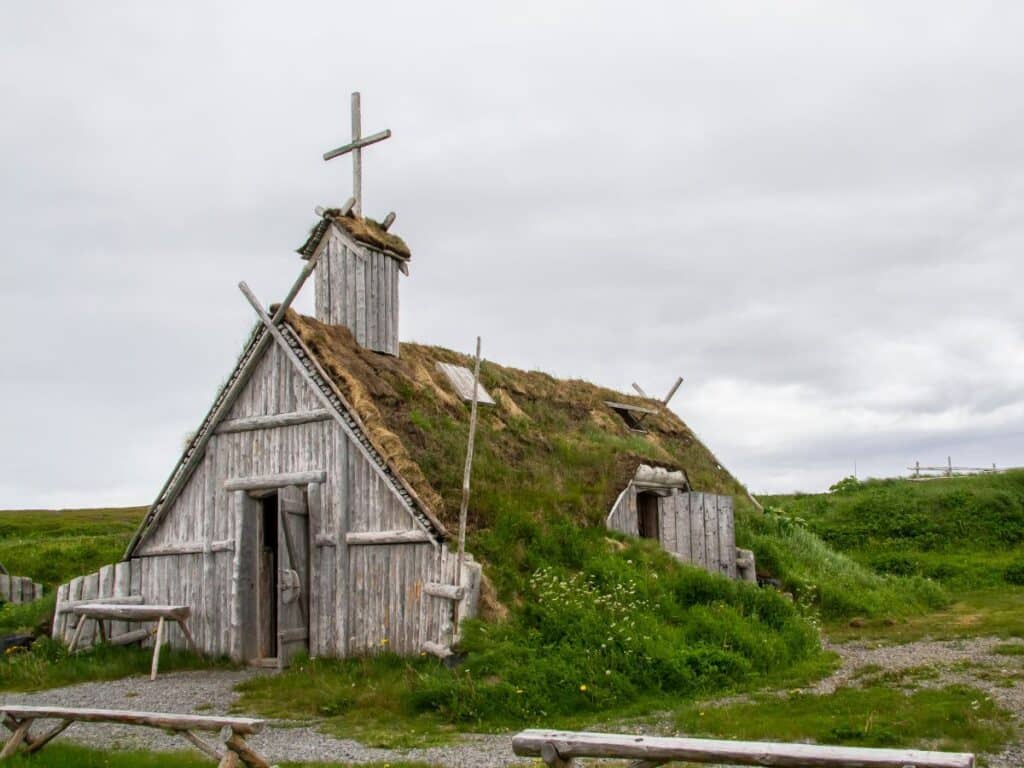
The first major breakthrough in confirming the Viking presence in North America came in 1960, when a team of archaeologists led by Helge and Anne Stine Ingstad discovered a Viking settlement at L’Anse aux Meadows, located on the northern tip of Newfoundland, Canada. This site is widely considered the first known Viking settlement in North America, and it matches many of the descriptions found in the sagas.
L’Anse aux Meadows is a fascinating archaeological site that features the remains of several buildings constructed using the same techniques used by Vikings in Greenland and Iceland.
Radiocarbon dating of the site places its occupation around the year 1000, the same time period in which the sagas claim that Leif Erikson and his crew reached Vinland. This discovery provided solid evidence that the Vikings did indeed make it to North America long before Columbus.
The Significance of L’Anse aux Meadows
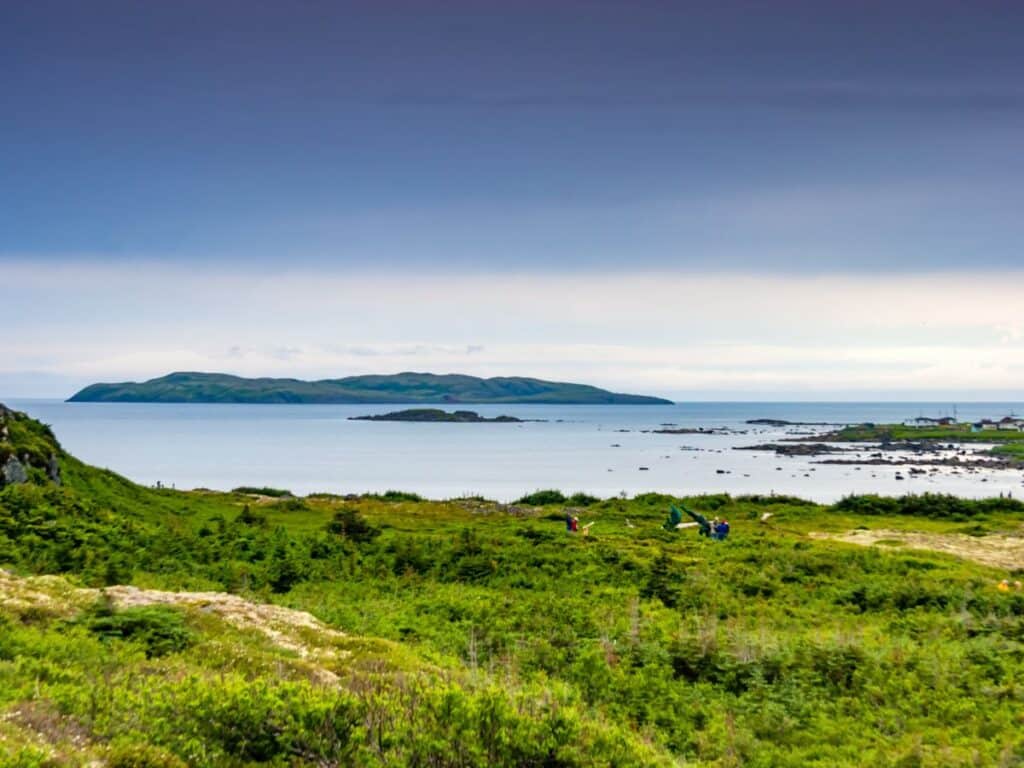
While L’Anse aux Meadows doesn’t match the lush, grape-filled landscape the sagas describe, its location is still highly significant. The site’s evidence suggests that the Vikings used it as a base for exploration and possibly a temporary settlement. The settlement contained iron nails, Viking-style tools, and other artifacts typical of Norse settlers, confirming its Viking origins.
However, the settlement at L’Anse aux Meadows appears to have been short-lived. The Vikings likely did not establish permanent settlements in the area, and there are no signs that they colonized the region like in Greenland or Iceland. The reasons for this remain speculative, perhaps due to hostile encounters with Indigenous peoples, the harsh climate, or a lack of resources.
Was Vinland Really the Americas?
The question remains: was L’Anse aux Meadows truly Vinland, the land of grapes and fertile soil described in the sagas? Some historians argue that the term “Vinland” could refer to a much broader region of North America, not just the area around Newfoundland.
The word “vin” in Old Norse can also refer to “meadow” or “pasture,” and some scholars suggest that the Vikings may have used the term to describe areas of North America that they found to be rich in resources, even if they didn’t specifically encounter grapes.
Other theories propose that the Vikings may have traveled farther south, potentially reaching areas of what is now the northeastern United States, where grapes were indeed abundant. The discovery of evidence like the remains of ancient grapevines in parts of the northeastern U.S. has led some to speculate that the Vikings could have made it as far as modern-day Maine or even further into the continent.

The Legacy of Viking Exploration in North America
Although the Vikings didn’t establish permanent settlements in North America, their voyages were groundbreaking. Their explorations were a testament to their exceptional seafaring skills and willingness to explore uncharted territories.
The discovery of L’Anse aux Meadows changed the way historians view Viking exploration, offering concrete evidence that the Norsemen did indeed make it to North America, and their legacy remains embedded in the history of early European exploration.
Despite this, the Vikings’ presence in North America was short-lived and overshadowed by the later, more sustained explorations by Europeans, particularly Columbus in the late 15th century. However, the story of Vinland remains an important chapter in the broader narrative of the age of exploration and the interactions between different peoples across the Atlantic.

The Vikings’ Brief North American Encounters: A Forgotten Chapter?
Why didn’t the Vikings leave a more lasting imprint on North America? Part of the reason may be that their presence was relatively fleeting. The harsh climate, limited resources, and potential conflicts with Indigenous groups likely made the Vikings’ settlements untenable in the long term.
The Vikings were also far from the only European group to venture into the Americas. Columbus’ voyages in the late 15th century marked the beginning of a new, far-reaching wave of exploration and colonization that would ultimately overshadow the earlier Viking forays.
Moreover, the Vikings’ records of their explorations were never widely disseminated across Europe, and their voyages faded into obscurity as time passed. But thanks to archaeological discoveries like L’Anse aux Meadows, we now know they were among the first Europeans to reach North America.
The Enduring Mystery of Vinland
Whether the Vikings truly discovered America before Columbus is unlikely to ever have a simple answer. While archaeological evidence supports the notion that the Vikings did indeed reach North America, the exact extent of their exploration remains shrouded in mystery.
Were they the first Europeans to set foot on the continent? Perhaps. Did they leave behind a lasting legacy? No, but their story serves as an early chapter in the larger history of human exploration and the complex interactions that followed.

Love a good medieval story?
Join our readers and get tales of kings, queens, castles and ordinary medieval lives straight to your inbox.

Kylie Lang is a nationally syndicated travel journalist with bylines on the Associated Press Wire & more, a medieval history writer, and the founder and lead author of Tales of the Middle Ages (talesofthemiddleages.com). She holds a BA (Honours) in History from the University of Kent and is a member of the British Guild of Travel Writers.